Staining a pergola: access, stain choice and upkeep
· 6 min read · By GK Painting & Remodeling
Yes, you can stain a pergola, and a penetrating stain is usually the right choice because it soaks into the wood instead of forming a skin that peels. The work is cleaning the wood, letting it dry all the way through, and then getting a brush or sprayer overhead without dripping on everything below.
Here's why pergolas weather faster than most wood, how to choose a stain, and how to handle the awkward parts: the ladder work, the drips and the plants. The pergola we stained dark brown, shown on our cedar pergola project page, is the example we'll refer to throughout.
Why pergolas weather so fast
A pergola is wood with nothing over it. Sun hits every surface, rain reaches the tops and sides, and the boards are mostly small, so there are a lot of ends and edges. The U.S. Forest Service points out that on horizontal wood, moisture collects, small checks enlarge into cracks as the wood wets and dries, and end grain holds water, which speeds up weathering.
The tops of the rafters and the crossbeams behave like deck boards: flat, sunburned and wet after every storm. Raw wood left alone turns gray, and the Forest Service says the weathered gray surface usually develops within a year or two. A stain slows that down by keeping water out and, if it has pigment, by shielding the surface from the sun.
New wood, weathered wood and old finishes
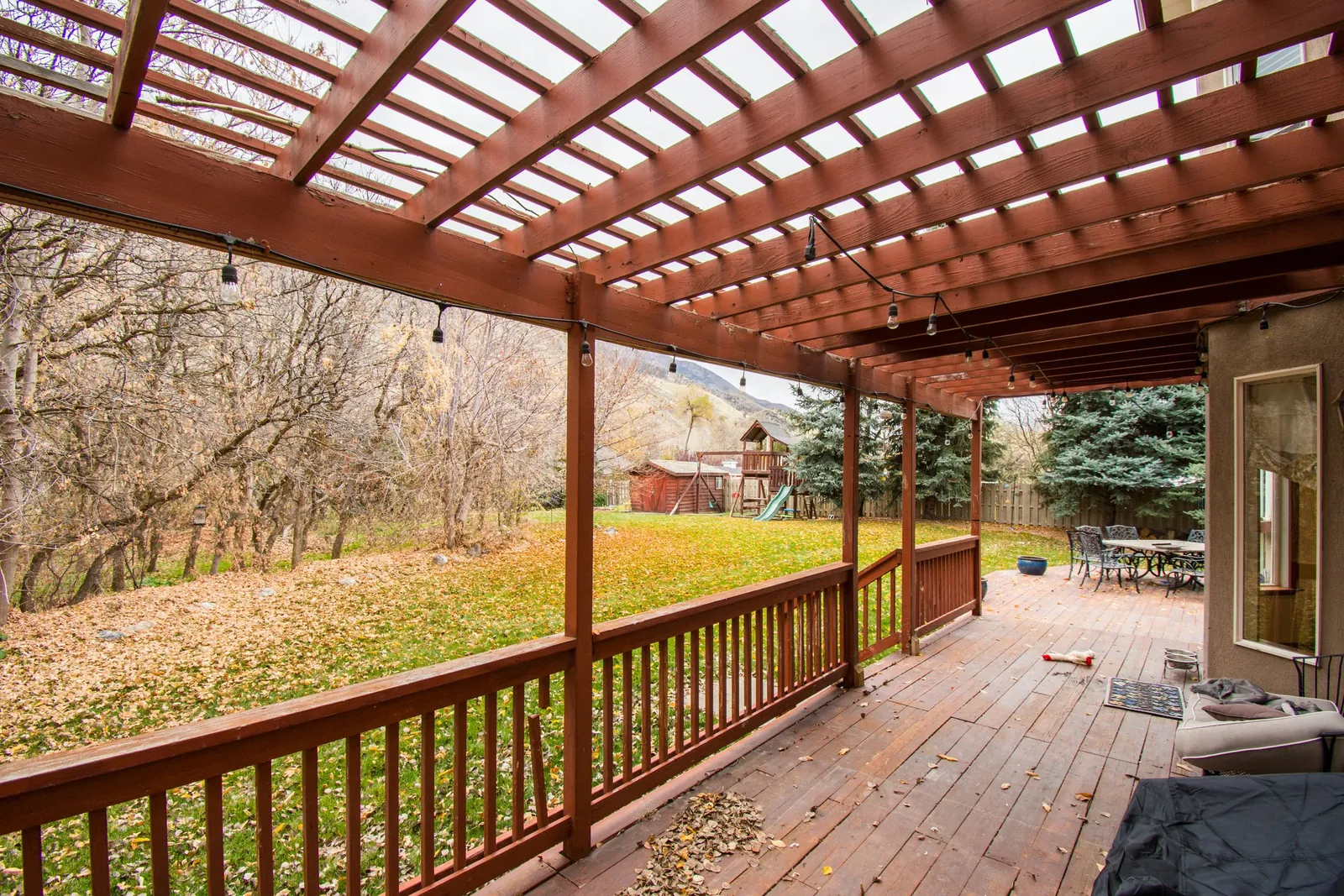
What's on the wood decides how you start. New, dry cedar that has never been exposed to the weather may be finished right away, according to Real Cedar, the industry website for western red cedar. Wood that has weathered gray needs more work. The same trade group says restoring weathered cedar so it can take stain takes significantly more preparation.
Weathering isn't all bad news for stain. The Forest Service notes that it opens the checks and cracks so the wood can absorb more finish, which usually means the stain lasts longer, though you'll use noticeably more of it.
An old finish is the real problem. A penetrating stain isn't effective over a solid-color stain or old paint, as Purdue Extension's guide to exterior finishes puts it. Peeling or flaking surfaces have to come off before stain can soak in, and that can mean serious scraping and sanding.
Clean it, and keep iron off the wood
Stain needs bare, clean, dry wood to soak into. Real Cedar recommends a brush and soapy water, with a diluted oxygen bleach solution if there's mildew, and says to never power wash a cedar deck. We'd treat cedar rafters the same way. Then give the wood time to dry thoroughly before the stain goes on.
Don't use steel wool or a wire brush to scrub it. Purdue Extension warns that these leave tiny iron deposits behind, and iron reacts with tannins in cedar, redwood and oak to leave dark blue-black stains that then get sealed under the new finish.
Choosing the stain
For a pergola, the choice is between a stain that soaks in and one that sits on top. A penetrating stain doesn't form a film, so it won't blister or peel when moisture gets into the wood. A solid-color stain behaves like thin paint. Purdue Extension notes that oil-based solid-color stains form a film much like paint and can peel loose, and the Forest Service doesn't generally recommend solid-color stains on horizontal surfaces such as decks, railings, fences and window sills.
| Finish | Look | Upkeep | On a pergola |
|---|---|---|---|
| Clear water repellent | Natural wood, will weather | Redo every 1 to 2 years | Shortest-lived option |
| Semi-transparent stain | Grain shows, tinted | Longer than clear; clean and recoat | Best fit for rafters and posts |
| Solid-color stain | Hides grain, opaque | Film that can peel on flat tops | Risky on the tops of boards |
Color is your call. Brown tones are popular because they give a natural, rustic look, and semi-transparent stains aren't available in white, according to Purdue Extension. The Forest Service advises light-colored stains for flat surfaces that get walked on because they show wear less. A pergola isn't a walking surface, so you have more room to go dark.
Our post on the best stain for a cedar deck goes into the stain types in more detail, and solid versus semi-transparent deck stain compares the two choices side by side.
Working overhead without a mess
Overhead work changes how you plan. You're reaching above your head, the liquid is thin, and whatever you miss ends up on the ground. The usual method is to protect first, then work from the top down.
- Cover whatever is underneath: boards, furniture, planters and plants. A pergola usually sits over the nicest part of the yard.
- Set up a stable footing, whether that's a ladder on level ground, a small platform or scaffolding, so you aren't leaning out to reach the far end of a beam.
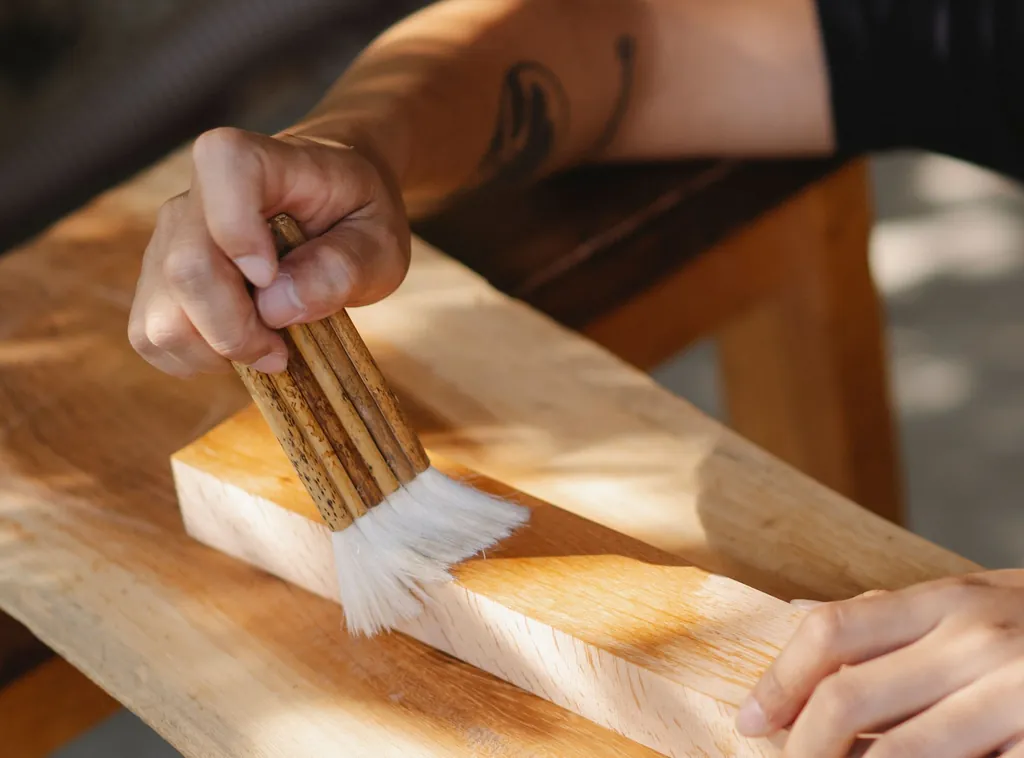
- Stain the rafters and crossbeams first, then the posts. Brushing gives better penetration than spraying, according to the Forest Service, though spraying followed by back brushing is also a good method.
- Work in small sections and finish each board to its end. Staining a few boards at a time keeps the wet edge from drying and leaving lap marks, and Real Cedar adds that working in shade slows drying and evens out the finish.
- Put plenty of stain on end grain and cracks, since that's where water gets in first.
- Wipe off drips and any stain that didn't soak in, and remember that rags wet with oil-based stain can heat up and catch fire. Purdue Extension says to bury them, soak them in water or seal them in an airtight container.
A pergola we stained
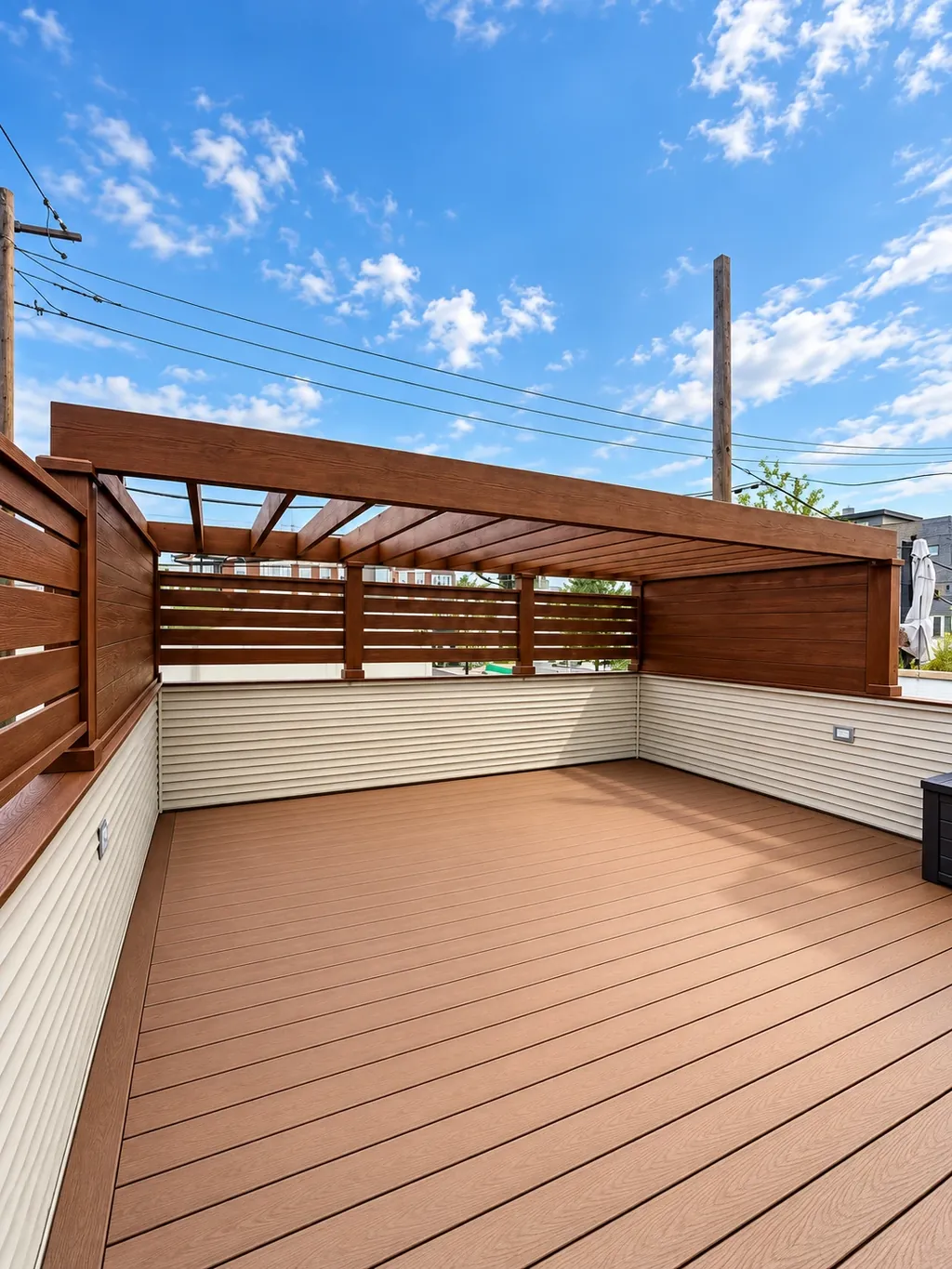
One of the projects on our work page is a raw cedar pergola and slatted privacy screens on a rooftop deck, stained a dark brown. The deck boards, the parapet and the step lights were left untouched. The stain went on the wood only, so the pergola and screens read as one dark frame around the deck.
Two things made that job go well, and they apply to yours. The wood was cleaned and dry before the stain went on, and the stain stayed on the wood. The stain soaks in rather than sitting on top, so the grain still shows through the brown.
Keeping a stained pergola looking good
A stained pergola isn't a one-time job. Penetrating finishes need renewing every so often, and they're easier to renew than a film. Purdue Extension says to clean the surface with a stiff bristle brush to remove dirt, dust and loose fibers, then apply a fresh coat, with no heavy scraping needed. It adds that the second coat often lasts longer because it soaks into small checks that open as the wood weathers.
To check whether the finish still works, splash some water on it. Purdue Extension describes this test for water-repellent finishes: if the water beads and runs off, the treatment is still effective, and if it soaks in, the wood needs refinishing. Graying is another sign. It's a rough guide on a stained surface, but it tells you when to take a closer look.
Having us do it
Deck staining and refinishing is a core part of our exterior painting work, and stained pergolas are part of that. Smaller exterior projects usually take one to three days and are scheduled around dry weather. The process starts with a phone call, George visits if he needs to see the structure, and you get a written quote with a start date.
We're based in Waunakee and cover Madison and the surrounding area; our page on deck and exterior work in Madison has the details. If you're comparing the effort of doing it yourself, our how to stain a deck guide applies to most of it. Or ask for a free estimate.
Common questions
Should I use a solid stain or a semi-transparent stain on a pergola?
A semi-transparent penetrating stain is usually the better fit because it soaks in instead of forming a film that can peel. Solid-color stains behave like thin paint, and the Forest Service doesn't generally recommend them on horizontal surfaces, which includes the tops of pergola beams.
Can I stain a pergola right after it's built?
New, dry cedar that hasn't been exposed to the weather may be finished immediately, according to Real Cedar. Other woods and treated lumber have their own drying needs, so check the label on the wood and the stain.
Can I use a power washer to clean a pergola before staining?
Real Cedar says to never power wash a cedar deck, and the same logic applies to cedar pergola boards. A brush and soapy water works, with a diluted oxygen bleach solution for mildew. Let the wood dry thoroughly afterward.
How do I know when my pergola needs re-staining?
Splash some water on the wood. If it beads and runs off, the finish is still working, and if it soaks in, it's time to refinish. Graying wood is another sign.
Does the stain drip onto what's under the pergola?
It can, because stains are thin. That's why everything underneath gets covered first, and why you wipe off drips and unabsorbed stain as you go.
Sources
- Selection and Application of Exterior Finishes for Wood (NCR-135), Purdue University Cooperative Extension Service and USDA Forest Products Laboratory
- Exterior Wood in the South: Selection, Applications, and Finishes (FPL-GTR-69), U.S. Forest Service, Forest Products Laboratory
- How to Finish and Maintain Your Cedar Deck, Real Cedar (Western Red Cedar Lumber Association)
- Finishing Western Red Cedar Decking, Real Cedar (Western Red Cedar Lumber Association)
More on decks and exterior and every decks and exterior post.