
Houses, condos, rentals and offices across spread-out Fitchburg
Fewer than half of Fitchburg's homes are lived in by their owners. Here's what homeowners, landlords and businesses in the city each tend to need from a painter.
Fitchburg spent its first years as the Town of Greenfield, and the 35 square miles it covers on Madison's southern edge now hold a little of everything: suburban neighborhoods near the Madison line, homes in shared buildings, offices, industrial land, trails and rural properties in the south.
That mix changes who plans the painting. About 48% of homes here are owner occupied and only about 38% are single-family detached houses, so the person choosing a wall color is often a landlord, and on the commercial side, a business owner. Below you'll find how Greenfield became a city, then what each of those three kinds of owner usually needs.
What we do in Fitchburg
Refinishing rental kitchen cabinets in Fitchburg
Aimed at landlords with tired rental kitchens: why refinishing beats replacing during a turnover, which laminate, thermofoil and MDF doors can take paint, cabinet colors that make it through a lease, and how several units fit into one per-cabinet quote.
Turnover and business painting for Fitchburg rentals and offices
For property owners and small businesses: what a repaint between tenants covers, the case for one wall color across every unit, painting an office or shop inside the working week, and what any painting estimate ought to spell out before you sign.
Staining pergolas and covered decks in Fitchburg
About the wood over your head: pergolas, roofed decks and screened porch framing, how stain reaches beams and rafters, why the outer boards of a covered deck wear first, and how to make a pergola and the deck under it look like they belong together.
Fitchburg homes at a glance
| Homes counted | 15,929 |
|---|---|
| Median year built | 1996 |
| Built before 1980 | 27% |
| Built 1980 to 1999 | 29% |
| Built 2000 or later | 44% |
| Owner occupied | 48% |
| Single-family detached | 38% |
From the Town of Greenfield to the City of Fitchburg
John Stoner began farming here in 1837. Ten years later the area was organized as the Town of Greenfield, and in 1853 it was renamed to avoid confusion with Greenfield in Milwaukee County. Ebenezer Brigham chose the new name, after Fitchburg, Massachusetts.
As Madison annexed land along its border, the town set out to become a city and stop the losses. The fight went all the way to the Wisconsin Supreme Court, which sided with Fitchburg, and the city incorporated on April 26, 1983. The map kept shifting after that: on October 31, 2022, the last detached pieces of the Town of Madison were split between Madison and Fitchburg, and former unincorporated communities such as Fitchburg Center and Oak Hall now lie inside the city.
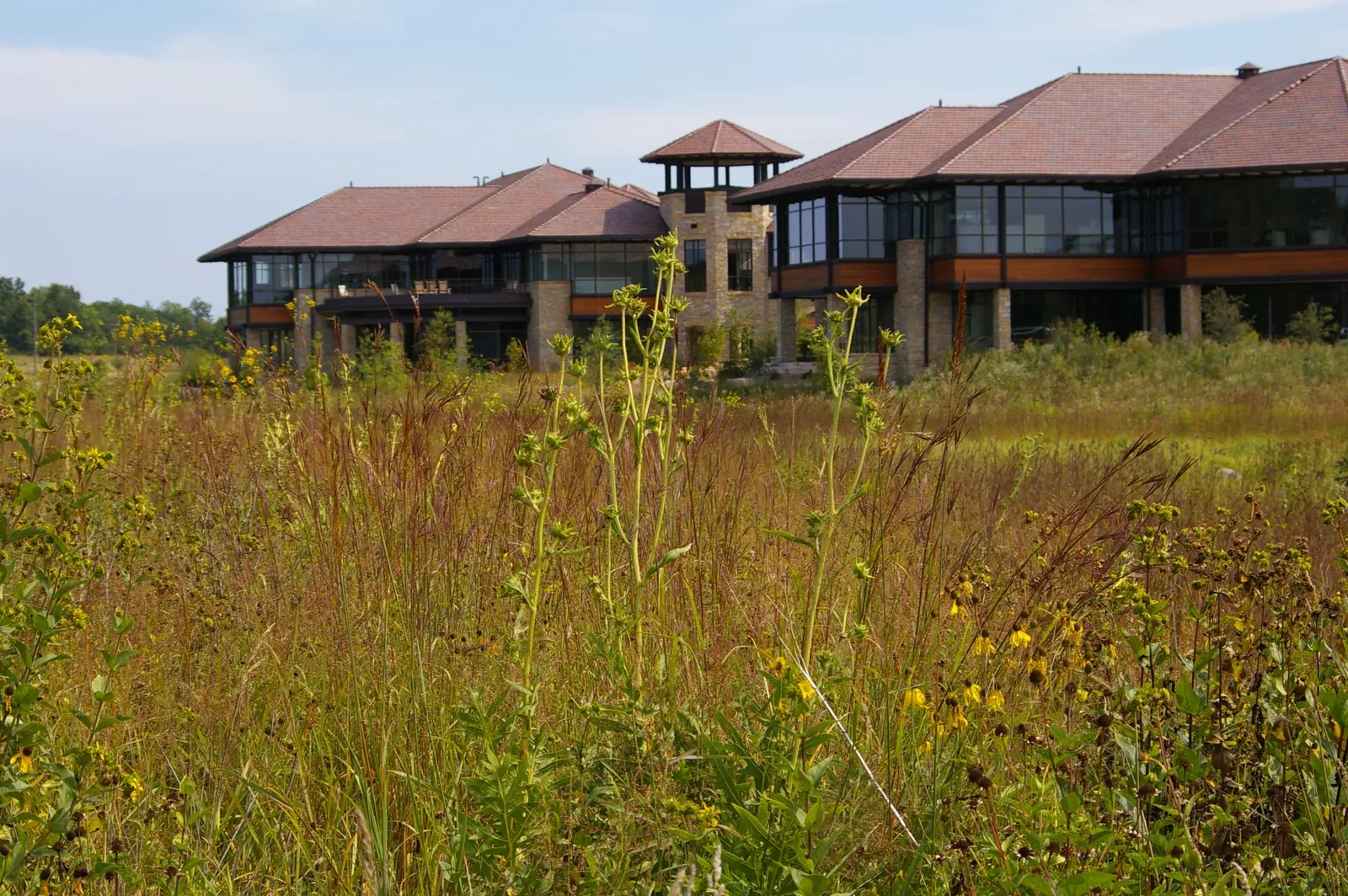
The photo at the top shows native prairie grasses and wildflowers in front of office buildings at Fitchburg Center. Trails cross the city as well: the Badger State Trail, the Ice Age Trail and the Cannonball trail all pass through, and the Military Ridge State Trail follows a former rail line.
Homeowners, landlords and businesses: what each one needs
If you own the home you live in
Most owner-occupied houses here are young enough that painting means a first or second round, not a restoration. The common list is builder finishes wearing thin and a deck ready for fresh stain, and where a yard has a pergola or a roofed deck, overhead wood too. Our Fitchburg page on pergolas and covered decks is about that last job.
If you rent out units
A landlord's paint has to survive a lease and be easy to repeat at the next turnover. That argues for a washable sheen, one wall color written down and used everywhere, and kitchens refinished rather than torn out. The rental kitchen cabinet page for Fitchburg goes into door materials and lease-proof colors, and our main cabinet refinishing page explains the process step by step.
If you run a business
An office, shop or waiting room needs its walls redone without losing a week of trade, which means staging the work one area at a time during our weekday hours. The Fitchburg page on turnover and business painting shows how that gets planned. When you know which of the three you are, tell us about the space.
A city built mostly since 1980
The median Fitchburg home was built in 1996, against 1980 for Madison. About 29% of homes here date from the 1980s and 1990s and about 44% from 2000 or later, while only about 2% went up before 1940.
So in most Fitchburg homes, a painter is working over drywall and builder trim that are still in good shape, and prep is mainly cleaning, light sanding and primer. The roughly 27% of homes built before 1980 are the exception. Their trim deserves a closer look, since older coats can include oil-based paint that new latex won't stick to on its own.
Age explains something landlords and condo owners notice, too. A building from the 1990s or 2000s has usually been through several tenants or owners and a few rounds of touch-ups, so its walls can end up carrying three slightly different whites before anyone repaints them properly. Writing down the brand, color name and sheen at every repaint stops that drift, and it makes the next quote easier to compare with the last one.
Paint that's ready for the next tenant or Monday's customers
Dry and hard are two different stages. Latex usually feels dry within an hour or two but needs weeks to cure fully, so a freshly painted unit can be shown and moved into, as long as nobody scrubs the walls or shoves furniture against them right away. Our post on dry time versus cure time has the details.
Sheen is the other choice that pays off later. Flatter finishes hide wall flaws but hang onto marks, while glossier ones wipe clean and show every dent, which is why rentals and busy offices often settle on eggshell or satin for walls and something harder for doors and trim. The post on paint sheens compares every step from flat to gloss.
Before the painting days, clear the small things off walls and shelves, whether it's a tenant's leftovers or a shop's displays. Our list for getting ready for the painters shows what to move and what to leave in place.
Common questions
Can you paint a rental between tenants?
Yes, and an empty unit is the easiest interior there is to paint. Let us know the day the keys come back as early as you can, so the start date lands inside the vacancy, and say whether the colors are staying the same. Most rooms take one to two days.
Fitchburg is spread out. Do you cover the whole city?
Yes. All of Fitchburg is on our list, from the neighborhoods along the Madison line to the rural properties in the south. At about 35 square miles it's a big place, so give us your street or nearest crossroads when you call and George can plan the visit.
Do you paint business interiors?
Yes. We paint offices, shops and storefront interiors, covering walls, ceilings, trim and doors, staged so as much of the space as possible stays open. All of it happens Monday to Friday between 8am and 5pm, never on nights or weekends, and the outside of business buildings isn't work we take on.
Do you paint condos and townhomes in Fitchburg?
Yes. Inside a condo or townhome, painting and cabinet refinishing work just as they do in a house, with floors and furniture covered first. Outside is different, because an association often decides door, trim and deck colors, so check its rules before you pick one.
What should a landlord have ready before the estimate?
A short sheet for each unit: the address, the move-out date, which rooms need paint, the color names already on the walls, and a cabinet count if the kitchen is included. Photos of any damage bigger than a nail hole help too, because larger drywall repairs have to happen before we paint.
Other towns we serve
Helpful guides
Sources
- American Community Survey 2020-2024 5-year estimates, U.S. Census Bureau, via Census Reporter
- Fitchburg, Wisconsin, Wikipedia
- Military Ridge State Trail, Wikipedia
- Dry Time versus Cure Time of Paint (technical bulletin), Dunn-Edwards
- Selecting Paint Gloss, Dunn-Edwards