
McFarland's three eras of houses, and what each asks of paint
Between Lake Waubesa and Mud Lake, McFarland's homes fall into three eras of similar size. How to tell which one you live in, and what each tends to need first.
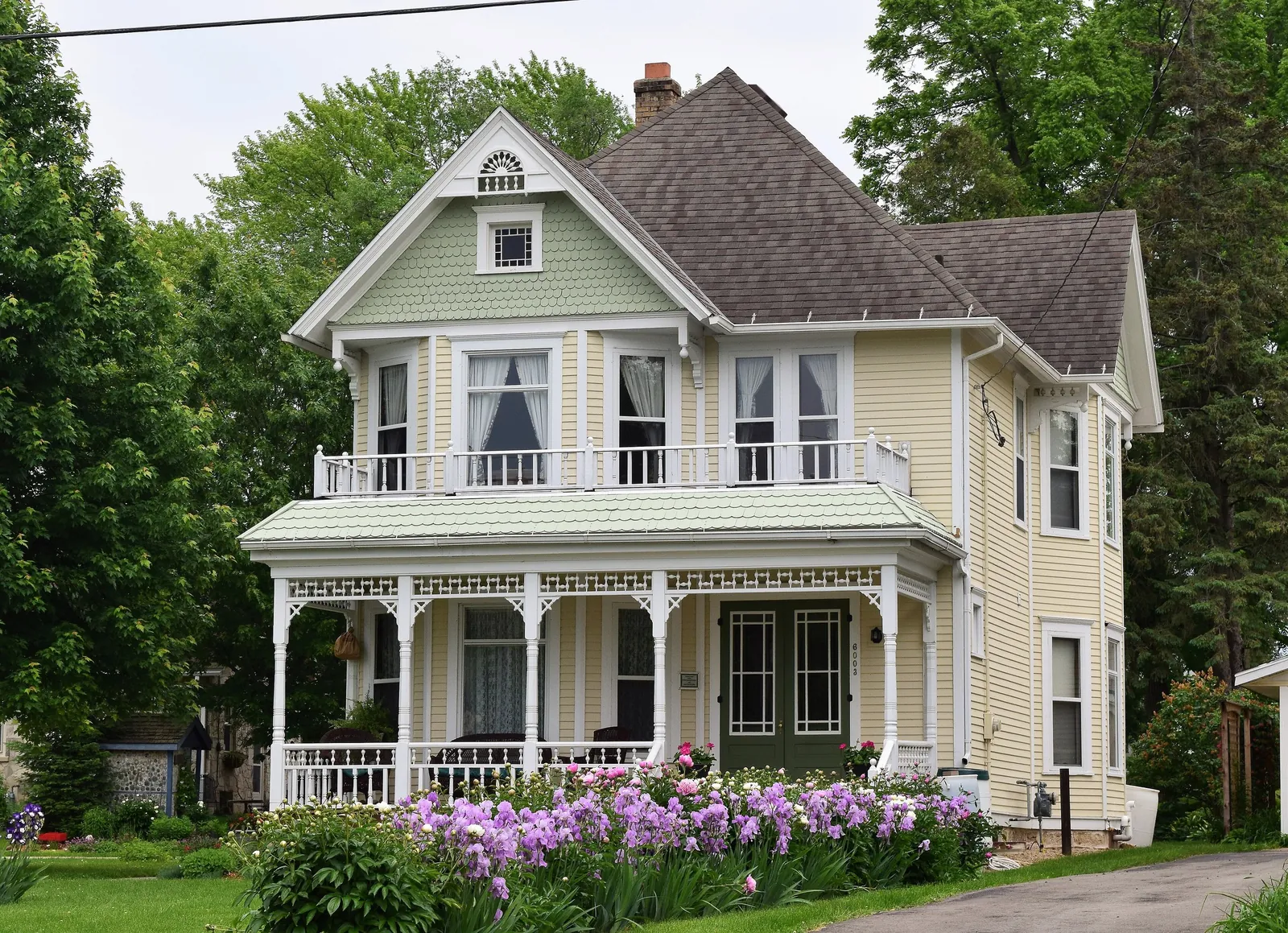
Ask three McFarland neighbors when their houses were built and you could easily hear three different decades. Census estimates split the village's homes into eras of nearly equal size: about 36% from before 1980, 28% from 1980 to 1999 and about 37% from 2000 on.
Each era hands a painter a different set of problems, so this page starts there: how to place your house, and what its kitchen, its rooms and its outdoor wood usually need. After that comes the village itself, from wheat fields and ice harvests on Lake Waubesa to the Beltline project of 1989 that set off its biggest wave of building.
What we do in McFarland
Redoing a cabinet paint job that didn't hold in McFarland
For kitchens where a past owner or a weekend project already put paint on the cabinets and it isn't holding. It reads what peeling, drips and tacky doors reveal, gives a simple test for oil or latex underneath, and sorts out how deep the prep goes before the doors are sprayed.
Painting McFarland bathrooms, powder rooms and laundry rooms
About the small, damp rooms: bathrooms where ceiling paint curls above the tub, mildew that keeps returning to one corner, exhaust fans and sheen, a powder room as the place for a deep color, and how long to wait before the first shower on new paint.
Staining shaded decks near the water in McFarland
For decks under big trees or close to Lake Waubesa and Mud Lake. It explains why shaded boards grow mildew, how a drop of bleach tells mildew from dirt, cleaning without a pressure washer, how long damp boards need to dry, and the kind of stain that suits them.
McFarland homes at a glance
| Homes counted | 3,935 |
|---|---|
| Median year built | 1989 |
| Built before 1980 | 36% |
| Built 1980 to 1999 | 28% |
| Built 2000 or later | 37% |
| Owner occupied | 73% |
| Single-family detached | 65% |
Telling a 1970s house from a 1990s one
The build year is the best guide, and when nobody remembers it, the house usually gives itself away. The clearest tell is the trim. A 1970s house tends to have dark-stained or painted trim with plain, narrow profiles and flat slab doors, while a 1990s house leans toward honey-colored oak trim, six-panel doors and an oak kitchen to match. Here's what each era usually needs:
| Built | What you'll often see | What usually comes first |
|---|---|---|
| Before 1980 | Solid wood doors, trim under several coats, a kitchen updated once or twice | Prep: oil-based paint under newer coats needs a bonding primer, and pre-1978 paint may contain lead |
| 1980 to 1999 | Golden oak cabinets and trim, raised-panel doors, walls touched up for decades | Cabinets and trim: sound wood that paints well once it's degreased, sanded and primed |
| 2000 and later | Thin builder paint that scuffs, stained cabinets someone else chose, a younger deck | Color: walls that won't wash clean, and a kitchen that doesn't feel like yours |
Kitchens are where the eras blur. A 1970s kitchen may already have been painted once, and an oak kitchen from the 1990s sometimes got a quick coat before a sale. That's the situation redoing a McFarland cabinet paint job is written for, and our main cabinet refinishing page covers the service itself.
Bathrooms of any age are the rooms most likely to be peeling, which is why the McFarland bathroom page concentrates on them. Rooms from the middle era sometimes carry a chair rail, a ready-made line for two tone walls if you'd rather keep it than remove it.
Outdoor wood follows setting more than age. A deck from 2005 under big trees near the water can look worse than a 1985 deck in an open yard, so shaded deck staining near the water is organized around the lot, not the decade.
Two lakes and a river trail
Lake Waubesa forms the village's western edge and Mud Lake its southern one. Waubesa, about 2,074 acres and one of the four major lakes around Madison, carries the Yahara River south from Lake Monona toward Lake Kegonsa, and its Ho-Chunk name translates as Tall Reed Lake.
On the eastern shore, Indian Mound Park holds the Lewis Mound Group, late Woodland burial mounds that include a bear effigy and have been on the National Register of Historic Places since 1984. Dane County's Lower Yahara River Trail crosses Waubesa on a boardwalk bridge about a mile long, linking the Capital City Trail to McDaniel Park, where the village holds a summer concert series.
For a painter, the lakes show up at the back of the house. Homes facing Waubesa look west across the water, so their decks and doors take the late-day sun, while lots near the shore under old trees stay damp and shaded. Our post on why paint your home explains what a good finish is protecting in either case.
Farms, ice harvests and a lakeshore resort trade
William Hugh McFarland established the village in 1856. Its first livelihoods came from the fields and the water: wheat and tobacco, plus ice and fish taken from Lake Waubesa and sent by rail to markets in Chicago.
A modest resort trade followed along the eastern shore, with Edwards Park and Larson's Beach among its draws. The Edwards-Larson House, a Queen Anne Victorian built in 1898 and now on the National Register, opens for tours on summer Sunday afternoons, and the McFarland Historical Society keeps a museum and log cabin open on summer Sundays too.
After the war, and after the Beltline
Following World War II, McFarland turned into a home for people working in Madison. Then in 1989 a major project on the adjacent Beltline was finished, the commute got much easier, and a period of rapid residential growth began. The village's median home dates to that same year.
Read against that history, the even split makes sense. Most of the houses from before 1980 date from the commuter village that grew after the war, the 1980s and 1990s ones largely from the years around the Beltline project, and the newest third from the decades since. About 73% of homes are owner occupied, so most of the people reading a page like this are planning for a house they mean to keep.
Common questions
Which lake is McFarland on?
Lake Waubesa, which runs along the village's western edge, with the smaller Mud Lake to the south. Waubesa is the lake the Yahara River passes through on its way from Lake Monona to Lake Kegonsa.
Do you paint the outside of lake houses?
Yes, the same pieces we work on anywhere: decks, exterior doors, garage doors, entryways and trim, though not whole-house siding. On a lake lot those pieces usually get more sun, damp or shade than they would on a street away from the water, so the cleaning and the choice of stain count for more, and the work waits for dry weather.
My McFarland house is from the 1970s. Is that old or new for painting?
Older than it looks, at least for prep. A 1970s house is young next to a prewar one, but most were built before 1978, so the EPA's caution about lead-based paint applies, and the trim and doors may still wear oil paint that a water-based coat won't grip without a bonding primer underneath. The walls are usually drywall, which keeps the room work simpler than in a plaster house.
Can the kitchen, a bathroom and the deck go on one quote?
Yes. Ask about all three on the same call and they can share one written quote, even if they're scheduled apart, since the kitchen and bathroom can go ahead in any season while the deck waits for a dry stretch. Afterward, label the leftover paint from each room; our post on storing leftover paint shows how to keep it usable for touch-ups.
How can I pay?
By Apple Pay, cash, check, Venmo or Zelle, whichever suits you. The estimate costs nothing, and you'll have the written quote in hand before anything is scheduled. When you're ready to start, request a free estimate.
Other towns we serve
Helpful guides
Sources
- American Community Survey 2020-2024 5-year estimates, U.S. Census Bureau, via Census Reporter
- McFarland, Wisconsin, Wikipedia
- Lake Waubesa, Wikipedia
- Lewis Mound Group, Wikipedia
- Lower Yahara River Trail, Dane County Parks
- Reduce the Risk of Lead Exposure at Home, U.S. Environmental Protection Agency