
Century-old houses and newer streets in the village of Dane
About the village on Highway 113, not the town around it or the county: its oldest houses, its newest ones and what each asks of a painter.
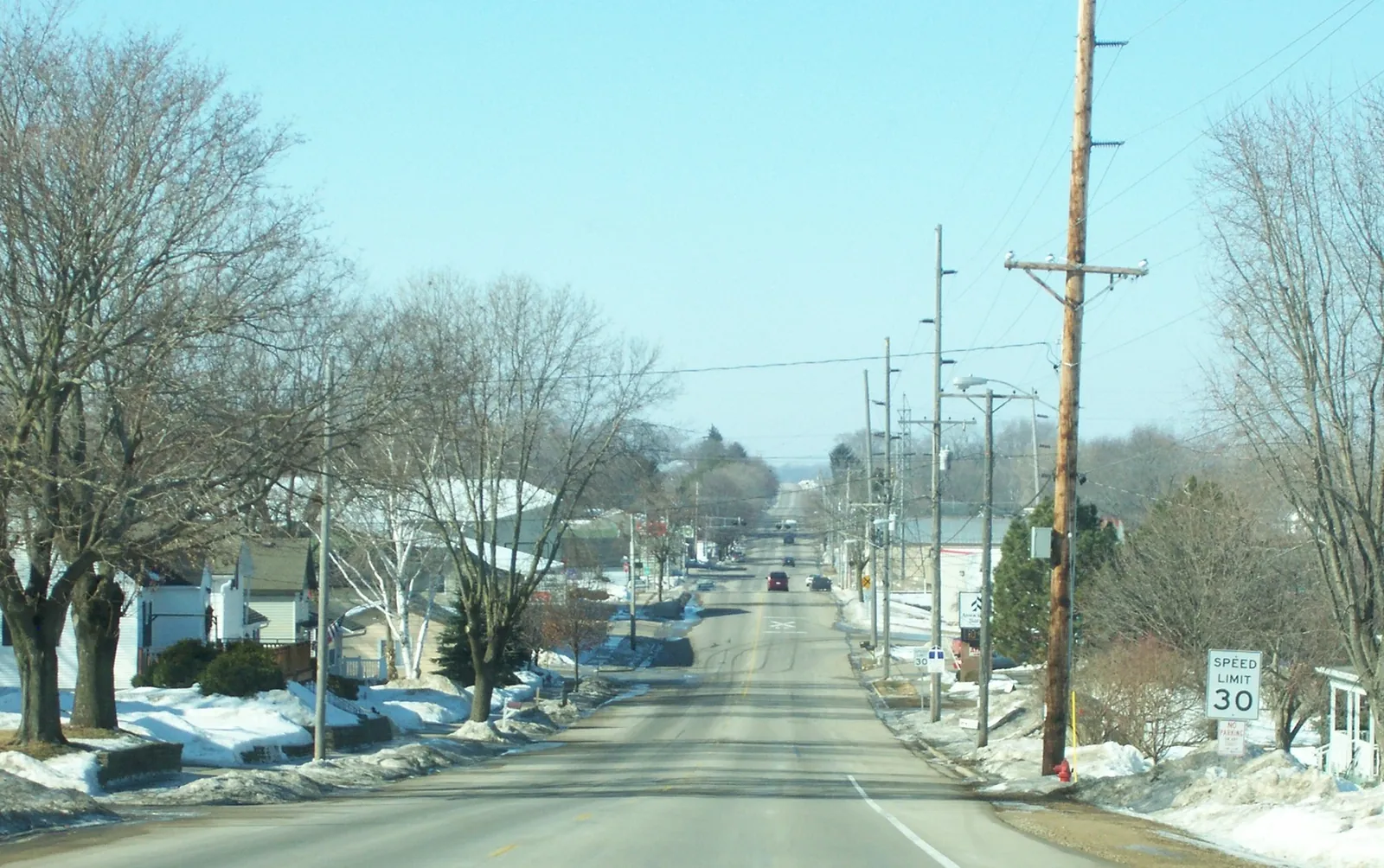
Three places in this corner of Wisconsin are called Dane, and this page is about the smallest: the village on Highway 113, between Waunakee and Lodi, home to a little over a thousand people. For a painter, what sets it apart is the spread in its houses. About 17% were built before 1940, a larger share than in any other community we serve, and about 35% went up in 2000 or later.
Those two groups rarely need the same thing. In an older house the work is mostly about what earlier owners left on the walls and trim, and in a newer one it's about what the builder chose. Our base is in Waunakee, south of the village on the same highway.
What we do in Dane
Farmhouse kitchens, hutches and pantry cupboards in Dane
Kitchens in older village houses tend to collect cupboards from several decades, plus a hutch or pantry cupboard that came with the place. This page is about pulling all of it into one color, beadboard panels included, and about choosing between deep green and cream beside butcher block or an old wood floor.
Old trim, stair rails and stubborn doors in Dane's older houses
Written for the woodwork in Dane's older houses: how to tell whether your trim was painted in oil, why it needs a bonding primer before latex, how spindles and handrails get brushed, and what to do about a door that sticks after decades of coats.
Porch railings, entry doors and garage doors on Dane houses
Outside an older Dane house, the weak spots are porch railings, solid wood entry doors, detached garage doors and trim. This page explains why spindle ends fail first, what wind does to a finish on an exposed wall, and when old trim already carries more paint than it can hold.
Dane homes at a glance
| Homes counted | 417 |
|---|---|
| Median year built | 1982 |
| Built before 1980 | 48% |
| Built 1980 to 1999 | 16% |
| Built 2000 or later | 35% |
| Owner occupied | 79% |
| Single-family detached | 84% |
Which Dane? The village, the town and the county
The village of Dane is an incorporated place of a little over one square mile. Around it lies the Town of Dane, a separate civil town of about 35 square miles that counted 934 residents in 2020. Both sit inside Dane County, which spreads across more than 1,200 square miles and has Madison as its county seat.
The village and the county share a namesake in Nathan Dane, the Massachusetts delegate to the Congress of the Confederation who wrote the Northwest Ordinance. Past the name, each one is its own place with its own Census count.
On this page, Dane means the village. The housing table above covers its 417 homes and nothing outside the village limits, and with a count that small, the Census Bureau's survey margins run wide, so read the figures as a sketch rather than a tally. If your house is in the Town of Dane instead, mention that first when you call, and we'll tell you straight away whether it's somewhere we can work.
A post office in 1844, a village in 1899
Dane had a post office by 1844, and the village was incorporated in April 1899. Then it held nearly still for half a century: the Census counted 280 people in 1900 and 305 in 1950. Growth came after that and kept coming, to 518 in 1980, 799 in 2000 and 1,117 in 2020.
Highway 113 runs east and west through the village as Main Street, and the photo at the top of this page looks west along it. The Wisconsin and Southern railroad crosses town on its way to Reedsburg. St. Michael Catholic Church burned after a lightning strike in 1974 and has since been rebuilt.
You can read that slow start and late growth in the housing. About 48% of the village's homes predate 1980, the oldest of them from before 1940, while the biggest single wave came after 2000.
What a house from before 1940 asks for
Plaster is the first thing to expect. According to the National Park Service, it was the wall finish in nearly all buildings until the 1930s or 1940s, so a house from that era almost certainly started with it. Sound plaster takes paint beautifully; the question is always what's already on top of it.
The woodwork usually carries the most history. Trim, doors and stair parts in a house that age have been repainted by owner after owner, and oil-based enamel often hides somewhere in the stack, which latex won't grip without a bonding primer. Our page on trim, stairs and doors in Dane's older houses shows how to find out what's on yours, and the post on painting trim covers the brushwork itself.
Outdoors, the same age shows in porch spindles, wood entry doors and window casings. When old exterior paint lets go, the reason matters more than the next coat, which is the whole point of our post on fixing peeling paint. The Dane page on porches, front doors and garage doors takes those parts one at a time.
Old house, new house: one request, two jobs
Ask for the same thing in a 1920s house and a 2010s house, and the prep can look completely different. Here is how it tends to split:
| Part of the job | House built before 1940 | House built since 2000 |
|---|---|---|
| Walls | Plaster with many coats on it | Drywall under the builder's flat paint |
| Trim and doors | Layers that may include oil enamel | One or two builder coats, now scuffed |
| Where the prep time goes | Testing, scraping and bonding primer | Cleaning, scuff sanding and priming |
| Kitchen cabinets | Mixed ages from past remodels | A factory finish worn at the pulls |
| Outdoor wood | Porch railings and old entry doors | A deck on its first or second stain |
A newer house needs less repair but no less care, because slick builder finishes resist new paint in their own way. For a kitchen of either age, our main cabinet refinishing page lays out the process, and the Dane cabinet page deals with the patchwork of cupboards an older kitchen collects. Whatever the house, outdoor wood deserves a look before the snow, and our fall painting checklist says what to check.
Common questions
Does this page cover the village, the Town of Dane or the whole county?
The village. The Census figures, the history and the houses described here all belong to the incorporated village on Highway 113. The Town of Dane that surrounds it and Dane County as a whole are separate places, each with numbers of its own.
My house in the village is more than a hundred years old. What should I expect?
Expect more of the time to go into preparation than into painting. Old trim gets tested and primed so new paint grips it, loose paint outside is scraped back to a firm edge, and plaster walls are checked before any color goes on. A house that old also predates 1978, and the EPA says homes from before then are more likely to contain lead-based paint, so tell us the year it was built.
Is Dane too far out for you?
No. The village is one of the twelve communities on our service-area list, the smallest of them by population, and Highway 113, its Main Street, leads south to Waunakee, where we're based. For George, it's a short drive up the road.
What do the newer houses in the village usually need?
Usually the builder's finishes, which tend to wear out around the same time. Flat wall paint marks easily and smears when you scrub it, cabinet finishes thin out around the pulls, and a deck's first stain fades where the sun and foot traffic hit hardest. Start with whichever one bothers you most, since none of them has to wait for the others.
How does an estimate work?
It begins with a phone call or the form on our contact page, where you tell us what you'd like done. If George needs to see the work, he drives up to the village and looks at it in person. After that we send a free written quote with a start date on it.
Other towns we serve
Helpful guides
Sources
- American Community Survey 2020-2024 5-year estimates, U.S. Census Bureau, via Census Reporter
- Dane, Wisconsin, Wikipedia
- Dane (town), Wisconsin, Wikipedia
- Dane County, Wisconsin, Wikipedia
- Preservation Brief 21: Repairing Historic Flat Plaster, Walls and Ceilings, National Park Service
- Protect Your Family from Sources of Lead, U.S. Environmental Protection Agency