Staining a deck yourself: clean, dry, then keep a wet edge
· 6 min read · By GK Painting & Remodeling
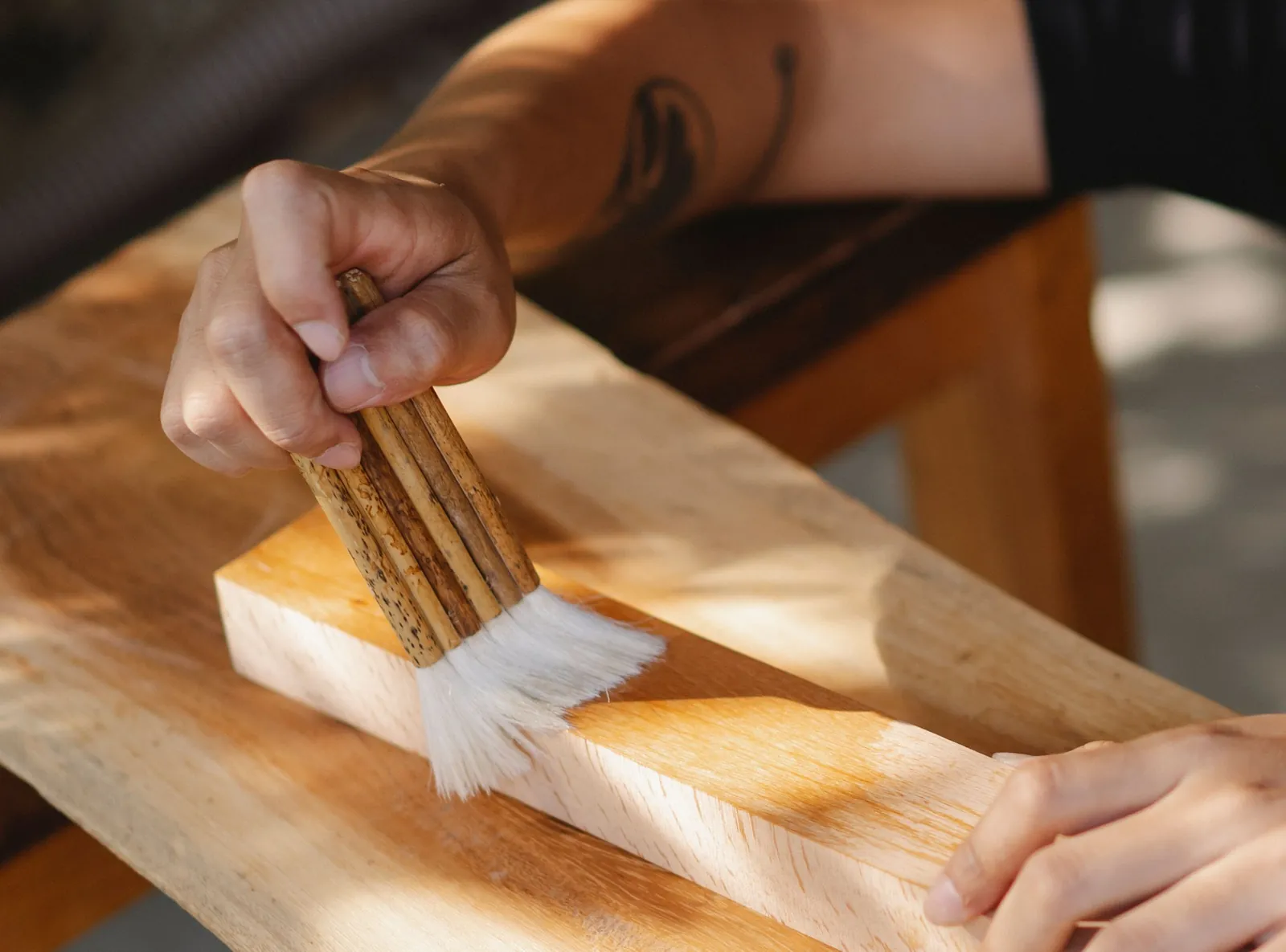
To stain a deck, clean it, let the wood dry fully, then brush a penetrating stain onto a few boards at a time and wipe off any that hasn't soaked in after about an hour. Pick a day of good drying weather, because stain needs a full day to dry properly.
This guide follows the U.S. Forest Service's wood finishing research, much of it done at the Forest Products Laboratory in Madison, Wisconsin. It covers the tools, the steps, the waits and the places where staining a deck yourself gets hard.
What you'll need
- Exterior stain made for decks, in a penetrating oil-based or similar formula (see the next section).
- A deck cleaner or a mildew cleaner, a stiff bristle brush and a hose.
- A 4 inch stain brush or pad for the boards, and a smaller brush for rails and spindles.
- Drop cloths or plastic to protect plants, the house and hardware.
- A hammer, screwdriver and a few screws, for loose boards and popped fasteners.
- Sandpaper for rough spots.
- Rags, a bucket of water and an airtight metal can for used rags.
- Gloves, eye protection and old clothes.
Pick a stain that can last on a deck
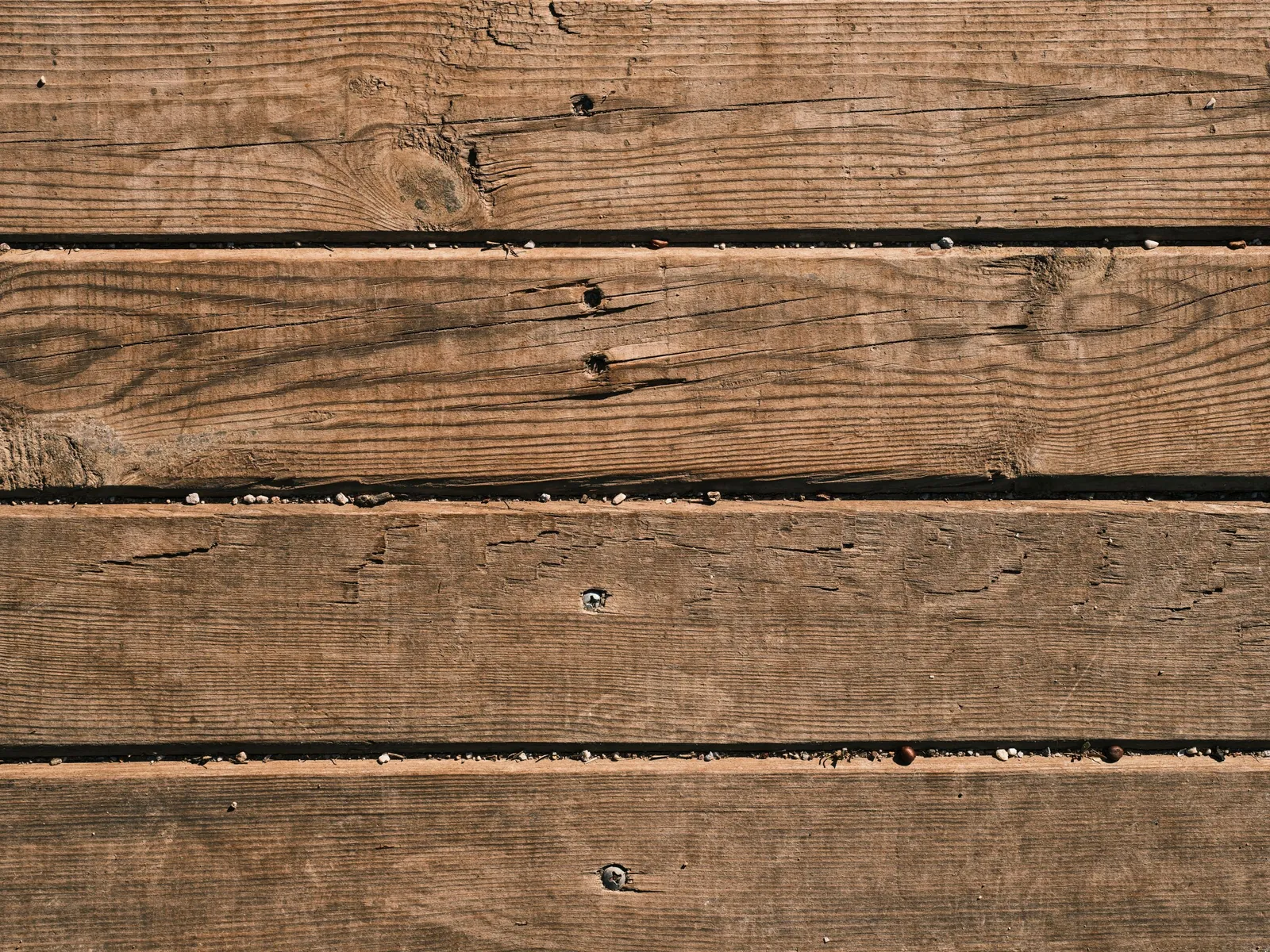
A deck takes sun, rain and foot traffic on every board, and that's hard on any coating that forms a film. The Forest Products Laboratory says clear film-forming finishes outdoors crack and peel from the wood after a year or two, and that penetrating finishes don't, because they soak into the wood instead of sitting on top of it. It calls oil-based semitransparent stains the finish of choice for wood that's fully exposed to the weather.
The same publication, from 1999, advises against opaque, solid-color stains on decks and fences, noting that they form a film and need careful surface preparation to refinish. Stain formulas have changed since then, so read the label, and see our posts on semitransparent versus solid stain and whether to paint or stain a deck before you buy.
Get the deck ready
- Clear the deck. Move furniture and planters, and cover plants and the house wall near the deck.
- Check the boards. Reset popped nails, replace or tighten loose screws, and sand splintered spots. Replace any board that's soft or rotted.
- Sweep, then scrub with a stiff bristle brush and a deck cleaner. Purdue Extension recommends a stiff bristle brush, and warns against steel wool and wire brushes because they can leave small iron deposits behind.
- Treat mildew. The Forest Products Laboratory says to pretreat mildewed wood with a commercial cleaner or a chlorine bleach and water solution before refinishing.
- Rinse well and let the wood dry. The same guide says to allow 1 or 2 days after treating mildew, and longer if the wood is still dark and damp.
- If there's an old film-forming finish, such as varnish or paint, it must be removed completely before you apply penetrating stain. Stain can't soak through a film.
Our post on preparing a deck for staining goes deeper on this step. If your deck has old paint and your house predates 1978, EPA says older paint is more likely to contain lead, so find out before you sand or scrape.
Staining, step by step
- Check the forecast and the label. The Forest Products Laboratory says stains don't cure properly if the temperature is too low, and that latex coatings generally need at least 50°F for several hours after application. Follow the manufacturer's temperature limits.
- Stir the stain, and keep stirring as you work. Pigment settles.
- Start with the rails, posts and spindles, then do the deck boards, then the stairs. Plan the order so you never have to walk across wet stain to leave.
- Brush the stain on. The Forest Products Laboratory says brushing improves penetration and uniformity.
- Work a few boards at a time, and brush with the grain for the full length of each board without stopping. Stopping mid-board is how lap marks start.
- On rough or weathered wood, apply a second coat within an hour, while the first is still wet, so both coats can soak in.
- After about an hour, wipe or brush off any stain still sitting on the surface. Stain that didn't penetrate dries as a glossy film.
- On smooth, planed wood, use a single coat. A second coat may not penetrate and leaves glossy and flat patches.
- Dispose of oily rags safely before you leave. Bury them, soak them in water or seal them in an airtight container.
How much stain, and how long to wait
| Item | What to expect |
|---|---|
| Wood dry after mildew cleaner | 1 or 2 days |
| Coverage, smooth wood | 400 to 500 sq ft per gallon |
| Coverage, rough or weathered wood | 150 to 200 sq ft per gallon |
| Second coat | Within 1 hour, wet on wet |
| Wiping off excess | About 1 hour after the last coat |
| Drying | A day of good drying weather |
Those figures come from the Forest Products Laboratory, mostly for oil-based semitransparent stain, and your product's label overrides them. The lab adds that some oil-based stains dry slowly and that a day of good drying weather is generally required for thorough drying, so don't stain just before rain. Our guide to how long deck stain takes to dry has the waits for feet and furniture.
Weather and sun matter more than most people think
Purdue Extension says working in the shade is desirable because stain dries more slowly there, which gives you time to keep a wet edge. A hot, sunny deck dries stain before it can soak in, and that's when lap marks and glossy patches show up. An overcast, mild day is better than a bright one.
The Forest Products Laboratory adds that solvent-based finishes release compounds that react with other pollutants to form ozone. To limit that, it suggests avoiding days with an ozone alert, applying solvent-based finishes late in the day so the solvents can dissipate, and favoring cloudy or cool days. It also says to read the label to see whether a stain is allowed for indoor use, since outdoor stains contain preservatives you don't want inside.
Where DIY gets hard
- Lap marks. They show where stain overlaps a partly dried area. A big deck in the sun is the worst case, which is why working a few boards at a time and staining in shade helps.
- Glossy patches. Too much stain, or a second coat on smooth wood, leaves areas that never absorbed.
- Old film. Leftover paint or varnish stops the stain from soaking in, and removing it is the longest step in the job.
- Mildew and moisture. Staining over damp wood or mildew traps problems under the finish.
- Weather. You need dry boards, mild temperatures and no rain for about a day, and that window can be short.
- Lots of detail. Rails, spindles, stairs and the underside of a handrail take far more time than the floor.
Rails and spindles are brushwork like any trim, so the technique in our guide to painting trim carries over. Refinishing is a recurring job. Purdue Extension says one coat of penetrating stain on new wood is expected to last 2 to 4 years, and our post on how long deck stain lasts covers what changes that.
Keeping the deck in shape afterward
Penetrating stains are easier to maintain than films. Purdue Extension says semitransparent penetrating stains are relatively easy to refinish: use a stiff bristle brush to remove dirt, dust and loose wood fibers, then apply a new coat, with no heavy scraping or sanding. Re-run the water splash test once a year, sweep leaves and debris out of the gaps, and clean spots of mildew early, before they spread. See our guide to deck maintenance for a seasonal routine.
When hiring makes sense
Staining a deck is a good DIY project for a small, straight deck with decent boards. Hiring makes sense when the deck is big or high, when it has an old film to strip, when it has lots of rails and spindles, or when you'd rather not risk lap marks.
We do deck staining and refinishing as part of our exterior painting. Smaller exterior projects usually take one to three days, and we schedule them around dry weather. The written quote is the price, no extra charge if the job takes longer than expected. See what stain does to raw wood in this cedar pergola stained dark brown, or ask for a free estimate.
Common questions
Should I brush, roll or spray deck stain?
Brush it. The Forest Products Laboratory says brushing improves penetration and uniformity. Spraying or rolling is fine for getting stain on quickly, but back-brush it into the wood.
How long should a deck dry before staining?
Until the wood is dry through, not just on the surface. After a mildew treatment, the Forest Products Laboratory says to allow 1 or 2 days, and longer after heavy rain.
Do I need a second coat of deck stain?
On rough or weathered wood, yes, if you apply it within an hour while the first coat is wet. On smooth wood, a single coat is usually right, since a second can't soak in.
What happens if I stain over an old finish?
It works over worn penetrating stain, but not over old paint or varnish. Penetrating stains can't soak through those, so they have to be removed first.
What temperature is too cold to stain a deck?
Follow the label. The Forest Products Laboratory says stains don't cure properly if it's too cold, and that latex coatings generally need at least 50°F for several hours. Oil-based products often allow lower temperatures, so check the can.
Sources
- Selection and Application of Exterior Stains for Wood (FPL-GTR-106), U.S. Forest Service, Forest Products Laboratory
- Selection and Application of Exterior Finishes for Wood (NCR-135), Purdue University Cooperative Extension Service
- Reduce the Risk of Lead Exposure at Home, U.S. Environmental Protection Agency
More on decks and exterior and every how-to post.