How long cabinet painting takes, from prep to the last hinge
· 6 min read · By GK Painting & Remodeling
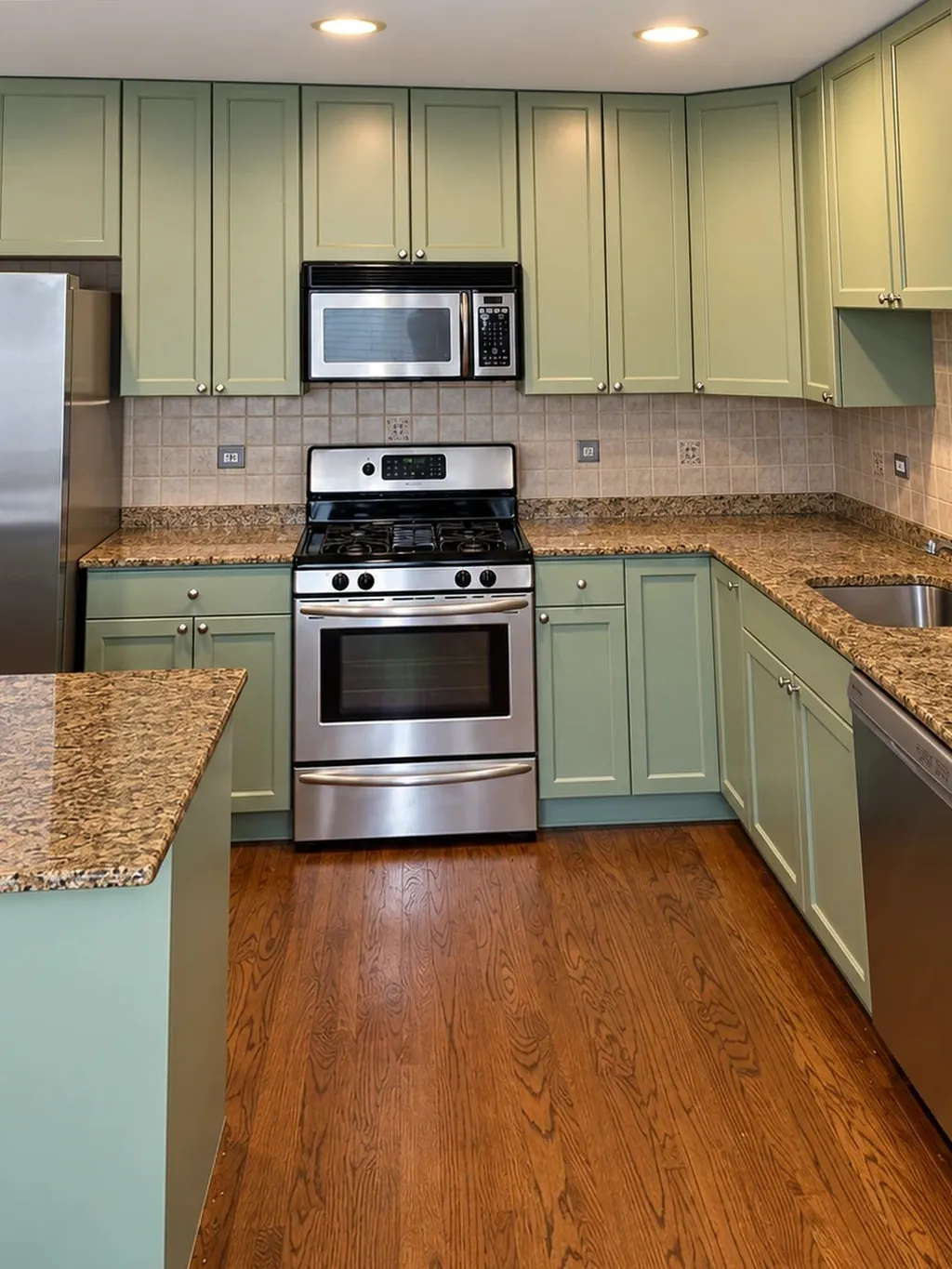
Most kitchens take one to two weeks to paint or refinish from start to finish. The painting itself is the short part; cleaning, sanding, priming and drying time between coats take most of the schedule.
Here's what happens in that week or two, what can stretch it, and why the finish keeps hardening for a few weeks after we've packed up. If you're still deciding whether to paint at all, our guide to painting or replacing your cabinets is a better place to start.
What the one to two weeks covers
A cabinet job isn't one long painting day. It's a sequence, and each step has to be finished, and often dry, before the next one starts. Here's the order we work in on every cabinet refinishing job:
- Protect the kitchen: floors, counters, appliances and anything nearby get covered before any paint comes out.
- Take the doors and drawer fronts off and label every piece, so each one goes back where it came from.
- Clean and degrease every surface. Kitchen cabinets carry years of cooking oil and hand grease, and paint won't hold on top of it.
- Sand, repair what needs it, and prime.
- Spray the doors and drawer fronts, and finish the cabinet frames in your kitchen.
- Reinstall everything and adjust the hinges so the doors hang straight and close evenly.
- Walk the finished kitchen with you before we call it done.
The number of cabinets, doors and drawers is the biggest factor in where a kitchen lands in that range. A small galley kitchen with a dozen doors moves faster than a large kitchen with an island, a pantry wall and a run of drawer stacks.
Protection, removal and cleaning
The first part of the job looks like the least painting and matters the most. Everything that isn't being painted is covered, because sanding dust and primer travel. Doors and drawer fronts come off and each one is labeled, along with its hinges, so nothing gets mixed up on the way back.
Then comes cleaning. It's the step most homeowners don't expect to take real time, and it's the one that decides whether the new finish lasts. Grease near the range and grime around the handles have to come off completely. If they don't, the primer bonds to the grease instead of the wood, and that's how painted cabinets end up peeling in the spots people touch most.
Prep and primer: where most of the time goes
Once the surfaces are clean, they're sanded so the primer has something to grip. Dents and chips get filled. Then everything is primed. The primer is what lets paint stick to a slick, stained or factory finish, and on materials like laminate it's what makes painting possible at all (we cover that in our guide to painting laminate cabinets).
Each of these steps needs drying time before the next. Water-based coatings are usually dry to the touch in one to two hours and ready for another coat in two to four, according to a technical bulletin from the paint maker Dunn-Edwards. Multiply that by sanding between coats, two sides of every door, and the frames, and you can see why a careful job takes days rather than hours.
Spraying the doors and finishing the frames
Doors and drawer fronts are sprayed, which gives the smooth, even finish people picture when they think of new cabinets: no brush marks in the flat panels, no roller texture on the edges. Our guide to spray painted kitchen cabinets shows what that finish looks like up close.
The cabinet frames stay in place and are finished in your kitchen. Doors are done one side at a time, with drying in between, so each door is handled several times before it's finished. That repetition is a big reason the job is measured in days.
Reinstalling, adjusting and the walkthrough
When the finish is dry enough to handle, everything goes back on. Hinges are adjusted so the gaps between doors are even and every door closes the way it should. It's fussy work, and it's what makes painted cabinets look factory built rather than refreshed.
Last, we walk the finished kitchen with you, door by door, before we call it done. If something isn't right, that's the moment to say so.
What can make a job take longer
Most of what stretches a schedule is visible on the estimate call, which is why George asks about it before he quotes:
- More pieces. A pantry wall, an island, built-ins or a bar area add doors and drawers, and every one gets the full process.
- Heavy buildup or damage. Cabinets with thick grease, water damage near the sink, or old peeling paint need more preparation.
- A big color change. Going from a dark stain to white usually takes more coverage than refreshing a light color.
- Cool, damp weather. Lower temperatures and high humidity slow drying, so the wait between coats gets longer.
- Dark colors. Deep, heavily pigmented colors generally take longer to dry and cure than light ones.
None of these change the price after you've agreed to it. The written quote is the price, no extra charge if the job takes longer than expected. Our guide to how cabinet painting is priced explains what the quote is built on.
Dry isn't the same as cured
This is the part that surprises people. Paint that feels dry hasn't finished hardening. Drying is the water or solvent leaving the coating. Curing is the film itself fusing and toughening, and it takes much longer.
Dunn-Edwards puts the full cure of latex coatings at anywhere from 14 to 30 days, and says oil-based coatings reach an initial cure in 7 to 10 days and keep hardening after that. Cool, humid air and dark colors slow the process down.
So your kitchen is ready to use when we leave, but the finish is at its most delicate for the first few weeks. A little care during that window pays off for years.
Living in a kitchen that's being painted
Every kitchen and household is different, so ask about this on the estimate call. A few things are true of almost every cabinet job. The doors are off for part of the schedule, so you'll have open shelves for a while. The frames are being finished in the room, so some days are easier for cooking than others. Simple meals and a plan for the coffee maker go a long way.
Fresh paint also releases fumes as it dries. The U.S. Environmental Protection Agency recommends increasing ventilation when you use products like paint and keeping that up for a while afterward, so open a window when the weather allows and run the range hood.
How to keep your timeline short
- Count your cabinets, doors and drawers before the estimate call. A rough tally helps George give you an accurate quote and start date faster.
- Choose your color early. If you're torn, our guide to choosing a cabinet color walks through five real kitchens.
- Decide about hardware before work starts. If you're switching to new pulls in a different size, the old holes need filling before the paint goes on.
- Mention anything else you want done at the same time, like a hutch, a bookcase or a vanity, so it's in the plan from the start.
Want to see what a finished job looks like? We've put four kitchens before and after side by side. This cherry kitchen refinished in white shows the before and after from the same angle, or ask for a free estimate and George will talk through your kitchen and send a written quote with a start date.
Common questions
Can I use my kitchen while the cabinets are being painted?
Partly. Expect the doors to be off for part of the job and plan simpler meals on the days the frames are being finished. How much you can use it depends on your layout and the stage of the work, so it's one of the first things to ask about on the estimate call.
How soon can I put dishes back in the cabinets?
You can use your cabinets once the job is done and everything is reinstalled. The paint keeps curing for a few weeks after that, so handle doors by their pulls and avoid stacking heavy items against painted surfaces for the first few weeks.
Does the color I choose change how long it takes?
It can. A big change from a dark stain to a light color usually needs more coverage, and deep, heavily pigmented colors tend to take longer to dry and cure than light ones.
Is refinishing faster than replacing cabinets?
Usually, yes. Refinishing leaves the cabinet boxes, counters, backsplash and plumbing where they are, so nothing has to be ordered, torn out or reinstalled. Most kitchens are refinished in one to two weeks.
Will the price change if the job runs long?
No. The written quote is the price, no extra charge if the job takes longer than expected.
Sources
- Dry Time versus Cure Time of Paint (technical bulletin), Dunn-Edwards
- Volatile Organic Compounds' Impact on Indoor Air Quality, U.S. Environmental Protection Agency
More on cabinet refinishing and every cabinets post.