How durable painted cabinets really are, and what makes them chip
· 6 min read · By GK Painting & Remodeling
Painted cabinets can chip, but a finish applied over a clean, sanded, primed surface and given time to cure holds up well in a busy kitchen. Most chips trace back to a short list of causes: grease or gloss under the paint, a finish used too hard before it hardened, and a handful of spots that take daily abuse.
No paint is chip-proof, so here's an honest look at what wears, why it happens, and what you can do about it. If you're still weighing paint against new doors, our guide to painting or replacing your cabinets is the place to start.
Where chips come from
A chip is paint letting go, either of the surface under it or of itself. A few things cause it, and they're worth knowing because most can be prevented:
- A weak bond. Dunn-Edwards says a weak bond forms when paint goes over a dirty, chalky, slick or glossy surface. Very poor adhesion can mean peeling right away, and marginal adhesion can fail months later.
- Impact. Door corners, drawer edges and the area around the pulls take knocks from hands, pots, rings and slammed doors.
- Use before the finish has hardened. Paint can feel dry while it's still soft underneath.
- Moisture. Water and steam near the sink and dishwasher are hard on any painted surface.
- Heavy buildup. Dunn-Edwards notes that too much paint, or older brittle coats underneath, can crack and peel under stress.
Only one of those, impact, is something no amount of prep can fully prevent. The others come down to how the cabinets were prepared and treated afterward. Stained cabinets wear too, because their clear coat is a film; our comparison of painted and stained cabinets shows how each one ages.
Preparation does most of the work
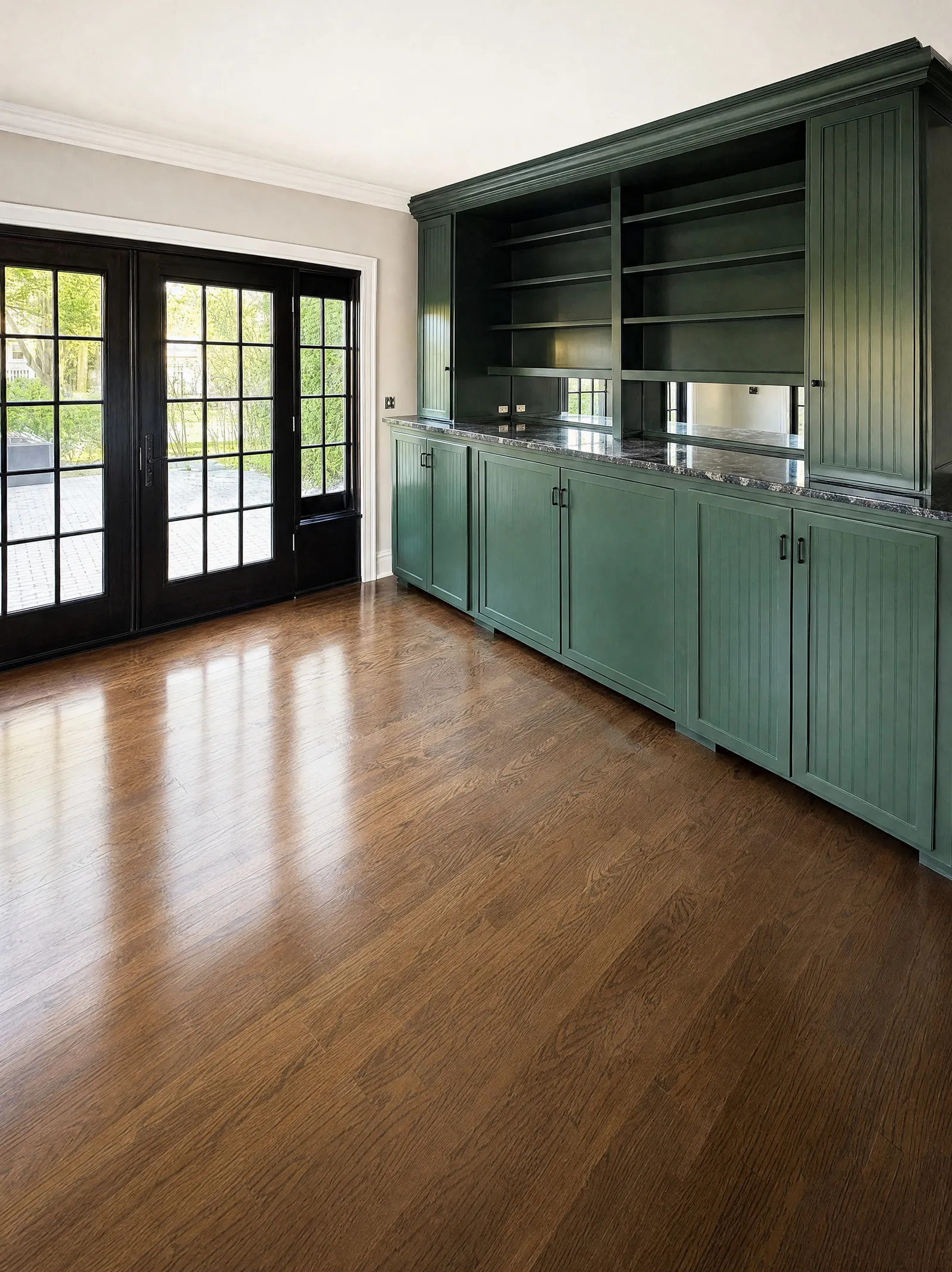
Kitchen cabinets carry years of cooking oil and hand grease, and paint can't bond to a film of it. That's why every cabinet refinishing job starts with taking the doors and drawer fronts off, labeling each piece, and cleaning and degreasing every surface before anything is sanded.
Sanding comes next, and it matters for the reason Dunn-Edwards gives: slick and glossy areas need to be scuffed to give the new paint some tooth to hold. Then everything is primed. Primer is what lets paint grip a slick, stained or factory finish, and it's a big part of why a finish stays put. Our post on whether you need primer explains what it does.
Doors and drawer fronts are then sprayed, which lays down a smooth, even coat. If you'd like to see how that looks up close, our guide to spray painted kitchen cabinets shows it.
Our Failure-First Method maps each of these steps to the failure it prevents, and to the line to look for on a quote.
Why the first weeks matter
Dry and cured are different things. Dunn-Edwards says latex coatings are typically dry to the touch in one to two hours, but take 14 to 30 days to fully cure, and that oil-based coatings reach an initial cure in 7 to 10 days and keep hardening after that. Dark colors and higher gloss levels take longer.
During that stretch the finish is at its softest. Hard use then is how a good paint job ends up with early scuffs and dents. Open doors by the pulls, don't stack heavy dishes against painted shelves, and clean with a soft damp cloth. Our post on how long cabinet painting takes covers what the schedule looks like, and dry time versus cure time explains the science.
The spots that wear first
Every kitchen has the same trouble spots. Knowing them helps you protect them, and helps you tell a wear mark from a real problem.
| Spot | What wears it | What helps |
|---|---|---|
| Door and drawer edges | Fingernails, rings, hands pulling | Use the pulls, not the edges |
| Around the pulls | Skin oils and daily contact | Wipe weekly with mild soap |
| Doors by the sink and dishwasher | Splashes and steam | Dry splashes right away |
| Cabinets near the range | Grease and heat | Run the hood, wipe often |
| Toe kicks and low corners | Shoes, vacuums and mops | Keep wet mops off the paint |
Our post on cleaning painted kitchen cabinets gives the routine that goes with that last column.
When doors stick
Dunn-Edwards describes blocking as two freshly painted surfaces sticking together when they're pressed against each other, like a door against its jamb. When they pull apart, paint can tear off one side or both. Causes include pressing painted surfaces together before the paint has dried and applying paint too heavily.
On cabinets that means a door against its frame, or a drawer front against the box. It's one reason doors and drawer fronts go back on once the finish has cured enough to handle, rather than while it's still soft, and it's why the hinges are adjusted at the end, so the doors hang straight and close evenly. Paint choice plays a part too: our cabinet paint comparison covers which types resist sticking best.
How the material changes the odds
Not every cabinet starts from the same surface, and the starting point changes how much the prep matters. Laminate is slick, and it's the primer that makes painting it possible at all, which we cover in our guide to painting laminate cabinets. Oak's open grain shows through paint as texture, and our guide to painting oak cabinets explains what to expect.
Cabinets that were painted before aren't a risk if the old paint is sound. They get the same cleaning, sanding and priming as stained ones, so the new finish holds to the old one instead of sitting on top of it. If the old paint is already peeling, that needs to come off first, which we cover in our post on repainting painted cabinets. Our post on painting MDF cabinets goes deeper on edges, swelling and sanding dust.
Reading a chip: wear, or a problem?
A painted finish isn't a stone countertop. Over years of daily use you may see a small nick along a door edge, a slightly worn patch around a pull, or a scuff on a toe kick. That's ordinary wear.
What shouldn't happen is paint lifting in sheets or flaking off places hands never touch. Those point to a bond problem. Dunn-Edwards says the back of a peeled flake tells you why: a stained or discolored underside points to moisture, a brittle or cracked one points to heavy buildup, and a dirty, chalky, slick or glossy one points to poor preparation. If you can't tell which one you're looking at, describe what you see when you call.
Habits that keep a finish looking good
- Open doors and drawers by the pulls, not the edges.
- Add felt or clear bumpers where doors meet the frame.
- Wipe splashes near the sink, dishwasher and range as they happen.
- Clean with a soft cloth, warm water and mild soap, and skip abrasive pads.
- Go gently for the first few weeks, while the finish is still curing.
None of that is fussy, and it adds up. A finish that's cleaned and handled sensibly has a much better chance of looking good for years than one that's scrubbed hard and slammed. Most before and after photos of painted cabinets are taken while the finish is new; care is what keeps it looking that way.
If a finish does fail
If a problem comes from the quality of our work, like a finish that peels or didn't bond, tell us and we'll come back and make it right. Damage from everyday use or accidents after the job isn't covered, like a cabinet door that gets kicked or scratched, but we're happy to quote the repair.
That's the honest line between a finish that failed and a finish that got hit. If you're curious what your own cabinets would need, ask for a free estimate and George will talk through them with you.
Common questions
Do painted cabinets chip easily?
Not when the prep is right. A finish put over a clean, sanded, primed surface and left to cure holds up well in daily use, but no paint is chip-proof. Hard knocks at door edges and corners are the most common cause of chips.
How long do painted cabinets last?
Years, when the finish is well prepared. How many depends on the prep, the paint, the cure time and how hard the kitchen is used, and the high-touch spots show wear first. Careful habits stretch it further.
What causes painted cabinets to peel?
Usually a weak bond. Dunn-Edwards says paint over a dirty, chalky, slick or glossy surface forms a weak bond, and moisture and heavy buildup of old paint can also cause peeling. Cleaning, scuff sanding and priming address the first cause.
Can you touch up a chip in painted cabinets?
Usually, yes. Clean the spot, let it dry, and have it touched up. If we did your cabinets and the chip comes from a finish that didn't bond, tell us and we'll come back and make it right. Damage from everyday use isn't covered, but we'll quote the repair.
Does the color or sheen change how durable cabinets are?
Dark colors and higher gloss levels take longer to cure, so they need gentler treatment at first. Dark colors also show scuffs and dust more. Once a finish has cured, the choice mostly comes down to the look you want and how easily the sheen wipes clean.
Sources
- Multiple Coat Peeling (technical bulletin), Dunn-Edwards
- Dry Time versus Cure Time of Paint (technical bulletin), Dunn-Edwards
- Blocking: causes and fixes, Dunn-Edwards
More on cabinet refinishing and every cabinets post.