Cleaning painted kitchen cabinets without wrecking the finish
· 5 min read · By GK Painting & Remodeling
Wipe painted cabinets with a soft cloth dampened in warm water and a few drops of mild dish soap, rinse with a clean damp cloth, and dry them right away. Skip scouring pads, strong degreasers and anything you wouldn't put on a painted wall.
A new finish needs gentler care than that for the first few weeks, because paint that feels dry hasn't finished hardening. Here's the routine, the spots that collect grease, what to keep away from the paint, and when to stop scrubbing and call someone.
A simple routine that works
- Dampen a soft microfiber cloth in warm water with a few drops of mild dish soap. Wring it out well: the cloth should be damp, not dripping.
- Wipe each door and drawer front from top to bottom, gently, paying attention to the edges around the pulls.
- Go over the same area with a second cloth dampened in plain water to pick up the soap film.
- Dry right away with a clean, soft towel.
Do the high-touch areas weekly and the whole kitchen about once a month, or more often if you cook with a lot of oil. Regular light cleaning beats an occasional hard scrub, because grease that hasn't had time to build up wipes off easily.
Rinse the cloth or switch to a clean side as it picks up grease, so you aren't spreading it from one door to the next. Work in good light too. A raking light from a window or a flashlight held at a low angle shows streaks and missed spots that you can't see head-on.
Where grease and grime collect
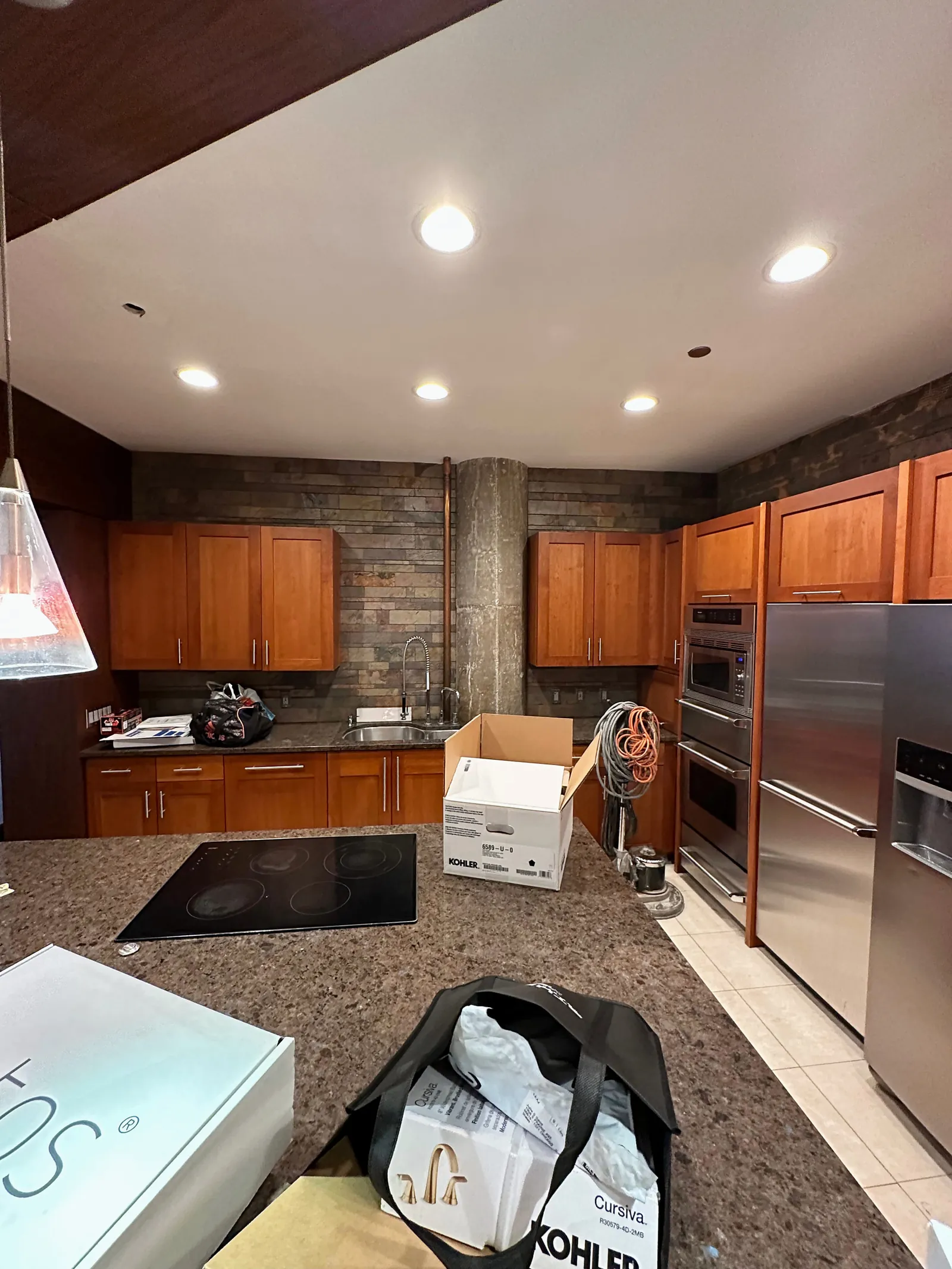
Grease doesn't spread evenly. It builds in a few predictable places: on and around the range, on the door and drawer edges at hand height, around every pull, and on the cabinet that sits beside the stove.
For a stubborn spot, don't scrub harder. Hold the damp, soapy cloth against it for a minute so the soap can loosen the grease, then wipe. Repeat if you need to. Several gentle passes do less harm to the paint than one hard one.
That same buildup is why every cabinet we paint is degreased first: new paint can't grip through a film of cooking oil. Our post on how long cabinet painting takes walks through those steps.
Matching the method to the mess
Most messes need the same gentle method with a little more patience. This is how we'd handle the common ones.
| The mess | What to do |
|---|---|
| Cooking grease | Hold a warm, soapy cloth on it for a minute, then wipe |
| Fingerprints and hand oils | Damp microfiber, then dry with a soft towel |
| Sticky spills like juice or syrup | Soften with a damp cloth, wipe, then dry |
| Dried-on food | Lay a damp cloth over it to soften, then lift it with the cloth, not a fingernail or knife |
| Splashes from the sink | Dry right away, so water doesn't sit on the edges |
What to keep away from painted cabinets
- Scouring pads, steel wool and abrasive powders. They cut through grease by cutting into the surface.
- Baking soda pastes and melamine sponges. Both clean by abrading, which dulls the sheen on a painted finish.
- Strong degreasers and ammonia-based cleaners. They can soften or cloud a painted surface, so test a hidden spot first if you ever use one.
- Soaking wet cloths. Water that sits in seams and along edges is harder on paint than a damp wipe.
And don't mix cleaning products to get more power. The Agency for Toxic Substances and Disease Registry, part of the CDC, warns that bleach mixed with ammonia produces very hazardous gases, and that bleach mixed with cleaners that contain an acid, like some toilet cleaners, can release chlorine gas. Plain soap and water carries no such risk.
Give a new finish time before you scrub
Fresh paint feels dry long before it's hard. Dunn-Edwards puts the full cure of latex coatings at 14 to 30 days, and says oil-based coatings reach an initial cure in 7 to 10 days and keep hardening after that. Dark colors and higher gloss levels take longer still.
So for the first few weeks after a cabinet job, be gentle. Wipe spills right away with a soft cloth dampened in plain water, press instead of rubbing, and hold off on the full soap-and-water routine until the finish has had time to harden. Our post on dry time versus cure time explains the difference in more detail.
Water, steam and heat
Moisture is harder on a painted finish than most people expect. Dunn-Edwards lists moisture trapped behind a paint film as a cause of peeling, and its advice before repainting includes relieving excess moisture, especially near kitchens. A kitchen makes plenty of it, so wipe up splashes around the sink and dishwasher as they happen, and keep a towel handy instead of draping a wet cloth over a door.
Run the range hood when you cook, especially when you fry. It pulls grease and steam out of the air before they settle on the cabinets above the stove. Appliances that vent steam or heat upward, like a toaster oven tucked under an upper cabinet, can also be hard on the finish above them.
Protecting the high-touch spots
Hands do more damage than cooking does. Skin oils build up around pulls and on door edges, and fingernails and rings chip corners. A few small habits protect those spots:
- Open and close doors and drawers by the pulls, not by the edges.
- Add felt or clear bumpers inside the door corners, so doors don't slam against the frame.
- Clean the pulls and the paint right around them every week.
- Keep wet dish towels and sponges off the door faces.
If you're choosing new pulls, our ideas for cabinet hardware cover finishes and sizes. The hardware you pick decides how often fingers touch the paint.
Don't forget the edges and the insides
Steam and grease land on more than the door faces. Wipe the bottom edges of the upper doors, the tops of the lower doors and the frame around each opening with the same cloth routine, because those are the places a quick wipe misses.
Inside, a damp cloth on the shelves a few times a year is enough. If the insides are worn or stained enough that you're wondering about painting them, our post on painting inside your cabinets covers when it's worth it.
Touch-ups, and when to call us
Small chips and scuffs happen in every kitchen. Don't try to scrub them out, because scrubbing spreads the damage. Clean the spot, let it dry, and ask whoever painted your cabinets about a touch-up. Our post on how durable painted cabinets are explains what causes chips in the first place.
If you've had a cabinet refinishing job with us and a problem comes from the quality of our work, like a finish that peels or didn't bond, tell us and we'll come back and make it right. Damage from everyday use or accidents isn't covered, like a door that gets kicked or scratched, but we're glad to quote the repair. And if you're thinking about having your cabinets refinished, ask for a free estimate and George will talk through your kitchen.
Common questions
What is the best cleaner for painted kitchen cabinets?
Warm water with a few drops of mild dish soap, applied with a soft cloth, is the best place to start. It cuts everyday grease without harming the paint. Stronger products can dull or soften a finish, so test a hidden spot first.
Can I use vinegar on painted cabinets?
We'd stay with mild soap and water. If you want to try vinegar, test a hidden spot first, keep it diluted, and never mix it with bleach, because bleach and acids can release chlorine gas.
How long should I wait to clean freshly painted cabinets?
Wait for the finish to cure before any real scrubbing. Dunn-Edwards puts the full cure of latex coatings at 14 to 30 days. Until then, blot spills and wipe with a soft cloth dampened in plain water.
How do I remove grease from painted kitchen cabinets?
Hold a cloth dampened in warm, soapy water against the spot for a minute so the soap can loosen the grease, then wipe and dry. Repeat as needed instead of scrubbing harder. A weekly wipe keeps grease from building up.
Do painted cabinets need special care?
Not much beyond ordinary good habits. Wipe them regularly with mild soap, dry them, avoid abrasives, and treat a new finish gently for the first few weeks.
Sources
- Dry Time versus Cure Time of Paint (technical bulletin), Dunn-Edwards
- Multiple Coat Peeling (technical bulletin), Dunn-Edwards
- Chlorine: Public Health Statement, Agency for Toxic Substances and Disease Registry, CDC
More on cabinet refinishing and every cabinets post.