How to paint built-in bookshelves so the finish lasts
· 5 min read · By GK Painting & Remodeling
Built-in bookshelves paint well, and the preparation is most of the job: clean, sand, prime, then apply a durable, low-sheen coat. The two decisions that shape the result are the finish on the shelves and the color inside them.
Here's the order of work, how to choose a color for the shelf backs, which sheen holds up where books rub, why shelves need time to cure before they're loaded, and when a built-in isn't a good candidate for paint.
What you're starting with
Built-ins show up in every era and finish: stained oak in an older house, a painted bookcase beside a fireplace, laminate or MDF units in a newer one. We refinish stained, painted, laminate and unfinished cabinets, along with built-in hutches and bookcases, so the material rarely decides whether a built-in can be painted. Condition and preparation do.
In an older house, built-ins often carry decades of oil-based paint or varnish and sit against plaster walls. Neither is a problem for paint, but both mean the preparation matters more. The U.S. Environmental Protection Agency says homes built before 1978 are more likely to have lead-based paint, and its Renovation, Repair and Painting rule sets lead-safe work practices for paid work that disturbs painted surfaces in those homes. Mention your home's age when you call.
Prep that decides the result
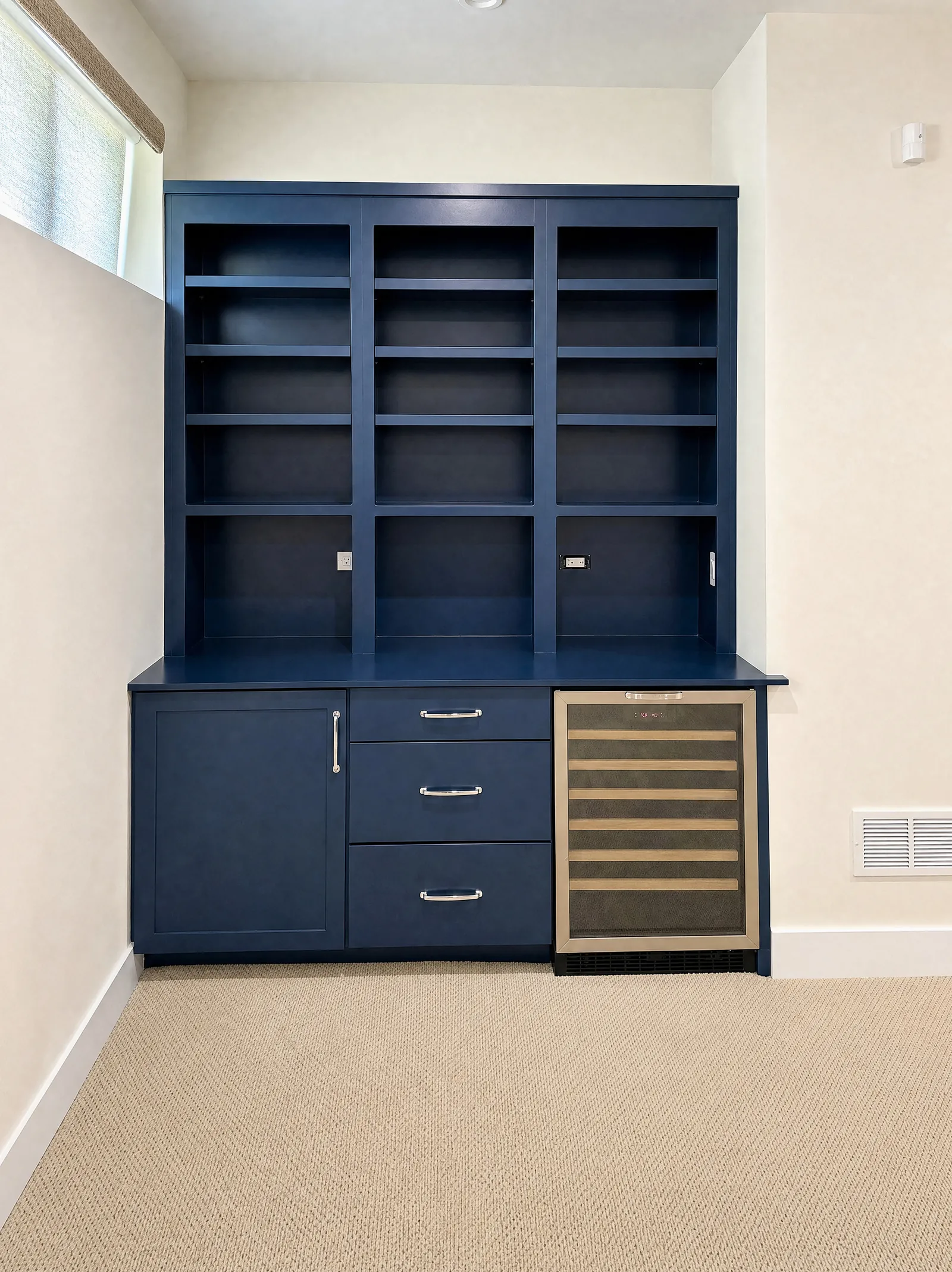
The order of work is the same as for any cabinet. Built-ins add one wrinkle: the frame and shelves stay in the wall, so masking does the work that taking the doors off does in a kitchen.
- Empty the shelves and cover the floor, furniture and anything nearby before any paint comes out.
- Clean and degrease every surface. Shelves collect dust, hand oils and years of fingerprints, and paint won't hold on top of them.
- Sand every surface so the primer has something to grip. For a glossy finish, Benjamin Moore recommends a light pass with a medium 180 to 220 grit paper, just enough to dull the surface.
- Repair and fill what needs it, then prime. Primer is what lets paint stick to a slick, stained or factory finish.
- Apply the color in thin, even coats, letting each one dry.
- Walk the finished built-in with you before we call it done.
Doors, if there are any, come off and are labeled so each one goes back where it came from.
Primer and the surface under it
What goes under the color depends on what's under the primer. Stained or varnished wood needs a primer that bonds to it. Wikipedia's article on kitchen cabinets notes that MDF can be painted, so MDF units in newer homes can take color once they're primed. Laminate needs a primer made for slick surfaces, which our guide to painting laminate cabinets explains.
Oak built-ins have two issues. The open grain stays visible under paint, which our guide to painting oak cabinets covers. Oak's tannins can also discolor a light color if the primer doesn't block them, and our post on painting kitchen cabinets white explains how that bleed-through happens and how it's prevented.
Color inside the shelves
The inside of a bookcase is where many people hesitate. You have four basic moves, and each does something different to the room:
| Choice | What it does | Works best when |
|---|---|---|
| Same color everywhere | Calm, reads as part of the architecture | The books and objects should carry the color |
| A darker back panel | Adds depth, makes objects stand out | The shelves hold art, pottery or a collection |
| The wall color on the back | The shelves recede into the wall | The room is small or busy |
| A contrasting color | Bold and graphic | The rest of the room is neutral |
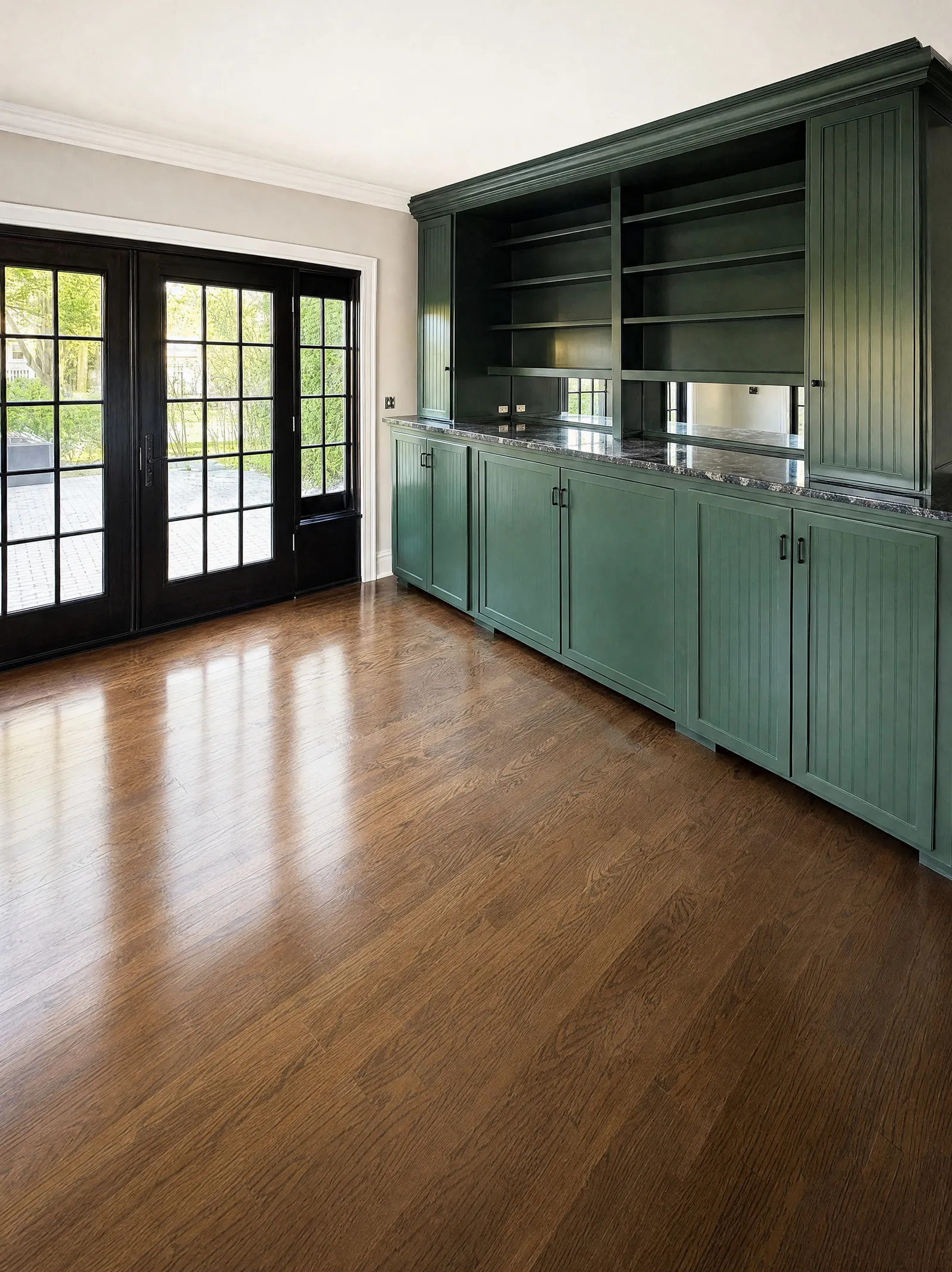
Two colors can also split the job. These red built-ins refinished in two shades of green show it, with the French doors beside them painted black. Two tones can set open shelving apart from the closed cabinets below it. Our guide to choosing a cabinet color works through how to test colors in your own light.
Choosing a sheen for shelves
Shelves are seen at angles and catch lamp light, so a very shiny finish shows every flaw. Benjamin Moore says lower sheens hide imperfections much better and tend to look better for longer, and its own bookcase example uses a satin finish. For a high-gloss look, it recommends spraying.
Satin is a good default for built-ins. It wipes clean of dust, forgives small flaws and doesn't glare. Our post on the best paint finish for kitchen cabinets compares the sheens, and the logic carries over to shelves.
Let it cure before the books go back
This is the step people skip. Benjamin Moore says to wait until the bookshelf has cured completely before reattaching hardware or doors or returning books, and explains why: if freshly painted surfaces press together, they can stick, a problem called blocking. A book left against fresh paint can do exactly that.
Dry is not cured. A technical bulletin from Dunn-Edwards puts the full cure of latex coatings at 14 to 30 days, notes that oil-based coatings reach an initial cure in 7 to 10 days and keep hardening, and says higher gloss, darker colors and humidity can all slow it. A paint can's own instructions will give its window.
Sagging shelves and other limits of paint
Paint changes color and finish. It can't repair the board underneath. Wikipedia's kitchen cabinet article notes that shelves made of some particleboard formulations may sag or deform, and that a three-quarter-inch shelf is 73 percent stiffer than a five-eighths-inch shelf even though it is only 20 percent thicker.
A shelf that already bows will still bow after it's painted. It needs a support or a thicker board first. Other problems to fix before refinishing include peeling laminate edges and board swollen by water. George checks the condition of your built-ins before he quotes, and he'll tell you plainly if refinishing isn't the right call.
Doors, hutches and the cabinets below
Many built-ins have closed cabinets below the shelves, or a hutch with doors. Those get the same preparation and spray finish as kitchen cabinets. The doors and drawer fronts are sprayed off the boxes, the frames are finished in place, and the hinges are adjusted when everything goes back so the doors hang straight. Our guide to spray painted kitchen cabinets explains what that finish looks like up close.
The walls, trim and ceiling around a built-in are worth a look at the same time. A fresh cabinet finish beside scuffed trim shows, and we paint those too, so interior painting can be part of the plan.
Getting built-ins quoted
Describe your project when you ask for an estimate: how many shelving units, whether there are doors or drawers below, and what they're made of now. It starts with a phone call, and George visits if he needs to see the space. Ask for a free estimate or read about our cabinet refinishing service first. If your home is older, our post on painting older Madison homes covers the prep that older plaster and trim need.
Common questions
What is the best paint for built-in bookshelves?
A durable, hard-wearing paint in satin or another low sheen, over a primer that suits the surface. Benjamin Moore says lower sheens hide imperfections better and tend to look better for longer, and its own bookcase example uses a satin finish.
Do you need to sand built-in bookshelves before painting?
We sand every job, along with cleaning, degreasing and priming. If you're painting them yourself, Benjamin Moore says sanding is only needed on a glossy finish, and then just a light pass with medium grit paper to dull the surface. Either way, clean and prime first.
How long before I can put books back on freshly painted shelves?
Wait until the paint has cured, which takes longer than drying. Dunn-Edwards puts the full cure of latex coatings at 14 to 30 days, and the paint's own instructions give its window. Until then, go light and leave air around the shelf backs.
Why do books stick to painted shelves?
It's called blocking. Freshly painted surfaces can stick together when they're pressed against each other before the paint has cured. Letting each coat dry fully and giving the finish time to cure before loading the shelves prevents it.
Should I paint the back of the shelves a different color?
It's a popular choice, and it works best when the shelves hold objects and art. A darker back panel adds depth and makes things stand out. If you'd rather keep the look calm, paint the whole unit one color.
Sources
- How To Paint A Bookshelf, Benjamin Moore
- Dry Time versus Cure Time of Paint (technical bulletin), Dunn-Edwards
- Kitchen cabinet, Wikipedia
- Reduce Your Risk of Lead Exposure in Your Home, U.S. Environmental Protection Agency
- Lead Renovation, Repair and Painting Program, U.S. Environmental Protection Agency
More on cabinet refinishing and every cabinets post.