Can you paint a bathroom vanity? What it takes to last
· 6 min read · By GK Painting & Remodeling
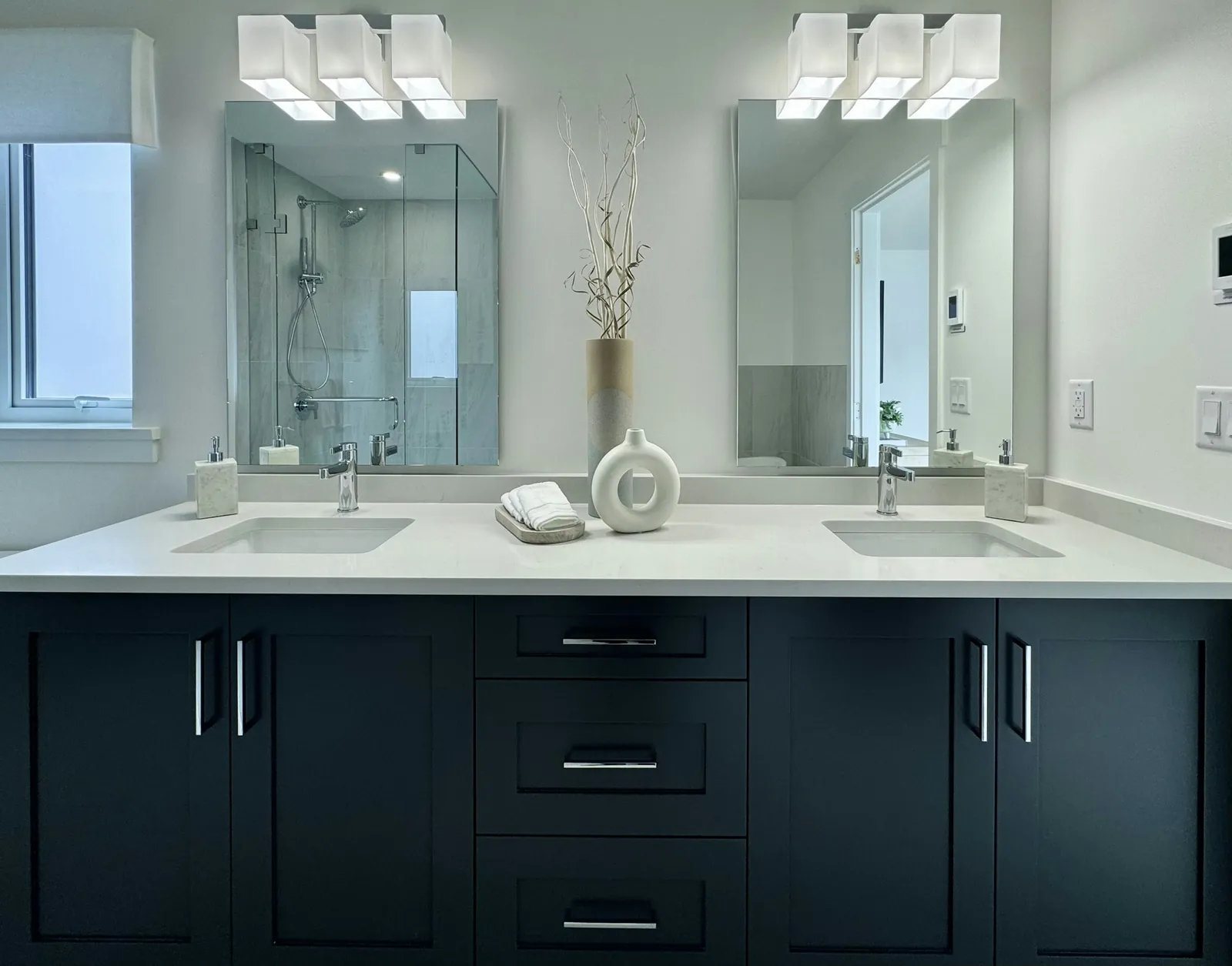
Yes, a bathroom vanity can be painted, and it's one of the quickest ways to change a bathroom. The finish just has to cope with steam, splashes and a sink, so preparation and sheen matter more here than on a wall cabinet.
We refinish bathroom vanities along with kitchen cabinets, using the same cleaning, sanding and priming. Here's what a bathroom does to a finish, what to check before anyone picks up a brush, how to choose a sheen and a color, and how to look after the vanity once it's done.
What your vanity is made of
Vanities come in solid wood, in MDF and in particleboard wrapped in laminate or a vinyl film called thermofoil. We refinish stained, painted, laminate and unfinished cabinets, so the material is rarely the deciding factor. Condition is. For a wood veneer vanity, see our notes on sanding and priming thin veneer.
Wikipedia's article on kitchen cabinets notes that MDF can be painted and that particleboard swells irreversibly if water reaches its core. It also says thermofoil can't be repaired once it's damaged. Those details matter in a bathroom, where water is part of daily life. Our guide to painting laminate cabinets covers when laminate and thermofoil can and can't hold paint. Our post on painting MDF cabinets shows how to tell MDF from particleboard and why the edges need sealing.
What a bathroom does to a finish
A vanity gets steam from every shower, splashes from the sink, and a film of soap, toothpaste and hair product on its doors and top edges. That is a different kind of hard life than a kitchen cabinet has, and it's why the finish has to grip the surface well and be fully cured.
Humidity also slows the paint itself. Dunn-Edwards says high humidity makes coatings take longer to dry, because the water in a latex coating takes longer to evaporate into damp air. The U.S. Environmental Protection Agency advises keeping indoor humidity below 60 percent, ideally between 30 and 50 percent, which is a useful target for a painted vanity as much as for mold. Our post on cabinet paint types shows how long each kind takes to cure.
Check for water damage first
Paint changes the color and the finish. It can't repair the board underneath. Before you decide to refinish, check the places water reaches first:
- The floor of the cabinet under the sink, for swelling, soft spots or crumbling board.
- The bottom edges of the doors and the sides, where splashes run down.
- Laminate edges that are lifting or bubbling.
- Dark stains or a musty smell, which can mean a slow leak.
- Drawer fronts that no longer sit flat.
Mold is a separate problem. The EPA says to clean up mold and dry the surface before painting, and warns that paint applied over a moldy surface is likely to peel. It also advises drying water-damaged areas within 24 to 48 hours to prevent mold growth. If a leak caused the damage, the plumbing has to be fixed first. George checks the condition of your cabinets before he quotes, and he'll tell you plainly if refinishing isn't the right call. The same checks appear in our guide to painting or replacing kitchen cabinets.
The prep that makes paint hold
A vanity gets the same order of work as a kitchen on every cabinet refinishing job:
- Protect the floor, the tub and anything nearby before any paint comes out.
- Take the doors and drawer fronts off and label each one so it goes back where it came from.
- Clean and degrease every surface. Soap film and hair products need to come off as completely as kitchen grease does.
- Sand, repair what needs it, and prime.
- Spray the doors and drawer fronts, and finish the frame in your bathroom.
- Reinstall everything and adjust the hinges so the doors hang straight.
- Walk the finished vanity with you before we call it done.
Spraying matters on a vanity because the doors are small and seen up close, usually under the bright lights over a mirror. Our guide to spray painted kitchen cabinets explains why a sprayed door looks smoother than a brushed one.
Choosing a sheen for a bathroom
Dunn-Edwards lists satin for kitchens, laundry rooms and bathrooms because it cleans well, and it describes semi-gloss as stain resistant, easy to clean and used where frequent scrubbing happens. Gloss is easier to clean than either, but it also highlights surface imperfections.
For most vanities that points to satin or semi-gloss. Satin is the more forgiving choice if the doors have some wear. Semi-gloss wipes clean faster and handles splashes well. Our post on the best paint finish for kitchen cabinets compares the sheens in more detail, and the logic applies to a vanity too.
Color ideas for a vanity
A vanity is the largest piece of color in most bathrooms, so it sets the mood. A few directions that tend to work:
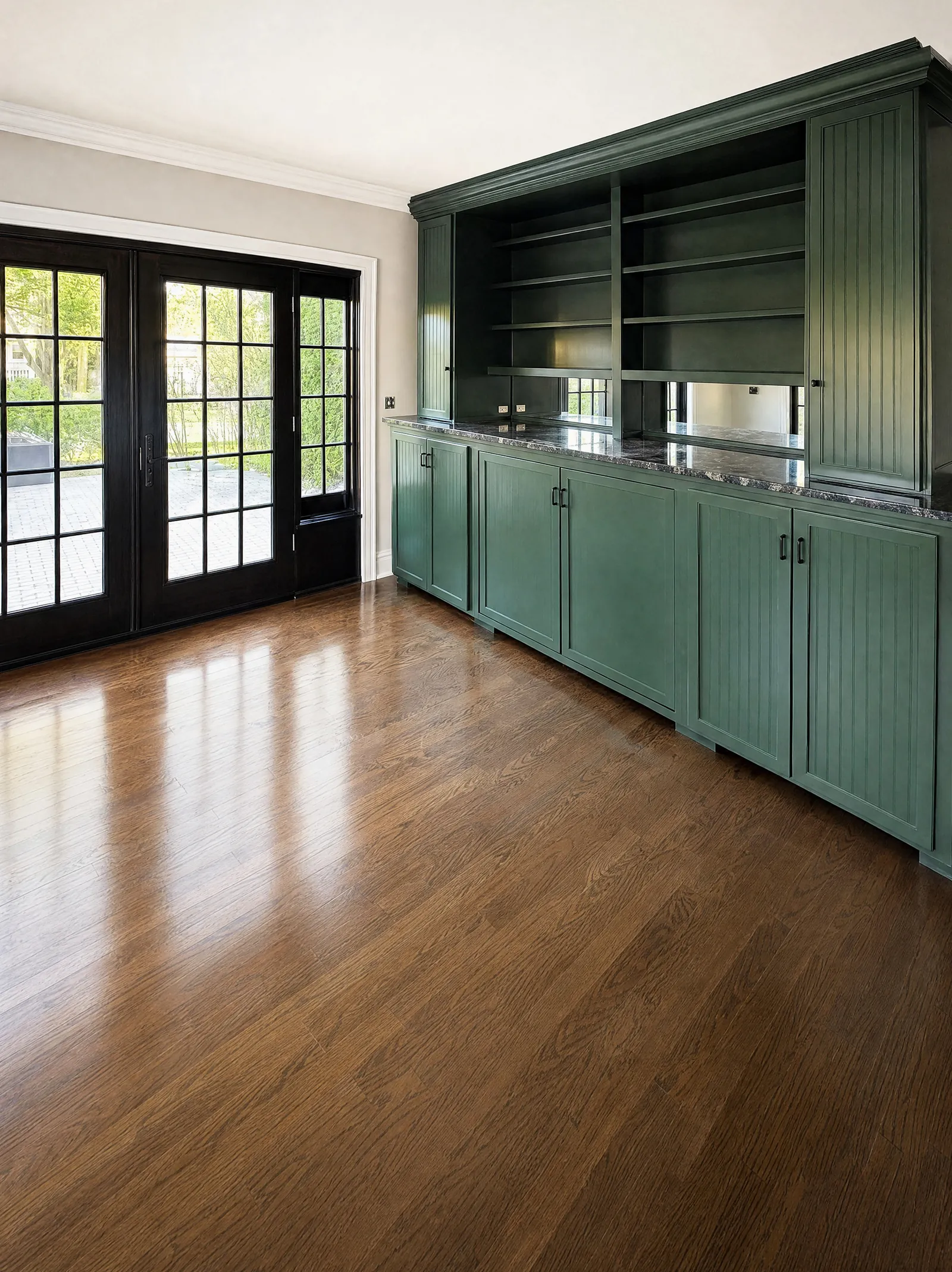
- A deep green or navy on a plain white bathroom gives the room one strong anchor.
- A warm white on a dated wood vanity brightens the room without clashing with tile.
- A soft gray or muted sage suits a bathroom with a lot of natural light and quiet tile.
- A black or very dark vanity can look dramatic against white fixtures, if the bathroom has enough light.
Take your tile, the metal on your faucet and the light in the room into account, and look at a painted sample next to the tile instead of a chip in a store. Plan the pulls at the same time, since hardware is part of the finished look. Our guide to choosing a cabinet color works through the same questions with real kitchens.
Ventilation and the first few weeks
The EPA says to run the bathroom exhaust fan or open a window when showering, since excess moisture can cause mold to grow in a bathroom. For a freshly painted vanity, that habit protects the finish too.
Dry isn't the same as cured. Dunn-Edwards puts the full cure of latex coatings at 14 to 30 days, and says humidity slows it down. So for the first few weeks, run the fan during and after showers, keep shorter and cooler showers if you can, wipe splashes with a soft damp cloth, and don't leave wet towels or cups against painted surfaces. Skip abrasive bathroom cleaners and ammonia sprays on the new finish until it has had time to harden. For more on timing and humidity, see our post on painting in high humidity, and for the walls around the vanity, how to paint a bathroom and the best paint for bathroom walls.
What stays, what changes and how it's quoted
Refinishing changes the color and the finish. The top, the sink and the plumbing stay where they are. If you're replacing a faucet, a top or the pulls, tell us when you call so the order of work makes sense. A linen cabinet or other built-in storage in the same room gets the same process, and doing it all at once keeps the room matching.
Cabinet work is priced per cabinet, with the paint included. The written quote is the price, no extra charge if the job takes longer than expected. Our guide to how cabinet painting is priced explains what goes into the number. If a laundry room or mudroom needs the same treatment, see painted laundry room cabinets. When you're ready, ask for a free estimate.
Common questions
Can you paint a bathroom vanity?
Yes, as long as the cabinet is sound. The vanity is cleaned, degreased, sanded and primed first, then the doors and drawer fronts are sprayed and the frame is finished in your bathroom. If the board under the sink has swollen from water, it needs to be dealt with before any paint goes on.
What is the best finish for a bathroom vanity?
Satin or semi-gloss. Both clean well and handle splashes. Satin is softer and more forgiving of worn doors, and semi-gloss wipes clean faster. Gloss is easier to clean still, but it shows every flaw in the surface.
Will a painted vanity peel from moisture?
It shouldn't when the surface was clean, primed and fully cured and the bathroom is ventilated. Paint peels when it's applied over mold or over a surface that wasn't properly prepared. If a problem comes from the quality of our work, like a finish that peels or didn't bond, tell us and we'll come back and make it right.
Can you paint a laminate or thermofoil vanity?
Laminate can be painted with the right preparation, including a primer made to bond to slick surfaces. Thermofoil can be painted while the film is firmly attached. If the film is lifting, paint won't hold it down.
How long should I wait before using the vanity normally?
You can use it once the job is done and everything is reinstalled. The paint keeps curing for a few weeks, so open doors by the pulls, wipe with a soft damp cloth and run the fan during showers while it hardens.
Sources
- Text Version of the Mold House Tour, U.S. Environmental Protection Agency
- A Brief Guide to Mold, Moisture, and Your Home, U.S. Environmental Protection Agency
- Dry Time versus Cure Time of Paint (technical bulletin), Dunn-Edwards
- Selecting Paint Gloss, Dunn-Edwards
- Kitchen cabinet, Wikipedia
More on cabinet refinishing and every cabinets post.