White kitchen cabinets: picking the white and prepping for it
· 6 min read · By GK Painting & Remodeling
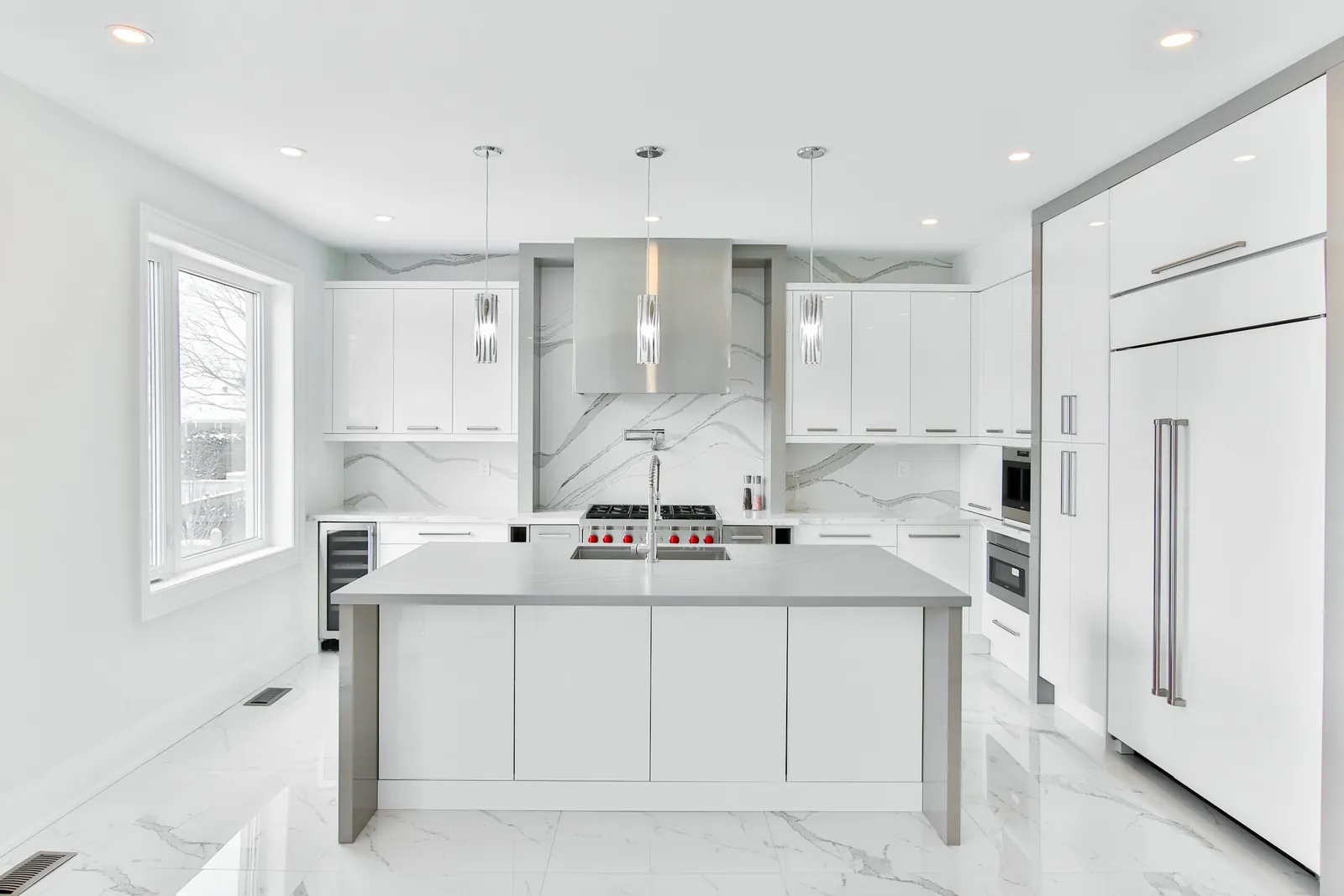
White works in almost any kitchen, but it's also the least forgiving color to get wrong. The wrong undertone looks dingy beside your counters, and thin preparation over dark stain lets the old color creep back through.
Here's how to choose between warm and cool whites, what makes white cabinets turn yellow, and why painting over dark wood or oak comes down to cleaning, sanding and primer. If you'd like to compare colors first, our guide to choosing a cabinet color walks through five real kitchens.
Why white keeps working
Going from a dark stain to white brightens the whole room and makes the cabinets read as part of the walls instead of a block of wood. It's the biggest change a cabinet finish can make. You can see the jump in cherry cabinets refinished in white. Compare the doors and drawer fronts there, because that kitchen also got new counters, a new backsplash and black pulls. Our painted kitchen cabinets before and after guide shows how to separate the paint from the other updates.
White is also honest about dirt. Grease near the range and fingerprints around the pulls show on white faster than on a mid-tone. That's not a reason to skip it. It's a reason to pick a sheen that wipes clean and to get the preparation right.
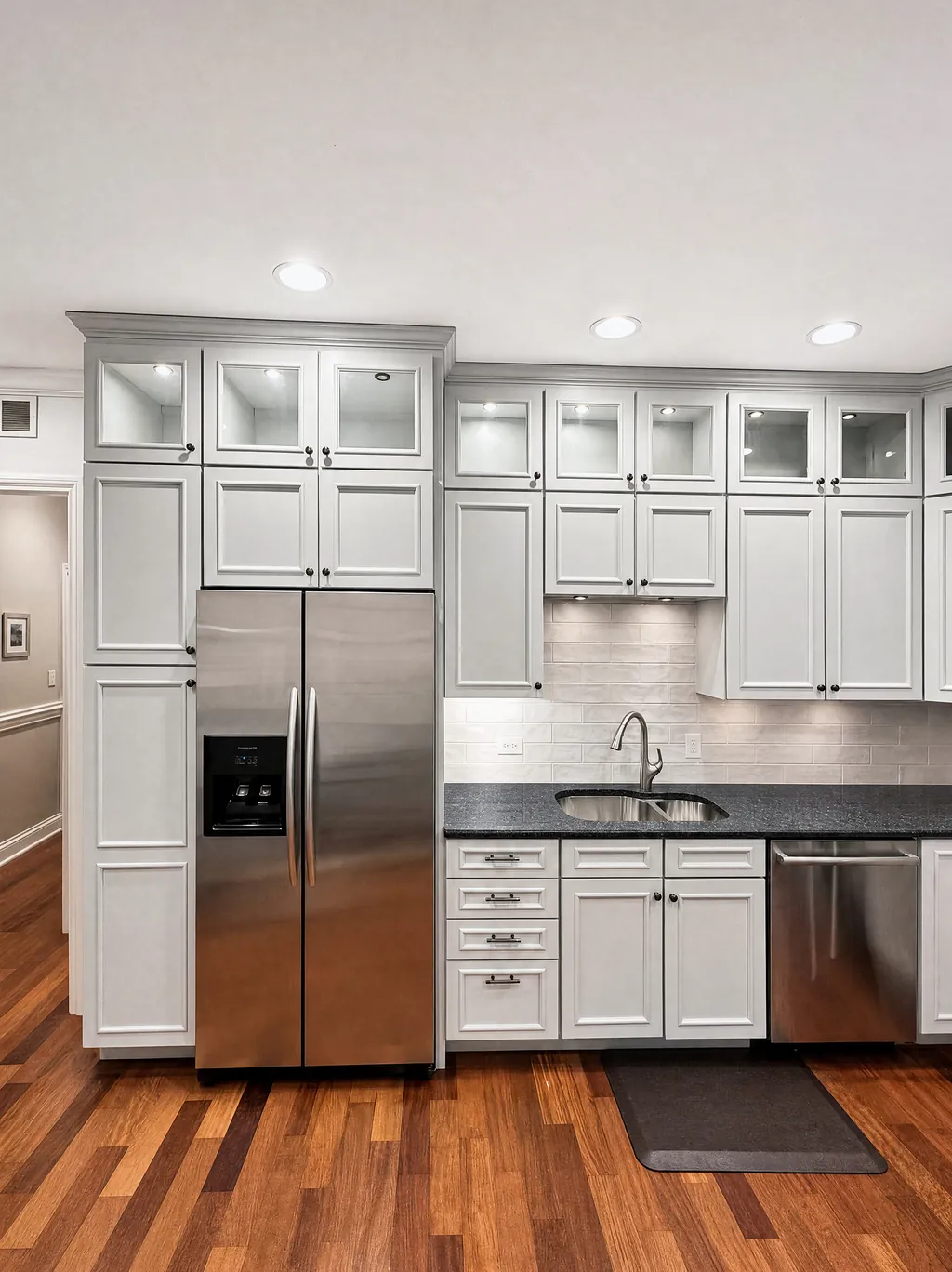
If your cabinets are already white and have yellowed or scuffed, the job is the same as for stained ones. Previously painted cabinets are cleaned, sanded and primed so the new finish holds to the old one instead of sitting on top of it.
Warm whites, cool whites and the ones in between
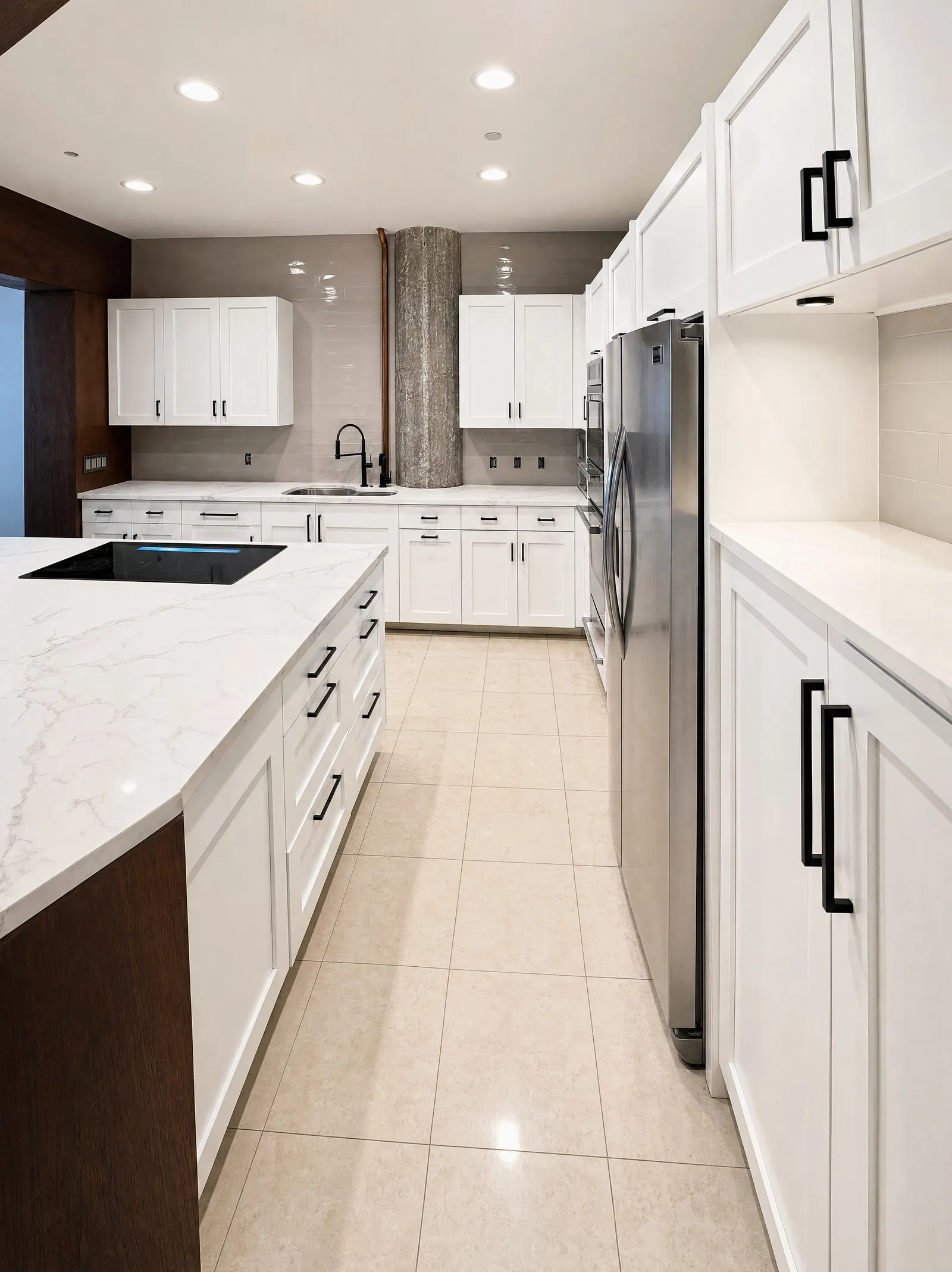
Every white leans one way. Warm whites carry a trace of cream, yellow or beige. Cool whites carry a trace of blue, gray or green. The ones in the middle read as plain, clean white. You can't see the lean on a paint chip until you put the white next to something else, which is why the surroundings decide.
Judge the white against what isn't changing: the counters, the backsplash, the floor and the wall color. A creamy white beside gray or bright white counters can look yellow. A stark cool white beside warm beige counters can look cold and bluish.
| What stays in the kitchen | Lean toward |
|---|---|
| Warm beige, tan or cream counters | A soft or warm white |
| Gray or bright white counters | A neutral or cool white |
| Warm wood floors | A soft white that echoes the warmth |
| Gray or blue walls | A neutral white; test a warm one before ruling it out |
Treat the table as a starting point, not a rule. Two samples side by side in your own room settle it faster than any chart.
Test it in your own light
Light changes how a white looks. Look at your samples in the morning, in the afternoon and in the evening, because window light shifts through the day. Use a big sample on a board, not a small swatch, and hold it near the cabinets rather than across the room.
Your bulbs count too. The U.S. Department of Energy lists warm bulbs at about 2,700 K, soft at 3,000 K, neutral at 3,500 K and cool at 4,100 K, and it warns that a change from one to another is noticeable. If you plan to swap bulbs, do it before you choose the white, so you're judging the final light.
What makes white cabinets turn yellow
Yellowing is a real thing, and it depends on the coating. Dunn-Edwards says oil-based paints tend to yellow, particularly in areas protected from sunlight, and it names heat from stoves, lack of light (inside closets, behind appliances) and household cleaners that contain ammonia as causes. It says latex paint does not tend to yellow. Our post on choosing a cabinet paint by type compares oil with the water-based options.
A yellow cast on older white cabinets isn't always the paint, though. Kitchen cabinets collect years of cooking oil and hand grease, and that film can read as yellow on white. It's the reason every cabinet job starts with cleaning and degreasing before any sanding or primer.
Painting white over dark stain
Dark stain to white depends on preparation. The sequence on every cabinet refinishing job is the same: clean and degrease, sand, prime, then color. In that cherry kitchen, that meant degreasing, sanding, a primer coat and sprayed color coats, with the doors and drawer fronts finished off the boxes and the frames finished in the kitchen.
A big color change also usually takes more coverage than refreshing a light color, which can add a little time. Our post on how long it takes to paint kitchen cabinets shows where the days go. Most kitchens take one to two weeks. If you're still deciding whether to paint at all, our post on painted vs stained cabinets compares the two finishes honestly.
Oak, tannins and bleed-through
Oak brings two issues. The open grain stays visible under paint, which our guide to painting oak cabinets covers. The other is bleed-through: oak is rich in tannins, which are among the water-soluble extractives in wood.
A coatings-industry article by researchers that included the U.S. Forest Service's Forest Products Laboratory explains the mechanism. Water is the driver. Extractives can move into a paint film shortly after it goes on, particularly a water-based one and mostly while it's still wet, and discolor it. The article is mostly about exterior wood, but the chemistry doesn't change when the board becomes a cabinet door.
In a kitchen, bleed-through looks like a stain or tint creeping into the white. The defense is a stain-blocking primer applied first, before the color. The same article says traditional oil-based stain blockers worked best at the time it was written, and that water-based ones didn't work as well yet, though manufacturers were improving them. Our primer guide has oil-based and waterborne stain blockers compared. Because water is the trigger, the cabinets beside the sink and dishwasher are the ones to watch.
Bleed-through is one of five failures worth screening for before you hire, and our guide to hiring a cabinet painter shows what to ask about each. Cherry and maple have their own notes on grain and bleed in our post on painting cherry and maple cabinets.
Choosing a sheen for white
Because white shows dirt, most people want a finish that wipes clean. Dunn-Edwards says higher gloss levels are easier to clean and more stain resistant, and they also highlight defects. For white, that usually points to satin or semi-gloss. Our post on the best paint finish for kitchen cabinets compares them in detail.
Hardware, walls and a second color
White is a quiet backdrop, so what you set against it carries the style. Black pulls give crisp contrast, as they do in that cherry kitchen. Brass reads warmer, and brushed nickel stays out of the way. Walls are the other half of the picture. White cabinets against white walls can look flat, while a slightly deeper tone on the walls gives the cabinets an edge. We paint walls too, so interior painting can be part of the same plan.
If all white feels like too much, keep it on the uppers and use a deeper color on the island or the lowers. We paint wall and base cabinets in one color or in more than one. Our post on kitchen island paint colors covers the island by itself.
Keeping white looking white
- Wipe spills near the range soon, with a soft cloth and mild soap.
- Skip cleaners with ammonia and anything abrasive.
- For the first few weeks, while the finish is still curing, use a soft damp cloth only and open doors by the pulls.
- Think about hardware early. New pulls in a different size mean old holes need filling before the paint goes on.
Our post on how to clean painted kitchen cabinets goes through the routine. If you're torn between all white and two colors, see two tone kitchen cabinets. When you're ready, ask for a free estimate. We work across Madison and Dane County.
Common questions
What is the best white for kitchen cabinets?
There isn't one best white. It depends on your counters, floor, walls and light. A warm white suits warm counters and wood floors, and a neutral or cool white suits gray or bright white counters. Test big samples in your own kitchen at different times of day.
Do white cabinets turn yellow?
Some do. Dunn-Edwards says oil-based paints tend to yellow, especially where light doesn't reach, and that heat and ammonia cleaners can speed it up. It says latex paint does not tend to yellow. Grease buildup can also make white look yellow, which is why cleaning comes first.
Can you paint dark cabinets white?
Yes. It's the biggest change a cabinet finish can make, and it depends on preparation. The cabinets are cleaned, degreased, sanded and primed before any color goes on, which keeps the dark stain covered.
How do you stop stain from bleeding through white paint?
Block it at the primer stage. Woods like oak contain tannins that dissolve in water and can discolor a light paint film, and a stain-blocking primer applied before the color is the standard defense. Skipping the primer, or using one that isn't made to block, is how bleed-through happens.
What sheen is best for white cabinets?
Satin to semi-gloss works for most kitchens. Both wipe clean, and neither shows flaws as much as gloss does. Satin is softer and more forgiving, and semi-gloss is easier to scrub.
Sources
- Yellowing (paint problem solver), Dunn-Edwards
- Understanding Extractive Bleed, CoatingsTech, American Coatings Association
- Purchasing Energy-Efficient Light Bulbs, U.S. Department of Energy, Federal Energy Management Program
- Selecting Paint Gloss, Dunn-Edwards
More on cabinet refinishing and every cabinets post.