Satin, semi-gloss or gloss: choosing a cabinet finish
· 6 min read · By GK Painting & Remodeling
For most kitchens, the best cabinet finish is satin or semi-gloss. Satin has a soft glow and forgives more flaws; semi-gloss wipes cleaner and shows more. The right pick depends on how hard the kitchen works, how much light it gets and how smooth the surface is underneath.
Sheen is simply how much shine a dry coating has. Here's how each level behaves on cabinets, what shows through each one, and how sheen changes the way a finish cures. If you haven't settled on a color yet, our guide to choosing a cabinet color is the place to start. For which kind of paint to put in that sheen, see our post on the best paint for kitchen cabinets.
What sheen does to a cabinet
Sheen is the amount of light a dry coating reflects. Flat paint reflects almost none, and gloss reflects a lot. The paint maker Dunn-Edwards sums up the trade in one idea: higher gloss makes a coating tougher and easier to scrub, and it also makes defects easier to see. Gloss changes how a color reads, too. The same color looks brighter and richer in a higher sheen.
Cabinets are an unusual case because you touch them all day. Doors collect fingerprints, drawer fronts get splashed, and the edges around the pulls take the most contact. That is why cabinets usually get a higher sheen than the walls beside them.
The room's lighting matters as much as the paint. A kitchen with big windows, pendant lights or lights under the upper cabinets throws more reflections, and a shiny door catches all of them. The same finish that looks calm in a dim galley can look glassy in a bright open kitchen.
Satin: the soft, forgiving choice
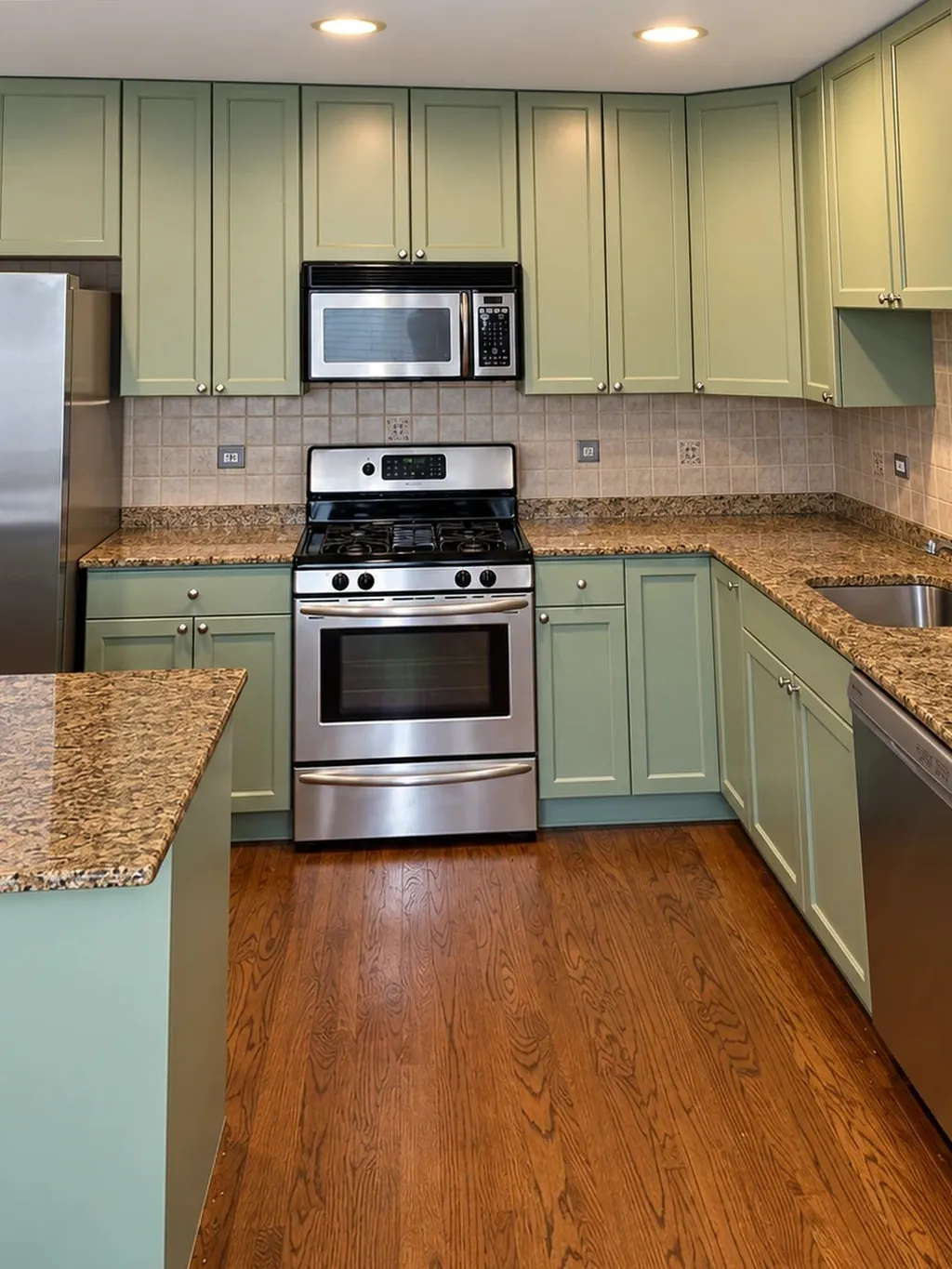
Satin has a gentle glow rather than a shine. Dunn-Edwards lists it for kitchens, laundry rooms and bathrooms because it cleans well, and it shows surface flaws more than a flat finish but far less than gloss.
That makes satin the safe middle for cabinets that have lived in a kitchen for a while. Every job gets sanded and primed, but small signs of age can still read under a brighter sheen, and satin gives them less to catch. A softer look also suits a calm, quiet kitchen.
Semi-gloss: the wipe-clean choice
Semi-gloss is the sheen most people picture on painted cabinets. Dunn-Edwards describes it as stain resistant and easy to clean, used where frequent scrubbing happens, and calls it a good option for windows, trim, cabinets and doors. In a Consumer Reports piece on kitchen upgrades, a paint expert recommends semi-gloss for cabinets because the shine makes them look new and gives a stain-resistant finish that wipes clean.
The cost is visibility. A semi-gloss door shows its flaws in raking light, so it rewards careful sanding and a smooth coat. That is one reason we spray doors and drawer fronts; our guide to spray painted kitchen cabinets explains how a sprayer lays down a thin, even film that levels as it dries.
Gloss and high gloss: tough, and honest about flaws
Gloss and high gloss sit at the durable end. Dunn-Edwards calls high gloss the toughest, most durable and most stain resistant of all finishes, and lists it for doors and cabinets exposed to fingerprints, dirt and oil.
The catch is the same as ever: the shinier the surface, the more it reflects every dent, sanding scratch and uneven edge underneath. A sprayed coat helps, but spraying can't hide a dent in the door below it. High gloss makes sense when the cabinets are in very good shape and you want that crisp, lacquered look. For an older kitchen, it is usually more than the surface can carry.
Flat, matte and eggshell: low sheen, more upkeep
Some people want cabinets with no shine at all. Low sheens do conceal flaws best, and Dunn-Edwards says flat paint hides surface imperfections better than any other finish. The trade is cleaning. The same source notes that stains can be hard to remove from flat finishes, and that eggshell resists stains better than flat but not as well as the glossier levels.
In a kitchen, where cabinets meet cooking oil and wet hands, a matte finish is a design choice with a maintenance cost. It can be the right one. Just pick it knowing a splash near the range will take more care to lift off.
The sheens side by side
| Sheen | Look | Cleaning | Shows flaws |
|---|---|---|---|
| Flat or matte | Chalky, no shine | Hardest | Least |
| Satin | Soft glow | Good | Some |
| Semi-gloss | Clear shine | Easy | More |
| Gloss | Bright shine | Easier | A lot |
| High gloss | Mirror-like | Easiest | The most |
Our wider post on paint sheens explained covers the same scale for walls, trim and ceilings.
What shows brush marks, dents and dust
The more a finish shines, the more of the work underneath it shows. Under a high sheen you'll see brush lines and roller texture, sanding scratches, filled dents that weren't sanded flush, uneven edges and the occasional speck of dust that landed in wet paint.
Most of that is solved before the color goes on. Every job gets cleaning, degreasing, sanding and priming, and the doors and drawer fronts are sprayed off the boxes. Choosing the finish is part of every estimate, so tell us how much shine you're picturing and we'll help you weigh it against the condition of your cabinets.
If you're comparing a painter who sprays with one who brushes, ask to see a finished door in the sheen you want, up close and at an angle. A brushed gloss is the hardest combination to get right, and a quick look at a real door tells you more than any description.
Sheen and cure time
Sheen has one more effect that people rarely hear about. In a technical bulletin on dry time and cure time, Dunn-Edwards says higher gloss coatings generally take longer to fully cure than lower sheens, and that dark colors, cool temperatures and high humidity slow things down too. Our post on sheen and prep for black cabinets covers the darkest case.
Dry is not the same as cured. The same bulletin puts the full cure of latex coatings at 14 to 30 days, with oil-based coatings reaching an initial cure in 7 to 10 days and continuing to harden after that. So whichever sheen you choose, treat the finish gently for the first few weeks. Open doors by the pulls, wipe with a soft damp cloth, and skip scrubbers and strong cleaners. Our post on how long it takes to paint kitchen cabinets explains the dry-versus-cure gap in more detail.
How to pick for your kitchen
- A busy kitchen where you cook most nights: semi-gloss, or satin if you prefer a softer look and don't mind wiping a little more often.
- Older cabinets with some wear or dents: satin, which is kinder to what's underneath.
- Cabinets in excellent shape and a taste for crisp, lacquered shine: gloss, with eyes open about what it reveals.
- A matte look: go ahead, and plan on gentle, prompt cleaning.
Whatever you choose, use one sheen across the whole kitchen. If the uppers, lowers, island and pantry catch light differently, the color looks uneven even when every door got the same paint. The only common exception is a deliberate contrast, like a matte island against glossier perimeter cabinets, and that should be a decision rather than an accident.
Judge any sheen on a painted sample in your own kitchen's light, not under store lighting. When you're ready, ask for a free estimate and we'll talk through color and finish together. For the day-to-day side, see our post on how to clean painted kitchen cabinets, and for how a finish ages, how durable painted cabinets are. Everything we do on cabinet refinishing starts from the same preparation, whichever sheen you choose.
Common questions
Is satin or semi-gloss better for kitchen cabinets?
Both work. Satin looks softer and hides more surface flaws. Semi-gloss wipes cleaner, and a paint expert quoted by Consumer Reports recommends it for cabinets. If you cook a lot and the surface is smooth, lean semi-gloss; if your cabinets show some wear, lean satin.
Is high gloss a good idea for kitchen cabinets?
High gloss is the toughest and easiest to clean, but it reflects every flaw in the surface. It makes sense when the doors and frames are in very good shape and you want a crisp, lacquered look. Otherwise a satin or semi-gloss is easier to live with.
Do matte cabinets stay clean?
Not as easily. Stains are harder to remove from flat finishes, so a splash near the stove takes more care to lift. A matte finish can be a good design choice, as long as you're ready to clean it gently and soon after a spill.
Does the sheen change how the color looks?
Yes. A higher sheen makes the same color look brighter and richer, and a lower sheen makes it look softer. That's why it helps to look at a painted sample in the sheen you're considering, in your own kitchen's light.
How do I clean satin or semi-gloss cabinets?
Wipe them with a soft cloth and mild soap, and dry them afterward. For the first few weeks while the finish cures, use a soft damp cloth only and skip scrubbers and strong cleaners.
Sources
- Selecting Paint Gloss, Dunn-Edwards
- Dry Time versus Cure Time of Paint (technical bulletin), Dunn-Edwards
- Upgrade Your Kitchen for Less, Consumer Reports
More on cabinet refinishing and every cabinets post.