
Staining pergolas and covered decks in Fitchburg
For Fitchburg yards with a pergola, a roof over the deck or a screened porch: getting stain onto overhead beams and all four sides of every rafter.
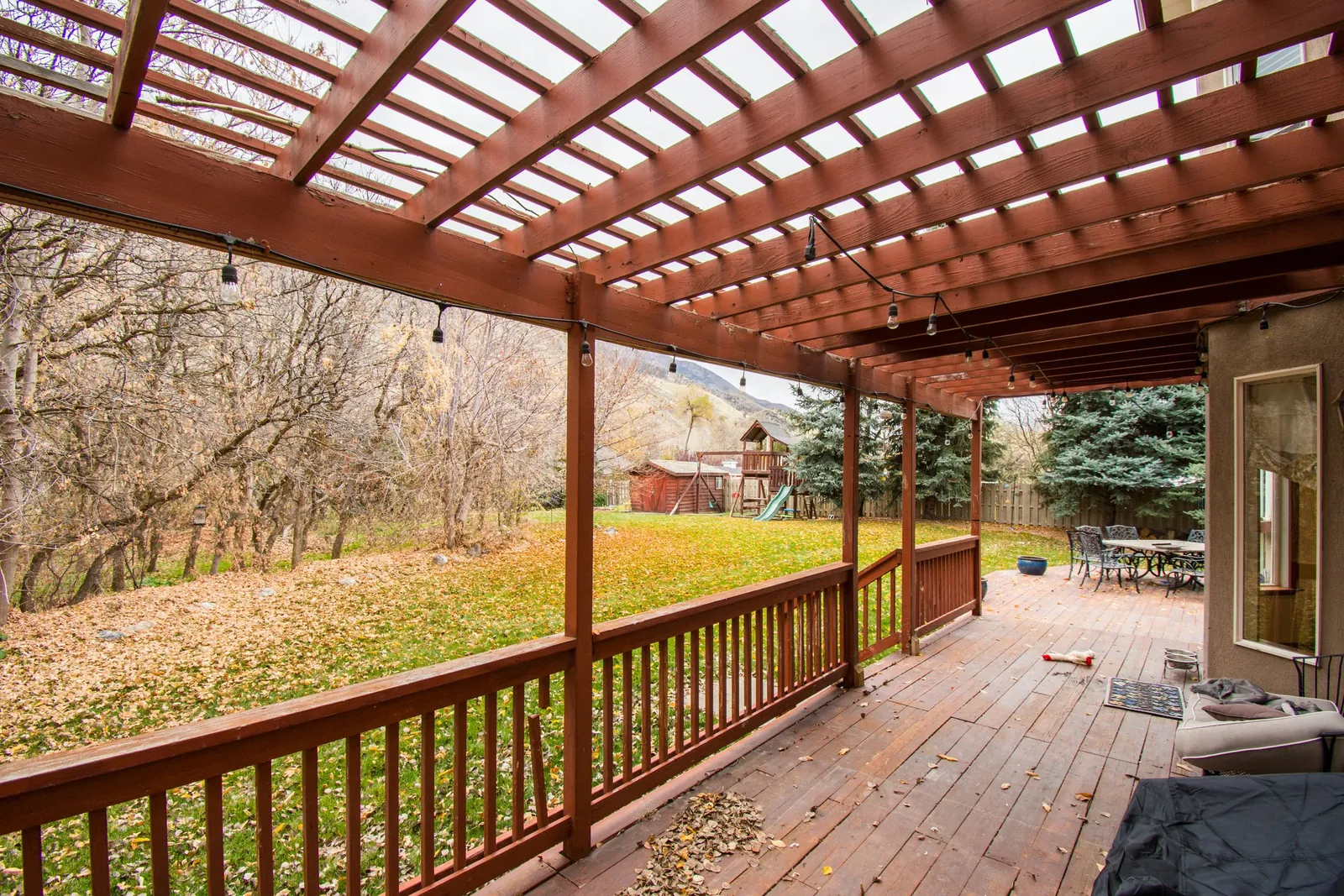
Once a deck has a pergola, a roof over part of it or a screened porch, staining it stops being a floor job. The wood runs overhead, and every post, beam and rafter has four sides that need covering. About 44% of Fitchburg's homes were built in 2000 or later, so a lot of the backyard wood here is young enough to keep in good shape rather than rescue.
This page is about those structures: what makes a pergola different from an open deck, how stain gets onto wood above your head, which boards on a covered deck still take weather, screened porch framing, matching the pergola to the deck, and how often the overhead wood needs another coat. More about the city is on our Fitchburg page.
Why a pergola isn't just a deck on posts
A deck has one face that people see and walk on. A pergola is a frame of posts, beams and rafters, and each piece is exposed on its top, both sides and its underside, with cut ends at every joint. Square foot for square foot of shade, that's far more wood to cover than a deck.
The tops of the rafters behave like deck boards. The Forest Service notes that moisture collects on horizontal wood, that small checks grow into cracks as it wets and dries, and that end grain holds water and speeds the weathering along. Posts and the sides of beams shed water, and they usually hold their stain longer.
Texture matters too. The Wood Handbook says semitransparent stains work best on rough-sawn lumber and last less than half as long on smooth wood, so a rough-sawn cedar pergola gives stain more to hold onto than a planed one.
Getting stain onto beams and rafters overhead
Overhead staining starts on the ground. Semitransparent stain is thin and runny, which the Wood Handbook notes makes it messy to apply, so the deck boards, furniture, grill and plants underneath are covered before anyone climbs up. A pergola usually sits over the best part of the yard, and a drip lands on all of it.
The structure is stained where it stands, from the top down: rafters and beams first, then the posts, a few pieces at a time so each one is finished end to end before its edge dries. The handbook says stain can be brushed, sprayed or rolled on but has to be back-brushed, which works it into the wood and heads off lap marks. Cut ends get an extra helping, since that's where water gets in first.
Our post on staining a pergola goes further into cleaning, stain types and keeping drips off what's below.
Covered decks: dry in the middle, wet at the edges
A roof over the deck doesn't stop the stain from wearing. The boards in the middle stay out of the sun and most of the rain, and they age slowly. The outer boards, the steps and the strip along the drip edge still catch windblown rain and melting snow, both of which the Wood Handbook lists among the ways liquid water reaches wood.
Shelter brings a problem of its own. The handbook says mildew is most common in shaded, moist or protected areas, and that dew tends to form on surfaces that cool off quickly, such as the ceilings of carports and porches. A covered deck that never sees direct sun can still turn gray or spotty even though rain rarely reaches the middle.
So a covered deck still needs stain, and the edge boards and steps usually set the schedule. When George looks at one, those are the boards he checks first.
Screened porch framing
On a screened porch, the wood in question is the framing: posts, rails and the strips and frames that hold the screens. It's finished much like any other outdoor trim, with one complication. Screen mesh wicks up stain, so the screens have to be protected first, either covered tightly or lifted out where they're removable.
Tell George what's on the framing now. The Wood Handbook says semitransparent stains aren't effective over a solid-color stain or old paint, so framing that was painted once usually stays with a solid finish rather than going back to a see-through stain.
Porch floors and ceilings are separate questions, so describe the whole porch on the call and the written quote will say exactly what's included.
Matching the pergola to the deck
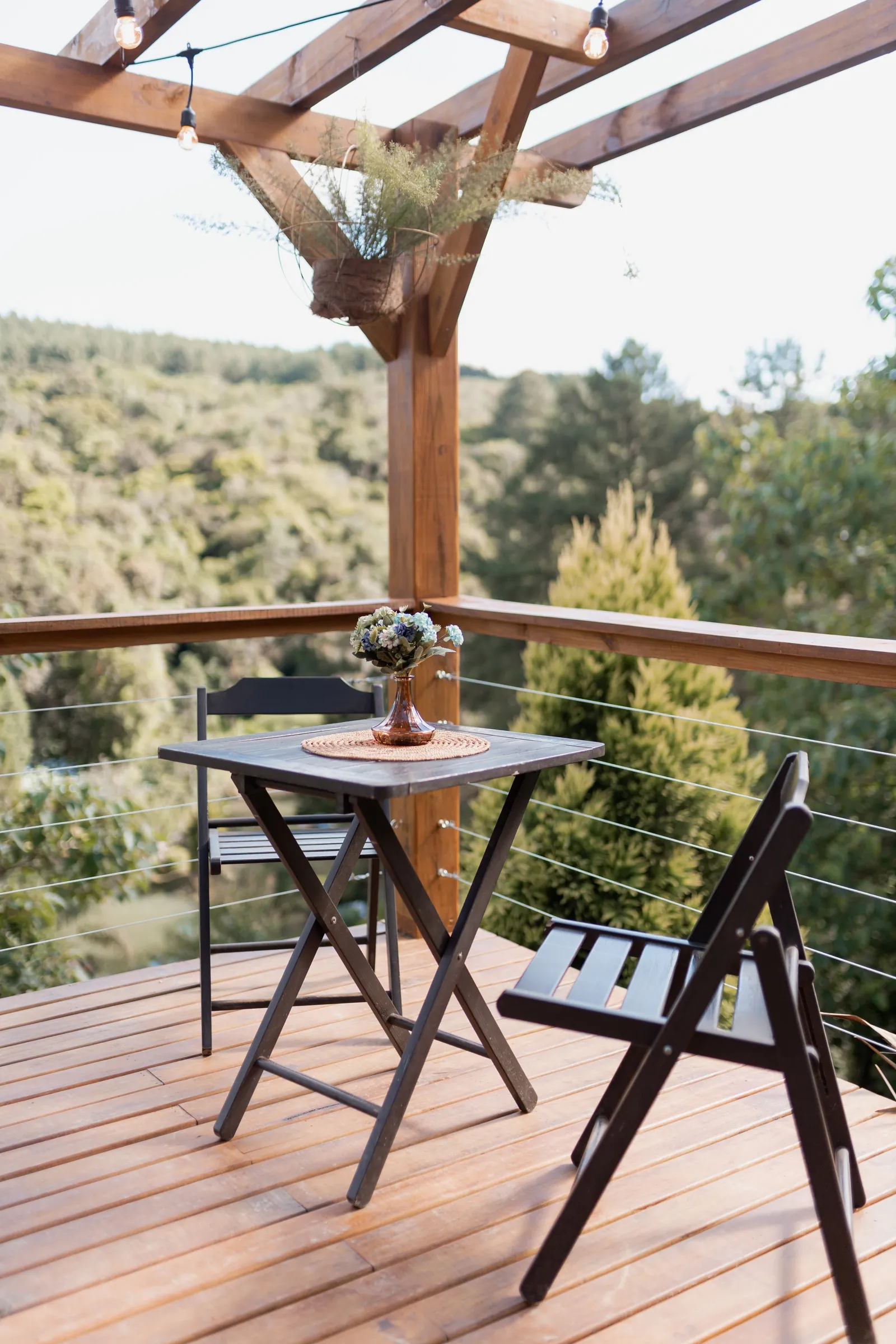
The same can of stain can look different on a pergola and on the deck beneath it. New cedar rafters and weathered treated-pine deck boards take color differently, and a deck that's been stained before carries some of its old color into the new coat. Try the stain on a hidden spot of each before settling on it.
An exact match isn't always the goal. The Forest Service advises lighter stains on surfaces people walk on, because they show wear less, but nobody walks on a pergola, so it can go a shade or two darker and still look planned. On a raw cedar pergola we stained dark brown, only the pergola and its slatted screens were stained, and the deck boards were left as they were. Our post on the best stain for a cedar deck compares the stain types.
How often overhead wood needs another coat
The rafter tops and the upper faces of the beams wear on roughly a deck's schedule, while posts and beam sides last longer. Purdue Extension's water test works overhead as well: splash a little water on top of a rafter, and if it beads, the stain is still working; if it soaks in and darkens the wood, it's time.
A semitransparent stain that has simply faded doesn't need stripping, since Purdue Extension says it can be brushed clean and recoated without heavy scraping. A solid-color stain is harder to keep up on rafter tops, and the Wood Handbook advises against solid-color stain on horizontal wood unless it's made for decks.
Pergola and deck staining are smaller exterior projects, usually one to three days, booked around dry weather. George visits if he needs to see the structure, then sends a written quote with a start date. The written quote is the price, no extra charge if the job takes longer than expected. Read about our deck and exterior work, or book a free estimate.
Common questions
Can a pergola be stained without taking it apart?
Yes. It's stained in place, from the top down, with everything underneath covered first. Nothing has to come down unless a board is rotten or loose, and that gets repaired before any stain goes on.
How do you stain overhead beams and rafters?
A few pieces at a time, top to bottom, with the stain brushed into the wood so it doesn't sit on the surface or leave lap marks. The deck and furniture below are covered, and the cut ends get extra stain.
Does a covered deck still need stain?
Yes. The middle boards wear slowly, but the edge boards and steps still catch blowing rain and snow, and sheltered wood that never dries in the sun is where mildew likes to grow. Those exposed boards usually decide when it's time.
Can the pergola be stained to match the deck?
Usually, after a test. Different woods and ages take the same stain differently, so try it on a hidden spot of each. A slightly darker shade on the pergola also works well, since nobody walks on it.
How often does a pergola need to be restained?
When water stops beading on the tops of the rafters. Those upper faces weather like deck boards and wear first, while posts and beam sides last longer, so a splash test each spring tells you where you stand.
More in Fitchburg
Decks and exterior nearby
Helpful guides
Sources
- American Community Survey 2020-2024 5-year estimates, U.S. Census Bureau, via Census Reporter
- Finishing of Wood (Wood Handbook, chapter 15), USDA Forest Service, Forest Products Laboratory
- Selection and Application of Exterior Finishes for Wood (NCR-135), Purdue University Cooperative Extension Service and USDA Forest Products Laboratory
- Exterior Wood in the South: Selection, Applications, and Finishes (FPL-GTR-69), U.S. Forest Service, Forest Products Laboratory