
Painting a Waunakee front entry: the door, sidelights and trim
The front door is the most handled painted surface on the outside of a house. How we paint Waunakee entries in fiberglass, steel or wood, plus sidelights and trim.
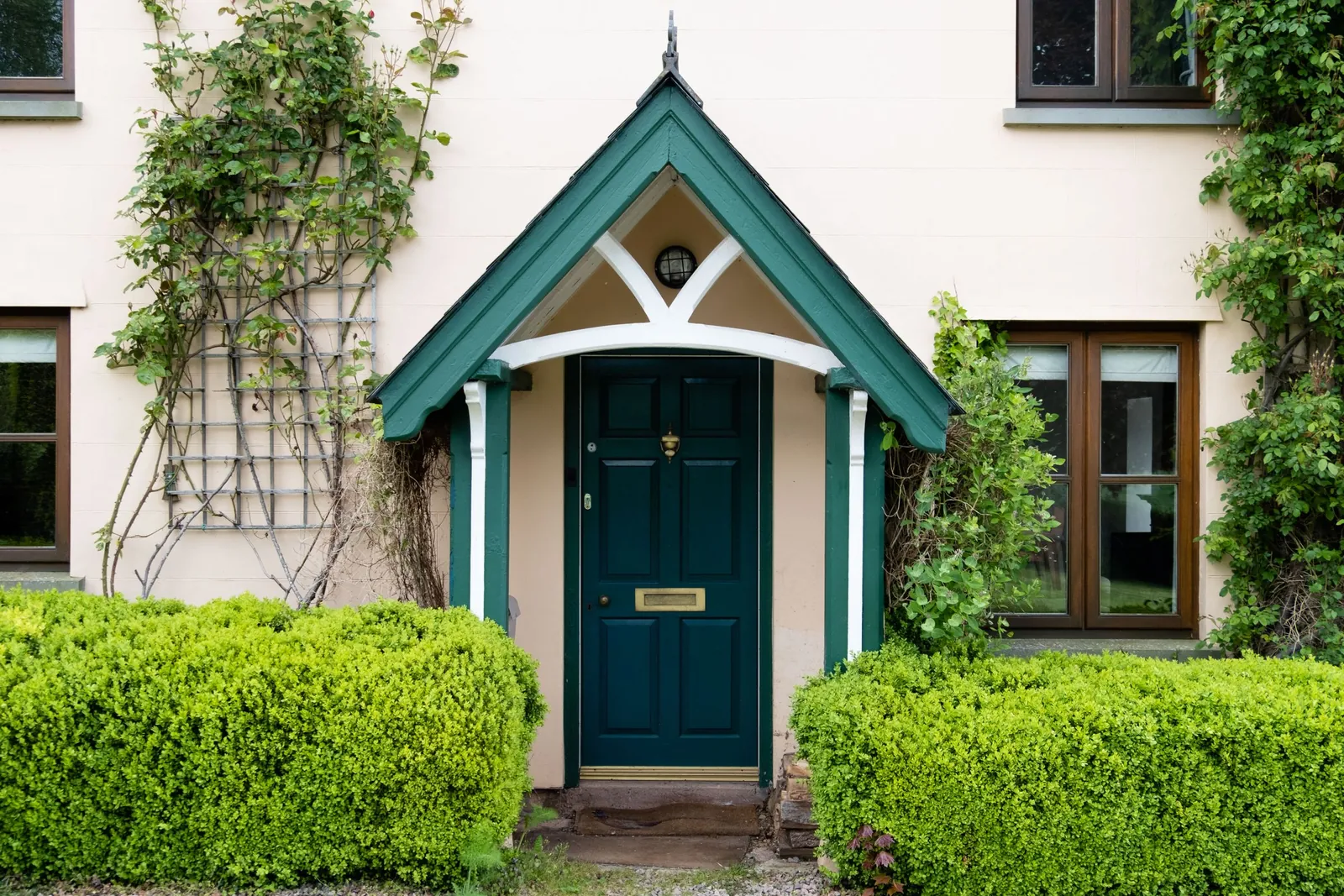
On a Waunakee house, the front entry is usually the outside job people notice first: a door that has faded, sidelights with peeling edges, or casing around the frame that has opened at the joints. With about 77% of the village's homes owner occupied, a lot of front doors here belong to people who plan to look at them for years.
We're based in the village and paint entry doors, sidelights and entry trim, along with garage doors, and we stain and refinish decks. Siding isn't part of our work. This page sticks to the entry: what it's made of, how fiberglass and steel doors are handled, sheen and color, and why a fresh door has to stay open for a while. For the rest of our outdoor work, see the exterior painting page.
What makes up an entry: door, sidelights, trim, columns
An entry has more parts than people expect. There's the door slab itself, often with glass; sidelights on one or both sides; sometimes a transom above; the jambs the door closes against; and the exterior casing, or brick mould, that frames all of it. Many houses add columns, pilasters or a small pediment over the door.
Each part can be a different material. A fiberglass or steel door may sit in a wood or composite frame with wood casing, so a single entry can need three kinds of prep. The threshold and weatherstrip aren't painted, and the hardware comes off or gets masked before anything else starts.
A wood door is handled much like trim: sanded, spot-primed where it's bare, and finished on every edge. Pella's owner's manual asks for the top edge of its door panels to be finished too, to reduce the chance of warping, and that edge is the one most often skipped.
Fiberglass doors
Fiberglass doors take paint well with the right prep. Pella's manual says its smooth fiberglass doors and sidelights can be painted but not stained, and Therma-Tru publishes its own finishing steps. Makers disagree on sanding and primer, so the first step is learning who made the door and following that maker's sheet.
Dunn-Edwards adds a fiberglass quirk worth knowing: fire-retardant additives in some doors release gases slowly, and that pressure can push a fresh coating off in blisters. Its advice is to keep direct and even diffused sun off the door while working, prime with a bonding primer and give the primer about a day before the topcoat.
Not sure what your door is made of? Pella's tip is a small magnet: if it sticks, the door is most likely steel. Our post on painting fiberglass doors goes deeper on the makers' instructions.
Steel entry doors
Steel doors usually arrive primed from the factory. Pella says its steel doors don't need more primer, just preparation: a wipe with a solvent, a light sanding with fine paper and a wash with mild soapy water, then two coats of exterior paint. Other makers publish their own sheets.
Bare metal changes the plan. A scrape or dent through the factory primer can expose galvanized steel, and Dunn-Edwards warns that alkyd or oil-based primers must never go on galvanized surfaces, because they react with the zinc and the paint later peels. Those spots get an acrylic bonding primer instead. Steel also heats up fast in afternoon sun, so a south- or west-facing door is best painted while it's in shade.
Sheen and color for a front door
A front door gets handled more than any other painted surface outside, so it needs a sheen that wipes clean. Dunn-Edwards notes that more gloss makes a coating tougher and easier to clean, but also shows every dent and brush mark. Semi-gloss is the usual middle ground; high gloss suits a smooth, flat door in good shape, and satin is kinder to a steel door with a few dings.
For color, start with what won't change: the brick or stone, the roof, the shutters and the trim. Deep greens, blues, black and red read well against light houses, and a softer color can sit nicely on a darker one. Look at a sample on the door in morning and late-day light before you decide, because a door that sits in shade all afternoon reads darker than the chip.
Entry trim and the door frame
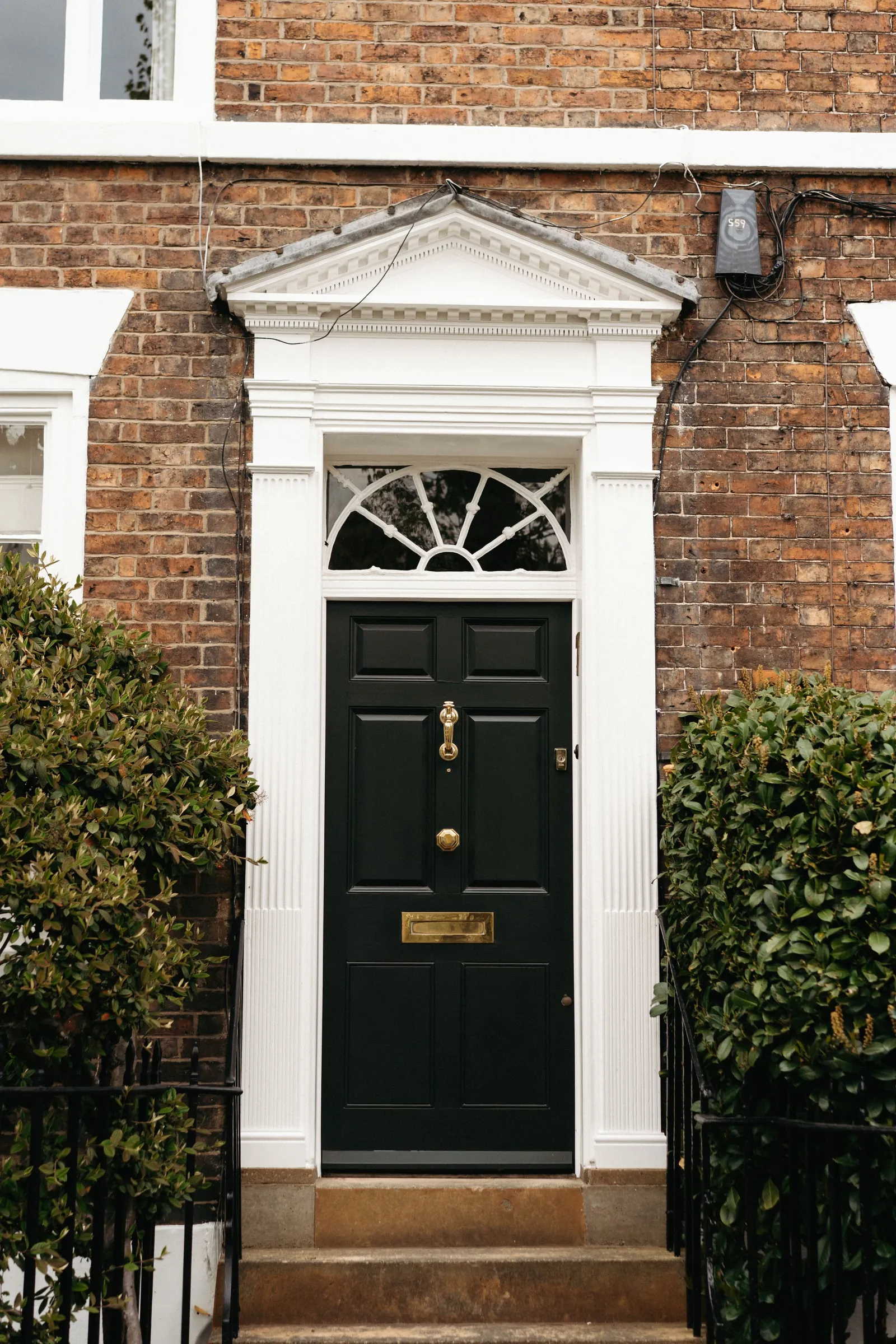
The casing around a door weathers faster than the door, because it's built from short boards that meet at joints and ends. Purdue Extension, writing with the Forest Products Laboratory, says paint normally fails first at those joints and at the ends and edges of boards, and the bottom of an entry casing, right by the step, catches splash and snowmelt.
So entry trim is cleaned, loose paint is scraped and sanded, bare wood is primed, and open joints are sealed with paintable exterior caulk before the finish coats. Soft or rotted wood is a different matter: paint won't hold it together, and a carpenter replaces it first. Our post on painting exterior trim covers the full sequence.
Drying time before the door can close
A freshly painted entry door is the textbook case of blocking. Dunn-Edwards describes blocking as two painted surfaces sticking when they're pressed together, and says pulling them apart can tear paint off either one. An entry door shuts against weatherstrip and a painted jamb every day, so it's where blocking shows up first.
Pella says to let the door dry completely, following the paint maker's directions, before closing it, and to use an exterior paint with good blocking resistance. In practice that means a dry, mild day with the door propped open while the paint sets, and someone home who doesn't mind a draft for a few hours. Dry to the touch still isn't fully cured, so close it gently for the first few weeks.
Smaller exterior jobs like an entry usually take one to three days and are scheduled around dry weather. Because we're based in Waunakee, George can look at the door and frame on a short visit before he quotes. Ask for a free estimate, or read about painting and staining in Waunakee.
Common questions
Can a fiberglass entry door be painted?
Yes. Smooth fiberglass doors take paint well over the primer the door maker calls for, and some makers require them to be painted. The work is done out of direct sun, since heat can make some fiberglass doors release gases that blister fresh paint.
Is it possible to paint a steel front door?
Yes. Most steel doors come factory primed and need cleaning, a light sanding and two coats of exterior paint. Any spot scraped down to bare galvanized metal needs an acrylic bonding primer, never an oil-based one.
Should a front door have a glossy finish?
Semi-gloss is the safe choice for most doors. It wipes clean and stands up to handling, while high gloss looks sharp on a smooth, flat door but shows dents and brush marks more.
Will you paint the trim around the front door too?
Yes. The entry casing, jambs, sidelight frames and details like pilasters are part of entry work, and they're usually painted with the door so the colors and sheens match.
How long until a freshly painted door can be shut?
Not until the paint is fully dry by the paint maker's directions, and even then gently for the first few weeks. Closing it too soon can glue the door to its weatherstrip and tear the new finish.
More in Waunakee
Decks and exterior nearby
Helpful guides
Sources
- American Community Survey 2020-2024 5-year estimates, U.S. Census Bureau, via Census Reporter
- Entry Doors: Fiberglass and Steel Owner's Manual, Pella
- Finishing Information, Therma-Tru Doors
- Painting Fiberglass Doors (technical bulletin), Dunn-Edwards
- How to Paint Galvanized Metal, Dunn-Edwards
- Selecting Paint Gloss, Dunn-Edwards
- Blocking: causes and fixes, Dunn-Edwards
- Selection and Application of Exterior Finishes for Wood (NCR-135), Purdue University Cooperative Extension Service and USDA Forest Products Laboratory