Choosing cabinet pulls and knobs when you're painting your cabinets
· 5 min read · By GK Painting & Remodeling
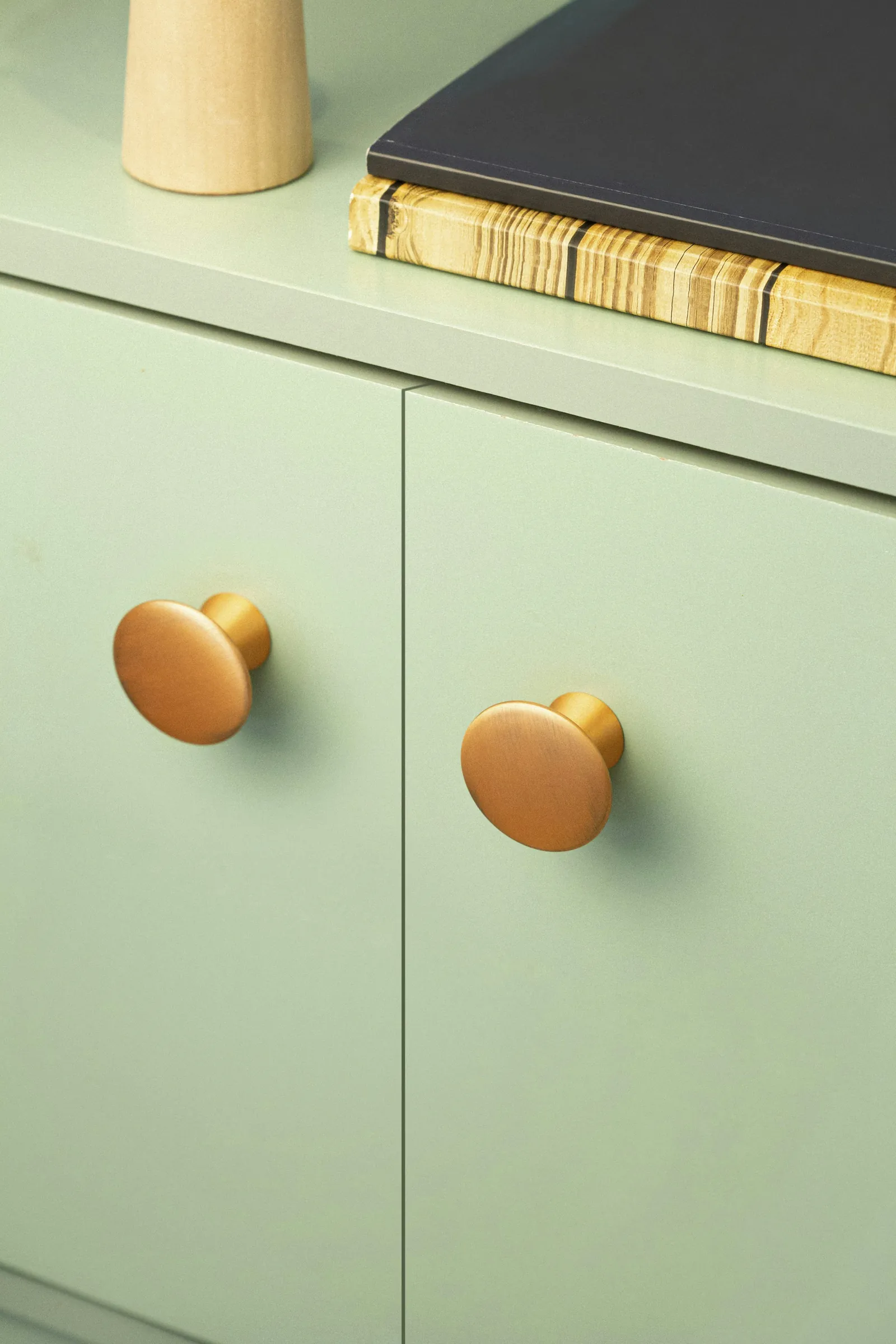
The best cabinet hardware matches the style of your doors, the size of your drawers and the metal already in the room, and the time to choose it is before the paint goes on. New pulls in a different size mean the old holes have to be filled, which is far easier on bare or primed doors than on a finished one.
Here's how to choose between knobs and pulls, which finishes suit which colors, how to measure, and what to do about the holes you already have. If you're still choosing the color, start with our guide to choosing a cabinet color.
Decide before the paint goes on
Hardware changes the cabinet itself, not just its look. If the new pulls have a different hole spacing than the old ones, the old holes need to be filled and sanded smooth so they disappear under the finish. Doing that to a door that's already painted risks chipping the new paint.
So settle the hardware early. Tell George what you're planning on the estimate call, so the holes and the schedule fit together on your cabinet refinishing job.
Knobs, bar pulls or cup pulls
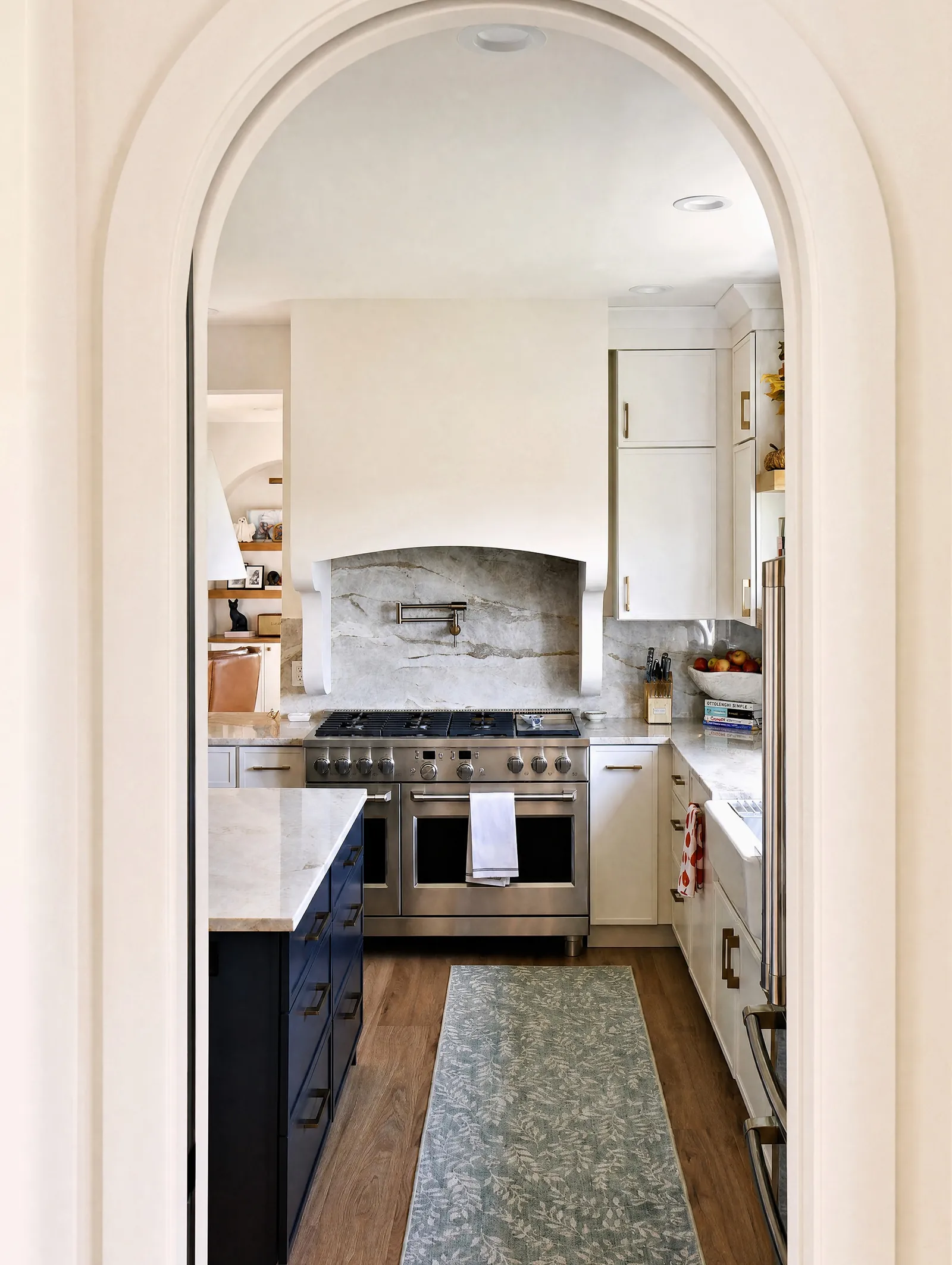
Three shapes cover most kitchens:
- Knobs are small, simple and quiet. They suit doors and narrow drawers, and they work with almost any door style.
- Bar pulls are long and straight. They look at home on Shaker and flat-front doors, and they give you more to hold on a wide or heavy drawer.
- Cup and bin pulls are traditional and a little farmhouse. They look best on drawers, where the cup shape gives your fingers a natural place to curl.
A common split is knobs on the doors and pulls on the drawers. Using one shape throughout looks cleaner, and either choice is fine as long as it's consistent from one run of cabinets to the next.
Finishes that go with painted cabinets
The metal does as much for the look as the shape. This table is a starting point rather than a rule:
| Cabinet color | Hardware to try | The effect |
|---|---|---|
| White | Black, brass, brushed nickel | Crisp, warm or quiet |
| Gray or greige | Brushed nickel, black, brass | Calm, modern or warm |
| Navy | Brass, brushed nickel | Warm contrast or soft |
| Sage | Black, nickel, brass | Modern or soft |
| Olive or forest green | Brass, warm gold, bronze | Rich and earthy |
Match the metal to something else in the room, like the faucet or the light over the sink, or mix two metals and repeat each one. Our posts on navy blue kitchen cabinets and green kitchen cabinets go into the color-by-color details.
Sizing: measure center to center
Pulls are sized by the distance between the two screw holes, measured from the center of one to the center of the other. DK Hardware's sizing guide notes that makers list pulls by that center-to-center distance, not by overall length. Measure your existing pulls that way if you want to reuse the holes.
Close isn't the same. A 96 millimeter pull is about 3.8 inches center to center, and a 4 inch pull is about 102 millimeters. The numbers sound nearly alike, and the two don't fit each other's holes.
For proportion, the same guide gives a rule of thumb: choose a pull roughly one-third the width of the drawer front, and use two pulls or knobs on very wide drawers. A tiny pull on a big drawer looks lost. Count your doors and drawers before you shop, too. A kitchen needs more pieces than most people guess once every door and drawer is tallied, and the count tells you how many of one style you need.
Matching hardware to your door style, and where it goes
Door style narrows the choice faster than anything else. Shaker doors, with their simple flat frame, take almost any hardware, from a plain knob to a long bar pull. Flat-front slab doors look best with clean bar pulls or very simple knobs. Raised-panel doors, with more detail, suit cup pulls and knobs with a little shape to them.
Glass-front doors are small and delicate, so keep the hardware modest.
Placement follows convention, and it's worth following. DK Hardware's guide places a knob near the bottom corner of an upper door and near the top corner of a base cabinet door, so your hand lands where it naturally reaches. Drawer pulls go in the center, with two pulls on very wide drawers. Whatever you choose, mark one door and one drawer with tape first, then repeat the same spacing on every other cabinet.
Reusing the holes you have
The simplest path is new hardware with the same center-to-center spacing as the old, so every hole is reused and nothing needs filling.
Switching shapes changes the math. Going from pulls to knobs leaves one hole on each door or drawer to fill, and going from knobs to pulls means a second hole to drill. A backplate on a cup pull can also cover an old pair of holes that don't match. None of this is hard, but all of it is easier to plan before the first coat.
Comfort and everyday use
Think about hands, not only looks. Hardware gets grabbed with wet fingers, full arms and sore joints, so the shape matters. The U.S. Access Board's guide to operable parts says handles shouldn't require tight grasping, pinching or twisting of the wrist, and it lists standard U-shaped pulls and loosely gripped knobs among the acceptable shapes.
That guide is written for accessible design, not for your kitchen, but it describes a quick check that works at home: try operating the pull with a closed fist. A bar pull passes easily. A small knob you have to pinch is the one to think twice about on a drawer you open fifty times a day. If kids, grandparents or anyone with sore hands share your kitchen, that's a good reason to choose bar pulls for the drawers you open most and save knobs for the doors you open less.
Hardware on a fresh finish
Pulls and knobs are where hands land on a cabinet, so they're also where a new finish gets its first wear. Dunn-Edwards puts the full cure of latex coatings at 14 to 30 days, and says dark colors and higher gloss take longer. Open doors by the pulls, go gently in the first few weeks, and keep a slipped screwdriver away from fresh paint. Our post on dry time versus cure time explains why the finish needs that long.
Once the finish is in place, the pulls are the part you'll wipe most. Our post on cleaning painted kitchen cabinets covers how to keep those spots clean without scrubbing the paint.
Before you order hardware
- Measure the center-to-center distance of your existing pulls.
- Decide on knobs, pulls or a mix, and on one metal or two.
- Order a sample and hold it against the cabinet color.
- Tape paper cutouts to a door and a drawer to check the scale.
- Tell George if you're changing the hole spacing, so the old holes are handled before the paint goes on.
Doors and drawer fronts are reinstalled at the end of every job and the hinges are adjusted, so the new hardware goes onto cabinets that hang straight. When you're ready, ask for a free estimate and mention the hardware on the call.
Common questions
What hardware looks best on painted kitchen cabinets?
Match the metal to the color: brass and warm metals suit navy, olive and forest green, black suits white and sage, and brushed nickel suits almost anything quietly. Whatever you pick, tie it to another metal in the room.
Should I use knobs or pulls on kitchen cabinets?
Both work. A common split is knobs on doors and pulls on drawers, since a pull gives you more to hold on a heavy drawer. Using one style throughout looks cleaner.
What do I do with the old hardware holes when I paint cabinets?
If the new pulls use the same hole spacing, reuse the holes. If they don't, the old holes need to be filled and sanded before the paint goes on, so they disappear under the finish. Tell George when you ask for an estimate if you're changing hardware.
How do I measure cabinet pulls?
Measure from the center of one screw hole to the center of the other. That center-to-center distance is how pulls are sized, and it has to match your holes if you want to reuse them.
Should cabinet hardware match the faucet?
It doesn't have to, but it should look planned. Match the metals, or use two metals and repeat each one somewhere else in the room, like a light fixture.
Sources
- Chapter 3: Operable Parts (Guide to the ADA Accessibility Standards), U.S. Access Board
- Cabinet Hardware Placement and Sizing Guide, DK Hardware
- Dry Time versus Cure Time of Paint (technical bulletin), Dunn-Edwards
More on cabinet refinishing and every cabinets post.