Green kitchen cabinets, from soft sage to deep forest
· 6 min read · By GK Painting & Remodeling
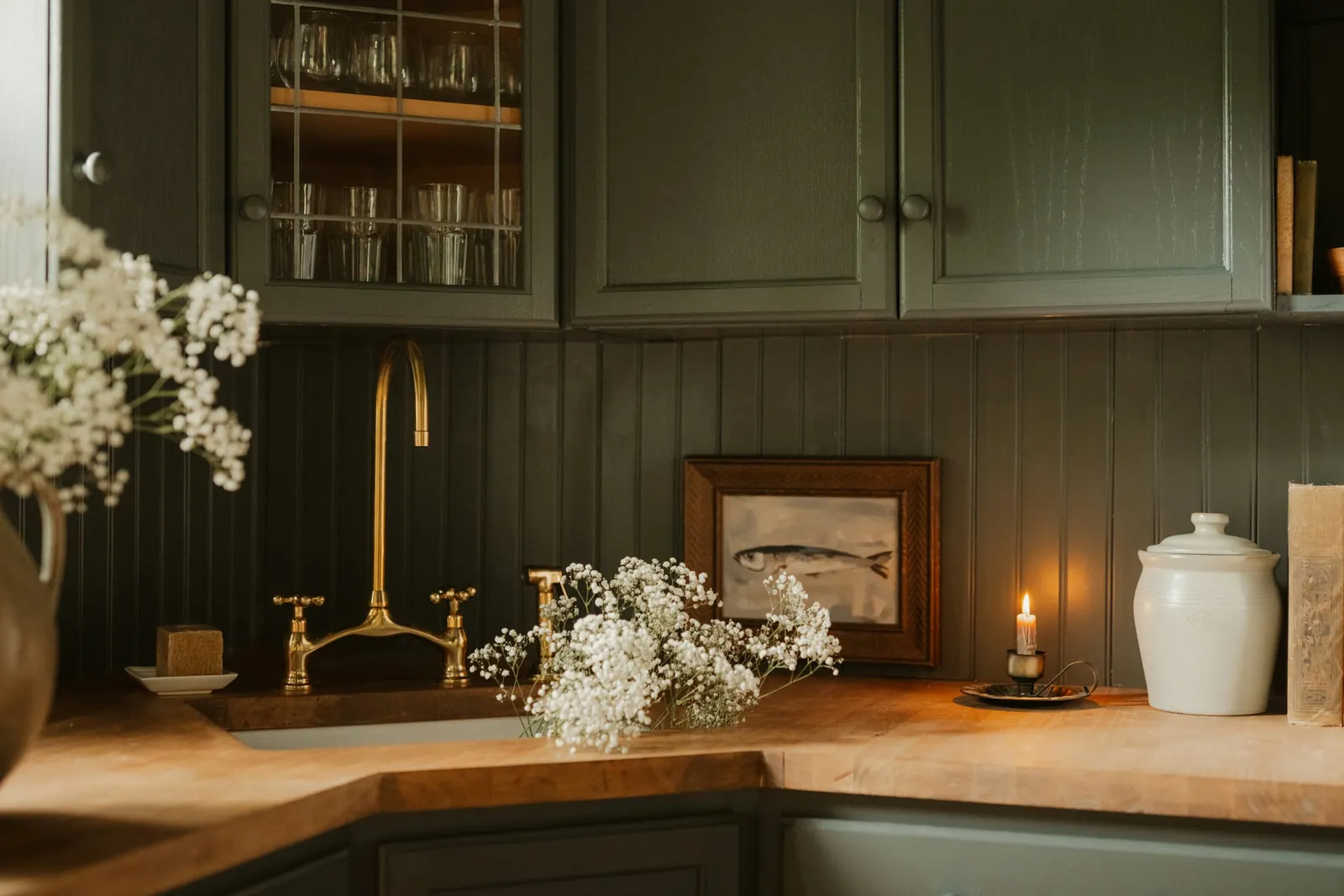
Green cabinets work in nearly any kitchen when the depth of the green matches the light in the room and the counters and floors you're keeping. Soft sage reads calm and airy, olive reads warm and earthy, and deep forest green reads rich and dramatic.
Here's how the shades differ, what each one pairs with, and what two green kitchens we've refinished show about a green that works versus one that fights the room. If you're still narrowing down colors in general, our guide to choosing a cabinet color covers five real kitchens.
Three greens, three moods
Green isn't one color. It runs from gray-greens that nearly behave like neutrals to deep greens that read almost black at night. These three families cover most of what people ask for:
| Shade | How it feels | Pairs well with | Watch for |
|---|---|---|---|
| Sage and gray-green | Calm, soft, airy | White counters, light floors, nickel | Can read gray in a dim room |
| Olive and moss | Warm, earthy | Butcher block, brass, warm wood | Can turn muddy beside cool gray |
| Forest and deep green | Rich, dramatic | White stone, oak floors, brass or black | Needs good light |
Those are families, not exact paint colors. Inside each one you'll find warmer versions with yellow in them and cooler versions with blue in them, and that undertone decides what the green sits well beside.
Pairing green with counters, floors and trim
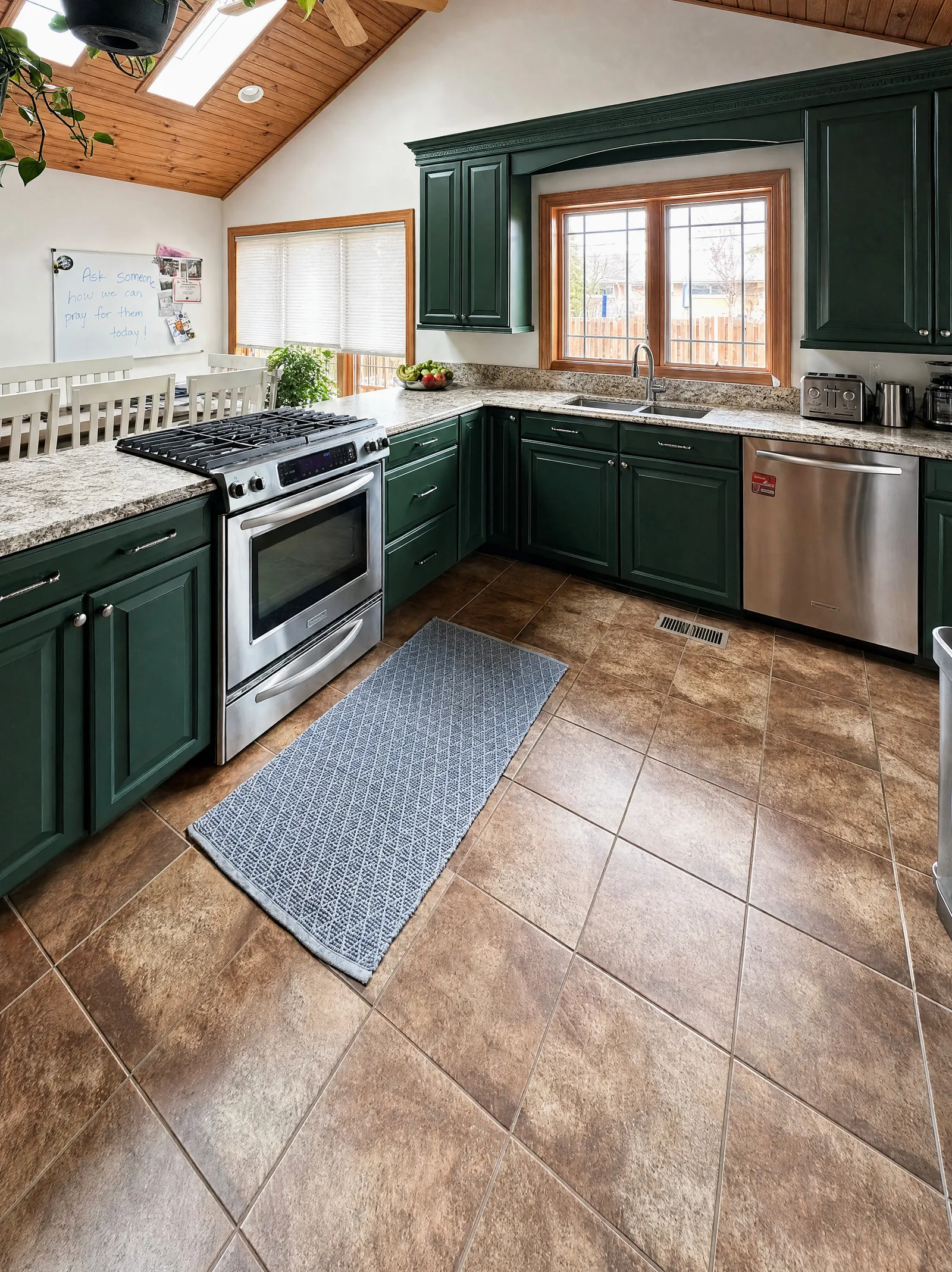
The counter is the biggest surface next to the cabinets, so start there. White and light stone are the safest partners, and they make deeper greens look crisp. Gray granite and quartz suit sage and cooler greens, while warm tan and brown granite are easy matches for olive and forest.
A counter with a lot of pattern needs a quieter cabinet. If the stone has veins or flecks in it, hold your sample right beside them and look for a green or gray in the pattern that the cabinet can echo. If the counter is bold and the green is bold, one of them will lose.
Wood floors do half the work of choosing. Warm oak and maple floors go well with olive and forest greens, which share their warmth. Cooler gray floors sit better with sage. A deep red-brown floor can handle a dark green, but a pale, grayed green beside it can look washed out.
Trim and walls matter too. White or cream trim keeps green cabinets looking crisp, and a warm white wall lets them stand out. A wall close to the cabinet color can look heavy unless the room gets plenty of light.
Two green kitchens we've refinished
The first kitchen had natural maple cabinets under a pine tongue-and-groove vaulted ceiling, with granite counters that stayed as they were. Maple and pine were competing for the same warm note. In deep forest green, the cabinets give the ceiling something to sit against. You can see it in our maple cabinets refinished in forest green project.
The second was a newly built kitchen in builder white with three brass lantern pendants. Repainting the cabinets in a deep olive gave the room its color without replacing cabinetry that was brand new, and the brass pendants suited the olive. That's our white cabinets repainted in olive green project.
We've also refinished red built-ins in two shades of green. They show that green can hold more than one tone at once, as in our red built-ins refinished in two greens. If your cabinets are cherry or maple now, our guide to painting cherry cabinets covers the prep before the green goes on.
Which green for which kitchen
If you're not sure where to begin, start from the kitchen you have:
- A dim kitchen with one small window: stay with sage or a lighter olive, and keep the counters and backsplash light.
- A big, bright kitchen: this is where deep forest green earns its place. There's enough light for it to look rich instead of heavy.
- A kitchen with lots of wood, in the floor, the ceiling or the trim: olive and forest tie in with the warmth, as the maple kitchen above shows.
- A kitchen of white counters and a plain backsplash: nearly any green works, so choose by mood.
- A kitchen with busy stone or tile: a muted sage or gray-green stays out of its way.
All the cabinets, or only some
Green doesn't have to cover every cabinet. A green island in a kitchen of white cabinets is one of the easiest ways to try the color, and green lower cabinets under lighter uppers keeps a dark shade from crowding the room. Our post on two tone kitchen cabinets goes through the options.
Whichever you choose, keep to one green. Two different greens on neighboring cabinets look like a mistake unless they're clearly planned, like the two shades on those built-ins.
How light changes green
A green that looks fresh at noon can look gray at six o'clock. Part of that is how much light the color reflects: paint chips often print a light reflectance value, or LRV, which describes how much light a surface bounces back, and deeper greens reflect much less than sage does. A deep forest green in a dim kitchen can feel closed in.
The other part is your bulbs. ENERGY STAR's bulb guide explains that lower Kelvin numbers mean warmer, yellowish light and higher numbers mean cooler, bluer light. Warm bulbs tend to bring out the yellow in an olive, and cooler bulbs can push a sage toward gray. Winter days are short in Wisconsin, so check your sample after dark too.
Hardware and the rest of the kitchen
Hardware changes how green reads. Brass and warm gold look rich against olive and forest. Black hardware gives sage a crisp, modern edge, and brushed nickel keeps it soft. Plan the pulls when you choose the color, and our ideas for cabinet hardware cover finishes and sizes.
If you like green but have a small kitchen, lean toward the lighter end of the range. Our post on the best cabinet colors for small kitchens explains why. And if you want green only on the island, see our ideas for kitchen island paint colors.
Deep greens and the cure
Deeper colors take longer to harden. Dunn-Edwards says dark colors with a high loading of pigment generally take longer to dry and cure than light ones, and puts the full cure of latex coatings at 14 to 30 days. For a forest or olive, that means going gently for the first few weeks. Black is the extreme case, covered in our post on black painted kitchen cabinets.
Our post on dry time versus cure time explains the difference, and how long cabinet painting takes covers the schedule for a typical kitchen.
Before you commit to a green
- Look at big samples against your counter, floor and backsplash, not on a white card.
- Check them in the morning and again at night under your own bulbs.
- Decide on pulls and knobs at the same time, since hardware is part of the look.
- Think about the wall color and whether you want the cabinets to stand out or blend in.
- Ask for an estimate once you've narrowed it to one or two shades.
George is based in Waunakee and works across Madison and Dane County. When you're ready, ask for a free estimate, and he'll talk through your kitchen and quote the cabinet refinishing in writing, priced per cabinet with paint included.
Common questions
What color countertops go with green kitchen cabinets?
White and light stone are the safest, and they make deeper greens stand out. Warm granites and butcher block suit olive and forest greens, and cool gray counters sit well with sage. Hold a sample against the counter before you commit.
Is green a safe choice for kitchen cabinets?
Green is easier to live with than most people expect, because muted and deep greens behave like neutrals beside wood, white and stone. And if you ever want a change, painted cabinets can be painted again with the same cleaning, sanding and priming.
What wall color goes with green kitchen cabinets?
Warm white, cream or a very light neutral keep the focus on the cabinets. A wall color close to the cabinet green can look heavy unless the room has plenty of light.
What is the best green for a small kitchen?
A soft sage or another lighter, grayer green is the easiest. Lighter colors reflect more light, which helps a small room feel open, and the LRV printed on many paint chips tells you how much.
Can you paint kitchen cabinets green?
Yes. Stained, painted, laminate and unfinished cabinets can all be refinished in a new color. Every job gets cleaning, degreasing, sanding and priming before the color goes on.
Sources
- Dry Time versus Cure Time of Paint (technical bulletin), Dunn-Edwards
- Light reflectance value, Wikipedia
- LED Bulbs Made Easy (bulb color and brightness guide), ENERGY STAR, U.S. Environmental Protection Agency
More on cabinet refinishing and every cabinets post.