Should you paint the inside of your kitchen cabinets?
· 5 min read · By GK Painting & Remodeling
Painting the inside of kitchen cabinets is optional, and for most kitchens the doors, drawer fronts and visible frames matter far more. Interiors are worth painting when you can see into them, as with glass doors or open shelves, or when they're stained, worn or dated; otherwise a clean, sound interior can be left alone.
Here's how to decide, how painted shelves hold up, what to expect from the fumes and the cure, and a middle path for kitchens where painting every inch isn't worth it. If you're still deciding whether to paint at all, start with our guide to painting or replacing your cabinets.
What the inside of a cabinet includes
The inside means the shelves, the side walls, the back and the floor of each box, plus the backs of the doors and the drawer boxes. It's a lot of surface, and it's often a different material from the fronts: laminate, a factory-coated board, or plain plywood.
That matters because the material decides the preparation. Laminate is slick and needs a primer made to bond to it, which we cover in our guide to painting laminate cabinets. Knowing what you have is the first step.
When painting the inside makes sense
- Glass-front doors or open shelves, where the inside is part of the kitchen's look.
- Interiors that are stained, yellowed, water-marked or worn, especially under the sink.
- A big color change on the outside. When the doors open on a dated interior, the mismatch shows.
- Cabinets you want to look brighter inside, so it's easier to see what's on the shelves.
- Backs of doors and shelf edges you see every time a door swings open.
The common thread is visibility. If you or your guests see the inside, painting it finishes the job. If nobody ever looks, it's work that doesn't show.
Odor is another reason to look closer. A cabinet that smells of old spills is a candidate for a thorough cleaning first, and painting it afterward leaves you a fresh, clean surface that you notice every day.
When to leave it alone
- The interior is clean, smooth and sound, so there's nothing to fix.
- It's a cabinet you rarely open, like the one above the refrigerator.
- It's a heavy-use shelf, where plates and pots slide across the surface every day.
- It's a laminate or coated interior in good shape, since painting it adds a bond to get right.
Painting the inside also adds real work: more surface to clean and sand, more coats, more drying time, and a bigger area that has to cure before it's loaded again. That's a fair price when the inside shows and a poor one when it doesn't.
How painted shelves hold up
Shelves take a different kind of wear from doors. Weight sits on them, dishes slide across them, and nothing is wiped as often. A well-prepared, fully cured finish handles that, but a fresh one is soft, and a painted shelf is the place that shows it first.
Dunn-Edwards describes a problem called blocking: freshly painted surfaces that stick to each other when they're pressed together, tearing paint off when they come apart. Stacked plates on a shelf that hasn't cured can do the same thing. The fix is patience. Our post on dry time versus cure time explains how long to wait and why.
Sheen is a trade-off here too. Glossier surfaces generally wipe clean more easily, but Dunn-Edwards says higher gloss coatings take longer to fully cure than lower sheens. Ask about it for your shelves, and see our post on the best paint finish for kitchen cabinets.
Drawers, door backs and the rest of the box
Drawer boxes are the interior surface that moves. Cutlery trays slide, utensils rattle, and the bottom of the drawer takes a scrape every time it opens. Many people leave the drawer boxes as they are and refinish only the drawer fronts.
The backs of the doors are different. You see them every time a door swings open, and they take little wear, so they're the easiest interior surface to paint.
A quick test works for any interior surface: how often do you see it, and how often does something slide across it? Seen often with little sliding, paint it. Rarely seen with heavy sliding, leave it.
Fumes, closed boxes and the first weeks
Paint gives off organic compounds as it dries. The U.S. Environmental Protection Agency says paints contain organic solvents, advises increasing ventilation when you use products like them, and notes that elevated concentrations can persist in the air after the activity is over.
A closed cabinet is about the worst spot for air circulation in a kitchen, and Dunn-Edwards says that poor circulation can prolong drying while good ventilation helps a coating cure. So keep the doors open when you can in the first days, run a fan if the weather allows, and give the shelves their cure before you load them. Dunn-Edwards puts the full cure of latex coatings at 14 to 30 days.
Preparation and what the insides add
Cabinet interiors collect crumbs, cooking grease and sticky shelf-paper residue, especially near the range, and paint won't bond to any of it. The preparation is the same as for the fronts: clean, degrease, sand and prime. Every cabinet refinishing job gets those steps on the surfaces that are painted.
Interiors add handling and time. Dunn-Edwards says latex coatings are typically dry to the touch in one to two hours and ready for a recoat in two to four, so every extra coat inside is more waiting. Empty the cabinets completely before the job begins. Our post on how long cabinet painting takes shows where the days go, and if you want the insides done, say so when you ask for an estimate so it's part of the plan from the start.
Choosing a color for the inside
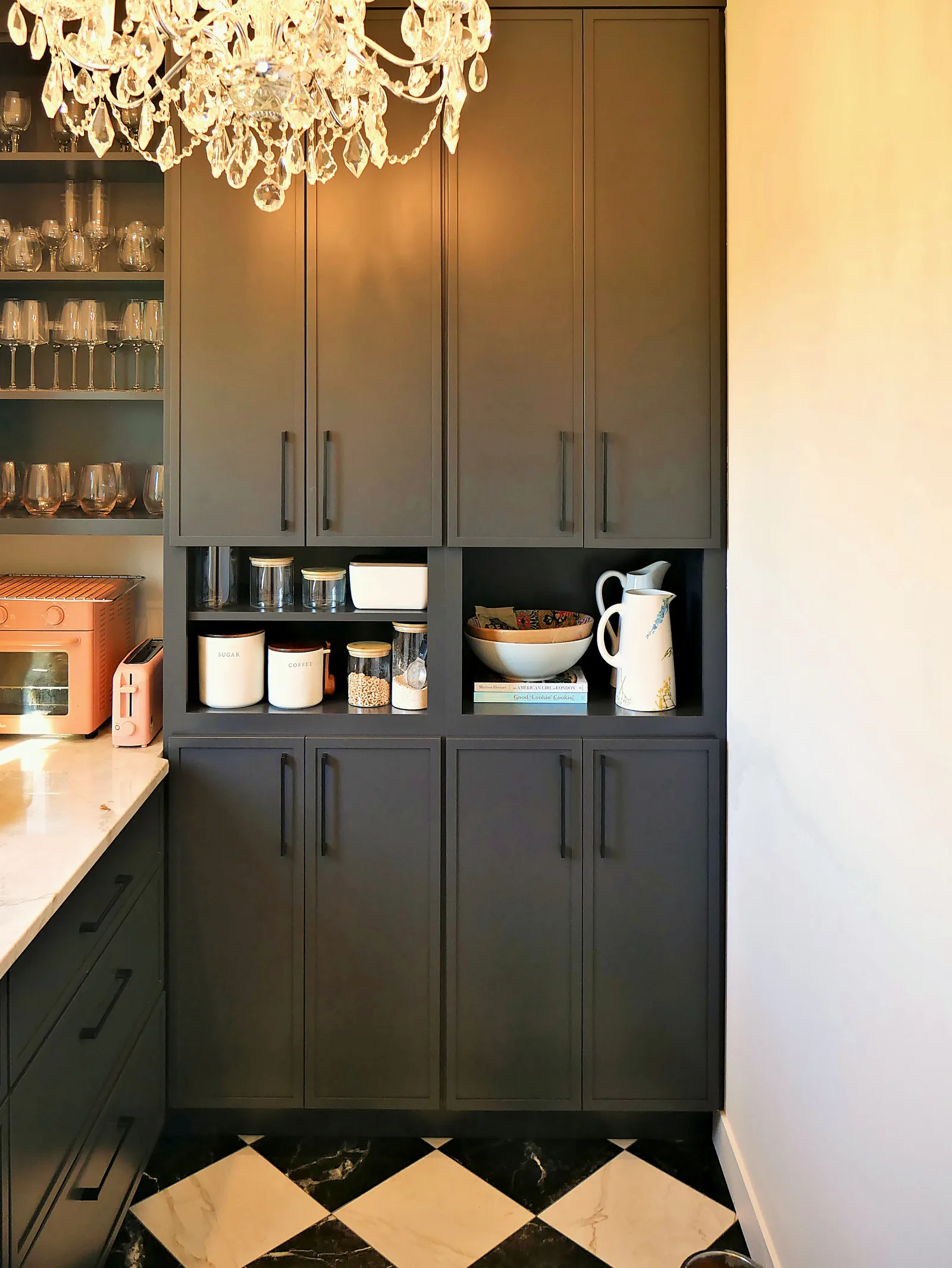
Most people go lighter inside than out. Paint chips often print a light reflectance value, or LRV, which describes how much light a surface bounces back, and a light interior reflects more of the light that reaches it, so what's on the shelf is easier to see. A dark exterior with a white interior is a classic combination for that reason.
You can also match the interior to the outside for a continuous look when the doors are open, or choose a soft contrast. If you're weighing exterior colors too, our guide to choosing a cabinet color covers five real kitchens.
A middle path
You don't have to choose between painting every inch and none of it. Paint the parts that show, like glass-door cabinets, open shelves and the backs of doors, and leave the deep, rarely opened boxes alone. Add liners to the shelves that take the most weight.
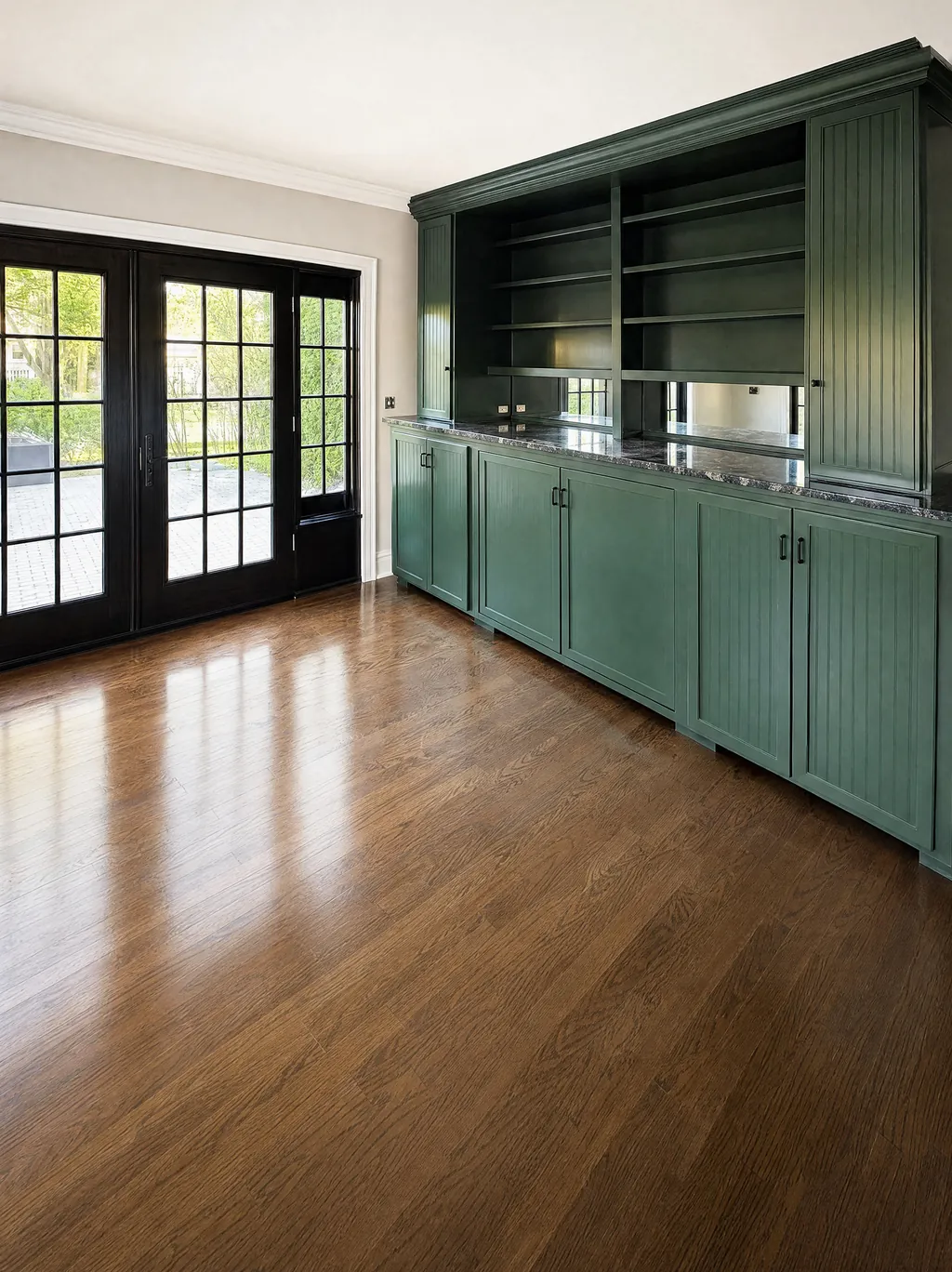
The same thinking applies to built-ins, where the shelves are always visible. Our post on painting built-in bookshelves covers that case. If you're not sure which interiors are worth it in your kitchen, ask for a free estimate and George can talk through the options on the call.
Common questions
Should I paint the inside of my kitchen cabinets?
Only if you'll see the inside or it's in poor shape. Glass doors, open shelves and stained or worn interiors are the best reasons. A clean, sound interior can be left alone.
Do painted shelves stand up to dishes?
A well-prepared, fully cured finish can, but fresh paint is soft for weeks. Dunn-Edwards puts the full cure of latex coatings at 14 to 30 days, and freshly painted surfaces pressed together can stick. Wait for the cure before loading, and consider a liner on the heaviest-use shelves.
How long before I can put dishes back in painted cabinets?
Wait for the finish to cure if you can. Latex paint is typically dry to the touch in one to two hours, but Dunn-Edwards says it takes 14 to 30 days to cure fully, and dry isn't the same as cured. Ask whoever painted them what they recommend for your paint.
Is it safe to store dishes in freshly painted cabinets?
Give the paint time to dry and air out first. The EPA advises increasing ventilation when using products that release VOCs, and notes that concentrations can persist after the work is done. Check the paint's label and ask the painter about it.
Can you paint laminate cabinet interiors?
Yes, with the right preparation. Laminate is slick, so it needs cleaning, a light sanding and a primer made to bond to it before any color goes on.
Sources
- Dry Time versus Cure Time of Paint (technical bulletin), Dunn-Edwards
- Blocking: causes and fixes, Dunn-Edwards
- Volatile Organic Compounds' Impact on Indoor Air Quality, U.S. Environmental Protection Agency
- Light reflectance value, Wikipedia
More on cabinet refinishing and every cabinets post.