Paint or stain for your deck: the plain answer
· 5 min read · By GK Painting & Remodeling

For most wood decks, stain is the better choice: a penetrating stain soaks into the boards and wears away gradually, while paint forms a film on a surface people walk on and tends to peel. Paint makes sense on a covered porch floor, or on a deck you want to disguise and are willing to maintain.
That's the guidance from the U.S. Forest Products Laboratory, and it comes with a catch: once a deck is painted, switching to stain means stripping it back to bare wood. Here's how the two behave, what upkeep each one means, and a plain way to decide. We stain and refinish decks as part of our exterior painting work, so we'd rather you pick the right finish than the easy one.
The short answer, with one exception
The Forest Products Laboratory's wood handbook says many fully exposed decks are more effectively finished with only a water-repellent preservative or a penetrating semi-transparent stain than with paint. Decks finished that way need refinishing more often than painted surfaces do, but refinishing is easy, because there's none of the laborious prep that peeled paint requires.
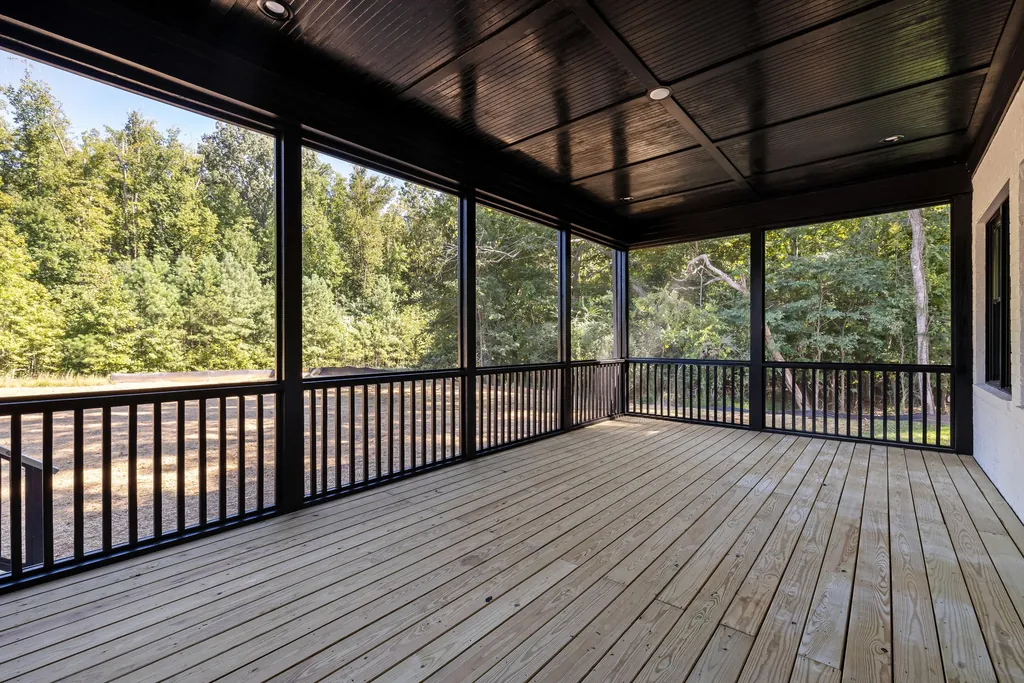
The exception is the porch. Exposed porch flooring is usually painted, the handbook says, with primers and paints formulated for porches because they resist abrasion and wear. A porch under a roof and a deck open to the sky are different jobs, even when the boards look alike.
How the two behave
| Feature | Penetrating stain | Paint |
|---|---|---|
| How it works | Soaks into the wood | Forms a film on top |
| How it wears | Fades and thins out | Cracks, peels and flakes |
| Grain | Shows through | Hidden |
| Redoing it | Clean and recoat | Scrape, sand, prime, repaint |
| Expected life on decking | 2 to 3 years new, 3 to 6 weathered | 2 to 3 years |
| Suitability for decking | Moderate on new, high on weathered | Low |
The last two rows come from the handbook's table of expected service life, compiled for an average location in the continental U.S. The lifespans look similar. What differs is how each one fails, and what it takes to start over.
Why paint struggles on a deck
A deck is a floor that lives outdoors. A deck-finish study by researchers at Oregon State University and the Forest Products Laboratory describes what the surface faces: wetting from rain, dew and snow, ultraviolet light, and abrasion from foot traffic and furniture. Water pools on flat boards instead of running off.
A film has to hold up against all of that at once. The handbook explains why film-forming finishes struggle on horizontal surfaces: solid-color stains, which behave like paint, lack abrasion resistance and, because they form a film, tend to fail by flaking. Ordinary house paint has the same weakness, which is why porch floors get paint made to resist abrasion.
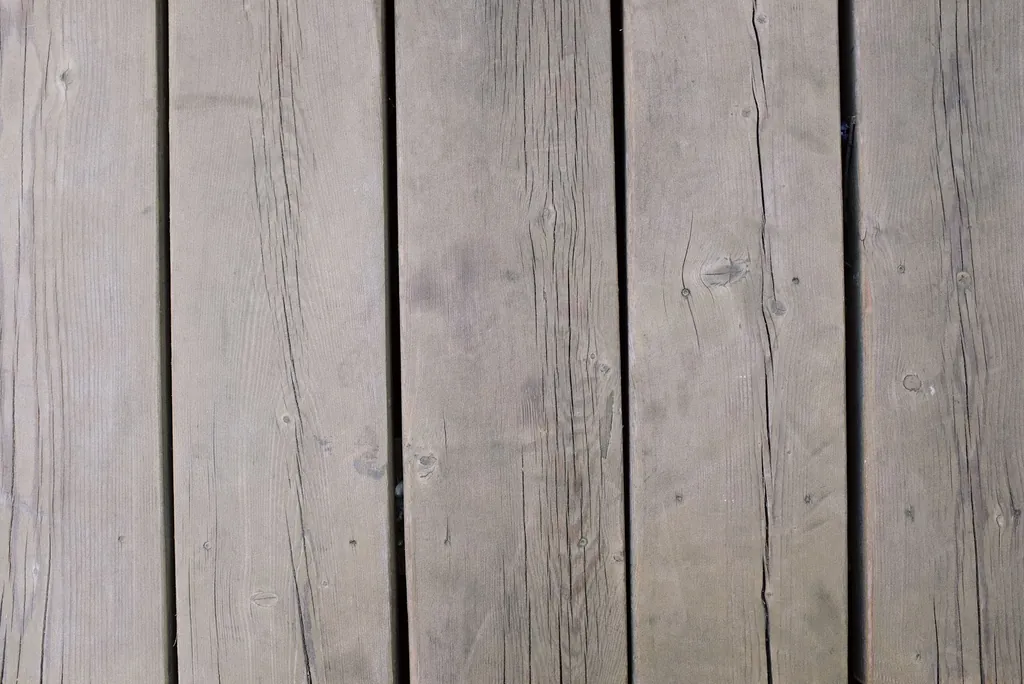
A penetrating stain has no film to flake. It simply thins out, first where people walk, and the boards underneath stay bare and ready for the next coat. New treated lumber adds its own wait, covered in staining pressure treated wood.
When paint is the right call
A covered porch floor
Porches get wet from windblown rain, so the handbook says to pretreat the wood with a water-repellent preservative before painting, then use primers and paints made for porches. Our look at porch paint ideas goes through colors and details.
A deck that's already painted
Purdue Extension says penetrating stain isn't effective over old paint, so a painted deck stays on the paint path unless you strip it back to bare wood. If you repaint, the surface still needs scraping, sanding and a good clean first.
A tired deck you want to hide
Sound but ugly boards, with gray patches and mismatched replacements, are where people reach for paint. A solid stain made for decks is the middle path, and our guide to solid and semi-transparent deck stain explains the trade-offs.
What the prep looks like for each
Stain prep is cleaning, brightening, drying and a light sanding, and our guide to preparing a deck for staining covers it step by step. The finish goes straight onto clean, dry, bare wood.
Paint has more layers to get right. The handbook's sequence for wood is a water-repellent preservative first, then at least three warm, sunny days for it to dry, then primer on the bare wood, then two coats of good paint. It says to apply enough primer to hide the grain and not to spread it thin. The handbook says a primer coat of the right thickness helps prevent premature paint failure, so skipping steps tends to backfire.
That's also the argument for stain on a typical deck: fewer layers means fewer places for the finish to let go.
Color and look
Stain keeps the wood in the picture. Purdue Extension says semi-transparent stains are especially popular in brown tones for a natural or rustic look, and they aren't available in white. Each board shows its own grain and color through the stain.
Paint can be any color and hides everything underneath, which is the point if the boards are blotchy or a mix of old and new. A chip or a worn spot shows the bare wood underneath. For a look at deep wood tones on cedar, see our cedar pergola stained dark brown.
What upkeep looks like
Stain asks for attention more often and for less effort each time. You walk the deck once a year, and when it starts to gray or the water soaks in, you clean it and add a coat. Purdue Extension says refinishing a semi-transparent stain takes no heavy scraping or sanding, just a stiff bristle brush and a new coat. Our guide to how long deck stain lasts has the ranges.
Paint asks for attention less often and for much more effort when it comes. A deck that starts to peel needs the failing paint scraped and sanded off, any bare spots primed and the whole surface repainted. Peeling can spread, since lifted edges give water a way in underneath.
A quick way to decide
Choose stain if:
- The deck is fully exposed to sun and rain.
- The boards are sound and you like seeing the grain.
- You'd rather clean and recoat than scrape and repaint.
- The deck is bare or has only a semi-transparent stain on it now.
Choose paint, or a solid finish made for decks, if:
- The deck is already painted and you don't want to strip it.
- It's a covered porch floor and you want a specific color.
- The boards are sound but badly mismatched, and you want an even look.
- You're prepared for the scraping and sanding that come when it fails.
Getting it done right
Whatever you choose, prep decides how long it lasts. If you'd like us to stain or refinish your deck, ask for a free estimate and tell us what's on it now. George visits if he needs to see it, then sends a written quote and a start date.
One last note: everything here is about wood decks. Composite decking has its own care rules from its maker, so read those before putting any finish on it, and say which kind you have when you call.
Common questions
Is it better to paint or stain a deck?
For most wood decks that are fully exposed to the weather, stain. The Forest Products Laboratory says a penetrating stain or water-repellent finish is more effective than paint on such decks, and that refinishing is easier. Paint is the usual choice for porch floors.
Can I stain over a painted deck?
Not successfully. Purdue Extension says penetrating stain isn't effective over old paint or solid-color stain. You'd need to strip the deck back to bare wood first, or keep repainting.
Can I paint over a stained deck?
Often, but it's a one-way street, because stain won't take over paint later without stripping. Clean the deck thoroughly, test a small area first, and use primer and paint made for decks or porch floors. A stain that's flaking has to come off first.
Why does paint peel on a deck?
A deck is a flat surface that takes rain, sun, snow and foot traffic. The Forest Products Laboratory says film-forming finishes on horizontal surfaces tend to fail by flaking, and an Oregon State study notes that water pools on deck boards. Once an edge lifts, water gets under it.
Can I use solid stain instead of paint?
Yes, if it's made for decks. The Forest Products Laboratory advises against solid-color stains on horizontal surfaces unless they're specially formulated for decks, because they lack abrasion resistance and tend to flake.
Does the choice change for composite decking?
Yes. Composite decking has its own care instructions from the manufacturer, and this guide covers wood only. Follow the maker's instructions before putting any paint or stain on it.
Sources
- Finishing of Wood (Wood Handbook, chapter 15), USDA Forest Service, Forest Products Laboratory
- Selection and Application of Exterior Finishes for Wood (NCR-135), Purdue University Cooperative Extension Service
- Protecting wood decks from biodegradation and weathering: evaluation of deck finish systems, USDA Forest Service, Forest Products Laboratory and Oregon State University
- Reduce the Risk of Lead Exposure at Home, U.S. Environmental Protection Agency
- Lead Renovation, Repair and Painting Program, U.S. Environmental Protection Agency
More on decks and exterior and every decks and exterior post.