Staining pressure treated wood: the wait, the water test and Madison timing
· 7 min read · By GK Painting & Remodeling
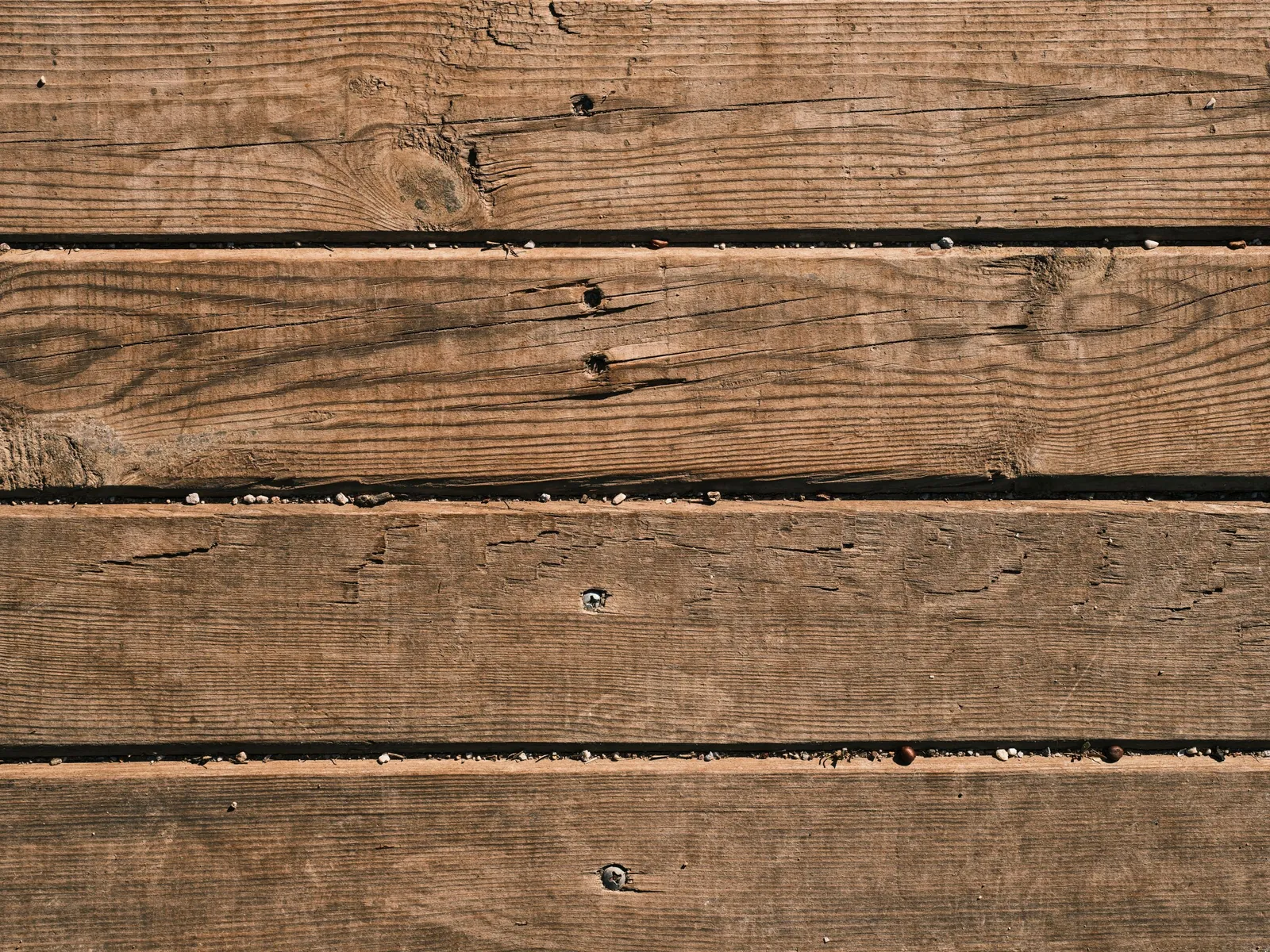
Yes, you can stain pressure treated wood, and you should. Staining pressure treated wood works once the boards are dry enough to soak up a drop of water, which can take about a week or several months. Published waits run that wide, so a simple test beats the calendar.
Below: why the advice varies so much, how to test the boards, what Madison's damp months do to the timeline, and two things to check on an older deck. For the weather side of timing, see the best time to stain a deck.
Is it a good idea to stain pressure treated wood?
Yes. The Forest Products Laboratory says treatment protects deck wood from decay and termites. It doesn't stop weathering: Culpeper, a lumber treater, says weather cycles leave treated wood susceptible to splits, cracks and checks, and the Southern Forest Products Association says decks weather especially fast because they catch direct sun and collect moisture.
That's why the association recommends at least a clear water-repellent coating on decking boards, and semi-transparent stain if you want color.
Today's treated lumber takes a finish well once it dries. The lab's Wood Handbook says wood treated with waterborne preservatives, such as copper-based systems, can be painted or stained if the wood is clean and dry. Our post on whether to paint or stain a deck covers the bigger choice.
How long to wait before staining pressure treated wood
The honest answer is that the sources disagree, by a lot. Here are published waits for new treated lumber, side by side.
| Source | Wait it gives | The condition |
|---|---|---|
| Forest Products Laboratory (Wood Handbook) | About one week | For surfaces to dry enough to finish, on clean, dry wood |
| Culpeper, a lumber treater | Within 30 days | Its care guide: 2 to 3 weeks in hot, dry summers, 4 to 6 weeks in cooler months |
| YellaWood, a treated lumber brand | Within six weeks | So long as the wood is sufficiently dry |
| Viance, a preservative maker | Typically 60 days | Says drying time is hard to predict |
| Southern Forest Products Association | 30 days or six months | 30 days for semi-transparent oil-based stain; six months for paint or solid-color stain |
| Same association, re-dried wood | Right away | Lumber kiln-dried or air-dried after treatment |
Published guidance, gathered by us; these aren't our measurements. Every source agrees on the first step: the wood has to be dry.
Why the numbers differ
Treatment adds water. The Wood Handbook says that because water goes into the wood during treatment, some drying and shrinkage will happen after installation unless the wood was kiln-dried after treatment. Viance says the drying time depends on how long ago the wood was treated, sun exposure, local temperature and recent weather.
The finish matters too. The Wood Handbook warns that preservative can bleed through latex paints and solid-color stains when the wood is still wet. The association says paint and solid stain form a film, and moisture escaping from wet wood causes blisters and poor adhesion, which is why it gives them the longest wait.
How to tell when the boards are ready
Test the wood, not the calendar. Sprinkle water on several boards, including shaded ones. The association's splash test is simple: on a new deck, if droplets form on contact, the lumber isn't dry enough for a finish; if the water soaks in, it's time.
A pin-style moisture meter gives you a number instead of a guess. Check the end tag too: the association says lumber re-dried after treatment, by kiln or air, is already in balance with the air, so coating can start right away.
What dry means in Madison
Outdoor wood never gets bone dry. The Wood Handbook says that for much of the United States, thoroughly air-dried lumber bottoms out at 12 to 15 percent moisture content. Its table of equilibrium moisture content, the level wood settles at in the local air, gives these monthly averages for Madison:
| Months | Outdoor equilibrium moisture content |
|---|---|
| March, April, May | 13.8, 12.8, 12.6 percent |
| June, July, August | 12.9, 13.2, 14.1 percent |
| September, October, November | 14.3, 13.8, 14.6 percent |
| December, January, February | 15.4, 14.4, 14.3 percent |
From the Wood Handbook's Table 13-1. So a meter reading in the low teens is about as dry as a Madison deck gets, and by November and December the air alone holds outdoor wood near 15 percent. Our post on the best time to stain a deck covers the reading to aim for.
Waiting too long hurts too
The old rule was to let new lumber weather for months. The Wood Handbook now calls letting your deck weather before painting it a classic example of advice that was good at the time and is now the source of much pain.
The reason is sunburn. The Forest Products Laboratory calls sun exposure before a film-forming finish a major cause of coating failures. On cedar boards left in the sun for 16 weeks, paint peeled and needed refinishing within 3 years; on boards exposed for one week, it started peeling after 13. Denser woods such as Douglas-fir and southern yellow pine lost little paint adhesion until they'd weathered 3 to 4 weeks.
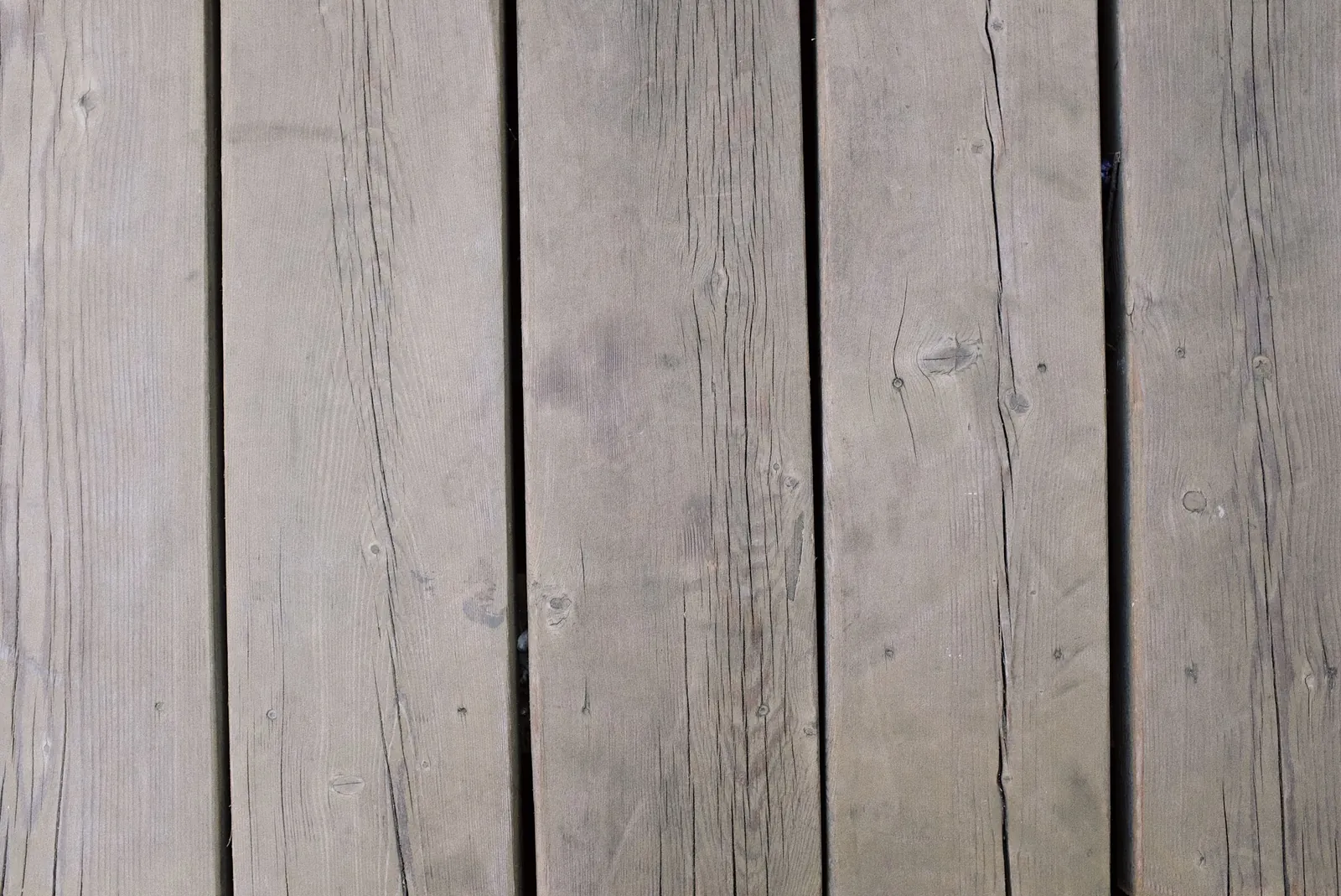
Penetrating stains are more forgiving: the handbook says they last longer on sunburned wood than on fresh wood. Paint and solid stain aren't. If you're planning a film-forming finish, test early and finish as soon as the wood passes.
What kind of stain to use on pressure treated wood
For deck boards, a penetrating stain. The Wood Handbook calls penetrating finishes an excellent choice for decks and railings, because film-forming finishes on decks often don't last any longer, and penetrating stains are easier to refinish.
- Semi-transparent for color: the Southern Forest Products Association says semi-transparent stains are best if you want color.
- No paint or solid stain underfoot: it says they show wear on frequently used pathways and aren't recommended for decking boards or stair treads.
- Oil or water base: the makers split. Culpeper recommends an oil-based stain with a water repellent and a UV stabilizer; Viance says a good quality oil-based or water-based stain.
- Lighter is easier on the boards: the Wood Handbook says darker finishes heat up more in the sun and so cause more warping and checking than light ones, and decks are often the worst affected.
Our posts on solid vs semi-transparent stain and how long deck stain lasts go further.
Next-step hurdle: a deck finished in the fall
Build a deck in October and the water test may not pass before winter. Culpeper's care guide expects drying to take longer in cooler months, the Wood Handbook says air drying is very slow in the cold winter months, and Madison's outdoor equilibrium moisture content climbs from 13.8 percent in October to 15.4 percent in December.
Don't force it. Keep leaves and debris swept off so the boards can dry, and retest in spring once the weather settles. If you want some protection over winter, read the label of a water repellent: the association says most water-repellent instructions recommend an immediate application. Our post on winter deck care covers the months in between.
When spring comes, the deck prep steps come first: clean, let it dry, and test again.
Older decks and fasteners: check these first
A deck built before 2004
EPA says that before 2004, wood treated with chromated arsenicals (CCA) was used in residential structures such as decks and playsets, and that manufacturers stopped making it for homeowner uses in December 2003. EPA doesn't require removing old structures, and says applying a penetrating coating, such as an oil- or water-based stain, on a regular basis may reduce the leaching of chemicals.
Its handling advice: don't burn CCA or other treated wood at home, wear goggles and a dust mask when sawing CCA wood, and wash your hands after handling it.
Fasteners
Look at the screws and nails before you stain. The Wood Handbook says metal fasteners can corrode in contact with wood treated with certain preservatives when moisture is present, and that 300 series stainless steel nails have performed well in wood treated with copper azole and alkaline copper quaternary. Culpeper's care guide makes a fastener check part of routine maintenance, and says a popped nail can be driven back in.
When to stop and call a professional
- Call 911 if anyone is badly hurt in a fall from a raised deck or a ladder.
- Today: bag treated scraps instead of burning them. EPA says not to burn CCA or other preservative-treated wood in a residential setting.
- Stop sanding painted railings or trim on a home built before 1978 until you know what's in the paint. EPA says work in a pre-1978 home with lead-based paint can easily create dangerous lead dust; see painting older Madison homes.
- Call a pro for soft or rotting boards, loose railings or posts, or boards that still won't pass the water test.
How we stain decks at GK Painting
Deck staining and refinishing is part of our exterior work, along with entryways, exterior doors, garages and trim. We look at the condition of the wood and tell you whether paint or stain will hold up on it. Prep is some combination of cleaning, scraping, sanding, minor repairs and priming, because the finish is only as good as what's under it.
Deck refinishing usually takes several days, depending on the size and condition of the deck, drying time and weather, and Wisconsin weather can shift the schedule. George is on every job himself.
We're based in Waunakee and work across Madison and the surrounding Dane County communities, and exterior work is priced with a written quote. The written quote is the price, no extra charge if the job takes longer than expected. Read about our exterior painting service or ask for a free estimate.
Common questions
Is it a good idea to stain pressure-treated wood?
Yes. Treatment protects the wood from decay and termites, not from sun and weather. The Southern Forest Products Association recommends at least a clear water repellent on decking and semi-transparent stain for color, and EPA says water-based preservatives leave a clean, paintable surface once they dry.
How long should you wait before you stain pressure-treated wood?
Until a drop of water soaks in instead of beading up. Published waits run from about one week (Forest Products Laboratory) to six months for paint or solid stain (Southern Forest Products Association). Lumber re-dried after treatment can be finished right away, and Madison's cooler, damper months stretch the wait.
What kind of stain should you use on pressure-treated wood?
A penetrating, semi-transparent stain for deck boards. The Forest Products Laboratory calls penetrating finishes an excellent choice for decks, and the Southern Forest Products Association says paint and solid stain aren't recommended for decking or stair treads. Makers split on oil versus water base, so read the label.
Can you stain pressure treated wood right away?
Only if it's dry. The Southern Forest Products Association says lumber re-dried after treatment can be finished immediately. Standard wet-treated lumber usually needs time, so run the water-drop test on several boards and start once the water soaks in. Some water repellents are made to go on right away; check the label.
What happens if you stain pressure treated wood too soon?
The finish may not soak in or hold. The Wood Handbook says preservative can bleed through latex paint and solid stain on wet wood, and the Southern Forest Products Association says escaping moisture causes blisters and poor adhesion. Waiting months has a cost too, because sun damages the bare surface.
Can you stain an old CCA-treated deck?
Yes. EPA says applying a penetrating coating, such as an oil- or water-based stain, on a regular basis to an older deck built with chromated arsenical-treated wood may reduce the leaching of chemicals. Wear goggles and a dust mask when sawing it, wash your hands afterward, and never burn the scraps.
Sources
- Wood Handbook: Wood as an Engineering Material (FPL-GTR-282), USDA Forest Service, Forest Products Laboratory
- Chromated Arsenicals (CCA), U.S. Environmental Protection Agency
- Finishing, Maintenance, and Inspection, Southern Forest Products Association
- Treated Wood FAQs: Deck Finishing, Viance
- Painting, Staining and Sealing Pressure Treated Wood, Culpeper Wood Preservers
More on decks and exterior and every decks and exterior post.