How to prepare a deck for staining, in the order that works
· 6 min read · By GK Painting & Remodeling
To prepare a deck for staining, repair anything loose or rotten, strip off any finish that's failing, clean away dirt and mildew, brighten the wood, let it dry completely and sand lightly before the first coat. Skip or rush a step and it shows later, as blotchy color or a finish that doesn't hold.
Prep is most of the work on any deck job. Here's the order of work and the reason behind each step, drawn from the U.S. Forest Products Laboratory and a treated-lumber maker's staining guide. It's the part of our exterior painting work that decides how long a stain lasts.
The order of work
- Walk the deck and mark what needs repair: loose boards, popped nails or screws, and soft or rotted wood.
- Clear the deck of furniture, planters and the grill, and cover plants and nearby surfaces.
- Remove any finish that's flaking, peeling or sitting on the wood as a film.
- Clean the whole deck of dirt, grease and mildew.
- Brighten the wood if it's gray or stained.
- Rinse thoroughly.
- Let the boards dry until they pass a moisture check.
- Sand lightly and dust everything off.
- Check the forecast, then stain.
The last step has its own rules. Our guide to the best time to stain a deck covers the weather and the moisture check.
Repair before you clean
Do the carpentry first. Anything you sand, wash or stain before it's fixed will have to be touched up afterward, and a board that's replaced after staining rarely matches the rest.
Check fasteners across the whole deck, replace boards that are soft, split or rotted, and look hard at the railings and stair treads, since those get the most hands and feet. New boards need to dry out like any new lumber, so test them separately before staining.
Protect what's around the deck
Cleaners, rinse water and stain all travel. Before anything wet comes out, cover or soak plants and shrubs along the edge, shield the house walls, the door threshold and any concrete or brick the deck touches, and move cars and grills out of range. It's the same rule we follow on every job: protection goes down before any paint or stain comes out.
Think about the underside too. Rinse water carries cleaner through the gaps between boards, so anything stored beneath the deck should be moved or covered. A few minutes with drop cloths and tape saves a lot of scrubbing later.
Deal with the old finish
A stain can only soak into bare wood. The treated-lumber guide says previously coated surfaces need to be sanded or stripped back to uniformly bare wood, and Purdue Extension says a semi-transparent stain isn't effective applied over a solid-color stain or old paint.
Flaking or peeling finish
This has to come off. The Forest Products Laboratory says that when cracking and peeling are extensive, it's usually best to remove all the finish from the affected area. Finish that's only loosely attached comes off with scraping and sanding, or low-pressure washing. Chemical strippers work too, and the treated-lumber guide says to rinse thoroughly afterward and clean with a neutralizing cleaner.
Faded stain that's still sound
A semi-transparent stain that has simply faded doesn't need stripping. Purdue Extension says it's relatively easy to refinish with a stiff bristle brush and a new coat, without heavy scraping or sanding.
Cleaning: dirt, mildew and gray
The treated-lumber guide says to clean thoroughly to remove dirt, grease, mold, mildew, other stains and discoloration. The Forest Products Laboratory says mildew is the main cause of discoloration on both painted and unpainted wood. It can be removed with a dilute solution of household bleach and detergent, or with commercial cleaners that remove mildew and brighten the wood at once.
Many of those commercial products use sodium percarbonate, an oxidizing agent that works on mildew like bleach does. Read the label, protect plants and skin, scrub with the grain and rinse everything well.
Work in sections so no cleaner dries on the boards before you get to it, and give the stairs and railings the same attention as the floor. Spots that stay dark after one pass usually need a second go, not a harder scrub. The goal is boards that look evenly clean before they ever see stain, because stain will show every patch of dirt you leave behind.
A note on pressure washers
A pressure washer can do real damage to a deck. The Forest Products Laboratory says the pressure needed to loosen firmly attached finish can erode the softer early growth in the wood, leaving a surface of the harder wood that's more difficult to finish. It adds that low pressure does less damage. Keep the pressure low, keep the wand moving and test a hidden corner first.
What a brightener does and doesn't do
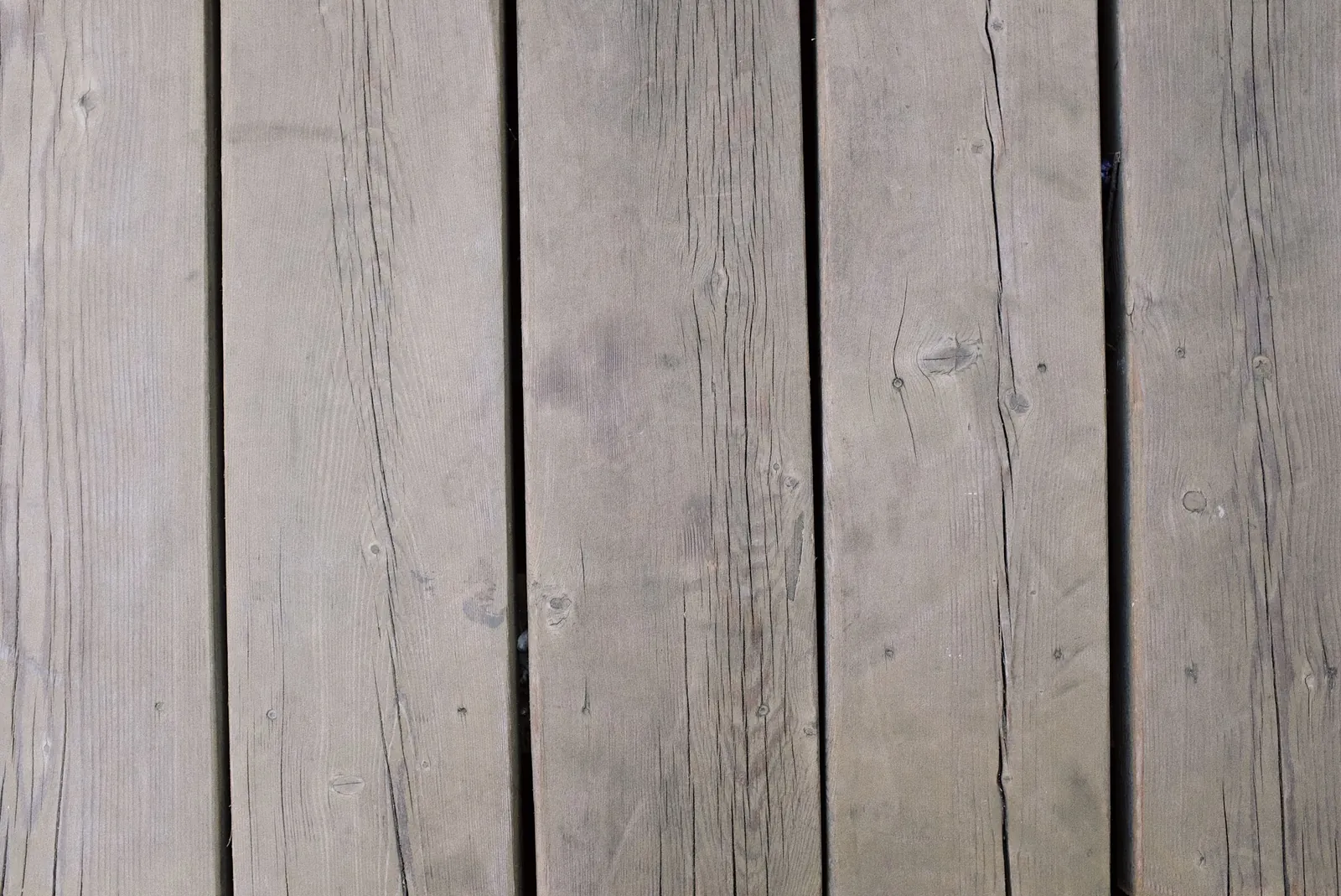
Brighteners clean up gray, tired-looking wood, but they don't add color. The Forest Products Laboratory is direct about it: removing discoloration reveals the wood's original color, and once weathering has stripped the colored components from the surface, it's a silvery gray. If you want color after that, it has to come from stain.
Different brighteners do different jobs. Oxalic acid products remove stains from extractives bleed and from iron, but they're not very good against mildew. Cleaners built on sodium hydroxide, a strong alkali, can darken wood if no brightener follows. Check the label of whatever you use to see which kind it is.
Sanding
The treated-lumber guide says all wood surfaces should be lightly sanded and thoroughly dusted to remove sanding residue and loose fibers, and that older unfinished wood may need sanding to remove discolored spots. The Forest Products Laboratory calls 50 to 80 grit sandpaper the best remedy for restoring a weathered wood surface.
Skip steel wool and wire brushes. Purdue Extension warns that they leave tiny iron deposits that react with the wood and show up as dark-blue stains sealed beneath a semi-transparent stain.
Dry, then check
Stain needs to soak in, and it can't soak into wet wood. Ideally the boards' moisture content is below 15 percent, according to the treated-lumber guide. A pin-style moisture meter reads it directly. Without one, drop a little water on the boards: if it isn't absorbed within a few moments, they're too wet.
Drying time depends on the weather and the wood, so there's no number of days to count on. Our post on how long to let a deck dry before staining lists the minimums stain makers give. Test several boards, shaded ones included, and wait for all of them.
This is also where prep and weather meet. The dry boards you need and the dry stretch the stain needs afterward are the same problem, so it pays to start the cleaning when the forecast has a few clear days in it. A deck that's clean and dry, with rain on the way, has to wait. On brand-new lumber the wait can be longer; our post on when new treated decks are ready for stain shows what Madison's damp months do to it.
Leaving the prep to us
Deck staining and refinishing is part of our exterior work. Before any stain comes out, we protect what's nearby, then clean, sand and repair where needed, because the finish is only as good as what's under it. George visits if he needs to see the deck, then sends a written quote and a start date. Ask for a free estimate and tell us what's on the deck now.
If you're planning to stain it yourself, our step by step guide to staining a deck picks up where this one leaves off, and our page on deck staining in Madison covers how we work around Dane County.
Common questions
Do I need to sand a deck before staining?
A light sanding is a good idea. One treated-lumber maker's guide says all wood surfaces should be lightly sanded and dusted, and that previously coated wood needs to be sanded or stripped to bare wood. The Forest Products Laboratory names 50 to 80 grit as a good range for restoring weathered wood.
Do I need a deck brightener?
Not always. Many cleaners that remove mildew also brighten the wood. A brightener won't add color, but it reveals the wood's original color by removing discoloration, and oxalic acid products remove iron and extractive stains.
Can I pressure wash a deck before staining?
Yes, carefully. The Forest Products Laboratory says high pressure can erode the softer part of the wood and leave a surface that's harder to finish, and that low pressure does less damage. Keep the wand moving and test a hidden spot first.
How long should a deck dry after cleaning?
Until the boards pass a moisture check. The treated-lumber guide says the moisture content should ideally be below 15 percent, and that water dropped on the wood should soak in within a few moments. The weather decides how long that takes.
Do I have to strip the old stain?
Only if it's flaking or peeling, or if it's a solid stain or paint. A faded semi-transparent stain that's still sound can be cleaned and recoated, according to Purdue Extension.
Is bleach okay for cleaning a deck?
The Forest Products Laboratory says mildew can be removed with a dilute solution of household bleach and detergent. Rinse the deck thoroughly, protect plants and skin, and follow the label of any cleaner you use.
Sources
- Finishing of Wood (Wood Handbook, chapter 15), USDA Forest Service, Forest Products Laboratory
- How to Stain a Deck, YellaWood
- Selection and Application of Exterior Finishes for Wood (NCR-135), Purdue University Cooperative Extension Service
- Reduce the Risk of Lead Exposure at Home, U.S. Environmental Protection Agency
- Lead Renovation, Repair and Painting Program, U.S. Environmental Protection Agency
More on decks and exterior and every decks and exterior post.