How long deck stain lasts, and how to tell when it's done
· 6 min read · By GK Painting & Remodeling
A semi-transparent deck stain usually lasts about two to three years on new, smooth boards and three to six years on rough or weathered ones, according to the general ranges in the U.S. Forest Products Laboratory's wood handbook. Sun, foot traffic, prep and the type of stain move any one deck up or down inside those numbers.
The Forest Products Laboratory is a federal wood research lab in Madison, so the ranges come from our own backyard, though they're averages for the continental U.S. and not a promise for any one deck. Here's the table, what shortens a stain's life, the signs that yours is finished, and how to get more from each coat. Refinishing decks is part of our exterior painting work.
The ranges, and where they come from
The handbook's table of expected service life rates finishes by surface, and decking has its own rows. Here they are, in years, for the finishes homeowners ask about:
| Finish on decking | New, smooth boards | Weathered, rough-sawn boards |
|---|---|---|
| Clear water-repellent finish | 1 to 2 years | 2 to 3 years |
| Semi-transparent stain | 2 to 3 years | 3 to 6 years |
| Solid-color stain | 1 to 2 years | 1 to 2 years |
| Paint | 2 to 3 years | 2 to 3 years |
The table is from a 1999 chapter, compiled from the observations of many researchers for an average location in the continental U.S. The handbook says life varies in extreme climates. Treat the numbers as a planning range, not a schedule.
What shortens a stain's life
A deck's surface takes more punishment than any wall. A deck-finish study by researchers at Oregon State University and the Forest Products Laboratory lists what it faces:
- Wetting from rain, dew and snow, with water that pools on flat boards instead of running off.
- Ultraviolet light from the sun, which breaks down both the finish and the wood's surface.
- Abrasion from foot traffic and furniture, which wears the finish first on the paths people use most.
Application adds to the list. The handbook warns that roller and spray application can put more stain on a deck than the wood can absorb, and stain that doesn't soak in sits on top instead. A deck that's shaded at one end and in full sun at the other will also wear unevenly, and that's normal. Starting too early or too late on new lumber shortens it too, as our post on staining new pressure treated decks explains.
Pigment and finish type make a difference
The more pigment in a finish, the longer it tends to last. The authors of the Oregon State study note that clear or lightly tinted finishes have typically lasted only one to two years on decks, and that unpigmented water-repellent finishes last a year or less on fully exposed horizontal boards. They say adding pigment can stretch that to four to five years in a semi-transparent stain, though it hides more of the wood's natural character.
All the finishes in that test were in poor condition at 39 months, and the authors considered two to three years excellent for a transparent finish on a fully exposed deck. That was a test in western Oregon, not Wisconsin, but it shows how hard a deck is on a finish.
The stain type matters too. Waterborne semi-transparent stains don't penetrate as well as oil-based ones and form a thin film, and the handbook says a second coat improves their durability. Our guide to solid and semi-transparent deck stain compares the two in more detail.
Why rough boards hold stain longer
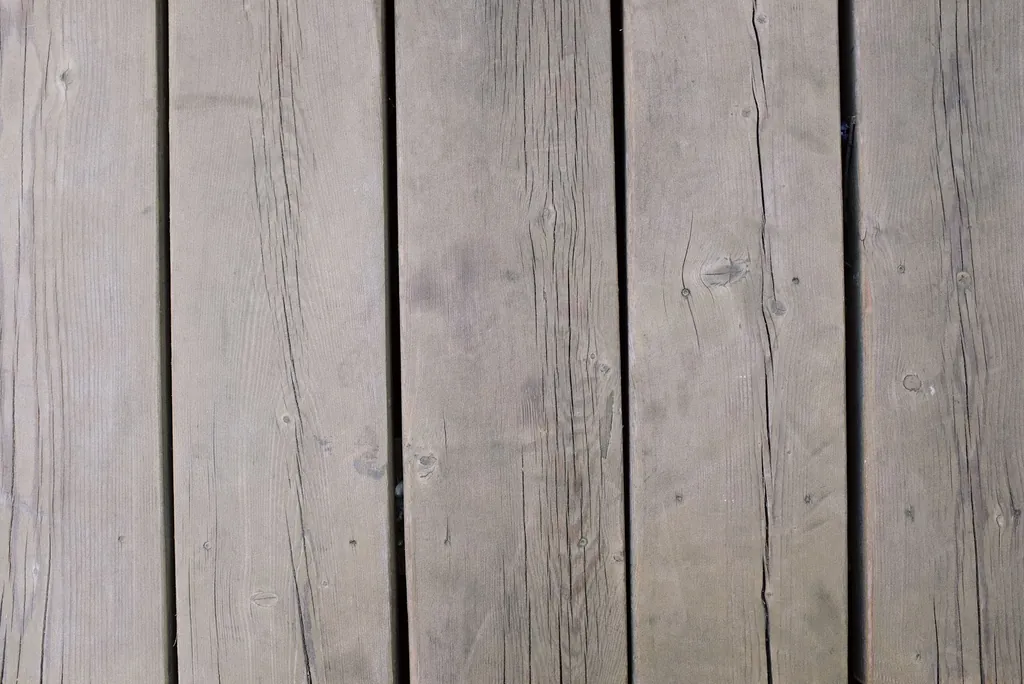
Look at the table again: the same stain lasts longer on weathered, rough-sawn boards than on new, smooth ones. The reason is absorption. A rough surface soaks up more stain, and the stain that's in the wood lasts longer than the stain that's on it.
The handbook backs this with numbers. Its coverage figures are 200 to 400 square feet per gallon on smooth wood and 100 to 200 on rough or weathered wood, so rough boards take about twice as much. It adds that stains perform much better on rough-sawn wood, and that water-repellent finishes generally last longer on rough surfaces because more of the finish penetrates.
The practical lesson is that a brand-new, smooth deck is the one most likely to need attention at the short end of the range. That's not a defect in the stain. Smooth boards just have less surface to hold it.
Signs it's time to restain
Don't wait for a date. Walk the deck once a year and look for these:
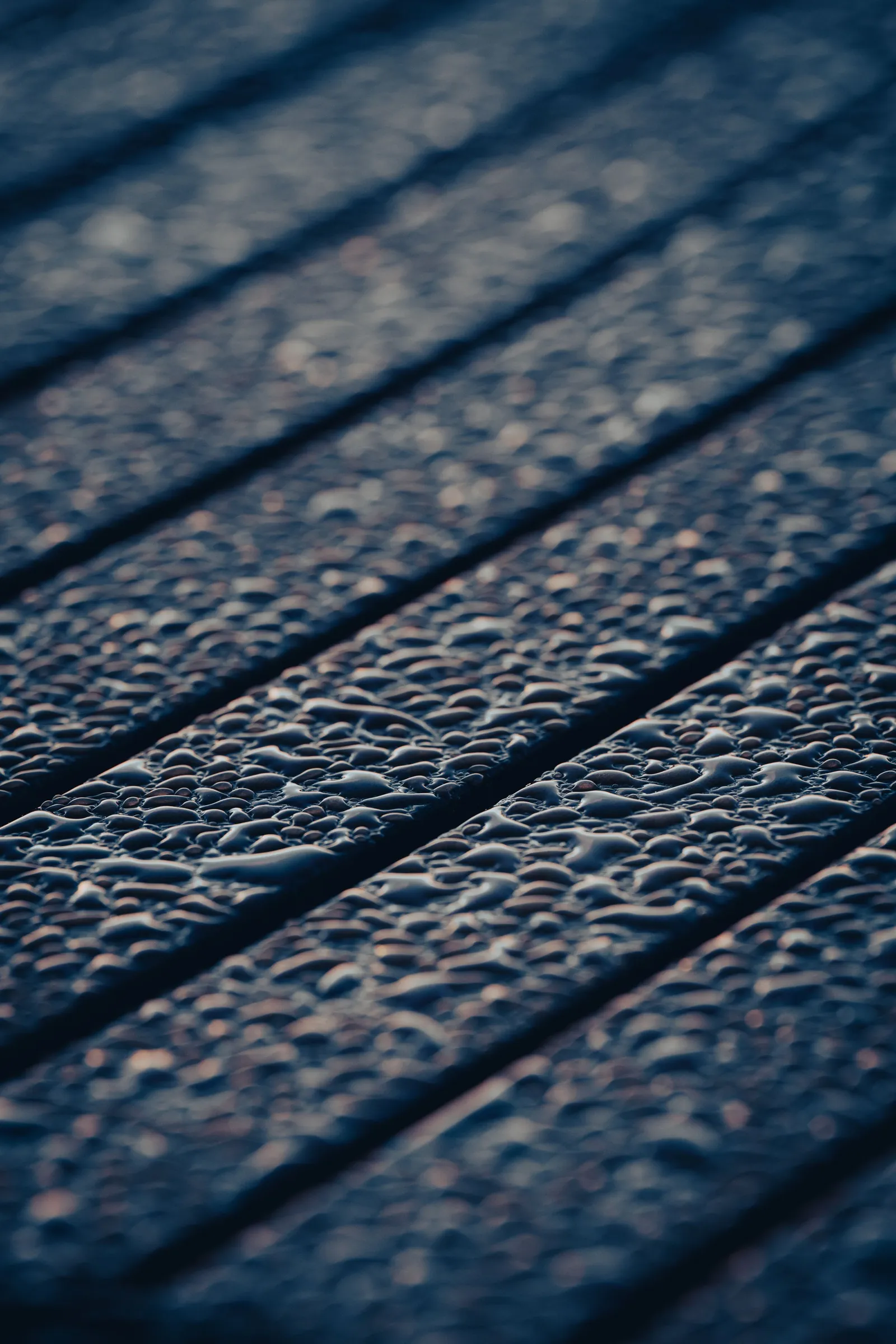
- Water soaks in. Purdue Extension's test for water-repellent finishes is to splash water on the boards. If it beads up and runs off, the finish is still working. If it soaks in, the wood needs refinishing.
- Graying. Purdue Extension says refinishing is also needed when the surface shows signs of graying.
- Mildew. The handbook says mildew on the surface of a water-repellent finish signals that it needs refinishing.
- Worn paths. Bare, thin or lighter stretches where people walk, around the door and along the stairs.
- Flaking or peeling. That's how solid stains and paint fail, since they form a film.
Getting a second coat to last
Coats are not all equal. The handbook says one coat of stain on new, smooth wood lasts only two to four years, and that successive recoats last longer. Purdue Extension says the second coat of a penetrating stain often lasts longer because it soaks into the small surface cracks that open as wood weathers.
On rough or weathered wood, the handbook describes a two-coat method: apply the second coat before the first has dried, so both soak in, then wipe off what didn't penetrate. It says that in certain exposures, this can last as long as 10 years. That's the best case, not the expectation, and it's the reason the handbook's table gives such a wide range for weathered boards.
Refinish before it fails completely
Semi-transparent stain is the forgiving one. Purdue Extension says it's relatively easy to refinish: no heavy scraping or sanding, just a stiff bristle brush to clear surface dirt, dust and loose wood fibers, and a new coat. Waiting until the deck is bare, gray and mildewed adds cleaning and brightening to the job, so catching it early saves work.
One warning from the same guide: don't use steel wool or wire brushes to clean a surface that will get a semi-transparent stain. They can leave tiny iron deposits that react with the wood and show up as dark-blue stains under the new finish. Our guide to preparing a deck for staining covers the right way to clean.
Stretching the time between coats
A few simple habits keep water off the boards and the stain on them. Sweep leaves and debris, move planters and mats that hold water against the deck, and keep furniture from dragging across the same strip every day. Our guides to deck maintenance and winter deck care go through the routine.
Because stain needs a dry stretch and dry boards, it helps to notice the signs before the weather is right. When you see graying or worn paths, plan to refinish on the first good stretch of dry weather rather than letting the wear deepen. Our guide to the best time to stain a deck explains what to look for in a forecast.
When a recoat isn't enough
A new coat can't fix a failed film. If a solid stain or paint is flaking, the handbook says that when cracking and peeling are extensive it's usually best to remove all the finish from the affected area, and that stripping is time-consuming, often difficult work. A deck that's soft, split or rotting in places needs repair before any finish goes on.
If you'd rather hand it off, we stain and refinish decks, and George visits if he needs to see yours before he sends a written quote and a start date. Ask for a free estimate and tell us how old the deck is and what's on it now.
Common questions
How often should I restain my deck?
Every two to six years for semi-transparent stain, going by the Forest Products Laboratory's general ranges: two to three years on a new deck and three to six on weathered boards. Walk the deck once a year and restain when the water test, graying or wear tells you to.
Does deck stain last longer than clear sealer?
Usually, yes, because pigment adds protection. The handbook gives one to two years for a clear water-repellent finish on new decking, against two to three for a semi-transparent stain. The Oregon State authors note that unpigmented finishes typically last a year or less on fully exposed boards.
Can I just add another coat of stain over the old one?
For a semi-transparent stain that's still sound, yes, after the deck is cleaned and dry. Purdue Extension describes this as easy refinishing. A solid stain or paint that's flaking is different: the loose film has to come off first.
How long does solid deck stain last?
The handbook's table gives one to two years for solid-color stain on decking, and it advises against solid stains on horizontal surfaces unless they're made for decks. Products made for decks may do better, so check the label and your deck's exposure.
Does a darker stain last longer?
More pigment generally means longer life, and darker stains carry more of it. The trade-off is that heavier pigment hides more of the grain, which is the trade-off the Oregon State authors point out.
Do I need to strip the deck before restaining?
Not for a sound semi-transparent stain, which usually needs a good cleaning and a new coat. You do need to remove a failing film such as peeling solid stain or paint. Stain can't soak into a surface that's covered by an old film.
Sources
- Finishing of Wood (Wood Handbook, chapter 15), USDA Forest Service, Forest Products Laboratory
- Selection and Application of Exterior Finishes for Wood (NCR-135), Purdue University Cooperative Extension Service
- Protecting wood decks from biodegradation and weathering: evaluation of deck finish systems, USDA Forest Service, Forest Products Laboratory and Oregon State University
More on decks and exterior and every decks and exterior post.