Porch paint ideas for floors, ceilings, doors and color
· 6 min read · By GK Painting & Remodeling
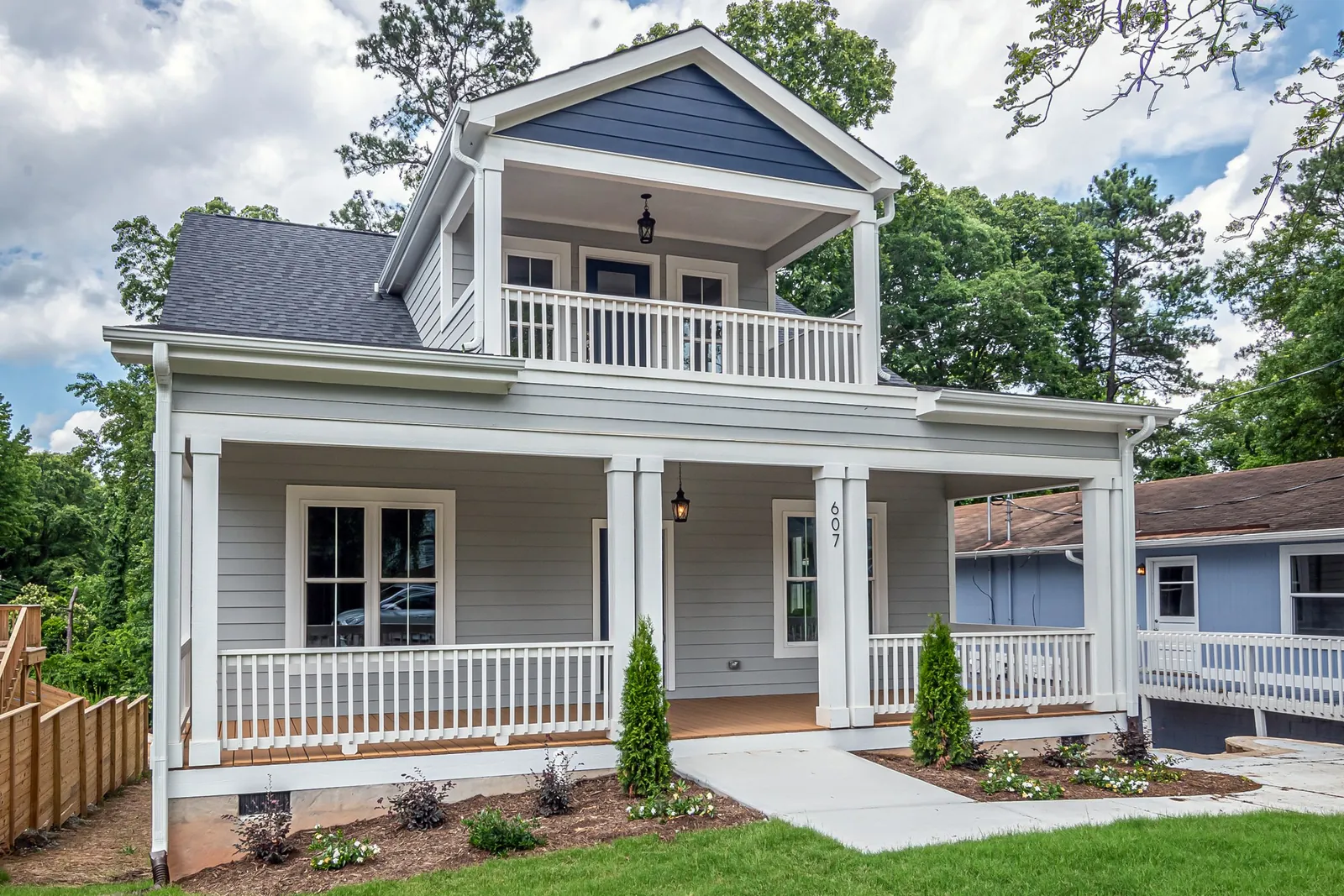
The best porch paint ideas start with the surfaces: a floor that can take foot traffic, a light ceiling, railings and trim in one color family, and a front door that carries the accent. Keep the palette to two or three colors, and let the roof, the brick or stone and the house color you aren't changing set the tone.
Below are ideas for each surface, what a porch floor needs that a wall doesn't, and what to check on an older porch before anyone scrapes it.
Start with two or three colors
A porch looks best when it behaves like an extension of the house. Look at what you can't change first: the roof, the brick or stone, the garage door and the wall color. Then choose one trim color, one accent and let the rest stay quiet.
- Warm white trim, a mid-gray floor and a deep green door.
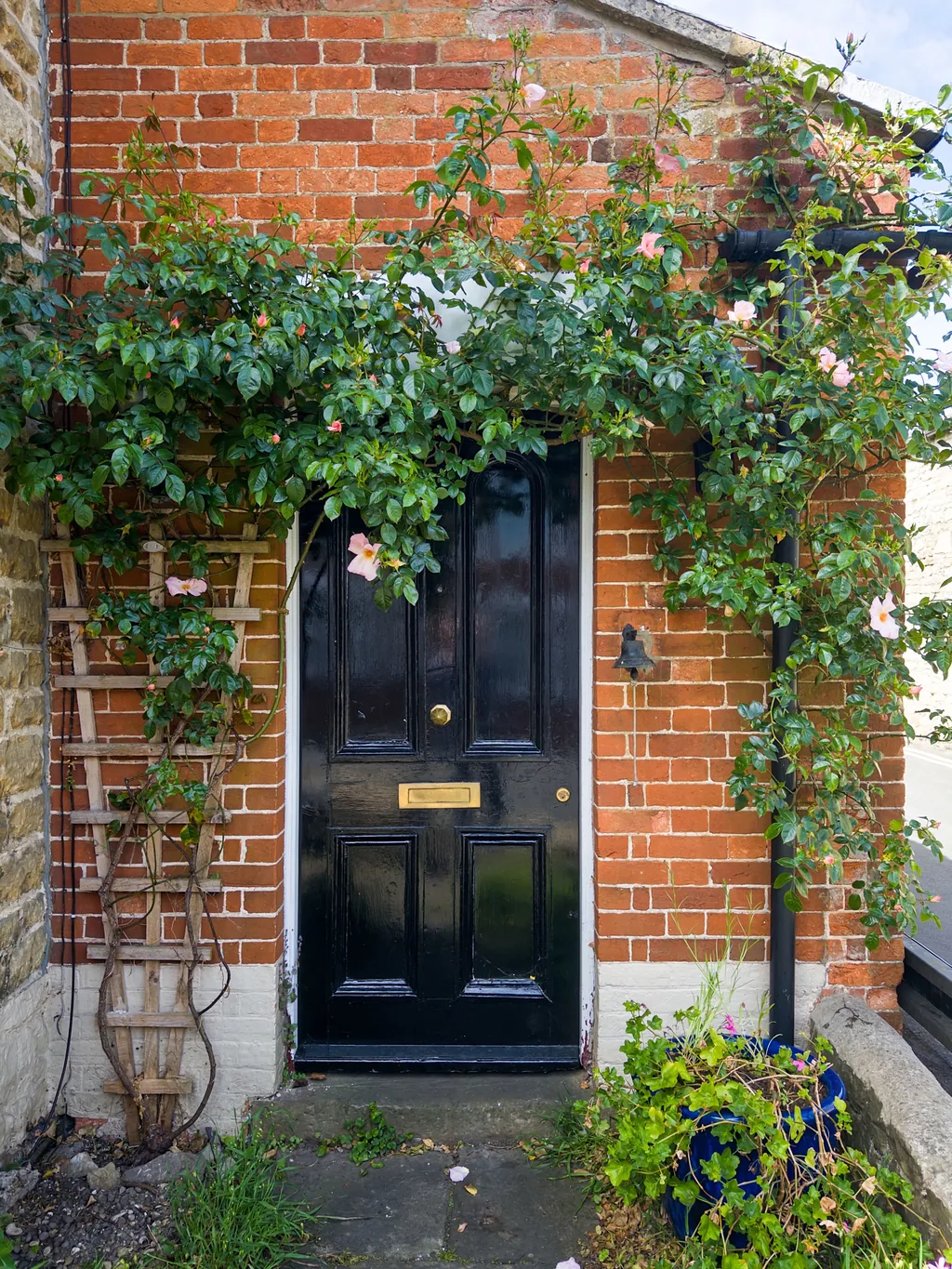
- Soft gray walls, white trim and a black door with a pale ceiling.
- Cream trim with a brick red or navy door, which suits houses with warm brick.
- Dark trim and a dark door with a white ceiling, for a high-contrast look.
| Surface | Color idea | Sheen to ask about |
|---|---|---|
| Ceiling | White, pale gray or soft blue | Flat or satin |
| Walls and trim | Warm white or a soft neutral | Satin or semi-gloss |
| Railings and posts | Match the trim, or go a shade darker | Satin or semi-gloss |
| Front door | The accent: green, navy, black or red | Semi-gloss or gloss |
| Floor | Mid-gray, charcoal or deep green | Whatever the floor enamel offers |
Porches are shaded, which can make a color look darker than it did on the sample card. Test your colors on the porch itself, in the morning and the evening. Our post on how to test paint colors covers how, and the ideas in our guide to front door colors carry over to the rest of the porch.
Porch floors
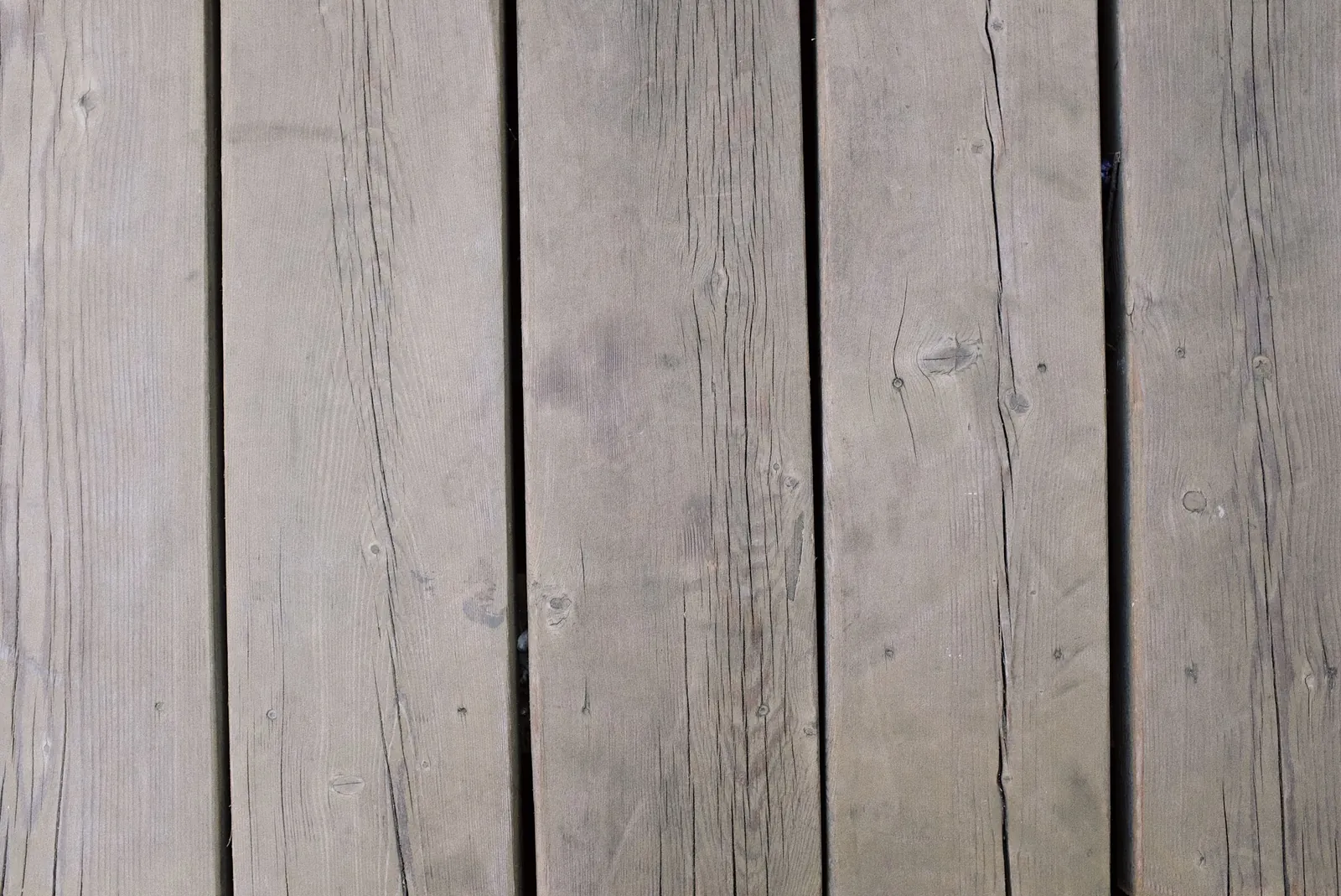
The floor takes the most wear, so it's the surface where the product matters most. The U.S. Forest Service says paint can be used successfully on roof-protected porch floors. Its recommended procedure is to treat the wood with a paintable water-repellent preservative, let the floor dry, then apply a primer and topcoats of porch and deck enamel, which is formulated to resist abrasion and wear.
The same guidance, written in 1991, says solid-color stains shouldn't be used on flat surfaces like decks and porches because of their low resin content. It also separates covered porches from open decks. Porches are usually somewhat protected, so conditions aren't as severe as on a deck, but moisture, sun and wear are still there at least some of the time. A fully exposed deck is a different job. Our guide to solid versus semi-transparent deck stain covers that.
Old paint on a floor needs a quick test before you commit. Purdue Extension describes one: clean the surface, paint a small out-of-the-way patch with latex, let it dry at least overnight, then press an adhesive bandage firmly onto it and snap it off. If paint comes away on the bandage, the old surface is too chalky and needs more cleaning or an oil-based primer.
- Mid-gray hides dirt and goes with nearly everything.
- Deep green or blue-gray reads as traditional.
- A pale floor brightens a dark porch but shows every footprint.
- Charcoal looks sharp against white trim and shows pollen.
Let the floor cure before the furniture goes back
Dry isn't the same as cured. A technical bulletin from Dunn-Edwards says latex paint is usually dry to the touch in one to two hours, but full cure can take 14 to 30 days, and darker colors and higher gloss take longer. A porch floor that gets chairs dragged across it in week one is a floor that gets scuffed.
Light foot traffic comes first, furniture comes later, and a rug or anything heavy waits longest. We explain the difference in our post on paint dry time and cure time.
Porch ceilings
A light ceiling bounces daylight back into a shaded porch, which is why white, pale gray and soft blue are the usual choices. Pale blue reads as sky and can make a low ceiling feel higher. A darker ceiling can feel cozy, but it makes a small porch feel smaller.
The real work is cleaning. Purdue Extension's guide to exterior finishes says it's particularly important to clean areas that are protected from sun and rain, porches included, because they collect water-soluble materials that interfere with the adhesion of new paint. Cobwebs, dust and mildew come off first. Mildew gets a dilute household bleach solution, rinsed well, and the guide warns never to mix bleach with ammonia.
If the ceiling is beadboard, paint the grooves with a brush before rolling the flat parts, so the paint doesn't pool in the joints.
Doors and entryways
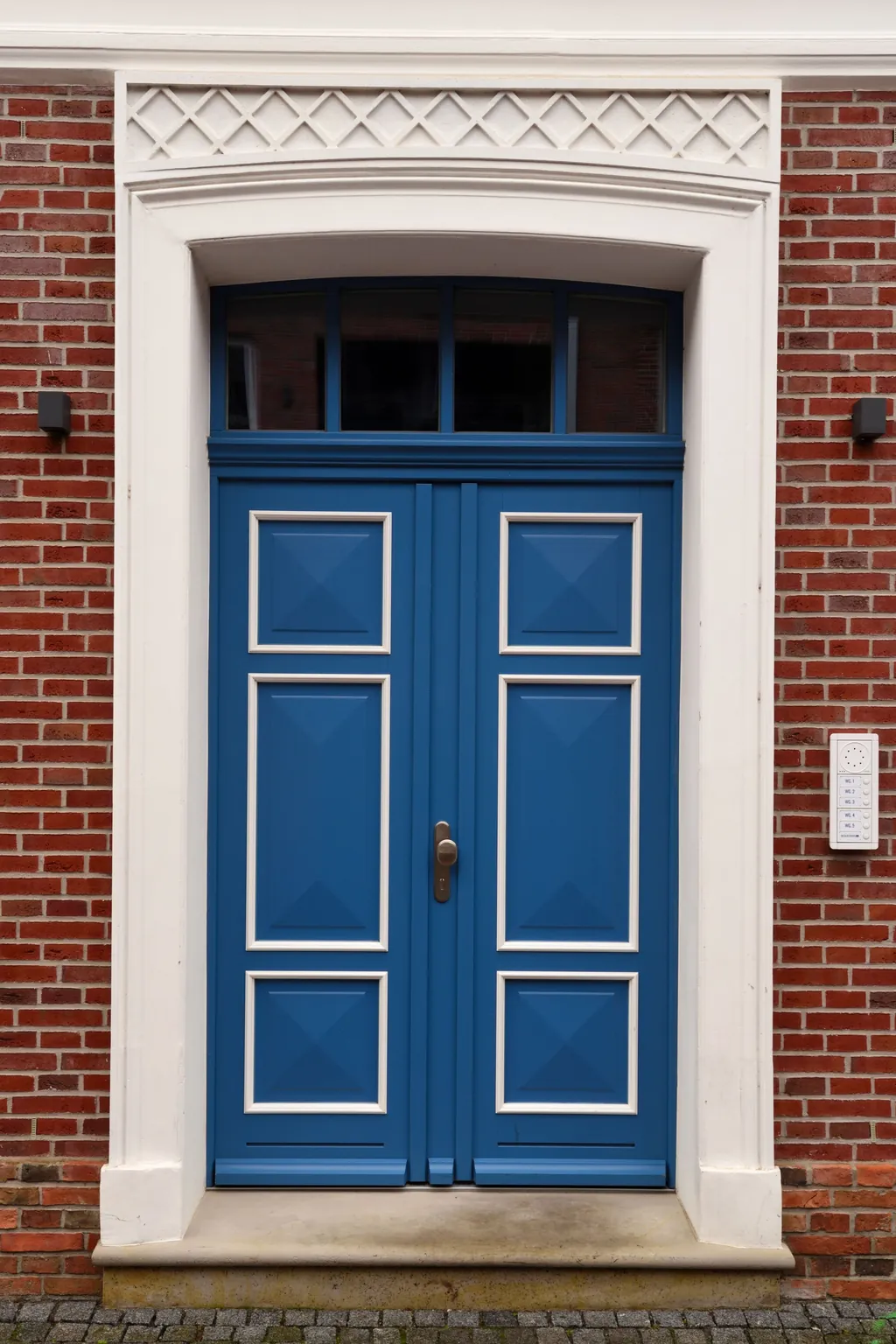
The door is where the accent belongs. A glossier sheen shows off the color and wipes clean, and it goes well with a calm trim color. If your porch has a storm door, a screen door or a sidelight, decide whether it matches the door or the trim, and keep that choice the same across the whole entry. For the prep, see how to paint a storm door.
Our posts on how to paint a front door and front door colors go through technique and options. We paint entryways and exterior doors as part of our exterior painting work.
Railings, spindles and posts
Railings are the slow part, with lots of edges and a top rail that catches water. The Forest Service doesn't generally recommend solid-color stains on horizontal surfaces such as railings, so paint over a primer is the safer choice for a solid color. A penetrating stain works if you want the grain to show.
Purdue Extension says paint normally fails first at the joints and at the ends and edges of boards, so bare wood at the bottom of posts and under rail ends gets sealed and primed before painting. Two coats last longer than one. For more on trim in general, see our post on painting exterior trim.
Older porches and lead
Older porches often have decades of paint on them, including thick oil-based layers on the floor, columns and railings. Scraping and sanding disturb that paint. The EPA says homes built before 1978 are more likely to have lead-based paint, and its Renovation, Repair and Painting rule sets lead-safe work practices for work that disturbs paint in older homes. Mention your home's age when you call.
Peeling on an older porch can also be a moisture problem rather than a paint problem. Fix the leak, the clogged gutter or the gap that's letting water in first, or the new paint will fail in the same spots.
The order of work
- Clean everything, ceiling to floor, and let it dry.
- Scrape, sand and fill, then prime bare wood.
- Paint the ceiling, then the walls and trim, then the railings.
- Paint the door, with the hardware removed or masked.
- Paint the floor last, so drips from above don't land on a finished surface.
Work in dry weather. The Forest Service advises waiting for morning dew to evaporate and giving paint at least two hours to dry before sunset.
What we paint, and what to tell us
Our exterior work covers entryways, exterior doors, garage doors, trim and deck staining. We don't paint whole-house siding. If your porch project includes a floor or a ceiling, say so on the phone and George will tell you what fits. He visits if he needs to see the space, then sends a written quote with a start date.
Smaller exterior projects usually take one to three days and are scheduled around dry weather. We're based in Waunakee and work across Madison and Dane County. The written quote is the price, no extra charge if the job takes longer than expected. Ready to talk it through? Ask for a free estimate.
Common questions
Can you paint a porch floor?
Yes, on a covered porch. The Forest Service says paint can be used successfully on roof-protected porch floors. Treat the wood with a paintable water-repellent preservative, let it dry, then use a primer and porch and deck enamel.
What color should I paint my porch ceiling?
White, pale gray and soft blue are the usual choices because a light ceiling bounces daylight back into a shaded porch. A darker ceiling can work on a large porch if you like the cozy look.
How long should I stay off a freshly painted porch floor?
Latex paint is usually dry to the touch in one to two hours, but full cure takes 14 to 30 days, according to Dunn-Edwards. Light foot traffic comes first, and furniture and rugs should wait.
Do you paint the whole outside of the house?
No. We paint entryways, exterior doors, garage doors and trim, and we stain decks. We don't paint whole-house siding.
Does lead paint matter when painting an old porch?
Homes built before 1978 are more likely to have lead-based paint, according to the EPA, and its Renovation, Repair and Painting rule sets lead-safe work practices. Tell us your home's age when you call.
Sources
- Exterior Wood in the South: Selection, Applications, and Finishes (FPL-GTR-69), U.S. Forest Service, Forest Products Laboratory
- Selection and Application of Exterior Finishes for Wood (NCR-135), Purdue University Cooperative Extension Service and USDA Forest Products Laboratory
- Dry Time versus Cure Time of Paint (technical bulletin), Dunn-Edwards
- Reduce Your Risk of Lead Exposure in Your Home, U.S. Environmental Protection Agency
More on decks and exterior and every decks and exterior post.