When to stain a deck: the weather, the wood and the forecast
· 6 min read · By GK Painting & Remodeling
The best time to stain a deck is a dry stretch of mild weather, when the boards are dry all the way through and nothing wet is forecast for at least a day after you finish. One treated-lumber maker puts the air temperature window at 55 to 95 degrees Fahrenheit, with the wood's moisture content ideally below 15 percent.
That's a weather question more than a calendar one, and Wisconsin adds a wrinkle, because a warm afternoon can be followed by a near-freezing night. Here's how to read a forecast for stain, how to tell when the boards are ready, and why we schedule exterior painting and deck staining around the same conditions.
What a good staining day looks like
A stain job needs three things lined up: mild air, dry wood and a dry stretch afterward. The third one is the one people forget.
- Air temperature inside the stain's window. The label on your can has the real numbers. One treated-lumber maker's guide gives 55 to 95 degrees Fahrenheit.
- Boards that are dry through, not just on top. Ideally the wood's moisture content is below 15 percent.
- No rain in the forecast for the day you stain or the day after. The same guide says the last coat is likely dry to the touch in under 24 hours, and the finish needs at least 72 hours to cure thoroughly.
- Dew that has burned off before you start. Dew is water too: the Forest Products Laboratory warns against applying paint when heavy dews form overnight, and stain has the same trouble with damp boards.
If one of those is missing, waiting a day or two is almost always better than redoing the stain.
Board temperature matters as much as air temperature
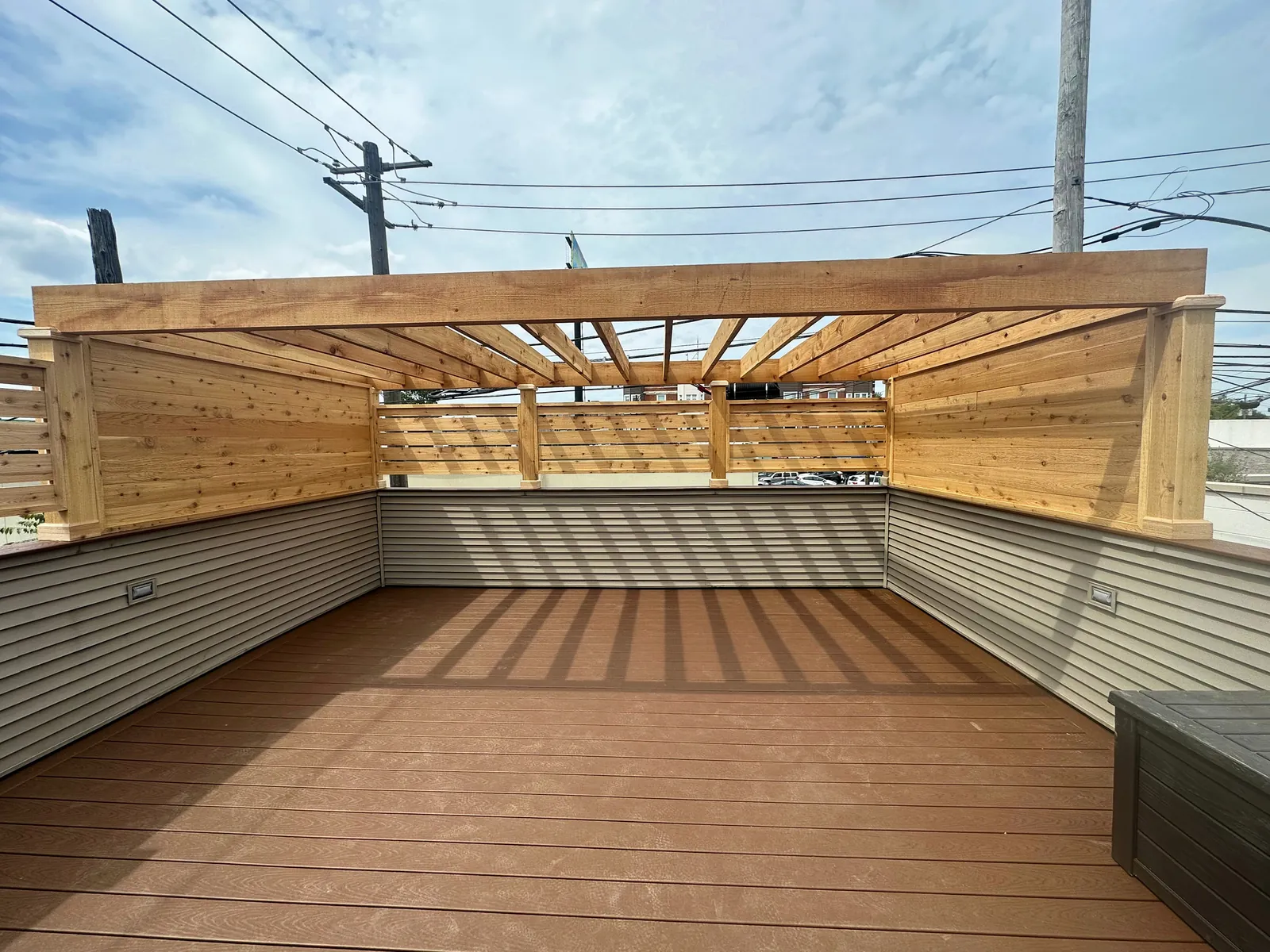
A deck in full sun can be much hotter than the air above it, and a shaded deck can be cooler. Both change how stain behaves. A technical bulletin from the paint maker Dunn-Edwards says the same of any coating: cooler temperatures slow evaporation and drying, while heat can dry the surface first and leave the film soft underneath.
That's why the Forest Products Laboratory suggests working in the shade where you can, since stain dries more slowly there, and staining only a few boards at a time. The goal is to keep the front edge of the wet stain from drying out before you reach a natural stopping point. When it does, you get lap marks, the darker stripes where wet stain overlaps stain that has already started to set.
Morning, afternoon or evening
Time of day matters because the first and last hours of the day are damp. Start after the dew has burned off the boards, and plan to finish early enough that evening dew doesn't land on stain that's still wet.
Pace matters too. The treated-lumber guide puts the interval between coats at around 20 to 30 minutes, depending on temperature, and says to apply the second coat once the first coat's sheen has begun to fade. That's a short window, so have the whole deck cleaned, dry and ready before the first board is stained.
Dry boards come first
Moisture is the quiet reason stain jobs go wrong. Stain soaks into the wood, and a board that's already full of water has nowhere to put it. That's true after rain and after a wash, and it's especially true of new lumber: the Forest Products Laboratory says wood treated with water-based preservatives finishes without trouble only if it has been properly redried and cleaned.
You don't have to guess. A pin-style moisture meter reads the board directly, and you want a reading below 15 percent. Without one, use the sprinkle test. Drop a little water on the boards. The treated-lumber guide says that if it isn't absorbed within a few moments, the wood is probably too wet to stain.
Washed the deck first? Give it the same test afterward. Drying time depends on sun, wind and humidity, so go by the test rather than counting days. Our guide to preparing a deck for staining covers the washing step.
Wisconsin's cold nights and surprise rain
The National Weather Service in Milwaukee puts the average date of the last 32-degree freeze for southern Wisconsin anywhere from mid-April to mid-May, using 1980 to 2010 records. At the Madison airport, the University of Wisconsin's Weather Guys put the average first 32-degree night at about October 1, from 73 years of records.
Those are averages, not staining dates. A freeze can come earlier or later, and a 70-degree afternoon can still be followed by a cold night. That matters because fresh stain needs hours to dry and days to cure. For paint, the Forest Products Laboratory advises that latex coatings shouldn't drop below 50 degrees for 24 hours after they go on. Your stain's label will have its own limits, so check the overnight low as well as the afternoon high.
Early spring and late fall are when those swings are widest. For more on how our climate shapes outdoor work, see our look at the Madison outdoor painting season.
New deck, finished deck or bare gray deck
A new deck
The question is moisture, not the date on the receipt. Test several boards, including ones that stay shaded. If some pass and some don't, wait for all of them.
A deck with a finish on it
The treated-lumber guide says previously coated surfaces need to be sanded or stripped to uniformly bare wood before they're stained, so the old film has to come off first. Build that prep into your plan: the right day for stain is the first good day after the prep is finished and the boards are dry.
A bare, gray deck
Bare wood that has weathered to gray can usually take stain once it's cleaned and dry. The Forest Products Laboratory points out that cleaning only reveals the color that's left in the wood. If you want color back, it has to come from the stain. For why published waits on new treated lumber run from one week to six months, see staining pressure treated wood.
If rain catches you partway through
It happens. If you have to cover a fresh deck, the treated-lumber guide says the covering shouldn't touch the stained surface and needs ventilation. A tarp laid flat on wet stain will stick to it and leave marks.
If a shower gets in before the stain has dried, let the boards dry out and look at what you have before adding more. The one thing to avoid is another coat over a waterlogged surface.
A quick checklist for the day
- Check the forecast for tomorrow as well as today.
- Read the stain label for its temperature and moisture limits.
- Test several boards with a meter or the sprinkle test, shaded ones included.
- Let the dew burn off, and start on the shaded side if you can.
- Work a few boards at a time, end to end, so lap marks don't form.
- Keep foot traffic off. The treated-lumber guide says light use is possible after about six hours, depending on temperature and humidity, and suggests waiting a day or two before furniture goes back. Our post on deck stain dry times compares the waits by stain type.
Leaving the timing to someone else
Deck staining and refinishing is part of our exterior painting work, and it's scheduled the way this guide describes: around dry weather. Our smaller exterior projects usually take one to three days, and the start date depends on the forecast as much as the calendar.
We're based in Waunakee and work across Madison and Dane County, and our page on deck staining in Waunakee has the local details. If you'd like George to look at your deck, ask for a free estimate. If you'd rather do it yourself, our step by step guide to staining a deck shows the order of work.
Common questions
What temperature is too cold to stain a deck?
Check your stain's label first, since limits vary by product. One treated-lumber maker's guide says the air temperature should be between 55 and 95 degrees Fahrenheit while you apply it. In cooler weather, coatings dry more slowly, so the boards stay vulnerable longer.
How long after rain can I stain a deck?
Until the boards pass the sprinkle test: a few drops of water should soak in within a few moments. How long that takes depends on sun, wind and humidity, so there's no number of days that works every time. A moisture reading below 15 percent is the other check.
Can I stain a deck in direct sun?
You can, but it's harder to do well. Stain dries faster on hot boards, which makes lap marks more likely. The Forest Products Laboratory suggests working in the shade where possible and staining a few boards at a time.
Can I stain a new deck right away?
Not until it's dry. New lumber, especially wood treated with water-based preservatives, needs to be properly redried before it's stained. Use a moisture meter or the sprinkle test rather than a set number of weeks, and read any instructions from the lumber's maker.
How long should I stay off a freshly stained deck?
One treated-lumber maker's guide says light use is possible after about six hours, depending on temperature and humidity, and recommends waiting a day or two before putting furniture back. The finish needs at least 72 hours to cure thoroughly.
Does humidity affect staining?
Yes. When there's more moisture in the air, coatings take longer to dry, according to a technical bulletin from Dunn-Edwards. A cool, damp day slows everything down, so plan on a longer wait between coats and before foot traffic.
Sources
- How to Stain a Deck, YellaWood
- Finishing of Wood (Wood Handbook, chapter 15), USDA Forest Service, Forest Products Laboratory
- Dry Time versus Cure Time of Paint (technical bulletin), Dunn-Edwards
- Check out the Last Dates of Wisconsin Freezing Temperatures, National Weather Service, Milwaukee/Sullivan
- When does the first freeze occur in fall?, UW-Madison Space Science and Engineering Center (The Weather Guys)
More on decks and exterior and every decks and exterior post.