
Porch railings, entry doors and garage doors on Dane houses
Most homes in the village of Dane are detached houses, many of them old. Here's how porch railings, front doors, garage doors and trim that face the weather get painted.
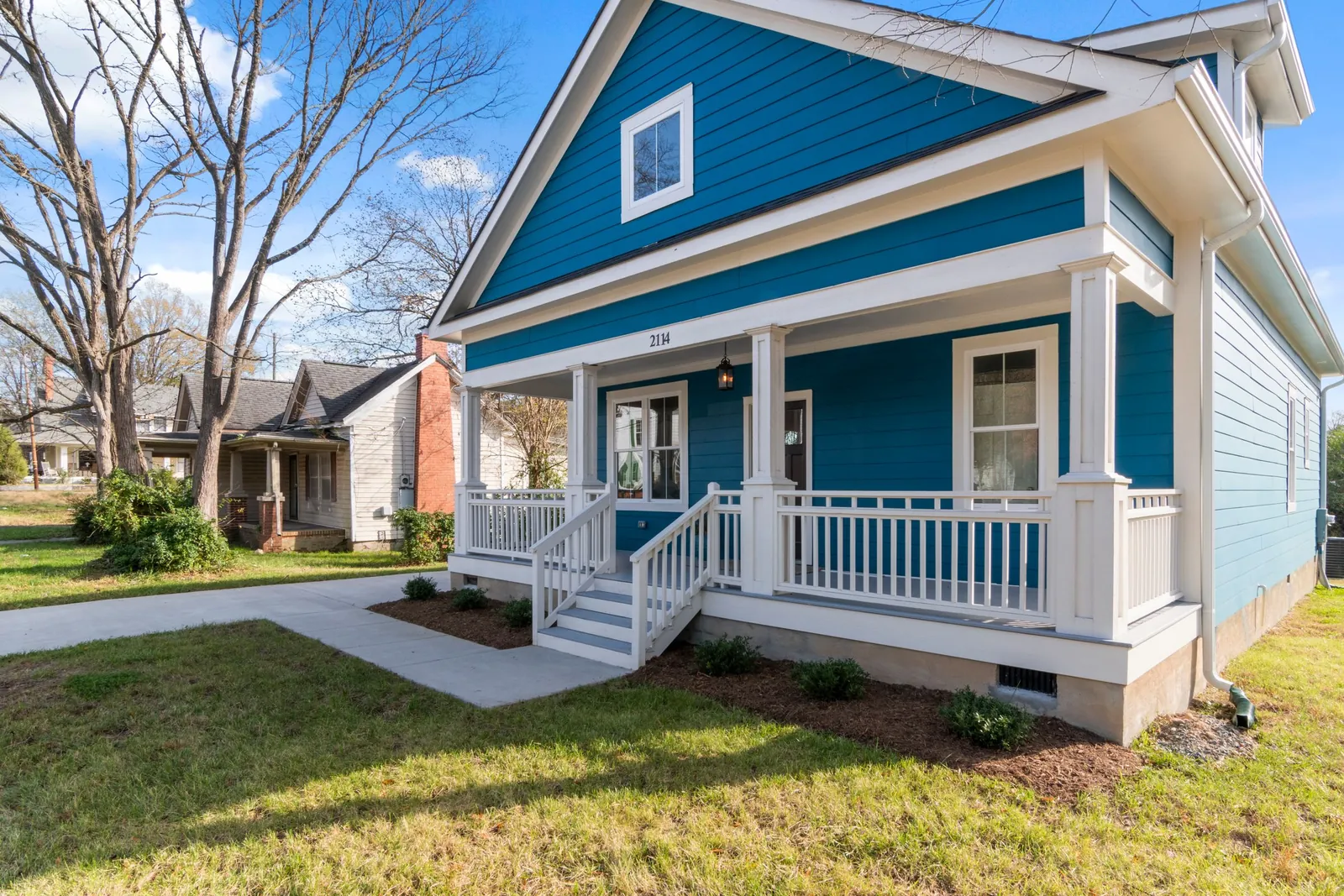
A front porch with a spindle railing, a wood entry door carrying decades of paint, a garage standing on its own: that's a common lineup on an older house in the village of Dane. About 84% of homes here are single-family detached houses, and about one in six went up before 1940.
Those are the parts of a house we paint outside: railings, entry doors, garage doors and trim, and we stain and refinish decks too. We don't paint whole-house siding. Most of these jobs take one to three days and are scheduled around dry weather.
Railings and spindles out in the weather
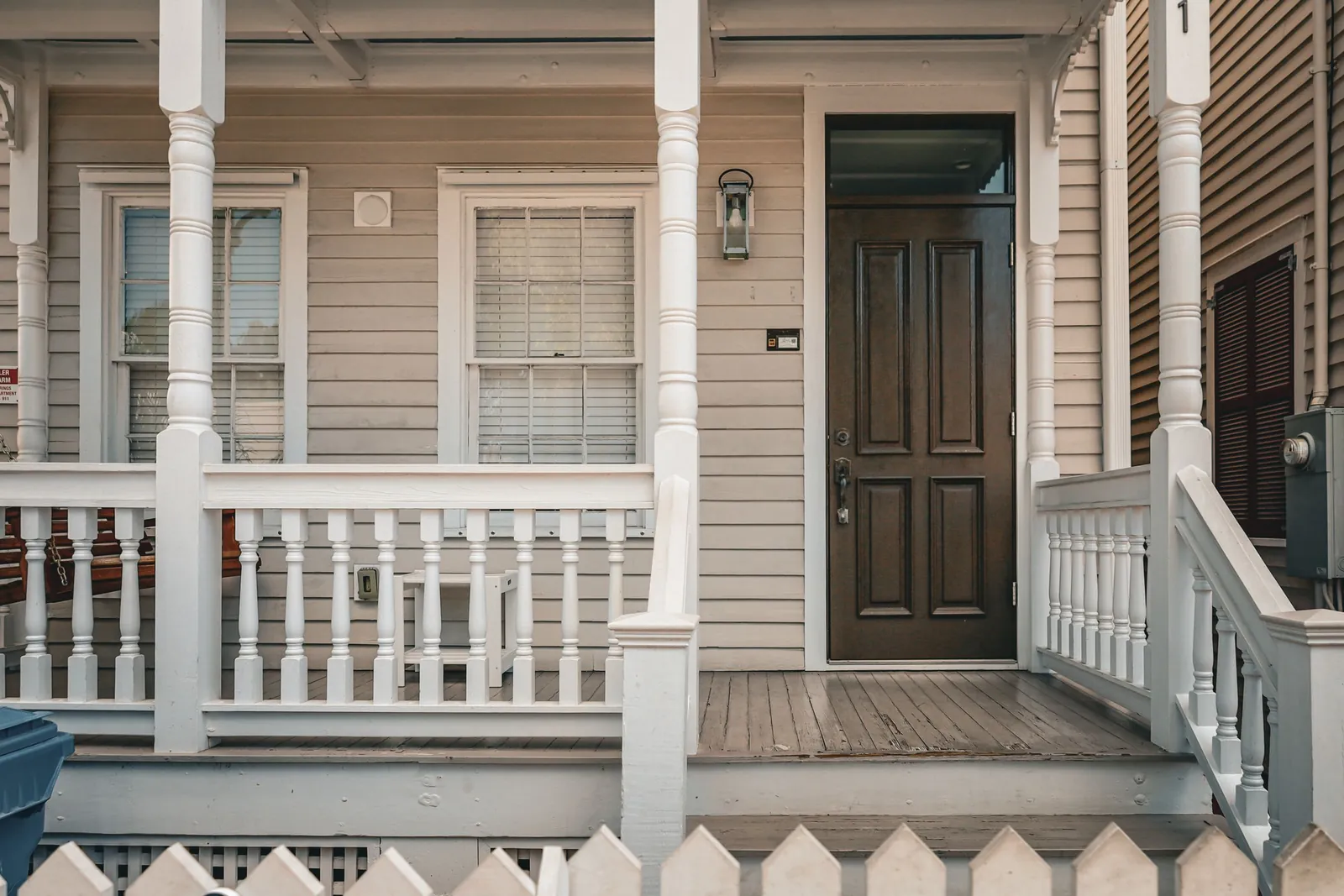
A painted porch railing fails from the ends. The Wood Handbook explains that end grain soaks up moisture much faster than the face of a board, and that finishes generally fail at the end grain first. A railing is full of it: the top and bottom of every spindle, the cut ends of each rail, the tops of the posts.
Paint can also hold water in. The Handbook names painted porch railings fully exposed to the weather as a common place for this kind of failure, because the film slows drying, and it says priming the end grain works with the paint to keep the wood dry. So on a railing, the ends and joints are primed with care before any color goes on.
Railings under a porch roof need washing even when they look clean. The Park Service notes that covered porches miss the rinsing that rain gives other surfaces, so grime and salts build up and can make the next coat peel. Our post on porch paint ideas has color ideas for the whole porch.
Old wood entry doors
An old front door is usually solid wood with raised panels, and it has been repainted many times. The panels are where trouble shows: paint cracks along the panel edges as the wood moves with the seasons, and the bottom rail, with end grain exposed at each corner, is where peeling tends to start.
Refinishing one starts with the loose paint, which is scraped and sanded back to a firm edge. Bare spots are primed, the lower rail and its corners get extra attention, and the hardware is removed or masked so the door still closes cleanly once it's done.
A front door that faces south or west with no porch roof over it wears out faster than one in the shade of a porch. If yours is exposed, choose a color and finish that's easy to recoat, because it will need it sooner.
Detached garages and their doors
A garage that stands apart from the house is often the last thing anyone repaints. We paint the garage door, the side service door and the trim around them, and we don't paint siding on the garage any more than on the house.
Old wood garage doors, panel or carriage style, share the weak spots of an entry door: end grain along the bottom and paint failing where water sits. Steel doors are mostly a matter of washing, scuffing any chalky surface and priming bare or rusty spots. Either way, the doors and trim can match the house or set the garage apart.
Standing alone, a detached garage often takes more wind and sun than the house does, so its south and west faces are the ones to check first each year.
Wind and weather on an open lot
Wind affects exterior paint in more than one way. The Wood Handbook counts windblown rain among the ways liquid water reaches wood, and it lists abrasion by windblown particles among the forces that weather a finish. A house with little around it to break the wind takes both on its windward side.
Wind matters during the job, too. It dries paint and stain faster at the surface, which can leave lap marks, and it carries dust and debris into a wet coat. A gusty day is a poor painting day even when it's dry.
The Handbook also notes that the parts of a house fully exposed to sun and rain, usually the west and south sides, deteriorate first and deserve two topcoats. On an open lot, that's where trim and doors need the closest look each spring, and our spring painting checklist lists what to check.
Trim on older houses
Trim on an old house has usually been painted more times than anything else outside, and there's a limit to what it can carry. The Park Service says that when paint builds to roughly a sixteenth of an inch, which it puts at 16 to 30 layers, even one more coat can set off cracking and peeling, because thick paint can't take the pull of a new coat as it dries.
So prep on old trim is about getting back to sound paint, not just adding another layer. Loose and cracked paint is scraped and sanded to a firm edge, bare wood is primed, and corners and window surrounds get a close look, since that's where end grain is exposed. Sills and the tops of casings hold water longer than vertical trim, so they usually need work first.
If the house was built before 1978, say so when you call. The EPA notes that homes that old are more likely to contain lead-based paint, which matters whenever old exterior paint gets scraped or sanded.
A short drive up Highway 113
The village sits on Highway 113, north of our base in Waunakee, and George comes out to look at railings, doors and trim before he quotes. On a porch he'll want to see the spindles up close, since the state of the end grain decides how much prep a railing needs.
It helps to have a short list ready: how long the porch railing runs, which doors you want done, whether the garage door is wood or steel, and roughly when everything was last painted. If there's a deck out back, add it so the quote covers it too. The written quote is the price, no extra charge if the job takes longer than expected.
See our main deck and exterior page, read about homes in the village of Dane, or ask for a free estimate.
Common questions
Can porch railings and spindles be painted?
Yes. They're cleaned, loose paint is scraped and sanded, and the end grain at the tops and bottoms of the spindles is primed before the color. Those cut ends are where railing paint usually fails first.
Can an old farmhouse front door be refinished?
Yes. Loose paint is scraped and sanded back to a sound edge, bare wood is primed, and the panels and rails get fresh paint. A door that's badly split or rotted needs repair before any paint.
Do you paint detached garages?
We paint the garage doors, the service door and the trim on a detached garage. We don't paint siding, on the garage or on the house.
How does wind affect exterior painting?
Wind dries paint and stain faster at the surface, which can cause lap marks, and it blows dust into a wet coat. Over the years, wind-driven rain and grit also wear down the finish on the side of the house that faces the weather.
Do you come out to the village of Dane?
Yes. The village is a short drive north of our base in Waunakee, and George comes out to see the work before he quotes it. Estimates are free.
More in Dane
Decks and exterior nearby
Helpful guides
Sources
- American Community Survey 2020-2024 5-year estimates, U.S. Census Bureau, via Census Reporter
- Finishing of Wood (Wood Handbook, chapter 15), USDA Forest Service, Forest Products Laboratory
- Preservation Brief 10: Exterior Paint Problems on Historic Woodwork, National Park Service
- Protect Your Family from Sources of Lead, U.S. Environmental Protection Agency
- Dane, Wisconsin, Wikipedia