
A first finish for the newer decks behind Verona's newer houses
Most Verona homes date from 2000 or later, and so do plenty of their decks. When new treated lumber is ready for stain, and what that first coat should be.
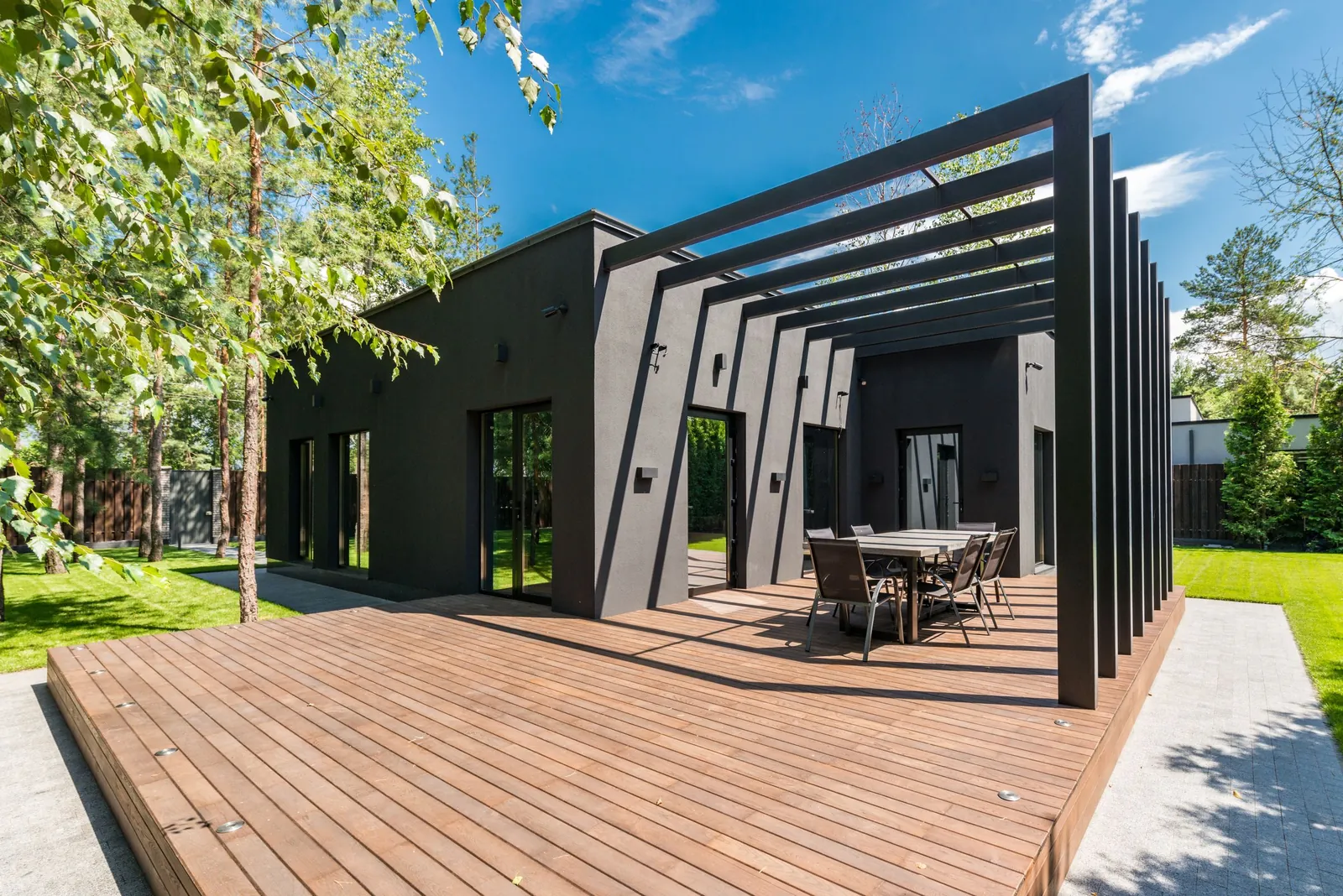
Some decks behind newer Verona houses have never had a finish at all. Others got one coat when the house was new and haven't been touched since. With about 57% of the city's homes built in 2000 or later, a lot of the decks here are young enough that their first real finish is still ahead of them.
That first finish shapes how quickly the boards gray, check and split, more than any coat that comes after it. Here's when new treated lumber can take stain, what it's treated with today, and how a first staining goes. We stain and refinish decks, and the rest of our outdoor work is on the decks and exterior page.
Newer decks on newer houses
In a city where the median home dates to 2002, a typical deck is either as old as the house or a little younger. The Forest Products Laboratory in Madison notes that deck lumber is usually pressure treated with a preservative, or else a naturally durable wood such as western redcedar or redwood.
Treatment and finish do different jobs. The preservative guards against decay and insects; it doesn't stop sun and water from working on the surface. The lab says decks left without proper maintenance develop checks, cracks, raised grain and mildew, and that adding a finish keeps those problems down.
That makes a newer deck the easiest kind to look after. There's no peeling film to strip and no stack of mismatched coats, so the first finish goes onto clean, sound wood.
When a new deck can take its first finish
Not always on day one. The Forest Products Laboratory says decking that came with a factory water-repellent finish, or was recently finished with a water-repellent preservative, may not absorb a semitransparent stain properly and should weather for two to three months first. Waiting up to a year opens the wood further, the lab adds, but invites significant checking.
The boards themselves give the clearest answer. Sprinkle water on a few, including one in shade: if it beads on the surface, the wood isn't ready, and if it soaks in and darkens the board, it is. Lumber tagged as re-dried after treatment is a different case, and the Southern Forest Products Association says it can be finished right away. Our post on staining pressure-treated wood sets the published waiting times side by side.
Today's copper-based lumber versus old CCA
If your deck went up after 2003, it isn't likely to be CCA. The EPA says wood treated with chromated arsenicals was used in decks and playsets before 2004, and that manufacturers voluntarily stopped making it for homeowner uses in December 2003. A deck built with a house from 2004 on sits on the newer side of that line.
Many of the replacements are copper based. The lab lists alkaline copper quat, copper azole and micronized copper azole, and notes that these usually don't include a water repellent, while some copper-free treatments do. That's one reason two new decks can act differently under the water test. For an older CCA deck, the EPA doesn't require removal, and it says a penetrating coating such as an oil- or water-based stain, applied regularly, may reduce chemical leaching.
Stain or paint for the first coat on new boards
Stain, for the boards you walk on. The Forest Products Laboratory recommends penetrating finishes for decks, meaning water-repellent preservatives and semitransparent stains, because paint and solid-color stain wear fast in traffic lanes and tend to trap moisture and peel. Penetrating finishes are also simpler to reapply. If you can't choose between a clear water-repellent preservative and a tinted stain, the lab suggests starting with the preservative and moving to a semitransparent stain at the next refinishing.
Pigment is what makes a semitransparent stain last, since the lab says it shields both the wood and the mildewcide from sunlight. Railings are the exception: they don't take foot traffic, and the lab says paint and solid-color stain can perform quite well on them. Our post on whether to paint or stain a deck covers the choice in full.
Why new boards check and crack
Fine cracks running along the grain of a newer deck surprise a lot of owners. The cause is movement: boards take on water from rain and dew and shrink as they dry, and the lab names that constant swelling and shrinking as the stress behind checks, cracks and raised grain.
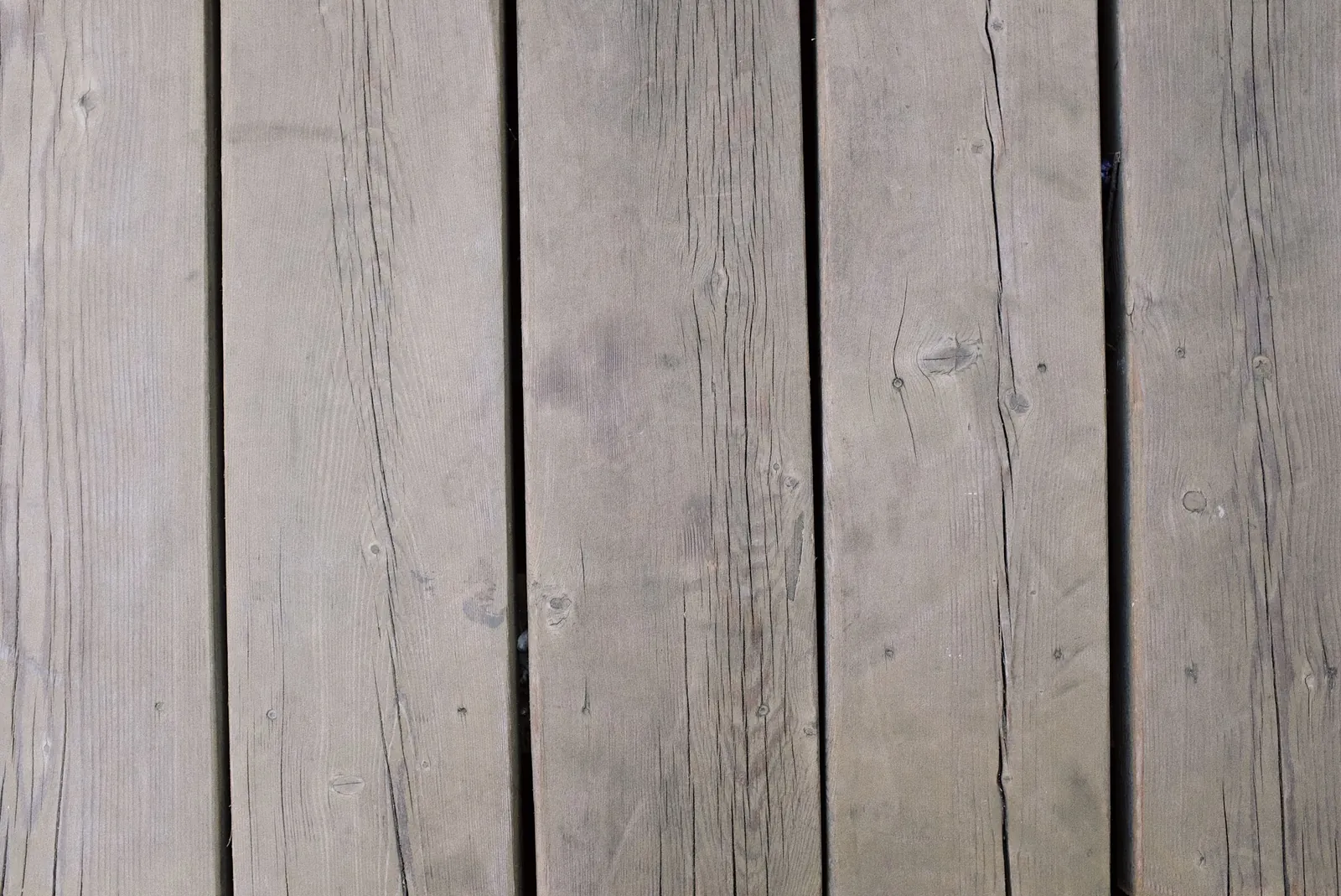
Treated lumber also starts out wet. The Wood Handbook notes that because water goes into the wood during treatment, some drying and shrinkage follows installation unless the boards were kiln dried afterward. Early shrinkage is normal; what matters is slowing the cycle down, and the lab's blunt summary is that most decks are retired because of cracks and checks that timely finishing could mostly have prevented.
How the first staining goes
It starts with George looking at the boards and running the water test. A brand-new deck usually needs only a light cleaning, while a few bare years mean a deck cleaner to lift dirt and mildew. The lab warns that aggressive scrubbing or power washing can tear wood from the surface, and that the silvery fibers on weathered boards take stain well, so the aim is a cleaning that doesn't strip them.
After cleaning, the lab suggests at least two warm, windy days of drying before any finish. Stain then goes on in an amount the wood can take in, worked from a wet edge so overlaps don't leave the darker stripes the lab calls lap marks. Ends cut during construction get extra attention, since the lab advises treating them even on factory-treated lumber.
Smaller exterior jobs like this usually take one to three days, scheduled around dry weather and the temperatures on the stain's label. The written quote is the price, no extra charge if the job takes longer than expected. Our guide on how to stain a deck shows the steps, and you can ask for a free estimate or see what we do in Verona.
Common questions
How long should a brand-new deck wait before it's stained?
Until water soaks into the boards instead of beading on them. Lumber with a factory water repellent may need two to three months of weather first, while lumber re-dried after treatment can often be finished right away.
Could my deck be built from CCA lumber?
Only if it was built before 2004. The EPA says CCA went into decks and playsets until manufacturers stopped making it for homeowner uses in December 2003, so a deck built after that is very likely one of the newer copper-based treatments.
Does pressure-treated lumber still need a finish?
Yes. Treatment guards against decay and insects, but without a finish the surface still weathers, grays and checks. A penetrating stain slows that down and is easy to renew.
Should a new deck be painted or stained?
Stained, on the walking surfaces. The Forest Products Laboratory recommends penetrating finishes for deck boards because paint and solid-color stain trap moisture and peel, though it says those film finishes can do well on railings.
Why is my new deck already cracking?
Because the boards swell with every rain and shrink as they dry, and treated lumber keeps drying out after it's built. A penetrating finish applied on time slows that movement, which is why the first coat shouldn't wait for years.
More in Verona
Decks and exterior nearby
Helpful guides
Sources
- American Community Survey 2020-2024 5-year estimates, U.S. Census Bureau, via Census Reporter
- Finishes for Wood Decks, USDA Forest Service, Forest Products Laboratory
- Chromated Arsenicals (CCA), U.S. Environmental Protection Agency
- Finishing, Maintenance, and Inspection, Southern Forest Products Association
- Wood Handbook: Wood as an Engineering Material (FPL-GTR-282), USDA Forest Service, Forest Products Laboratory