
Deck stain for sunny, open Windsor lots
Why decks with no shade turn gray so fast in Windsor, how the pigment in stain slows it down, which edge of the deck wears first, and when in the day to stain.
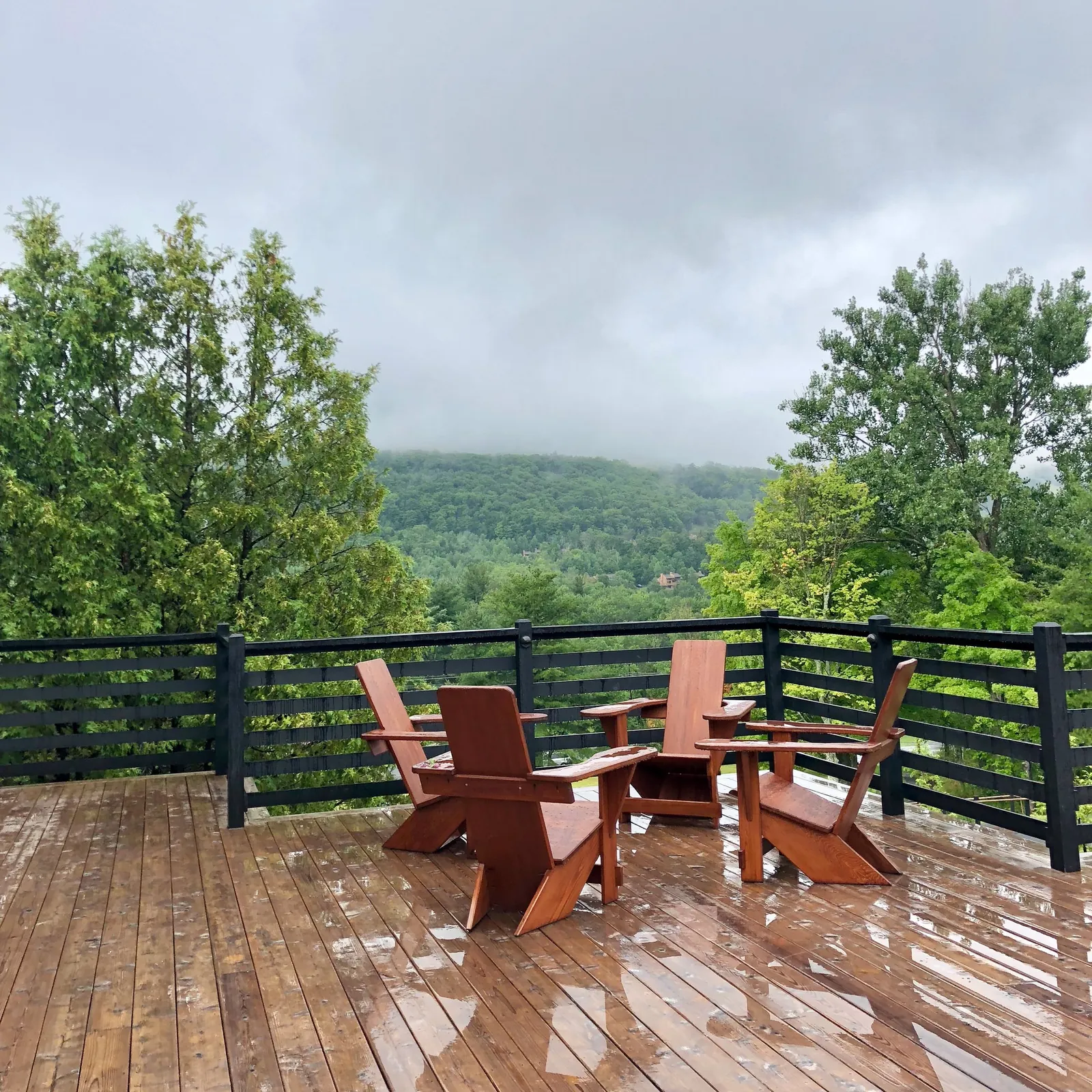
On a newer lot the trees are often still too young to shade a deck, so it sits in sun from late morning until evening with the wind running across it, and the boards gray much sooner than boards under a big maple. About 42% of Windsor's homes were built in 2000 or later, and that's the situation behind a lot of them.
This page is about what sunlight does to deck wood, how the pigment in a stain pushes back, how to tell which part of your deck is wearing first, and how to time a stain day on an exposed deck. We stain and refinish decks across the village, usually in one to three days, scheduled around dry weather.
What sunlight does to bare boards
Graying isn't dirt. The Forest Products Laboratory describes weathering as photo-oxidation of the wood surface, driven by the ultraviolet part of sunlight and helped along by rain, swings in temperature and moisture, and grit carried on the wind. It starts as a change of color and moves on to slow erosion of the surface and fine checking.
As it goes on, the lab says, every species of wood turns gray, because the colored compounds are lost from the surface and mildew moves in. The surface also wears unevenly, since the softer and harder bands of each growth ring erode at different rates, which is why an old, unfinished deck feels ridged underfoot.
None of that means the boards are ruined. It means their surface is unprotected, and an open lot simply runs the clock faster.
Pigment is the deck's sunscreen
A clear water repellent keeps water out but does little against the sun, and the lab's guide to deck finishes puts its life at about a year on a deck's exposed surfaces. Pigment changes that. The same guide says the pigment in a semitransparent stain protects the wood surface, and the mildewcide in the finish, from sunlight, which lengthens the stain's service life.
The Wood Handbook adds the trade-off. A semitransparent stain with more pigment gives more protection against weathering, and it also hides more of the wood's own color and grain. A barely tinted finish shows off the boards but gives up some of that shield, which counts most on a deck that never gets shade.
Our post on solid vs semi-transparent deck stain compares how the two kinds of stain wear over the years.
The sunny edge wears first
Wear on one deck is rarely even. The Wood Handbook notes that surfaces fully exposed to sun and rain deteriorate first, usually on the south and west sides of a building, and that the north side may not need restaining nearly as often as the south.
On a deck, that means the boards along the south and west edges, the top step of the stairs and the path between the door and the grill. Compare a sunny board with one close to the house wall: if water soaks into the sunny one while it still beads near the wall, the finish is giving out on the sunny side first.
That pattern carries into refinishing. Areas that weathered less may not take new stain as readily, so the Handbook advises feathering new stain into old there and wiping off whatever hasn't soaked in within an hour, before it dries into shiny spots that later flake.
Wind and dust on an open lot
Wind does two things to an exposed deck: it dries the surface faster, and it carries grit. The Forest Products Laboratory counts abrasion by windblown particles among the forces that weather wood, and the same breeze drops dust, seed fluff and grass clippings onto stain that's still wet.
Fast drying helps after cleaning. The lab's deck guide says to allow at least two warm, windy days for a washed deck to dry before it's finished. During staining it works against you, because wind can dry the leading edge of the stain before the next board is reached, and that dried edge is where lap marks begin.
A gusty afternoon is a poor time to stain even when the sky is clear. If a neighbor's mower is running upwind, it's worth waiting for that too.
Railings in a second color
Deck boards and railings don't take the same beating. The boards take feet, chairs and standing water, while the railings mostly take weather. The lab's deck guide points out that a railing doesn't need the abrasion resistance of the floor, and that paints and solid-color stains may perform quite well on railings even though film finishes are a poor choice for the boards.
That makes a two-tone deck practical: a semitransparent stain on the boards and a solid-color stain on the railings, often in the trim color of the house. Seen against open sky, a dark railing tends to recede, while the boards keep the warmth of wood.
Watch the railing caps. They're flat and face the sky, so they catch sun and water the way the floor does, and they're usually the first part of a railing to look worn.
Timing a stain day with no shade
On an exposed deck, the hour matters as much as the forecast. The Wood Handbook says working in the shade is desirable because stain dries more slowly there, and it advises staining only a few boards at a time so the front edge doesn't dry before a natural stopping point.
When there are no trees, the shade comes from the clock instead. Morning, once the dew is off the boards, and late afternoon, once the house throws a shadow across the deck, are easier than midday on hot wood. Temperature limits come from the stain's label, and the boards have to be dry all the way through.
Our post on the best time to stain a deck covers the forecast side. See our main deck and exterior page, read more about painting in Windsor, or ask for a free estimate.
Common questions
Why does my deck turn gray so quickly?
Mostly sunlight. Ultraviolet light breaks down the wood surface and strips out its color, and a deck with no shade gets a full dose every day. Rain, windblown grit and mildew push the graying along.
Does a darker stain last longer in full sun?
Pigment is what protects the wood, not darkness on its own. The Forest Products Laboratory says a semitransparent stain with more pigment guards better against weathering, while a clear water repellent lasts about a year on exposed decking. Ask how heavily pigmented a stain is, not only what shade it is.
Can deck railings be a different color from the boards?
Yes. Railings don't take foot traffic, so a solid-color stain can work well on them while the floor gets a penetrating stain. Matching the railings to the house trim is a popular choice.
What time of day is best for staining a sunny deck?
Morning after the dew has dried, or later in the day once the deck is in the shadow of the house. Hot boards at midday dry stain too fast and invite lap marks, and the stain's label sets the temperature limits.
How can I tell the stain is wearing on the sunny side?
Compare it with the shady side. Sprinkle water on boards in both places, and if it soaks into the sunny boards but still beads near the house, the finish is wearing there first. Faded color and a rougher feel underfoot are the other signs.
More in Windsor
Decks and exterior nearby
Helpful guides
Sources
- American Community Survey 2020-2024 5-year estimates, U.S. Census Bureau, via Census Reporter
- Finishes for Wood Decks, USDA Forest Service, Forest Products Laboratory
- Finishing of Wood (Wood Handbook, chapter 15), USDA Forest Service, Forest Products Laboratory