
Mudroom lockers, laundry cabinets and built-ins in Windsor
For Windsor houses with cabinets far from the kitchen: lockers by the garage door, laundry uppers, a basement bar or an office wall, and how to plan them all.
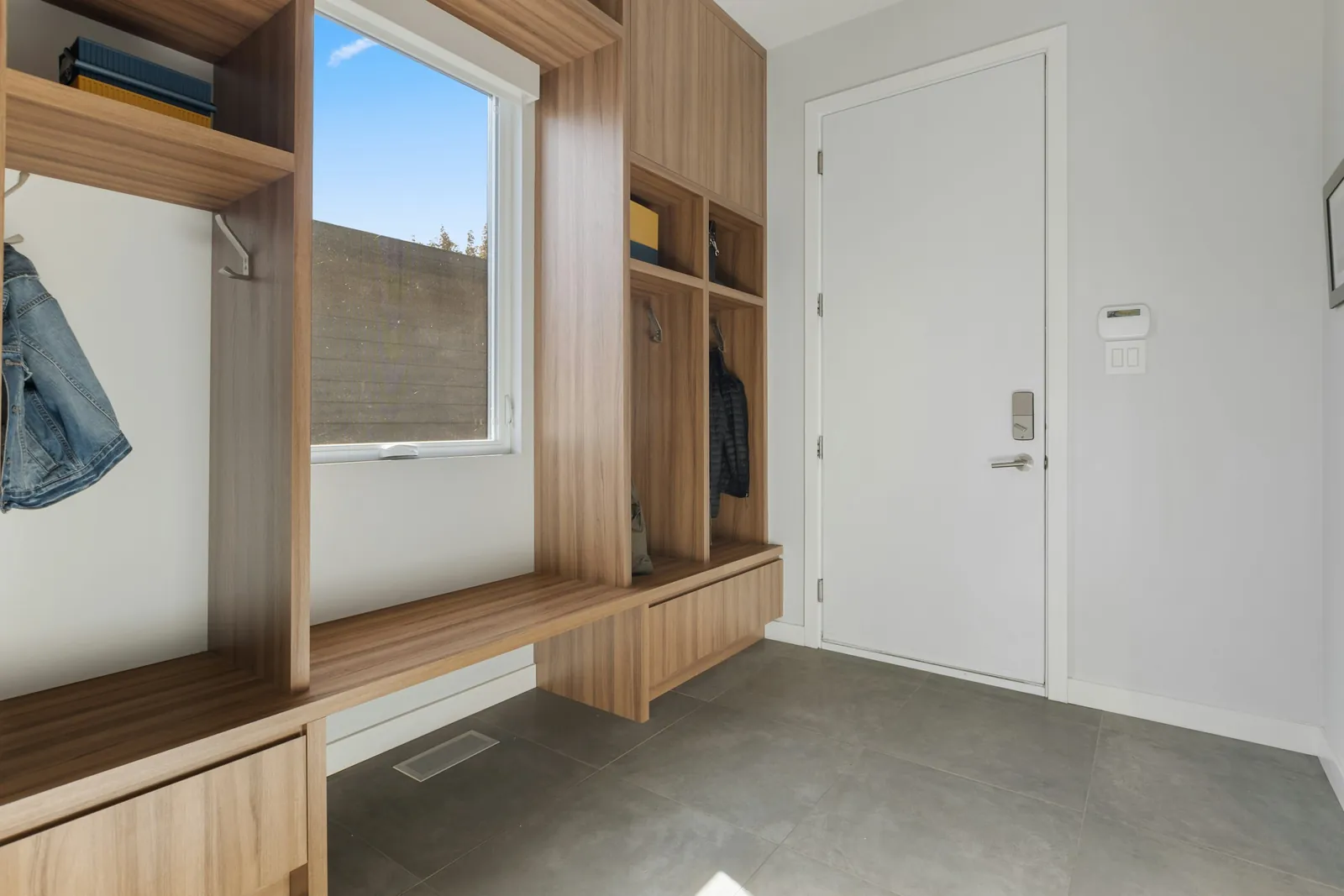
Lockers by the door from the garage, uppers over the washer, a bar in the basement, a wall of shelving in the home office: in a Windsor house, the kitchen is rarely the only room with cabinet doors. About 75% of the village's homes are single-family houses, and houses like that tend to collect cabinetry room by room.
Windsor voted to become a village in 2015, and about 42% of its homes were built in 2000 or later. This page is about the cabinets in those houses that sit outside the kitchen: what each room does to a finish, and how to fit them into one plan or spread them over a few years.
Counting the cabinets past the kitchen
Walk through a house built in the last twenty-five years and count the cabinet doors that aren't in the kitchen. The list often runs to a locker wall or bench at the garage entry, a run of uppers and a base cabinet in the laundry room, a vanity in each bathroom, and maybe a bar or a desk wall downstairs.
Many of those were installed with the kitchen, in the same wood and stain, so they age together. Refinish the kitchen alone and the difference jumps out the first time you walk into the mudroom. We refinish stained, painted, laminate and unfinished cabinets, and that includes vanities and built-ins as well as kitchens.
Our main cabinet refinishing page covers the kitchen side of the work. Everything below is about the other rooms.
Lockers and benches by the back door
A mudroom bench gets sat on, kicked and stood on to reach the top hook. The locker floors take wet boots and the salt that rides in on them, and the bottom corners of the doors get bumped by every bag heading out to the car. No cabinet in the house works harder.
Two things help painted lockers last. First, thorough prep: every surface is cleaned, degreased, sanded and primed, which counts double here because gloves, hands and gear leave oils that paint won't grip. Second, a tougher sheen. Dunn-Edwards says raising the gloss makes a paint more durable, including its resistance to scrubbing, stains and moisture, so a mudroom is the place to go a step glossier than the living room.
Built-in lockers stay put, so the room is masked and the boxes, bench and cubbies are finished in place while the doors come off to be sprayed. Our post on mudroom cabinet ideas has layouts and colors that forgive boot marks.
Laundry cabinets that live beside the dryer
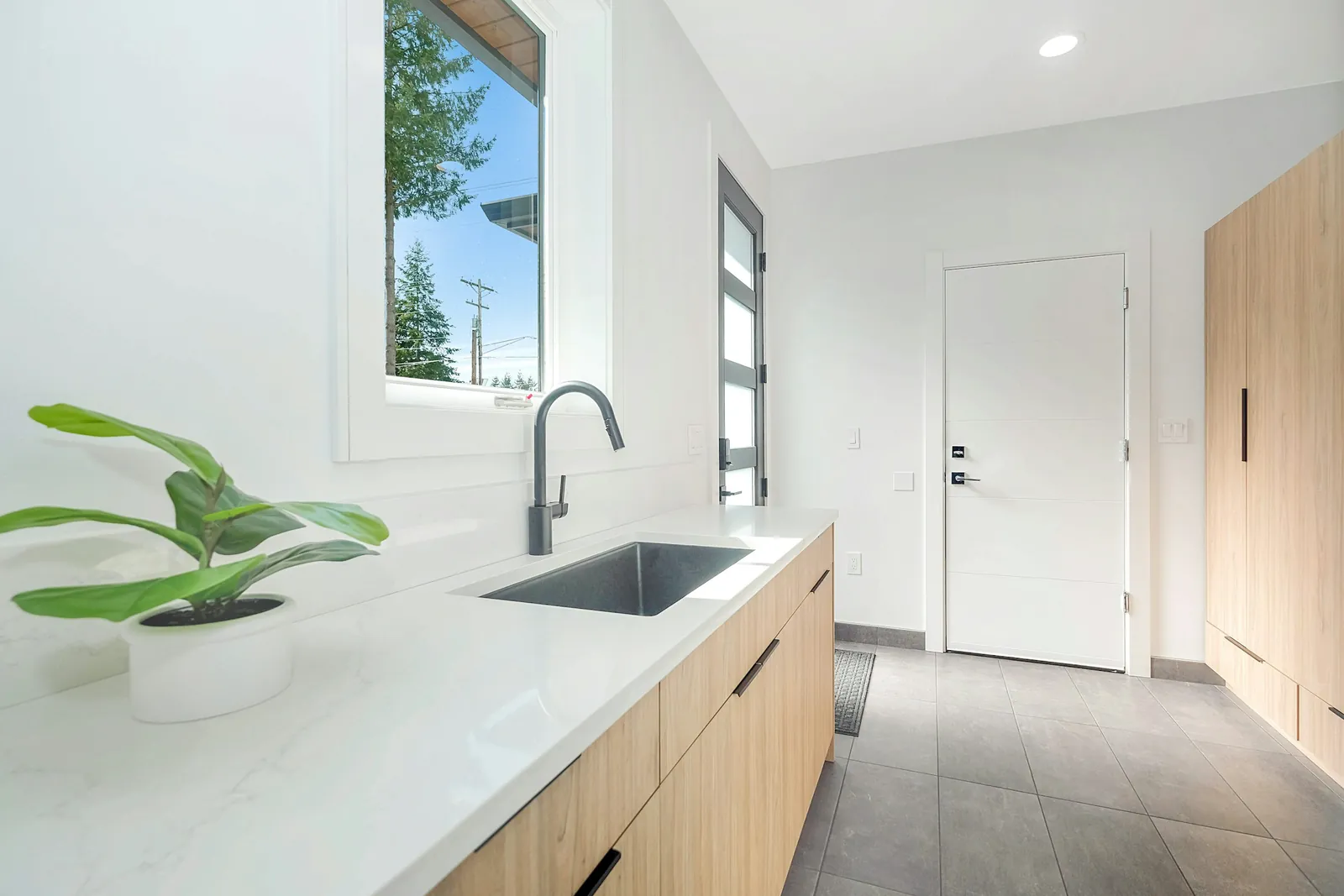
Every dryer load puts warmth and moisture into the room, and if the vent leaks or the room has no fan, that moisture settles on the cabinets nearest the machine. The EPA's mold guidance says appliances that produce moisture, clothes dryers among them, should be vented to the outside where possible.
So check the vent before the cabinets are painted. Damp air slows new paint as well: Dunn-Edwards notes that when there's more moisture in the air, the water in a latex coating takes longer to evaporate. Running the fan or leaving the laundry door open for the first few weeks gives the finish its best start.
Some laundry uppers are laminate rather than wood, and they can be refinished too, with a primer suited to a slick surface. Our post on painted laundry room cabinets covers colors for small, windowless laundry rooms.
Wet bars, butler's nooks and office walls
A basement bar or a butler's nook between the kitchen and dining room is usually built like the kitchen, often with a small sink. Look under that sink before anything gets painted. A slow drip can swell the bottom of the box, and no paint will firm up a soft or swollen panel.
Office built-ins are a different job. They're mostly shelves, face frames and a few doors, and the time goes into edges and inside corners rather than flat panels. A desktop that gets leaned on all day needs a gentle start, since Dunn-Edwards puts the full cure of latex coatings at 14 to 30 days.
Glass-front doors and open shelves raise the question of whether the inside of a cabinet should change color too. Our post on painting inside cabinets is worth reading before you decide what you want there.
One cabinet color through the house, or several
The simplest plan is one cabinet color everywhere. Where the kitchen, the mudroom and a bar can all be seen from one spot, a single color reads calm and deliberate, and one labeled can of touch-up paint covers every room.
Rooms with doors are where you can change course. A laundry room you close off can carry a bolder color than the kitchen, and a mudroom can take a darker, more forgiving shade of the kitchen color so boot scuffs don't stand out. What rarely works is two colors that are close but not identical in rooms you see together. They look like an accident rather than a choice.
Test where the rooms meet. Hold a painted sample board in the doorway between the kitchen and the mudroom, look at both colors in the same light, morning and evening, and decide from there.
In one stretch or a room at a time
Refinishing is priced per cabinet, with paint included, so adding a laundry room to a kitchen job mostly means counting more doors and boxes. That keeps phases simple too. The kitchen this year and the mudroom and laundry later can each be quoted on their own, so you know what the second round involves before you commit to the first.
Doing everything at once has its own advantage: masking and setup happen once, and every room ends up in the same batch of color. If you split it, keep a note of the color, sheen and brand so the later rooms match. Most kitchens take one to two weeks by themselves, and each extra room adds to that.
When you call, give a rough count of doors and drawers in each room and say which rooms you're weighing. George looks at the cabinets, Carley sets the schedule, and the written quote covers whatever combination you choose. Ask for a free estimate, or read more about painting in Windsor.
Common questions
Will painted mudroom lockers stand up to daily wear?
Yes, with thorough prep and time to cure. Lockers are cleaned, degreased, sanded and primed before any color, and a glossier finish takes scrubbing better. Expect some wear on the front edge of the bench over the years, as on any painted surface people sit on.
Do laundry cabinets have to match the kitchen?
No. A laundry room with a door can be its own color, and plenty of people use it for a shade they'd find too strong in the kitchen. Match them when the two rooms open onto each other or sit side by side along a hall.
Can a wet bar or an office built-in be refinished?
Yes. Bars, butler's nooks and office built-ins are cabinets, and they get the same cleaning, sanding, priming and finish as a kitchen. Check the sink base of a bar for old leaks first, because a swollen panel has to be repaired before paint.
Can the mudroom and laundry go on the kitchen's schedule?
Yes. They can be part of the same job, with their doors and drawer fronts sprayed alongside the kitchen's and the built-in parts finished in place. More cabinets add time, and George can tell you how much once he has seen the rooms.
How do I decide which rooms share a cabinet color?
Start with sight lines. Rooms you can see from the same spot should share a color or contrast on purpose, while rooms behind a door can go their own way. Compare samples in the doorway between rooms, in daylight and under the evening lights.
More in Windsor
Cabinet refinishing nearby
Helpful guides
Sources
- American Community Survey 2020-2024 5-year estimates, U.S. Census Bureau, via Census Reporter
- A Brief Guide to Mold, Moisture, and Your Home, U.S. Environmental Protection Agency
- Selecting Paint Gloss, Dunn-Edwards
- Dry Time versus Cure Time of Paint (technical bulletin), Dunn-Edwards
- Windsor, Wisconsin, Wikipedia