Cleaning paint brushes, and where the rinse water goes
· 6 min read · By GK Painting & Remodeling
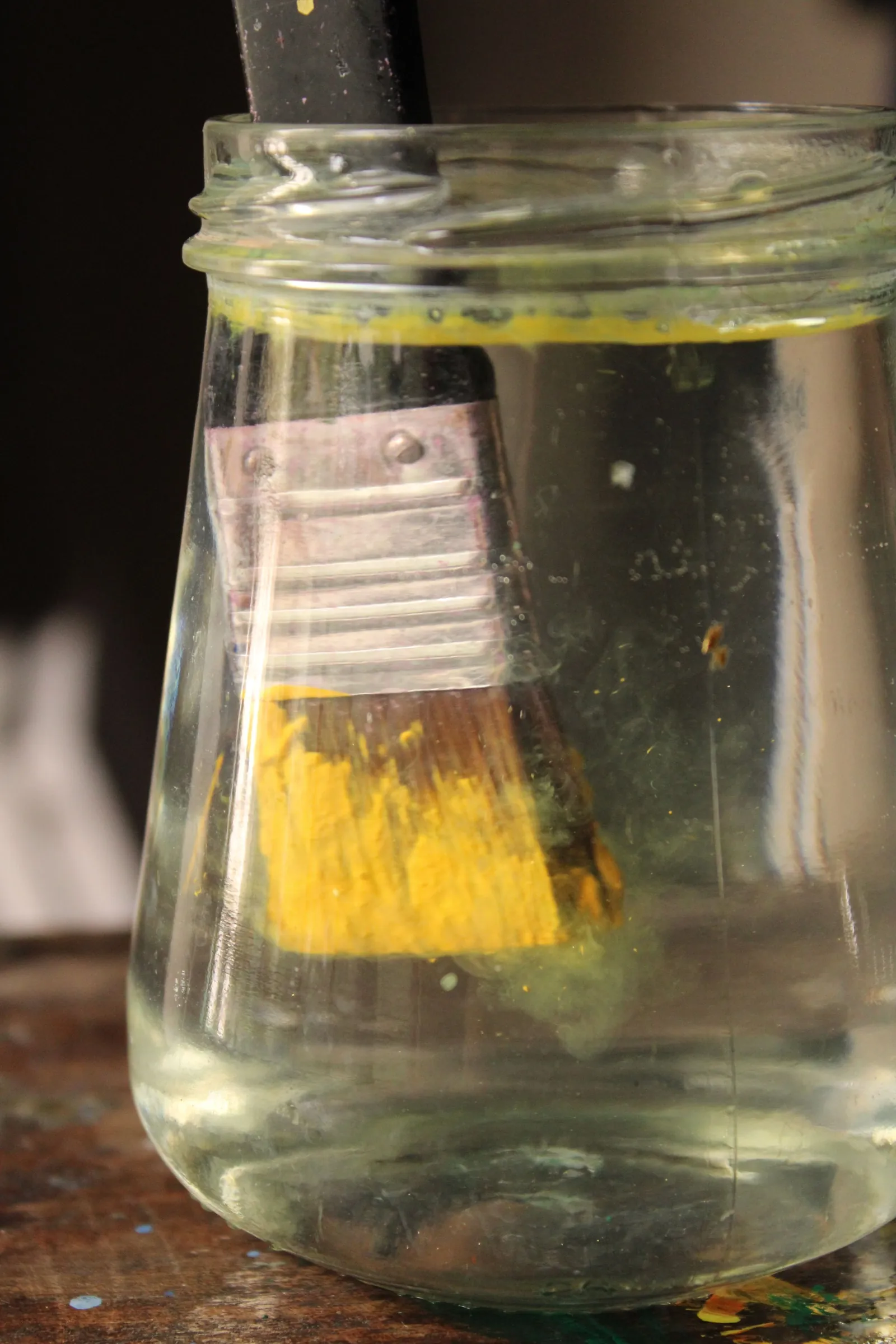
Clean latex paint from brushes with warm soapy water before it dries, and clean oil-based paint with thinner (our guide to latex versus oil-based paint explains the difference). Rinse water from latex can be handled at home, but oil-based thinner and sludge never go down a drain or onto the ground.
Here's the routine for each kind of paint, what to do with the rinse water and leftovers, and how to keep a good brush working for years. Getting the brush clean is the last step of the job, and the best time to do it is the moment you stop painting.
Clean it before the paint dries
Clemson Cooperative Extension makes the key point first: brushes and rollers used with latex paint can be washed with soap and water as long as the paint hasn't dried. Once it dries, you need a solvent. That means the best cleaning technique is speed.
| Cleanup | Latex or acrylic paint | Oil-based paint |
|---|---|---|
| Cleans up with | Warm water and soap | A small amount of thinner |
| Rinse water | Let it settle, then dispose of it properly (see below) | No water: the thinner never goes down a drain or outdoors |
| Leftover solids | Let them dry, then trash | Sludge and used solvent are household hazardous waste |
If you can't clean up right away, don't leave the brush sitting in the open air. Wrap it, as described in the section on taking a break below.
Cleaning a latex brush, step by step
- Scrape excess paint off the brush back into the can with the back of a putty knife or the edge of the can. Every bit you save is less to rinse.
- Work the brush in a pail of warm water, or under a gentle stream at a sink, pressing the bristles against the bottom so the paint leaves the heel of the brush near the ferrule.
- Add a little dish soap, and massage it through the bristles with your fingers, all the way to the heel.
- Rinse until the water runs clear. If it's still cloudy, repeat the soap step.
- Comb the bristles out with a brush comb, then shake out the water.
- Shape the bristles and let the brush dry flat or hanging, with the bristles pointing down, until dry. Put the paper keeper back on if you have it.
This Old House advises cleaning and combing out a brush after every use and wrapping the bristles in the keeper it came in. It also warns that pure nylon brushes can go floppy with heat and soak up water from latex paint, which is another reason to rinse thoroughly and not leave one soaking.
Where the rinse water goes
Paint rinse water has to go somewhere, and the wrong place can hurt local water. Clemson's extension guidance is clear on the places to avoid: a storm drain, the yard, and a septic system. Clemson says a storm drain is not safe for paint or dirty water, and that runoff shouldn't be allowed to reach one or soak into the ground. A septic tank isn't built for paint, which can upset the bacteria that make it work. And never wash paint equipment with a garden hose.
For latex, Clemson describes a three-bucket method. Scrub the brush in the first bucket, move to the second, and give it a final rinse in the third. Cap the buckets and leave them about 24 hours in a protected spot away from sun, children and animals. The paint solids settle to the bottom, and the water can then be poured down a bathroom drain, or saved for the next project. Once the sludge dries completely, it goes in the trash, and mixing in cat litter speeds that up.
Clemson also notes that latex can go down a sink with minimal impact on the sewer system, but it wastes a lot of water compared with settling. Rules vary by town, so if you're not sure, call your municipality, and if your home is on a septic system, don't put paint water in the drain at all. Our post on how to dispose of paint in Dane County covers the local drop-off options.
Cleaning oil-based brushes
- Work in a well-ventilated space and wear gloves.
- Wipe off as much paint as you can with a rag or newspaper.
- Swirl the brush in a small amount of thinner in a glass or metal container, pressing the bristles against the bottom, then wipe it with a disposable rag.
- Repeat in a second container of clean thinner until the thinner stays clear.
- Wipe the bristles dry on disposable rags, comb them out and shape the brush.
Clemson says oil-based solvent should never be washed down a drain, inside or out, or poured outside. Seal the used thinner and let it sit overnight. The paint settles out, and the clean solvent on top can be poured into a new, labeled container for the next brush. The settled sludge and any thinner you can't reuse are household hazardous waste, so take them to a collection site.
Rollers and covers
Scrape as much paint as you can off the cover with a roller tool or the back of a putty knife. Latex covers wash in the same bucket as brushes, and you should squeeze the cover from the core outward until the water runs clear. Stand the cover on end to dry. If you're shopping for a new one, our guide to which nap roller to use on walls explains the options.
A quality cover can be reused several times, and Benjamin Moore says one should last up to five uses before it starts to shed. A budget cover that sheds after a wash is a false economy, and a reason to buy the better one the first time.
Taking a break instead of cleaning
If you're coming back the next day, you don't need to wash everything. Benjamin Moore suggests wrapping unwashed brushes and roller covers in clear plastic wrap and keeping them up to two days at room temperature, or up to a week in the refrigerator, then letting them warm to room temperature before you use them.
For latex, that saves water and time between coats. Keep anything you refrigerate sealed and apart from food, and see our guide to storing leftover paint for the can itself. For longer pauses, or if the paint has already started to dry, clean the brush.
If the brush already dried
A brush with dried latex needs a solvent, as Clemson notes, and a stiff brush may never be perfect again. Use a brush cleaner or remover made for the type of paint on it, follow the label, ventilate the room and wear gloves. Soak only the bristles, not the handle, and comb out the loosened paint.
Don't expect miracles from a brush that's hard to the heel. Keep it for rough jobs like priming a garage wall, and buy a new angled brush for trim and cutting in.
Storing clean brushes
Make sure the bristles are completely dry before you wrap them, since a damp brush in a closed keeper stays damp and can dry out of shape. Store the brush flat or hanging by its handle, never standing on its bristles.
Good brushes are worth the care. A well-kept angled brush is the tool behind a clean line, as we explain in our guide to cutting in paint, and a clean one is ready for the next coat. If you'd rather leave the painting and the cleanup to us, we cover floors and furniture first and clean up when the job is done, as part of our interior painting. Ask for a free estimate.
Common questions
Can I wash paint brushes in the kitchen sink?
For latex paint, Clemson Extension says it can go down a sink with minimal impact on the sewer system, but that it wastes a lot of water, and septic systems aren't designed for it. Never do it with oil-based paint or thinner.
How do I clean a brush with dried latex paint?
Once latex has dried you need a solvent, so use a brush cleaner or remover made for dried paint and follow its label. Ventilate the room, wear gloves and comb the paint out as it loosens.
Is it okay to put paint rinse water down the storm drain?
No. Clemson's guidance says a storm drain is not safe for paint or dirty water, and not to wash paint equipment where runoff can reach one or soak into the ground.
What do I do with used paint thinner?
Seal it and let it sit overnight so the paint settles out, then pour the clean solvent into a labeled container to use again. The sludge and any thinner you can't reuse go to a household hazardous waste collection.
Can I keep a brush wrapped in plastic instead of washing it?
For a short break, yes. Benjamin Moore suggests plastic wrap for up to two days at room temperature or up to a week in the refrigerator, and letting the brush warm up before you use it.
Sources
- Water-wise cleaning of painting equipment after household use, Clemson Cooperative Extension
- How to Choose the Best Paintbrush, This Old House
- 6 Tips For Storing Leftover Paint & Shelf Life, Benjamin Moore
- How to Choose the Best Paint Roller Cover for Your Project, Benjamin Moore
- Make safe disposal of oily rags part of any home improvement project, City of Piedmont
More on interior painting and every tips and tricks post.