Storing leftover paint so it's still good for touch-ups
· 6 min read · By GK Painting & Remodeling
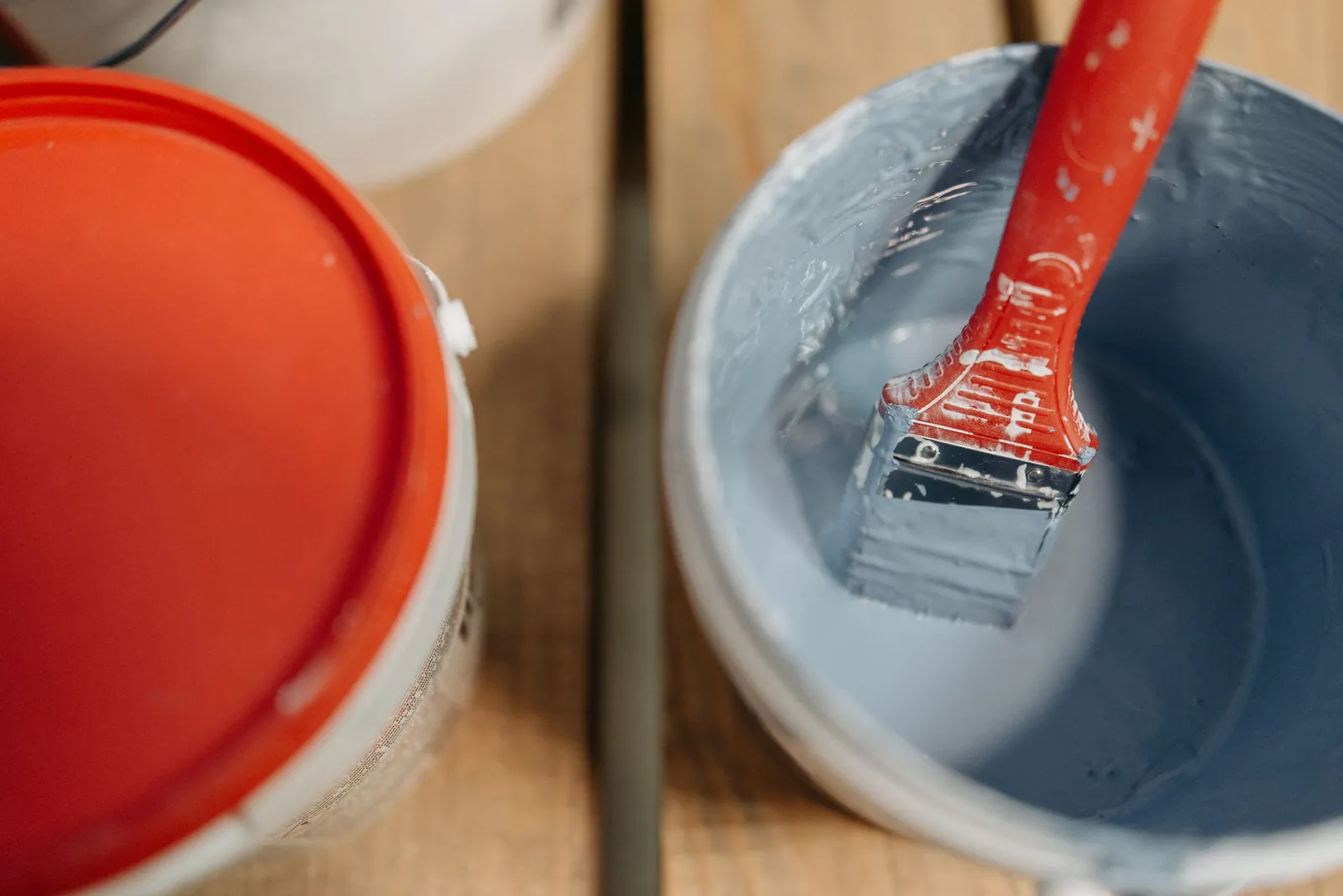
Store leftover paint in a tightly sealed can, labeled, in a space that stays between freezing and hot, which for most Wisconsin houses means inside the house and not in an unheated garage. Done that way, a can of latex paint is usually still good for touch-ups years later.
Here's how to seal it, where to put it, how to tell if it has gone bad and what to do with what you don't need. You'll want some on hand when it's time for our guide to touching up paint.
Keep a little, not a lot
A pint or a quart is usually plenty for touch-ups on the walls you painted. A gallon that's a quarter full has a lot of air in it, and air is what dries paint out. The EPA also points out that gases can leak even from closed containers, which is a reason to keep only what you'll use and to dispose of the rest safely.
If you've got a mostly empty gallon, pour what's left into a clean, smaller airtight container such as a quart can or a glass jar with a good lid, and copy the label information onto it. Less air means less skin and a longer life.
Seal the can properly

- Wipe the rim of the can and the lid clean, so dried paint doesn't keep the lid from seating.
- Lay a piece of plastic wrap across the opening. Benjamin Moore recommends plastic wrap between the lid and the can, and Dunn-Edwards describes the same idea as a better seal that also keeps dried bits from falling back into the paint.
- Set the lid on and tap it down around the edge with a rubber mallet until it is firmly closed.
- For water-based paint, Dunn-Edwards also suggests floating a thin layer of clean water on top of the paint before sealing to keep a skin from forming. Their bulletin gives 6 to 8 ounces for a bucket, so use less for a quart.
- Store the can upright, so paint doesn't sit against the lid.
Dunn-Edwards explains why skins form even in a closed can: when conditions are warm, the lid is warmer than the paint, water evaporates from the paint on the underside of the lid and condenses on the cooler paint below, and what's left on the lid dries into a skin.
Label it before you shelve it
Benjamin Moore recommends writing the brand, color, product name, sheen and where the paint was used on the can, or on the back of a light switch plate in the room. Add the date. Color names fade off lids and labels, and matching a color years later is much easier with a code and a sheen.
Take a photo of the label too, and keep a small painted sample card taped inside a cabinet door. If the can gets lost, the card and the photo still point to the right color. When you hire a painter, ask for the color name, code and sheen for your records.
Where to store it: not a freezing garage
Latex paint is mostly water, so freezing is its biggest enemy. Dunn-Edwards says water-based paint stored below freezing (32 degrees Fahrenheit) can gel, especially after repeated freeze and thaw cycles, and that heat above 110 degrees can cause skinning, settling and gelling over time. Their paint-skinning bulletin suggests a place where a constant 70 to 80 degrees can be maintained, away from direct sunlight, and Benjamin Moore's range is 60 to 80.
In Wisconsin that rules out unheated garages, sheds, porches and car trunks in winter, and attic spaces in summer. Benjamin Moore's own advice for garage storage is simply to make sure the paint doesn't freeze, which is a tall order here.
A basement utility area, a cool interior closet or a high shelf in a heated space is a better home. Keep it dry, out of sunlight, away from food and out of reach of children and pets. The EPA adds that anything you keep should be stored in a well-ventilated area, so pick a spot with some airflow rather than a bedroom closet.
How long it keeps
Benjamin Moore says most paint products, including its own, have a shelf life of about two years, and that temperature swings and storage conditions can change that. Well-stored latex often lasts longer, and poorly stored paint can fail sooner.
The label or the manufacturer's technical data sheet is the best guide for a specific product. If your paint is older than two years, open it and check it before you plan to rely on it.
Is it still good?
| What you see or smell | What it means | What to do |
|---|---|---|
| Clear liquid on top, paint stirs back smooth | Separation (syneresis), which Dunn-Edwards lists among the changes storage can cause | Stir thoroughly, then test a small patch before using it |
| A skin on top | Dried paint from the lid or surface | Lift it out, then strain the paint through a nylon strainer bag or filter |
| Hard settled lumps that won't stir back in | Hard settling of the pigment, which Dunn-Edwards says leaves bad paint | Don't use it on walls |
| Sour or strong smell | Benjamin Moore says paint past its shelf life can smell sour and strong | Dispose of it |
| Chunks or a jelly feel after stirring | The paint has gelled, often from freezing | Dispose of it |
If paint looks fine, brush a little on a hidden spot or a piece of board and let it dry before committing. A mismatch in color or sheen shows up there instead of on your living room wall.
Getting stored paint ready to use
Paint that has sat for a year needs a few minutes of attention before it goes on a wall. If it has been in a cool room, let the can come up to room temperature first, because Dunn-Edwards notes that lower temperatures can make coatings thicker and slower to dry.
- Open the can with a flat tool, not a screwdriver that will gouge the rim, and wipe the rim clean again when you're done.
- Stir slowly from the bottom for several minutes, so settled pigment comes back into the paint without whipping air into it.
- Strain it through a nylon strainer bag or filter if you see any bits, which is what Dunn-Edwards recommends for skins.
- Brush a patch on a scrap or a hidden spot, let it dry, and compare it to the wall before you touch up anything visible.
If you've got two or three partly full cans of the same color, same product and same sheen, you can combine them into one container so the color is uniform, and label the new container. Don't combine different sheens or different colors that happen to look alike.
Pausing mid-project: brushes and rollers
If you're stopping for the night, don't wash your brushes and roller covers yet. Benjamin Moore suggests wrapping unwashed ones in clear plastic wrap, keeping them up to two days at room temperature or up to a week in the refrigerator, and letting them come to room temperature before you use them.
Oil-based paint, stain and the cans you don't need
Oil-based paint, stain and thinner need more care than latex. Follow the storage section of the label, and treat leftover thinner and sludge as household hazardous waste rather than trash. Clemson's extension service says exactly that about oil-based paint sludge and used solvent.
Paint you don't want or can't use is a disposal question, not a storage one. Our post on how to dispose of paint in Dane County covers where it goes.
If you're getting ready to paint a room, we do the walls, ceilings, trim and doors for homes and businesses as part of our interior painting. Ask for a free estimate, and keep the leftover can for the touch-ups that follow.
Common questions
Can I store paint in the garage in Wisconsin?
An unheated garage is risky because latex paint can gel when it freezes, and repeated freezing and thawing makes it worse. An attached garage that never freezes may be fine, but a heated indoor space such as a basement utility area is safer.
Does paint go bad if it freezes?
Water-based paint can. Dunn-Edwards says latex stored below 32 degrees can gel, particularly after many freeze and thaw cycles. If a frozen can stirs back to a smooth consistency, test it on a scrap before using it on a wall, and throw it out if it stays lumpy.
How long does leftover paint last?
Benjamin Moore gives about two years for most paint products. Well-sealed latex stored at a steady room temperature can last longer, so check the smell and consistency instead of going by the date alone.
Should I store paint upside down?
Benjamin Moore's storage advice doesn't call for it, and a properly sealed can doesn't need it. Store the can upright with a clean rim, plastic wrap under the lid and the lid tapped tight.
How do I know what color and sheen is in an old can?
Check the label first, then any note you wrote on the can or a switch plate. If neither survives, a paint store can sometimes match a dried sample, but a labeled can with brand, color code and sheen saves the guesswork.
Sources
- 6 Tips For Storing Leftover Paint & Shelf Life, Benjamin Moore
- Paint Storage Best Practices (technical bulletin), Dunn-Edwards
- Paint Skinning (technical bulletin), Dunn-Edwards
- Volatile Organic Compounds' Impact on Indoor Air Quality, U.S. Environmental Protection Agency
- Water-wise cleaning of painting equipment after household use, Clemson Cooperative Extension
More on interior painting and every tips and tricks post.