Peeling paint: find the cause, then repair it so it stays put
· 6 min read · By GK Painting & Remodeling
Fix peeling paint by finding out why it's peeling, since moisture, a dirty or glossy surface underneath and too many layers of old paint are the usual causes, and then scraping back to sound paint, sanding the edges smooth, priming bare spots and repainting. If you skip the first step, the new paint will peel in the same place.
Here's how to read the evidence on the back of a paint chip, how to deal with moisture, how to make the repair itself and when the problem is bigger than a patch. There's also a short lead-safety note for older homes, because that's where you'll find the most peeling.
Read the back of the chip
Pick up a flake of the peeled paint and look at its underside. Dunn-Edwards explains that the condition of the back of the chip points to the cause:
| The underside of the peeled paint is | The likely cause |
|---|---|
| Stained or discolored | Moisture trapped behind the paint |
| Brittle, cracked or checked | Too many layers of paint building up stress |
| Dirty, mildewed, chalky, slick or glossy | A previous coat applied over a poorly prepared surface |
Benjamin Moore adds a few more causes of cracking and flaking: paint applied too thin, low-quality paint, aging that leaves paint too brittle to flex with temperature and humidity changes, and paint applied over bare wood without primer. The first job is figuring out which one you have, because each has a different fix.
Moisture: find it and stop it
A Purdue University extension bulletin on paint failure (written about house paint on wood, though the physics is the same indoors) says the most common cause of premature paint failure on wood is moisture, including moisture moving through a house wall from the inside. It adds that normal household activity, such as cooking, dishwashing, clothes dryers, bathing and breathing, can put about three gallons of water a day into the air of a house with a family of four, and that problems are particularly pronounced around bathrooms, laundry rooms and kitchens.
So look for the source. Plumbing leaks, tub and shower overflow and splash, a bath fan that doesn't vent outside, a dryer vented into the basement, and a window that streams with condensation in winter can all peel paint. Dunn-Edwards says to repair moisture sources and install vents where needed, especially near kitchens, bathrooms and laundry areas. The EPA puts it simply: the key to mold control is moisture control, and water-damaged areas should be dried within 24 to 48 hours.
Painting over a moisture problem wastes paint. Fix the leak, run the fan and let the wall dry completely first. Our post on painting in high humidity goes into timing.
Older homes and a lead-safety note
Peeling is common in older houses, where several generations of paint sit on plaster and on old oil-based trim. Slick, glossy oil-based paint is hard for new paint to grip, and plaster walls with many coats can lift in sheets. Prep matters more in those homes than the brand of paint does.
One more thing to know. The EPA says homes built before 1978 are more likely to have lead-based paint, and its Renovation, Repair and Painting rule sets lead-safe work practices for paid work in those homes. For small areas of damaged paint, the EPA says to fix them promptly and without sanding, and if you must sand, to wet the area first, sand only what you need and clean up thoroughly. It also says not to try to remove lead-based paint yourself. Details are on the EPA's pages on reducing lead exposure at home and the lead renovation, repair and painting program. If you're calling about a job in an older home, mention your home's age when you call.
Repairing a small peeling area, step by step
This is for a patch the size of a hand or a trim run, in a home where lead isn't a concern or after you've taken the EPA's guidance into account.
- Cover the floor with a drop cloth and ventilate the room.
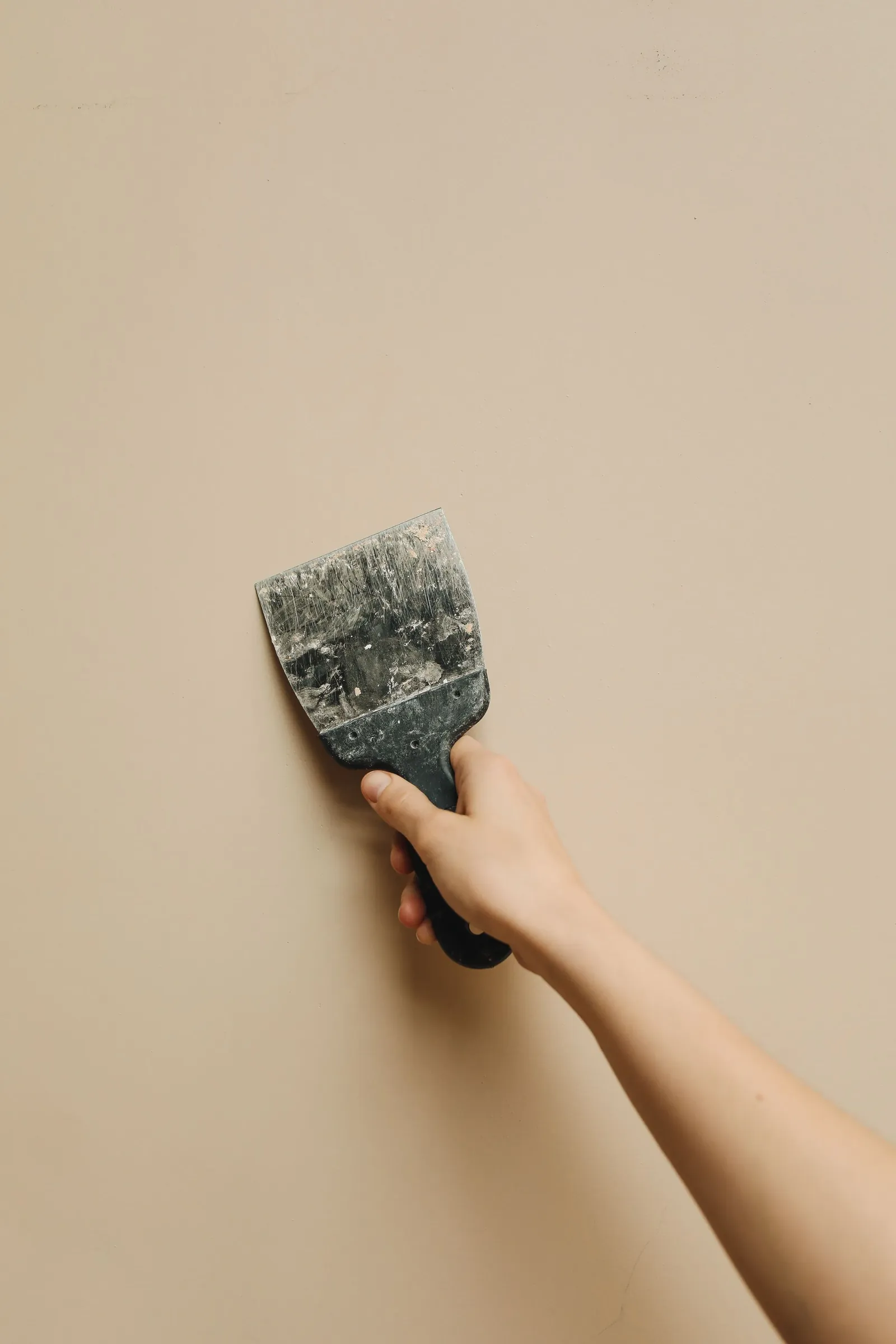
- Scrape off all loose, flaking and peeling paint back to the sound surface, with a stiff putty knife. Dunn-Edwards warns that leaving it may cause future failure. Tap around the edge, and if paint lifts, keep scraping.
- Feather the edge: Purdue's bulletin says to sandpaper the edges of the remaining paint smooth with the bare surface, so the step between paint and bare surface disappears.
- Clean the area. Dunn-Edwards suggests household chlorine bleach, water and a little liquid dishwasher detergent to remove mildew, dirt and chalk, then a clean-water rinse and thorough drying. Never mix bleach with ammonia or ammonia-based cleaners.
- Scuff sand any slick or glossy spots so the new paint has tooth to grip.
- Spot-prime the bare spots. Both Dunn-Edwards and Purdue call for primer on bare surfaces before the topcoat.
- If the edge still shows, fill the shallow step with a thin skim of joint compound or patching compound, sand it smooth and spot-prime it.
- Repaint with two thin coats of quality paint, working out to a corner or natural break so the new paint doesn't end in the middle of a wall.
Test the bond before you trust it
Purdue describes a simple adhesion test. Clean the old surface, repaint a small area, and let it dry at least two days. Then firmly press one end of an adhesive bandage onto the painted area and jerk it off with a snapping action. If the tape is free of paint, the new paint has stuck well. If paint comes off with it, the old surface needs more cleaning or a bonding primer.
It takes five minutes and can save you repainting a whole wall. For help with the primer question, see our guide to whether you need primer.
Peeling on trim, doors and glossy surfaces
Trim and doors peel more than walls because they get touched, bumped, steamed and glossed. The cause is often the same: new paint over old, slick, unprepped paint. Scuff sand glossy surfaces, clean them well and use an appropriate primer, as Dunn-Edwards advises, before the topcoat.
Where paint peels at a door's edge or a window's sill, the cause may be blocking: two painted surfaces stuck together before they had cured. Benjamin Moore says closing doors or windows before the paint has dried or cured is a cause, along with thick old coatings that leave the moving part too little room. The fix is to sand down thick buildup, prime and recoat, and leave doors open until the paint is hard. Our guides to painting interior doors and painting baseboards walk through trim prep. If the peeling is on a fiberglass or steel entry door, see why paint lets go on fiberglass and steel doors.
When it's more than a patch
Some peeling can't be fixed with a scraper. Benjamin Moore's advice is that painting over cracked paint is a bad idea. If the paint is cracking and flaking over a whole wall, or lifting in sheets because of many layers, the old paint has to come off or be sealed down before new paint goes on. Purdue says that once heavy cracking from too many layers has occurred, the only solution is completely removing the old paint and applying a new finishing system.
Crumbling plaster, a wall that stays damp or repeated peeling in the same place are signs to fix the structure first. Anything beyond small holes, like failing plaster or drywall damage, needs a repair before painting, and painting the surface comes after that.
Letting us look at it
We paint walls, ceilings, trim and doors as part of our interior painting, with cleaning, sanding and priming before any topcoat, and we repair small holes first. George visits if he needs to see the space, and the written quote is built from what he finds. Ask for a free estimate, and mention your home's age if it was built before 1978. We work across Madison, Middleton, Verona and the rest of Dane County, and you can read more about interior painting in Madison.
Common questions
Why is my paint peeling off the wall in sheets?
Usually a weak bond or moisture. Dunn-Edwards says to look at the back of the peeled paint: stained means moisture, brittle means build-up, and dirty, chalky or glossy means the previous coat went over a poorly prepared surface.
Can I paint over peeling paint?
No. Benjamin Moore calls painting over cracked paint a bad idea. New paint can only be as strong as what's under it, so scrape off the loose paint, sand the edges and prime bare spots first.
Why does paint peel in the bathroom?
Humidity. Purdue's bulletin names bathrooms, laundry rooms and kitchens as the places where moisture problems show up most, and the EPA says to run the bathroom fan or open a window when showering. Fix the moisture before you repaint.
Is peeling paint dangerous?
In a home built before 1978 it can be, because the EPA says those homes are more likely to have lead-based paint. Wipe up chips and dust with a damp cloth, keep children away from the area and mention your home's age when you call a painter.
What do I use to prime a spot where paint peeled?
Spot-prime the bare area with a primer suited to the surface underneath, and scuff sand first if the old paint was glossy. Then paint two thin coats of quality paint over it.
Sources
- Multiple Coat Peeling (technical bulletin), Dunn-Edwards
- Paint Failure Problems and Their Cure (NCR-133), Purdue University Cooperative Extension
- Cracking and Flaking Paint, Benjamin Moore
- Reduce Your Risk of Lead Exposure at Home, U.S. Environmental Protection Agency
- A Brief Guide to Mold, Moisture and Your Home, U.S. Environmental Protection Agency
More on interior painting and every tips and tricks post.