Touch-up paint that disappears instead of showing a patch
· 6 min read · By GK Painting & Remodeling
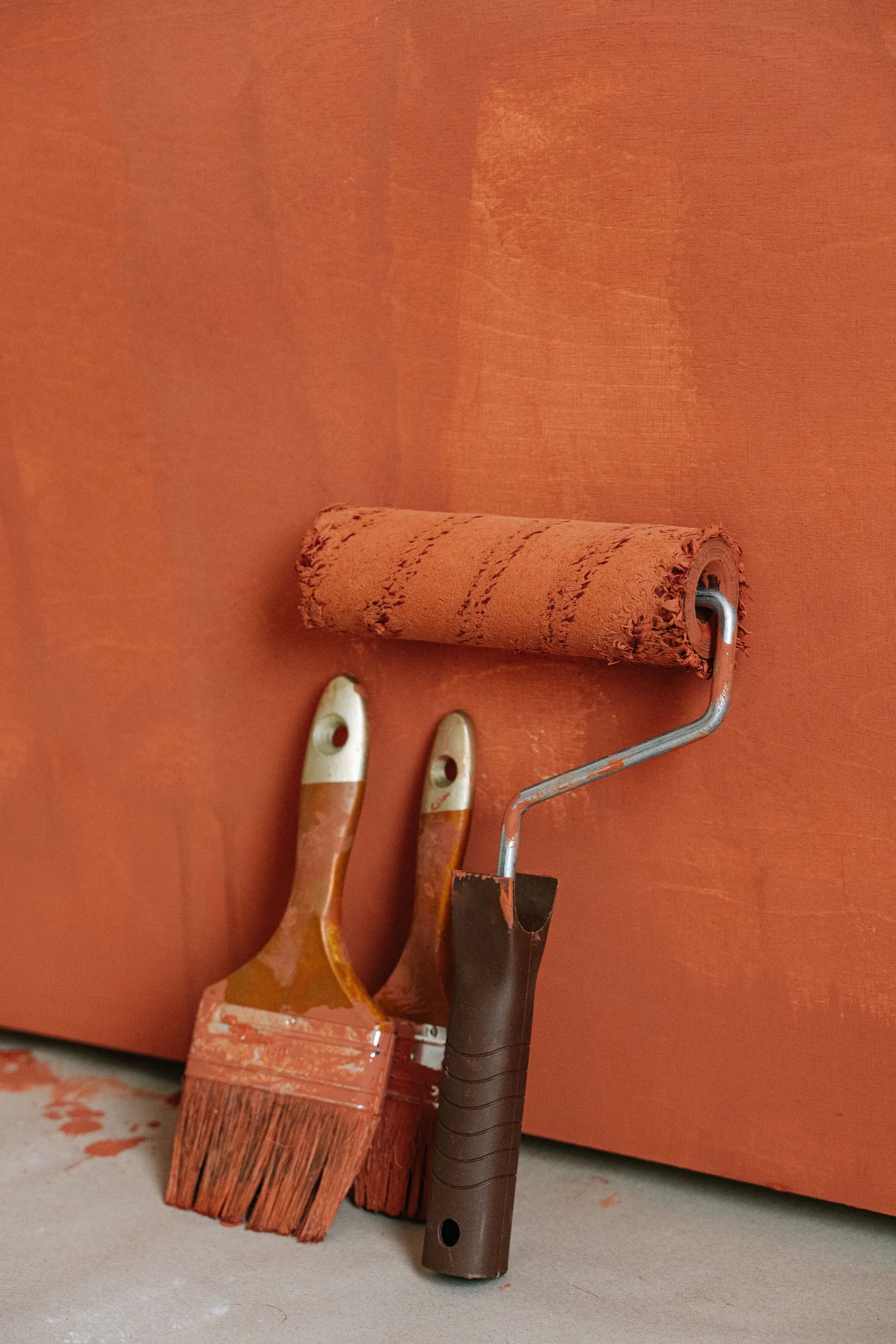
A touch-up blends in when you use the same paint, clean and prime the spot, and apply it thinly with a small roller rather than a brush. When it doesn't blend, the usual culprit is a difference in sheen or texture, not color.
Here's why touch-ups show, how to do one properly, and how to decide when the better move is to repaint the whole wall. The paint you saved matters, so our guide to storing leftover paint helps if you've got a can in the basement.
Why a touch-up shows
Dunn-Edwards defines a touch-up as paint applied to a recently painted surface, meaning one painted less than a year ago, either to cover a missed spot or to hide a repair. Its technical bulletin is candid that no touch-up is perfect, but that a good one blends in acceptably.
Diamond Vogel's bulletin explains the three ways a touch-up can look different. The color can be a shade lighter or darker, the sheen can come in higher or lower than the surrounding paint, and the profile can differ if the new paint is built up above the old instead of flush. The sheen difference has a name, flashing, and it's the one people notice most.
Light makes it worse. Farrow & Ball defines critical lighting as sunlight or another source that strikes a wall at an angle of 15 degrees or less, and flashing shows most under that kind of shallow light. A patch you can't see at noon can jump out at 4 pm in November.
What makes touch-ups harder
Dunn-Edwards lists the factors that make a touch-up more visible. Knowing them tells you where your wall sits on the difficulty scale:
- Sheen. Paints with a sheen are harder to touch up than flat paint, and Diamond Vogel agrees that eggshell, satin and semi-gloss show sheen differences more than flats.
- Dark colors, which are usually harder to touch up.
- Excess paint build-up, which makes a raised patch.
- Differences in porosity and texture, especially in raking light.
- Dirt or grease on the surface.
- Different temperature and humidity from the original job, and a different way of applying the paint.
That's why a flat bedroom wall can take a touch-up almost invisibly, while a satin hallway in a dark color shows every attempt. It's one of the reasons to think about sheen before you paint, and our guide to which paint finish to use in each room lays out the trade-offs.
Touch up, or repaint the wall?
| Situation | Better move |
|---|---|
| A small scuff or nick on a flat wall, painted within the last year | Touch up |
| A repaired hole or patch | Prime the repair, then touch up, and be ready to blend wider |
| Several touch-ups already on the same wall | Repaint the wall, corner to corner |
| A glossy or dark wall with a visible patch | Repaint the wall, corner to corner |
| Marks from scrubbing or cleaning | Try touching up; a full coat may be needed (see burnishing below) |
| A water stain or peeling paint | Fix the cause first, then repaint the area |
Dunn-Edwards puts the rule plainly: if a surface needs an excessive number of touch-ups, it may be best to repaint the entire wall from corner to corner. A wall that's been patched four times is a wall that wants one clean coat.
Start with the right paint
Use the same paint from the same batch, if you have it. Dunn-Edwards lists this first among its best practices, and Farrow & Ball makes the same point about keeping leftover paint from the original batch. A different can of the same color name can still come out a hair off.
If you have no leftover, you need the color name, code and sheen. The paint must be tinted properly, with the correct base, color formula and product, or the touch-up won't match even if you do everything else right. Our guide to storing leftover paint covers labeling it so you never have to guess.
Prep the spot
The surface must be clean, dry and free of dirt, dust, grease or oils, and free of loose or peeling paint. A spot you touch up over grime will look different from the wall around it however good the paint is.
If you've filled a hole or dent, the repair is more porous than the wall. Farrow & Ball says freshly damaged and filled areas absorb the touch-up coat at a different rate, which causes uneven color and sheen. Diamond Vogel's advice for avoiding touch-up problems starts with applying an appropriate primer. So fill, sand smooth, spot-prime the repair, let it dry, and only then touch up.
Apply it thin, with a small roller
Dunn-Edwards says that if you have a choice between a brush and a roller, use a roller. They prefer a small roller (they call it a weenie roller) with a good synthetic cover and a nap of one quarter to one half inch.
- Stir the paint well. Pour a small amount into a tray.
- Load the roller lightly. Dunn-Edwards says to use the least amount of paint necessary, which limits build-up in the patch.
- Roll over the spot and feather out into the surrounding wall with the roller, not a brush. Dunn-Edwards warns that feathering with a brush leaves a flat halo around the touch-up, while a synthetic roller blends slight color and sheen differences without one.
- Let it dry, look at it from several angles, and add a second thin coat only if you need it.
- Don't force-dry it with a heat gun or hair dryer. Diamond Vogel's bulletin says never to force dry a touch-up.
For a smooth wall painted with a water-based non-flat paint, Dunn-Edwards says thinning the paint with about 5 to 10 percent clean water can help limit the sheen difference. Check the label on your can before you thin, because some paints say not to. Diamond Vogel also suggests a foam brush for a thin application if a roller is out of the question.
Blend wider than the mark
The most common mistake is touching up exactly the size of the mark. A small, sharply defined patch draws the eye, even when the color is right. Extend the roller a few inches past the mark in every direction, and fade the edges with a light touch.
Check your work after it dries, in the same light that showed the problem. If it still flashes, a second light coat is better than a heavy one. If it still flashes after that, you're looking at a repaint of the wall.
Scuffs, scrubbing and burnished spots
Sometimes the mark you're covering is from cleaning. Dunn-Edwards describes burnishing as a glossier patch caused by washing or scrubbing, most noticeable on flat and low-sheen paints, because rubbing breaks off the tiny pigment nodes that keep the surface dull. Darker colors show it more, which is why black cabinets in a busy kitchen need their sheen chosen with care.
Their advice is to use only mild liquid detergent and water, never abrasive cleaners, and to wait at least two weeks after painting before washing at all. Once burnishing has happened, touching up is the first option, but fully fixing it may take a new finish coat. Our post on cleaning walls before painting covers what's safe to use, and cleaning painted walls by sheen covers everyday washing.
When to hand it over
If a wall has too many patches, a tricky sheen or a color that's been discontinued, a clean repaint of the wall usually looks better than a fifth touch-up. We paint walls, ceilings, trim and doors as part of our interior painting work, repair small holes first, and most rooms take one to two days. A free estimate starts with a phone call.
Common questions
Why does my touch-up paint look different from the rest of the wall?
Usually it's sheen, not color. A touch-up can come out glossier or flatter than the surrounding paint, especially when the wall had a different porosity, was applied a different way or was painted at a different temperature. Higher-sheen paints show the difference the most.
Should I use a brush or a roller to touch up a wall?
A small roller with a synthetic cover and a quarter to half inch nap blends best. A brush tends to leave a visible halo where you feather the edge, though a foam brush can work for a very thin application.
How long can I wait to touch up paint?
Sooner is better. Dunn-Edwards defines touch-up as work on paint less than a year old, and aging, dirt and a different batch of paint all make a later patch easier to see.
Can I touch up with paint that's been sitting for years?
You can if it stirs smooth and smells normal, but test it on a hidden spot first. Paint that has been frozen, separated or aged may dry a different color or sheen from the wall.
When should I repaint the whole wall instead?
When the wall already has several touch-ups, a glossy or dark finish, or a patch that still flashes after two light coats. Dunn-Edwards recommends repainting corner to corner when a surface needs too many touch-ups.
Sources
- Touch-up (technical bulletin), Dunn-Edwards
- Touch-up Factors (technical bulletin), Diamond Vogel
- Touching Up Paint Coatings, Farrow & Ball
- Burnishing (technical bulletin), Dunn-Edwards
More on interior painting and every tips and tricks post.