Testing paint colors on your own walls before you commit
· 6 min read · By GK Painting & Remodeling
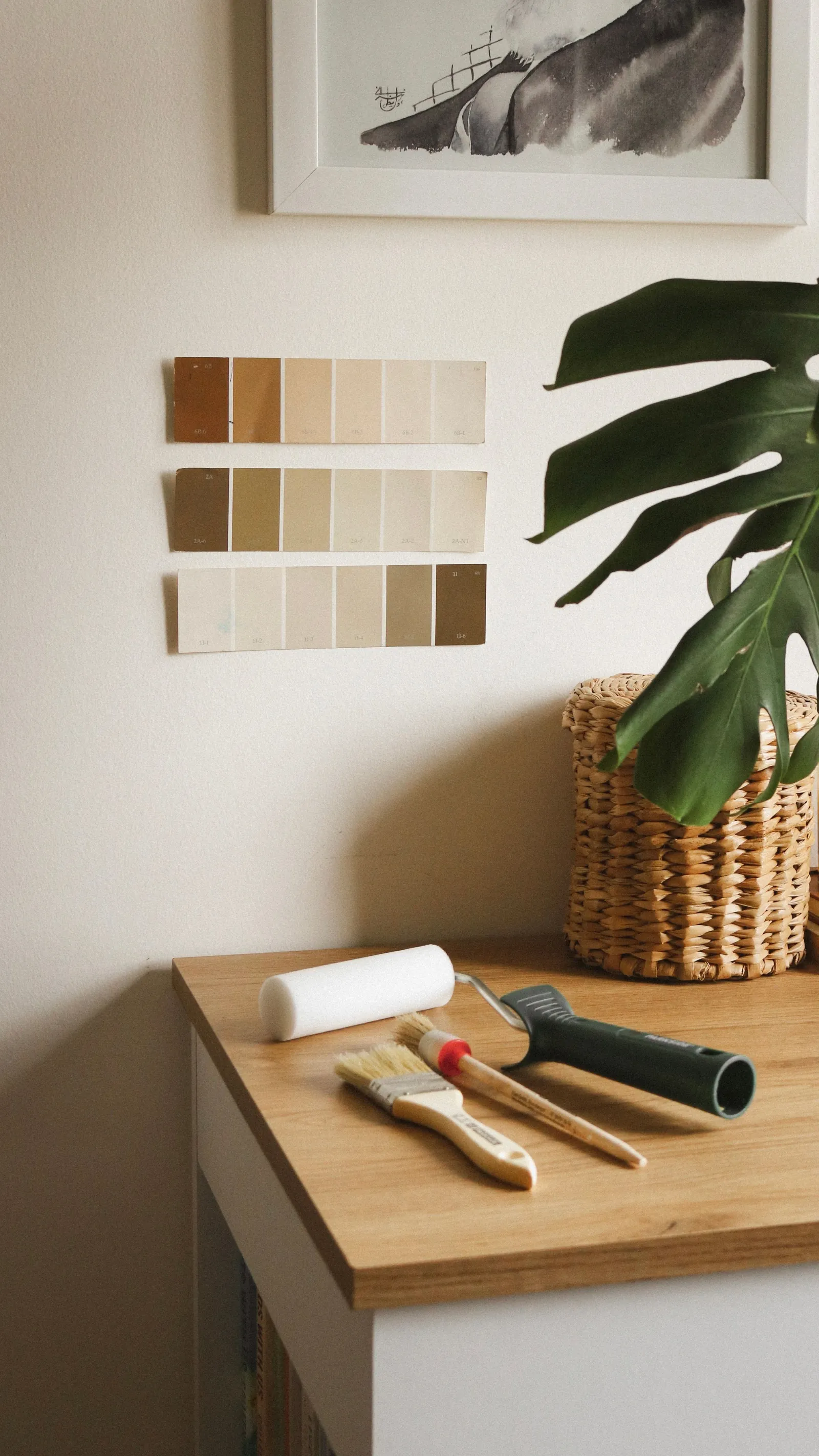
Test a paint color by painting two coats on a sample at least a couple of feet across, on more than one wall, and then looking at it in the morning, in the afternoon and at night under the lights you actually use. A color is the paint plus the light plus everything near it, and a tiny chip can only show you the first of those.
Here's how to run a test that predicts the finished room, what changes the way a color looks, and how to know when you've seen enough. If you haven't narrowed down your choices yet, our guide to choosing paint colors for your home comes first.
Why a small swatch misleads you
A paint chip is a few square inches of color surrounded by white card. Your eye judges color in context, so a chip beside a white border looks different from the same color covering a wall. Add the room's real light and furniture and the match gets weaker still.
Dunn-Edwards puts the principle bluntly in a technical bulletin: nothing changes the perception of color more than light, so colors should be assessed under the predominant lighting conditions of the space. That's the rule behind everything below.
Make the sample big enough
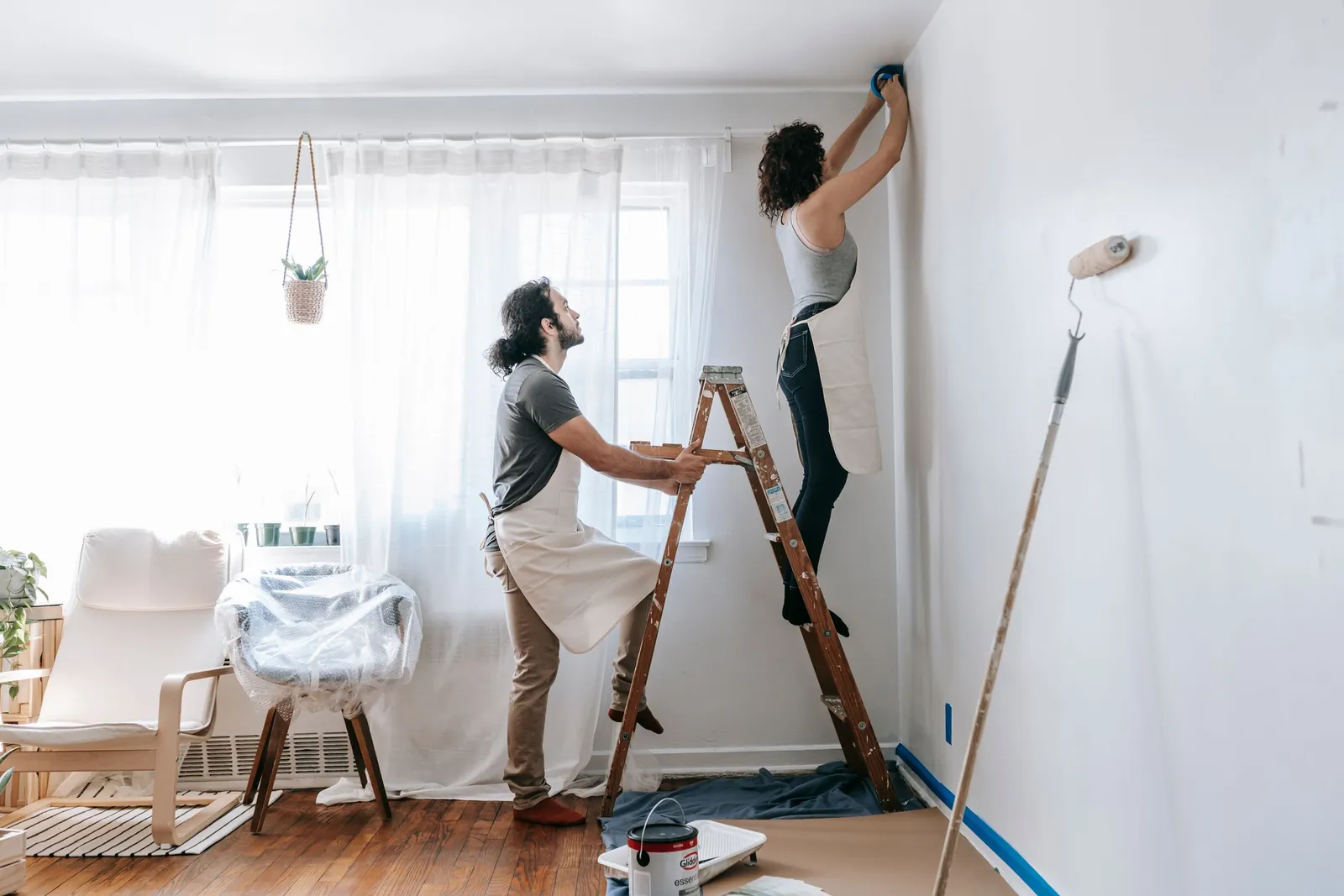
Aim for a patch at least two feet by two feet. Anything smaller and you're judging the color against its surroundings instead of on its own. A good sample is large enough that when you step back, it reads as a piece of wall.
There are two ways to do it. You can paint directly on the wall, which shows the real texture and light, or paint on sturdy white board and tape it up, which lets you move the sample from wall to wall and keeps the old color from showing through. Boards are the better choice when the current wall is dark or boldly colored, and for rooms where you're comparing several options.
Paint two coats, over white
One thin coat of a sample is usually lighter or patchier than the finished wall, so give it two coats and let each dry. A single coat over an existing color shows the old paint through, and you end up judging a mixture.
Dunn-Edwards notes that priming is recommended when you want to cover a dark surface with a light color, and that a primer tinted to the new color keeps the dark paint from showing through. A white board or primed patch is the sample-sized version of the same idea. If you're thinking of going much lighter than what's on the wall now, see our guide to painting over dark paint.
Look at it all day
Light changes through the day, and a color changes with it. Check your samples at set times rather than whenever you pass them:
| Time | What to look for |
|---|---|
| Morning | How the color reads in your first light, especially in a bedroom or kitchen |
| Midday | The cleanest daylight view, and a check on how bright it gets |
| Late afternoon | Warmer, lower light that can pull a color toward yellow or orange |
| Evening, lights on | The color under your lamps, which is how you'll see it most of the year |
Dunn-Edwards calls direct sunlight the truest light source, with the best balance between warm and cool. Artificial light leans one way or the other. Their bulletin says incandescent and halogen bulbs enhance reds and yellows and warm a space up, while fluorescent and other energy-saving lighting enhances blues and greens. So test under the bulbs in the room, and if you plan to change bulbs, change them before you judge the color.
Test on more than one wall
A wall that gets the window's light head-on and a wall in shadow can make one color look like two. Put a sample on at least two walls, ideally one that faces the window and one that faces away from it, and one on a corner if you can.
Rooms that face different directions get different light, and a north-facing room is often the hardest one to judge from a chip. Our post on paint colors for north-facing rooms goes into what that means for your choices.
Check it in tough light and on real texture
Most rooms have one hard light: a window or fixture that skims across a wall at a shallow angle. Dunn-Edwards calls this the critical light source, where light strikes a surface at an acute angle and casts shadows that show every irregularity.
That light shows more than texture. It also shows whether the color looks even, flat and rich or streaky and thin. Look at your sample from the side, with the sun low or a lamp held close to the wall, because that's the view that will bother you a year from now if it's going to.
A smooth board and a textured wall return light differently. Dunn-Edwards explains that smoother areas reflect light more uniformly, while rough or textured areas scatter it, which can make the same color look duller or less saturated.
If your walls have texture, a sample on a smooth board will look a little cleaner than the finished room. That's one more reason to put at least one sample directly on the wall before you order.
Remember that sheen changes color too
The same color in two sheens can look like two colors. Dunn-Edwards explains that different sheen levels of one color may appear lighter or darker side by side, because the way a surface reflects light changes what reaches your eye. A glossier finish reflects light more directly, and a flatter one scatters it.
So sample in the sheen you plan to use. A flat sample won't predict how a satin finish will look. Our paint finish for each room guide helps you pick the sheen before you test.
Look at it next to what's staying
A wall color is never alone. Hold the sample, or step back from it, next to the floor, the trim, the countertops, the sofa and the curtains. A cool gray can look purple next to a warm wood floor, and a soft white can look dingy next to bright trim.
The same goes for cabinets. We cover testing cabinet colors in our guide to choosing a cabinet color, and a sample door is far more telling than a chip.
Give it a few days, then decide
Live with your samples for two or three days if you can. Notice whether you still like the color on a gray Wisconsin afternoon, and whether it still looks right at night. If two finalists keep trading places, test them side by side on the same wall.
- Pick two or three finalists, in the sheen you plan to use.
- Paint each on a white board or primed patch, two coats, at least two feet across.
- Put them on at least two walls, one of them facing the window.
- Look morning, midday, late afternoon and evening with the lights on.
- Check them beside the floor, trim and furniture, and from the side in raking light.
- Wait a couple of days, then pick the one you still like.
When you've chosen, you can tell us the name and sheen when you call. We paint walls, ceilings, trim and doors as part of our interior painting, and your quote is built around the paint you pick. Ask for a free estimate once you have your color.
Common questions
How big should a paint sample be?
Make it at least two feet by two feet. A patch that size lets you see the color as a section of wall rather than a swatch, and it's large enough to judge against the light and the room around it.
Should I paint the sample directly on the wall?
You can, and it shows the real texture and light. Painting on a large white board and moving it from wall to wall is better when the current color is dark or when you're comparing several options.
Why does paint look different at night?
Daylight and artificial light have different spectral makeups, so the same color reflects a different mix of wavelengths. Warm bulbs push reds and yellows, while cooler, energy-saving lighting enhances blues and greens, which is why you should check the sample under your own lamps.
How many samples should I test at once?
Two or three finalists is plenty. Too many samples blur together, and you start choosing between near-identical options instead of between different directions.
Does the sheen of the sample matter?
Yes. The same color can look lighter or darker in different sheens, so sample in the sheen you plan to use on the wall.
Sources
- Gloss, Lighting & Texture Effects on Color Perception (technical bulletin), Dunn-Edwards
- The Importance of Priming (technical bulletin), Dunn-Edwards
- How to Paint a Ceiling (technical bulletin), Dunn-Edwards
More on interior painting and every tips and tricks post.