Mudroom cabinet ideas that survive boots, snow and salt
· 5 min read · By GK Painting & Remodeling
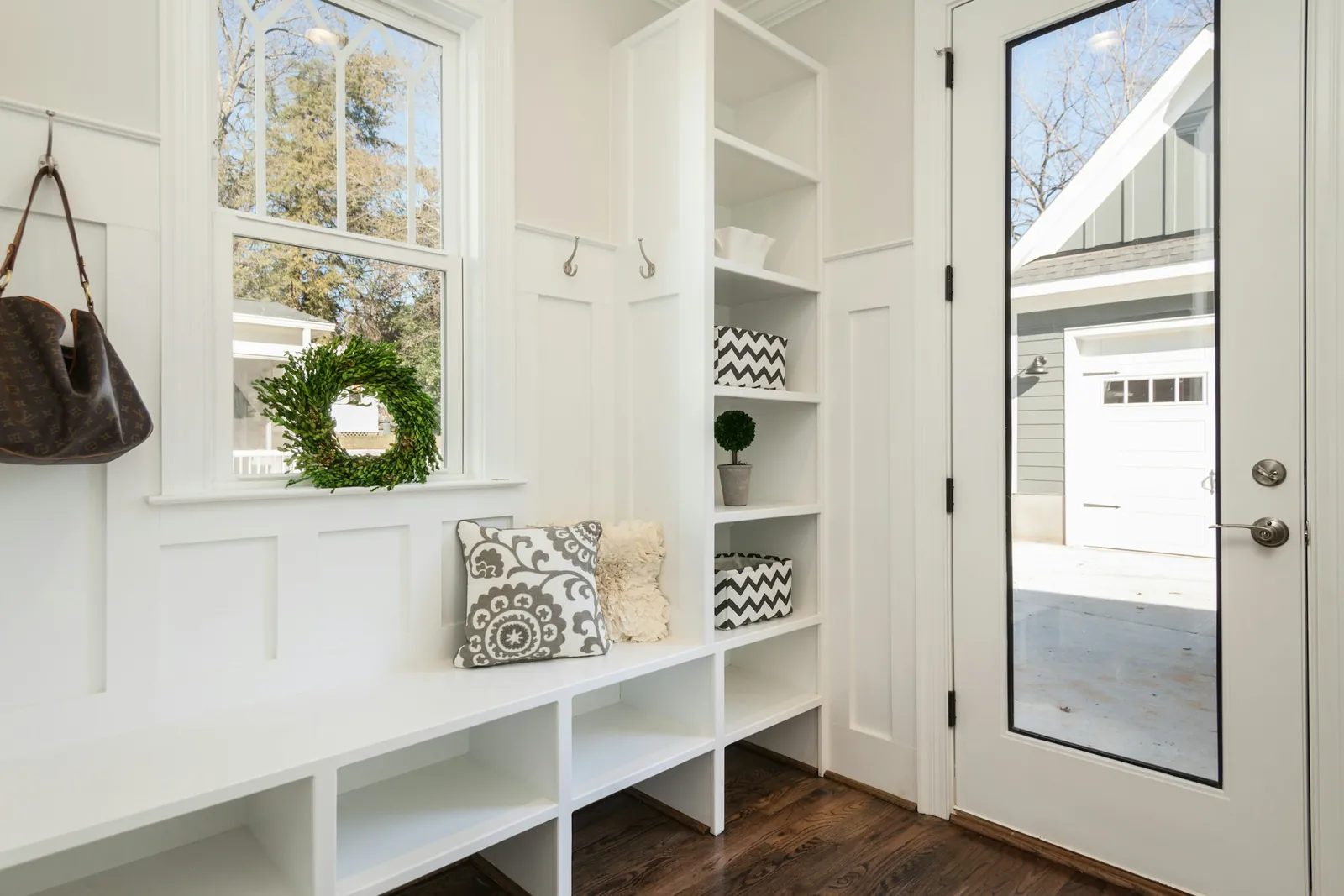
The best mudroom cabinets are built for abuse: lockers or cubbies with a hard, wipeable finish, a bench that doubles as a boot shelf, and enough air for wet gear to dry. If you already have cabinets in the entry, a durable painted finish gives them a second life.
In Wisconsin that's a real test. Here's what a mudroom is up against, the layouts and finishes that cope, colors that forgive the wear, and how to look after the paint through its first winter.
What a Wisconsin mudroom is up against
Madison averages 51.8 inches of snow a year, according to the National Weather Service's 1991 to 2020 climate normals. Its monthly table shows average snowfall in every month from October through May, which puts a mudroom to work for most of the year.
That means wet boots, slush, ice melt and the road salt that rides in on shoes, plus backpacks that bang into doors and benches that people sit on and kick. A mudroom finish has to be hard, wipeable and tolerant of damp. Pretty is a bonus.
Layouts that work
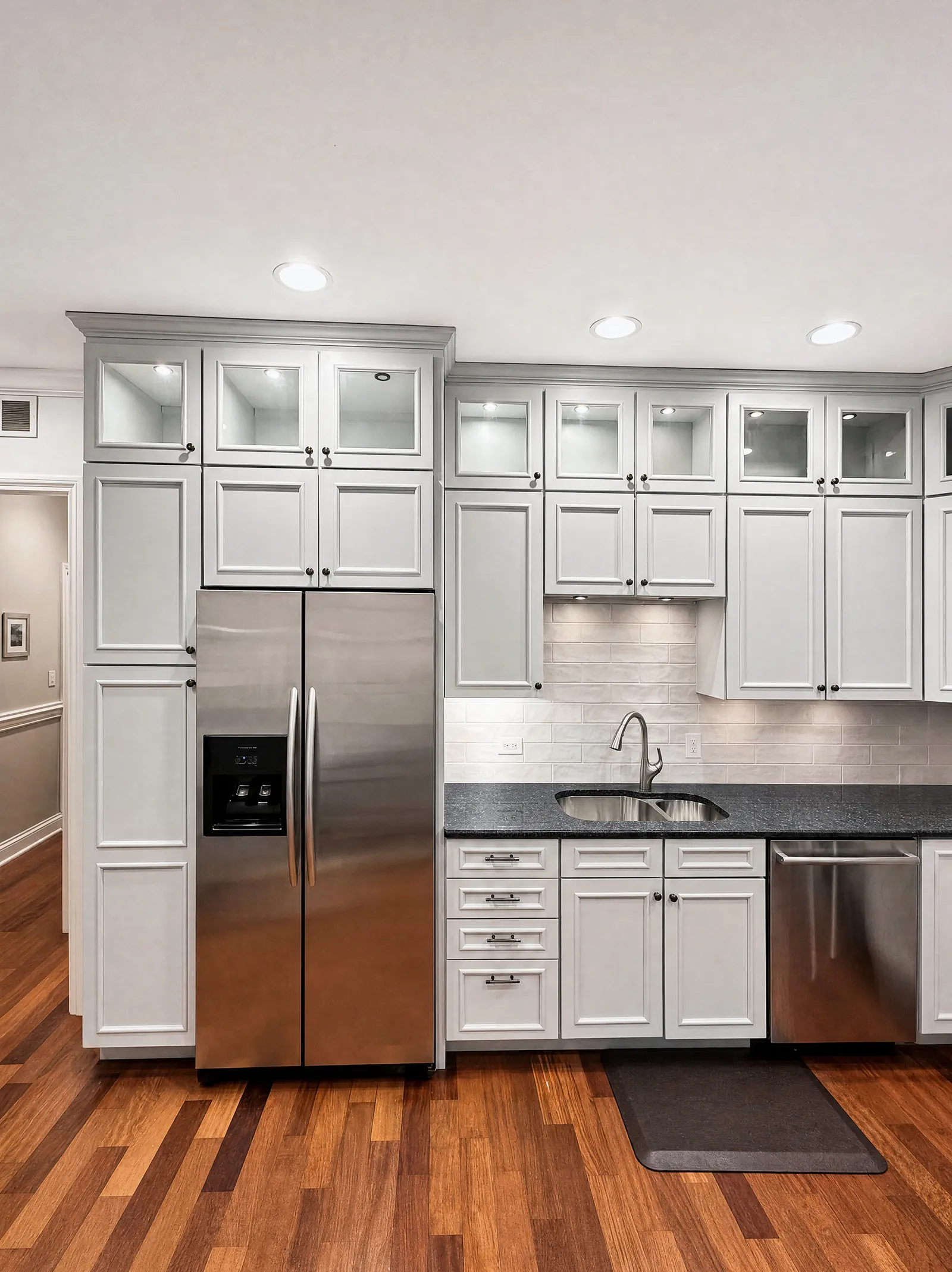
- Tall lockers, one per person. Each gets a hook, a shelf and a place for boots below.
- Open cubbies for everyday gear. Air moves through, so damp mittens dry.
- Closed cabinets for off-season items like hats, helmets and the second pair of boots.
- A bench with storage under or beside it. The seat is the surface that gets the most abuse.
- Upper cabinets for things you reach for less often, like gloves and pet supplies.
If your mudroom already has cabinets and lockers, you don't need a new layout to get a new look. Refinishing keeps the cabinet boxes where they are and changes the color and the finish.
One choice is worth making early: open or closed. Closed doors hide clutter but hold moisture in, while open or vented cubbies dry faster and show every mess. A common compromise is open cubbies at boot and coat height, where things are wet, and closed cabinets above for everything that stays dry.
Finishes that take the abuse
Sheen is the lever you can pull. Dunn-Edwards says higher gloss improves durability and scrub, stain and moisture resistance. It describes semi-gloss as a good option for cabinets and doors, and says gloss and high gloss are the finishes for doors and cabinets exposed to fingerprints, dirt and oil.
For a mudroom, semi-gloss is the common sweet spot: tough, wipeable and not so shiny that every scuff glows. Satin is softer and shows less, and it still cleans well. Our post on the best paint finish for kitchen cabinets compares the sheens, and the same logic applies to lockers.
Spraying helps, too. Our guide to spray painted kitchen cabinets explains why a sprayed door lays down a smooth, even film, and a smooth film is easier to wipe clean than a textured one.
Wear shows first at the edges and corners people touch most: the front edge of the bench, the bottoms of the locker doors and the base trim. That's true of any painted cabinet, and it's why a proper cure matters. Our post on how durable painted cabinets are goes through what to expect.
Salt, slush and wet gear
Salt tracked in from walks and driveways dries to a white film on lower doors, bench seats and the floor of every locker. Wipe it with a soft damp cloth before it builds up, rather than scrubbing it dry.
Moisture needs somewhere to go. The U.S. Environmental Protection Agency advises drying water-damaged areas and items within 24 to 48 hours to prevent mold growth. A locker full of damp gloves is a small version of that problem, so give wet gear room to dry with open cubbies, a boot tray and doors that don't shut tight on soaked coats.
Colors that forgive the wear
Pure white tends to show boot scuffs and mud, and very dark colors tend to show dust and salt film. Mid-tones usually forgive both. A few directions that work in an entry:
- A deep green, which reads as a classic locker color and ties to the outdoors. See our post on green kitchen cabinets.
- A navy or deep blue, which looks sharp with black or brass hooks. See navy blue kitchen cabinets.
- A warm gray, which sits easily next to almost any flooring and wall color.
- A bolder color inside the locker doors or on the back panels, so the pop of color shows when the doors are open.
If a bolder color inside appeals, our post on whether to paint inside cabinets explains when the inside is worth finishing and when it isn't.
A mudroom opens onto other rooms, so it helps to look at your sample against the kitchen and hallway colors beside it. Our guide to choosing a cabinet color covers how to test samples in your own light.
Painting lockers and built-ins
We refinish mudroom cabinets and lockers the way we refinish kitchens. Every job gets cleaning, degreasing, sanding and priming, and that matters more here than anywhere, because a mudroom collects grime, salt and the oils from hands and gear.
Doors and drawer fronts come off and are sprayed. Built-in lockers and benches stay put, so the room is masked and the finish goes on in place, as it did with these red built-ins refinished in two shades of green. Everything goes back on, and the hinges are adjusted so the doors close evenly. That is the same order of work on every cabinet refinishing job.
Some mudroom lockers are laminate or another slick surface. We refinish laminate along with stained, painted and unfinished cabinets, using a primer made to bond to slick surfaces. Our guide to painting laminate cabinets explains what that preparation involves and which problems, like peeling edges, have to be fixed first.
Details that protect the paint
- Choose hooks and pulls before painting. Old holes need filling if the new hardware is a different size.
- Add soft bumpers to locker doors so slams don't chip the edges.
- Put a boot tray or mat at the base of each locker, so the floor catches the salt and slush instead of the finish.
- Protect the bench seat. Cushions or a removable tray take the daily wear, and the paint takes less.
Care through the first winter
A new finish is delicate before it's fully cured. In a technical bulletin on dry time and cure time, Dunn-Edwards puts the full cure of latex coatings at 14 to 30 days and notes that dark colors, high humidity and glossier finishes can all slow it down.
A mudroom brings plenty of humidity in on its own, so for the first few weeks, hang the wettest gear somewhere else if you can, open doors by the pulls and wipe with a soft damp cloth rather than a scrubber or a strong cleaner. Our post on how to clean painted kitchen cabinets covers the long-term routine.
Planning a mudroom project
When you ask for a free estimate, describe the lockers, benches and cabinets you have, and mention anything you want done at the same time, like a laundry room or a vanity. Cabinet work is priced per cabinet with the paint included, and our post on painted laundry room cabinets covers the room that often sits next door.
We're based in Waunakee and work across Madison and Dane County. The written quote is the price, no extra charge if the job takes longer than expected.
Common questions
Can you paint mudroom cabinets and lockers?
Yes. Mudroom cabinets and lockers are cleaned, degreased, sanded and primed first. Doors and drawer fronts are sprayed, and built-in lockers and benches are finished in place after the room is masked.
What is the best finish for mudroom cabinets?
Semi-gloss is the usual choice. It's tough and wipes clean, and Dunn-Edwards lists it as a good option for cabinets and doors. Satin is softer and shows fewer scuffs, and it still cleans well.
What color should mudroom cabinets be?
A mid-tone such as deep green, navy or warm gray tends to forgive wear better than pure white or very dark colors. Look at a painted sample next to the colors of the rooms around it, in the mudroom's own light.
How do you keep painted mudroom cabinets clean in winter?
Wipe salt film and slush off with a soft damp cloth before it builds up, and give wet gear room to dry instead of closing it into a locker. While the finish is still curing in the first few weeks, skip scrubbers and strong cleaners.
Can laminate mudroom lockers be painted?
Yes, with the right preparation. Laminate is cleaned, degreased and lightly sanded, then primed with a primer made to bond to slick surfaces. Laminate that's peeling or swollen has to be repaired first.
Sources
- Monthly snowfall, official normals 1991-2020, Madison area, National Weather Service
- Selecting Paint Gloss, Dunn-Edwards
- Dry Time versus Cure Time of Paint (technical bulletin), Dunn-Edwards
- A Brief Guide to Mold, Moisture, and Your Home, U.S. Environmental Protection Agency
More on cabinet refinishing and every cabinets post.