Professional cabinet painting: what each step prevents, and how to judge a quote
· 7 min read · By GK Painting & Remodeling
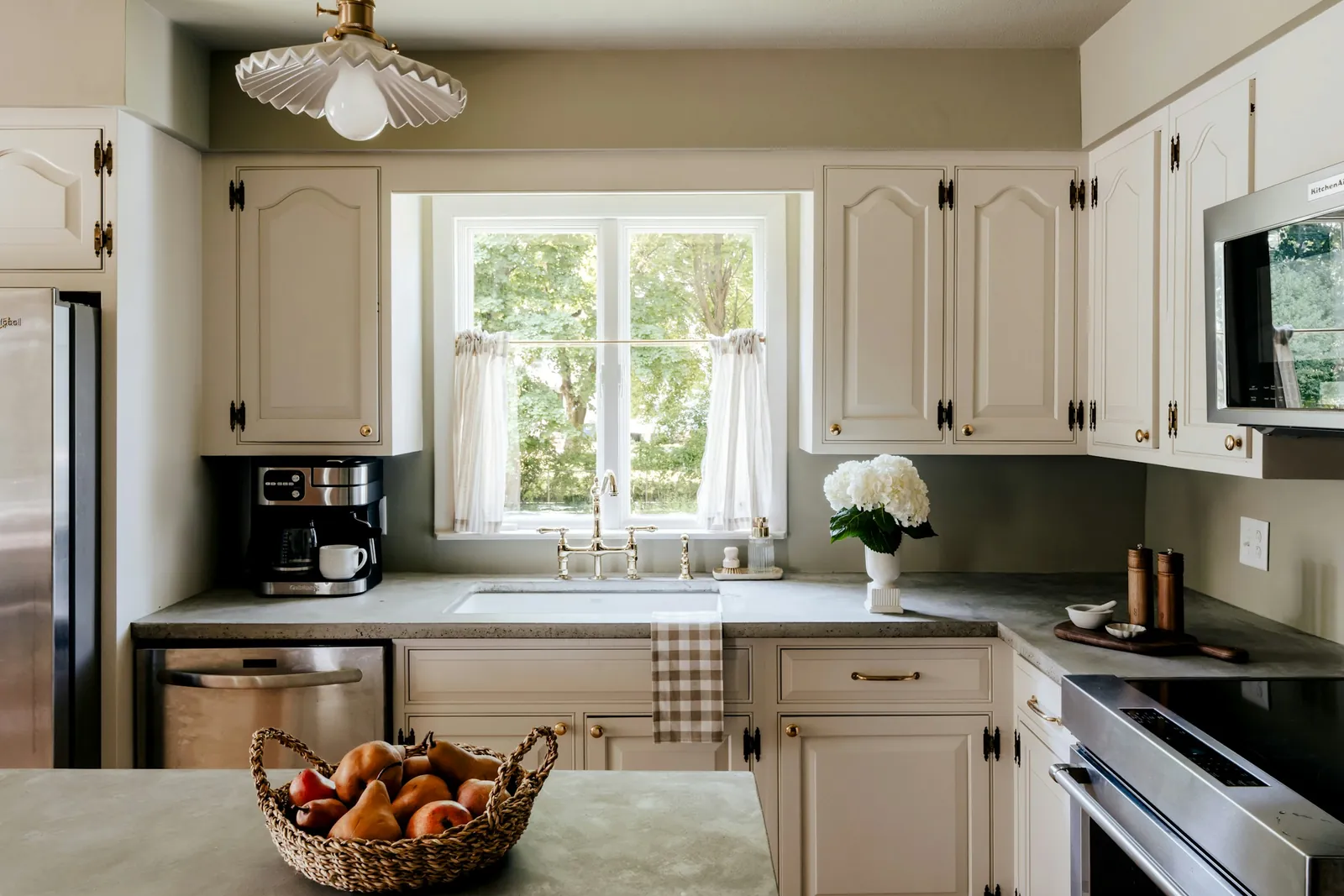
Professional cabinet painting is a refinishing process that changes the color and finish of the cabinets you already have. Doors and drawer fronts come off, every surface is degreased, sanded and primed, the doors are sprayed, and the frames are finished in place.
Here's why each step exists, which failure it prevents, and how to tell from a quote whether a painter actually does it.
What you're paying for when you hire a pro
- What stays: your cabinet boxes, counters, backsplash and layout.
- What changes: the color, the sheen and the feel of every door.
- How long it takes: most kitchens take us one to two weeks.
- What decides whether it lasts: the bond under the paint, then the cure after it.
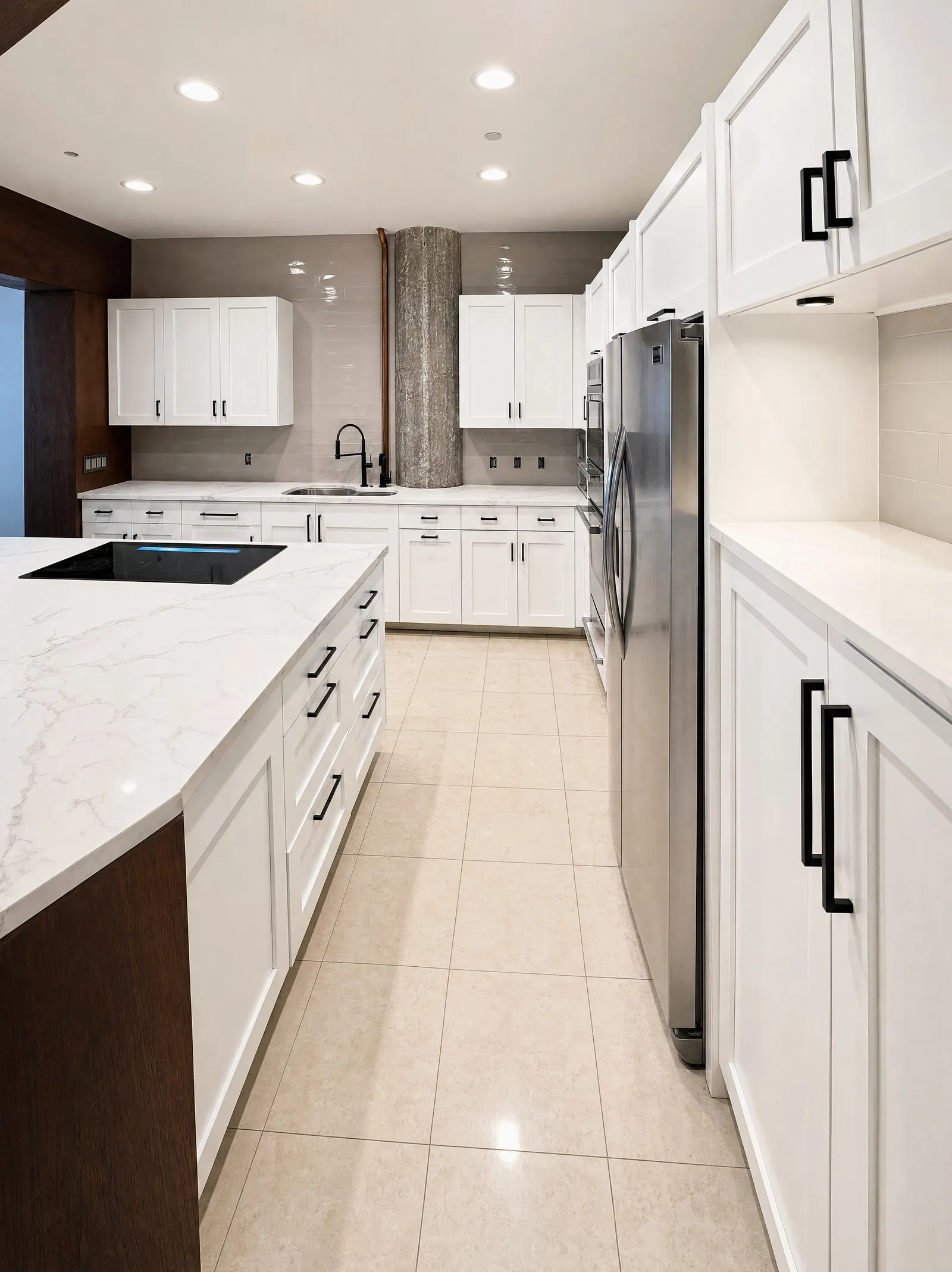
Professional vs DIY: where the difference shows
A homeowner and a professional cabinet painter can buy the same can of paint. The difference is in the steps you can't see on day one: degreasing, scuff sanding, primer choice, spraying, and when the doors go back on. Skip one and the edges start to go within weeks. Our step-by-step guide to painting kitchen cabinets shows the full DIY sequence.
Why the paint brand is the weakest predictor on a quote
Most homeowners compare cabinet painting quotes by price and paint brand. Brand matters, but it's rarely why professionally painted cabinets fail. Paint is only as strong as what it's stuck to.
Dunn-Edwards says a weak bond forms when paint goes over a dirty, chalky, slick or glossy surface, and that when adhesion is marginal, a finish can look fine at first and peel later. No topcoat fixes that, because the topcoat sits on top of the problem. So judge any cabinet painter, us included, by the steps under the paint.
The Failure-First Method for judging professional cabinet painting
The Failure-First Method works backward. Name the five ways painted cabinets fail, match each one to the step that prevents it, then look for that step in the quote. A step a painter can't describe is a failure you can predict.
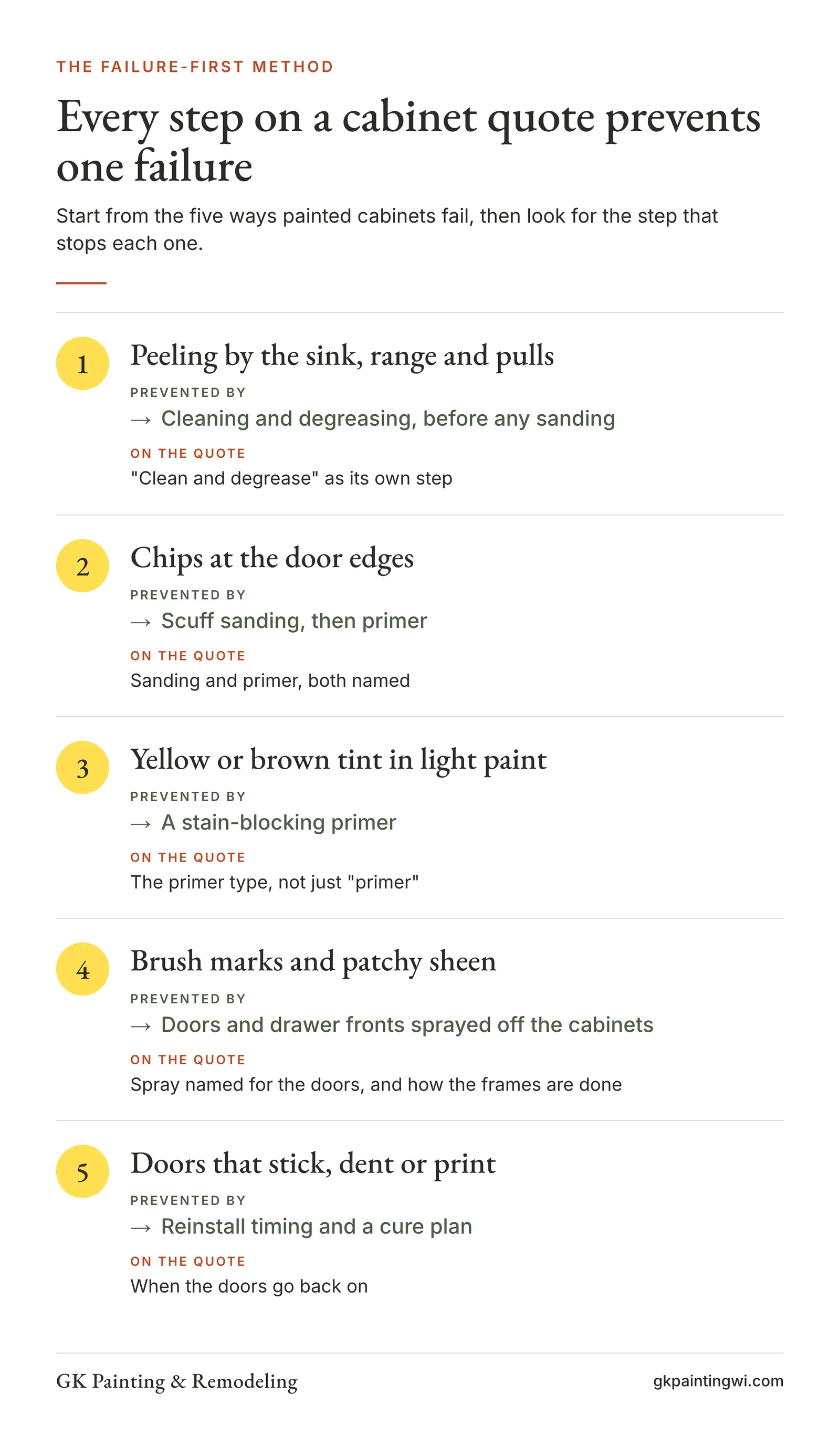
Failure one: peeling where hands and cooking hit
Kitchen cabinets carry years of cooking oil and hand grease, and paint can't bond to that film. That's why professional cabinet painting starts with cleaning and degreasing, before any sanding. Sanding a greasy surface first just works the grease into fresh scratches. Our post on how durable painted cabinets are covers the spots that wear first.
Failure two: chips at the door edges
Painted cabinets chipping at the edges usually means the paint went over a finish it couldn't grip. Factory finishes and old varnish are slick on purpose. Scuff sanding gives the surface tooth, and primer gives the paint something made to hold. Laminate depends on primer completely, and cabinets painted before only take a new finish well if the old paint is sound.
Failure three: stain bleeding into light paint
Going from dark to light is where this one bites. The American Coatings Association explains that some woods hold water-soluble extractives, and that tannins, found in high concentrations in oak, are one of them. Water is the main trigger, so the cabinets by the sink and dishwasher show it first, as a yellow or brown tint in the paint.
The defense is a stain-blocking primer before any color goes on, which our post on painting kitchen cabinets white covers. A quote that only says "primer" doesn't tell you whether it's that kind.
Failure four: brush marks and patchy sheen
Brush marks and roller texture show on day one, and they come from how the paint went on. A sprayed finish lays down a smooth, even coat, which is why our doors and drawer fronts come off and get sprayed. The frames stay put and get a fine-finish roller or a sprayer, depending on the space. Here are sprayed doors up close.
Failure five: doors that stick, dent or print
Dry isn't cured. Dunn-Edwards says latex paint takes 14 to 30 days to fully cure, and that dark colors and higher gloss levels take longer. In that window the finish is soft, so a door pressed against its frame can stick, and a stack of plates can leave a print.
That makes reinstall timing a process step, not an afterthought. Doors go back on once the finish has cured enough to handle, and the hinges are adjusted at the end so the doors hang straight. Our post on dry time versus cure time explains the science.
The professional cabinet painting process, step by step
Here's the cabinet painting process in the order we work it.
- Talk it through. George calls about your cabinets, colors and finishes, and visits if he needs to see them.
- Get it in writing. You get a written quote with a start date.
- Protect the kitchen. The area around the cabinets is protected before work starts.
- Remove and label. Doors and drawer fronts come off, and every piece is labeled.
- Clean and degrease. Every surface, before any sanding.
- Sand. Slick and glossy areas are scuffed so the primer can grip.
- Prime. Every surface, so the new coating adheres.
- Spray and finish. Doors and drawer fronts are sprayed; the frames are finished in your kitchen.
- Reinstall and adjust. Everything goes back on, and the hinges are set so the doors hang straight.
- Walk through and clean up. You check the work with George before the job is done.
Most kitchens take one to two weeks, and our post on how long cabinet painting takes breaks down where that time goes.
How to vet kitchen cabinet painters: the five-line quote test
Every kitchen cabinet painter promises a smooth finish; the written quote shows who means it. Wisconsin's home improvement rule, ATCP 110.05, says a contract that requires any payment before the work is finished must be in writing, along with any changes to it, and that it has to describe the work and the principal products and materials.
| Line | What it should say | Why it matters |
|---|---|---|
| Scope | Doors, drawer fronts and cabinets by count, plus extras like an island or interiors | A count makes quotes comparable |
| Prep | Clean and degrease, sand, prime, as separate steps | Failures one to three start here |
| Products | Primer, paint brand, sheen and color | Wisconsin's rule calls for the principal products |
| Dates | A start date, and when it should finish | So the job can't drift |
| Price | The total, its basis, and what happens if the job runs long | More time shouldn't mean a surprise |
On ours, that last line reads: "The written quote is the price, no extra charge if the job takes longer than expected." Cabinets are priced per cabinet, with paint included. We use premium paint from Sherwin-Williams and Behr, and if you'd rather use a brand you already like, we'll use it. Our post on what a painting estimate should include goes line by line.
Questions that separate cabinet specialists from wall painters
- "Who'll actually be in my kitchen?" George is on every one of our jobs himself, from the first call to the final walkthrough.
- "Can I see cabinet work, not just rooms?" Ask for before and after photos of cabinets specifically, like the projects on our work page.
- "Are you insured?" We're fully insured. Here's why painter insurance matters.
- "What happens if the finish peels?" If a problem comes from the quality of our work, we'll come back and make it right. Everyday damage isn't covered, but we'll quote the repair.
- "My house is older. Does that change anything?" About half of Madison's homes were built before 1980, and EPA's Renovation, Repair and Painting rule sets lead-safe practices for paid work in homes built before 1978. If yours predates 1978, mention its age when you call.
The next hurdle: comparing quotes that don't use the same unit
Once you know what professional cabinet painting should include, the next problem arrives with the quotes. One prices per door, one per cabinet, one gives a single total. You can't compare them until every painter is pricing the same list. That's what the Piece Count is for.
| Item | How to count it |
|---|---|
| Doors | Every door, including glass-front and pantry doors |
| Drawer fronts | Every drawer face, plus the false fronts under the sink |
| Cabinets | Each wall and base cabinet |
| Island and panels | The island, end panels, fillers and any legs |
| Trim | Crown, light rail and toe kicks |
| Interiors | Which cabinets, if any, get painted inside |
| Colors | One color, or two: uppers and lowers, or an island accent |
| Hardware | Keeping your pulls, or new ones with different hole spacing |
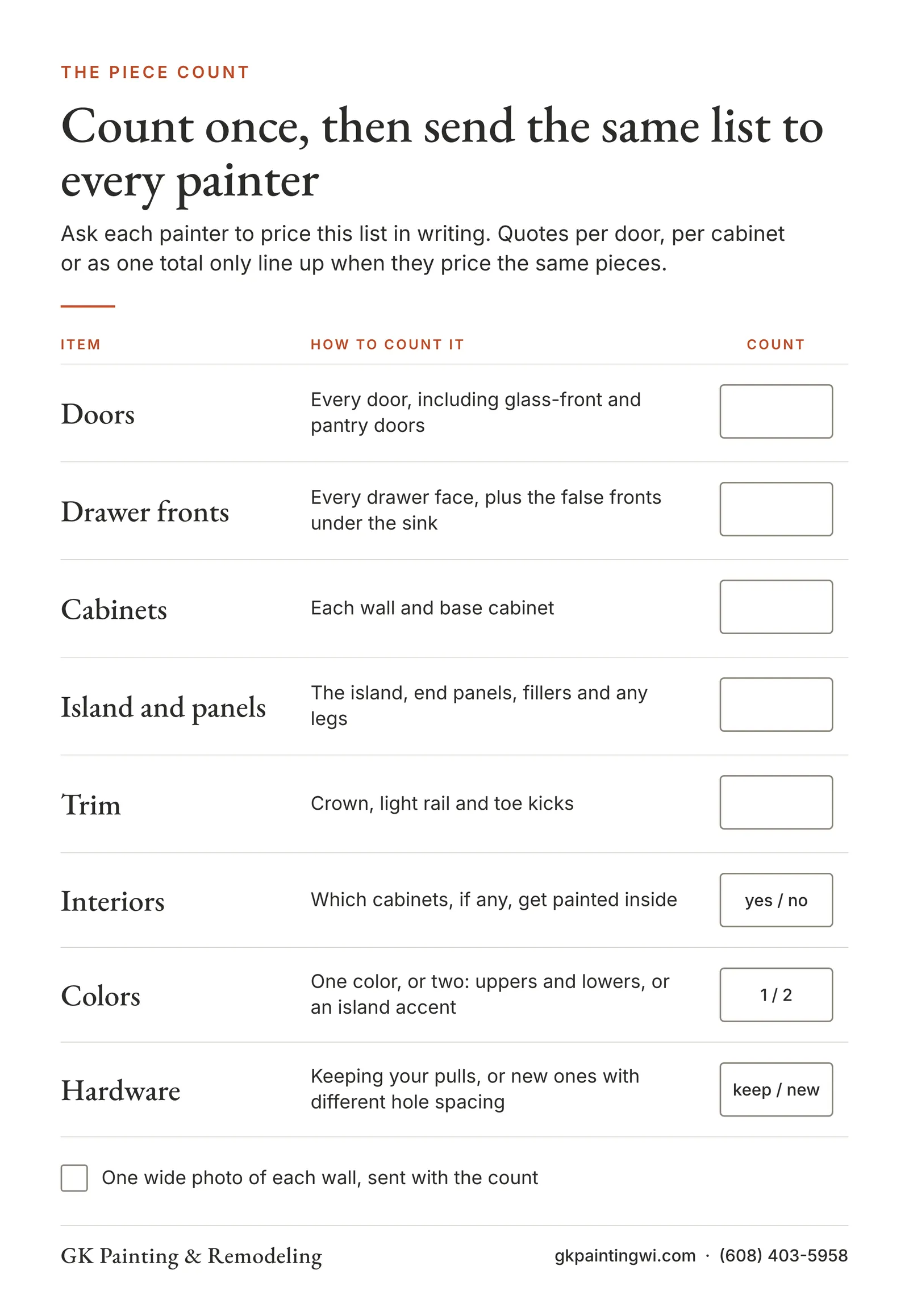
How to use it
- Send the same Piece Count, a wide photo of each wall and your color plan to every painter.
- Ask each one to price against that list, in writing.
- Put the quotes side by side. Any item a quote leaves out is a question to ask, not a saving.
Our estimate form has spaces for your door and drawer-front counts when you choose cabinet refinishing, so George has your count before he calls. For what moves the price, see what cabinet painting costs.
From dated cabinets to a finished kitchen, without a remodel
Good cabinet painting isn't a can of paint. It's a sequence: clean, sand, prime, spray, cure, and a written quote that names each step.
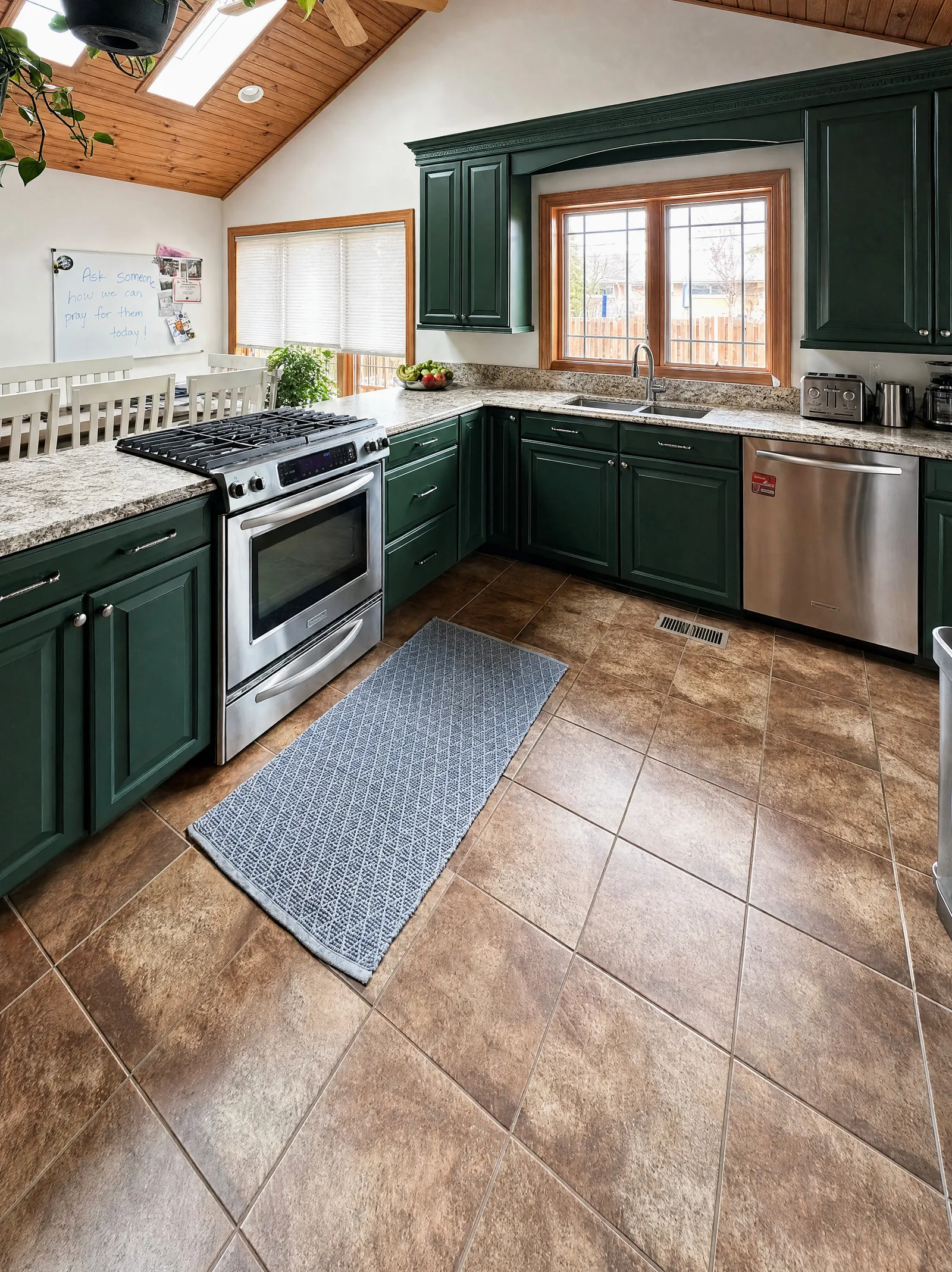
Count your doors and drawer fronts, then ask for a free cabinet estimate. George will look at your cabinets, tell you plainly whether refinishing is the right call, and send a written quote with a start date.
Common questions
Is professional cabinet painting worth it?
If your cabinet boxes are solid and you like the layout, usually yes. Painting changes the color and finish while the boxes, counters, backsplash and layout stay put. If the boxes are damaged, or you want a new layout or more cabinets, replacing them makes more sense.
How long does professional cabinet painting take?
Most kitchens take us one to two weeks. The number of doors and drawers, the condition of the cabinets and the overall scope set the exact timeline. The finish keeps hardening after that: Dunn-Edwards puts a full latex cure at 14 to 30 days.
Do professional painters spray or brush kitchen cabinets?
We spray the doors and drawer fronts for a smooth, even finish. The frames are finished in your kitchen with a fine-finish roller or a sprayer, depending on the space. Spraying the doors off the cabinets keeps brush marks off the pieces you see most.
How long do professionally painted cabinets last?
Years, when the prep is right and the finish gets time to cure. Durability comes down to the bond under the paint, the cure, and how hard the kitchen gets used. Door edges and the spots around the pulls show wear first.
Why are my painted cabinets chipping or peeling?
Usually a weak bond. Paint over grease, or over a slick finish that wasn't sanded and primed, can look fine at first and let go later. Water near the sink makes it worse. If the old paint is already lifting, it has to come off before anything new goes on.
What should a cabinet painting quote include?
Five lines: the scope by count, the prep steps, the products (primer, paint, sheen and color), the start and finish dates, and the price with what happens if the job runs long. In Wisconsin, a contract that requires payment before the work is finished must be in writing.
Sources
- Multiple Coat Peeling (technical bulletin), Dunn-Edwards
- Understanding Extractive Bleed, American Coatings Association
- Dry Time versus Cure Time of Paint (technical bulletin), Dunn-Edwards
- ATCP 110.05: Home improvement contract requirements, Wisconsin Legislature
- Lead Renovation, Repair and Painting Program, U.S. Environmental Protection Agency
More on cabinet refinishing and every cabinets post.