Painting MDF cabinets and particleboard: edges, water and dust
· 7 min read · By GK Painting & Remodeling
Yes, MDF and particleboard cabinets can be painted, and painting MDF cabinets goes well when the edges are sealed and the board is dry and sound. The smooth faces take paint easily; the cut edges soak it up, and particleboard that has swollen from water won't flatten again.
Below: how to tell what your cabinets are made of, what happens when paint meets bare MDF, the swelling problem, formaldehyde and dust, and what a Wisconsin winter means for a garage paint job.
What are my cabinets made of?
Start here, because the plan depends on it. Cabinets are usually solid wood, MDF, particleboard, or one of those boards wrapped in laminate or a vinyl film.
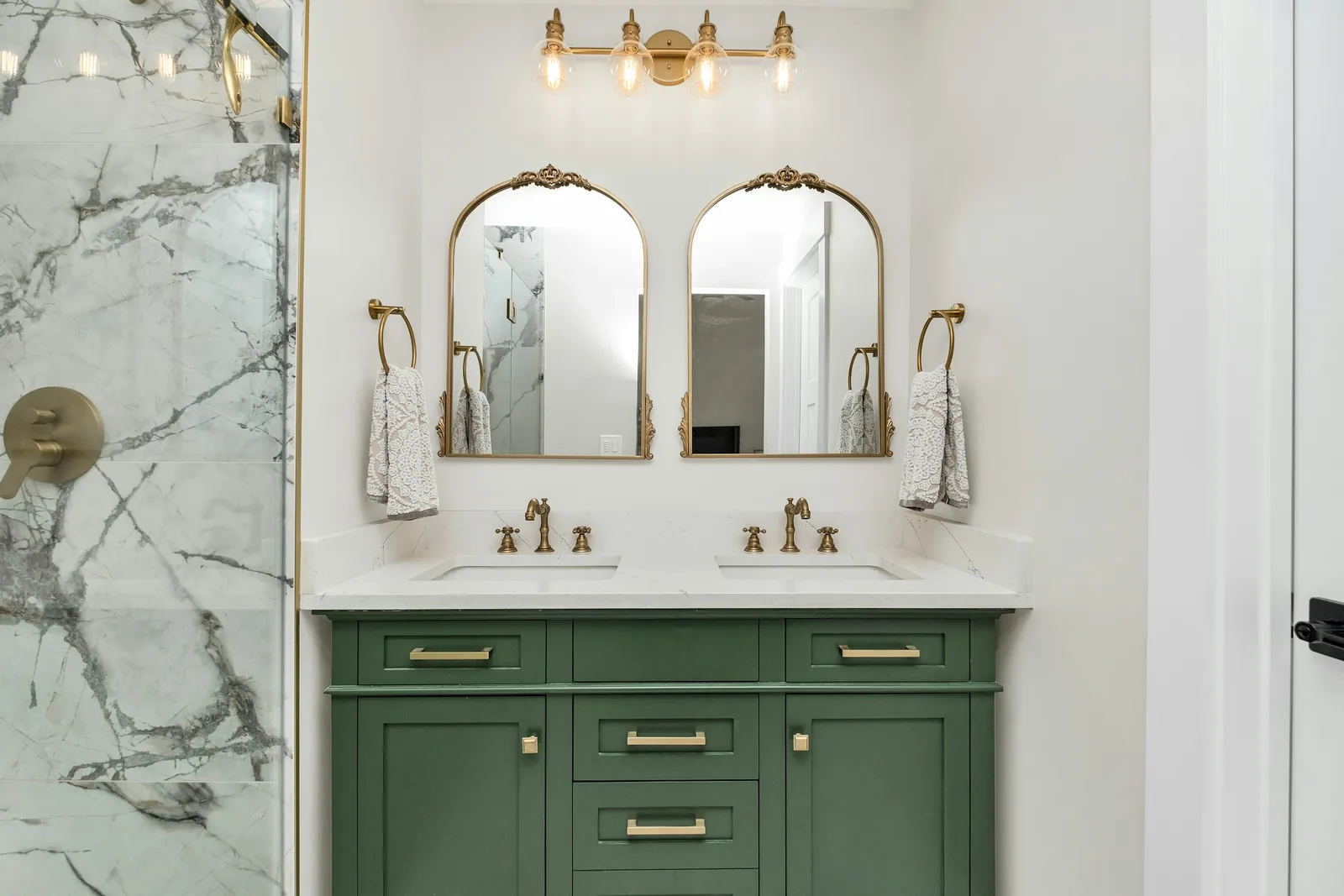
Four checks narrow it down:
- Look at the face. In its technical bulletin on MDF mouldings, the Composite Panel Association (CPA) describes the surface as flat, smooth, uniform and free of knots and grain. Grain showing under the old finish points to solid wood or a wood veneer, and painting veneer cabinets has its own sanding limits.
- Look at a raw edge: inside a hinge cup hole, on a shelf edge or on the back of a door. MDF shows fine, even fiber. Particleboard shows coarser chips toward the middle; the Forest Products Laboratory's Wood Handbook says its faces are usually fine particles and its core coarser material.
- Look for a skin. A plastic film with rounded edges and no visible seams is likely thermofoil, and a hard plastic face is likely laminate. Both have their own process.
- Look under the sink. Puffed, soft or crumbly board there tells you what the box is made of and what it's been through.
The Board Check: what paint meets on each material
| Material | What paint meets | Where it goes wrong | Our plan |
|---|---|---|---|
| MDF | A smooth face with no grain | Cut edges soak up finish and raise fibers | Seal edges, prime, thin coats |
| Particleboard | Fine particles over a coarser core | Water swells it, and the swelling stays | Paint only where it's dry and flat |
| Solid wood | Grain under the old finish | Joints move as humidity changes | Clean, sand, prime |
| Laminate or thermofoil | A plastic skin over MDF or particleboard | Film that lifts or bubbles | Its own process |
The first three rows draw on the CPA and the Wood Handbook; the last column is our editorial guide, not a measurement.
Painting MDF cabinets: faces, edges and fiber raise
Can MDF kitchen cabinets be painted? Yes. The CPA says MDF's uniform composition and smooth, tight surface allow finishes to be applied directly to the surface. The face isn't the problem. The edges are.
What happens if you paint straight onto MDF?
On a cut edge, water can lift the fibers. The CPA warns that water-based primers used with MDF moulding may produce fiber raise with any significant contact with water. The Wood Handbook says the edges of panel products, fiberboard included, are especially vulnerable to absorbing water because they contain end grain, and it recommends sealing them with a thinned oil-alkyd primer or a sealer formulated for the job. That advice comes from its chapter on exterior finishes, but the edge is the weak spot indoors too.
In practice: seal raw edges before the first full coat, give edges an extra coat of primer, sand any raised fibers smooth once the primer is dry, and keep every coat thin. Sheen matters here too: the Wood Handbook says gloss accentuates imperfections such as raised grain, so a slightly fuzzy edge shows more under semi-gloss than under satin. If your doors came factory finished, the main job is getting new paint to bond to that coating, the same question our post on painting cabinets without sanding works through, plus sealing any edge that was cut, chipped or drilled.
What kind of paint do you use on MDF cabinets?
The primer matters more than the topcoat. Over factory primer, the CPA says top coats may be solvent based or water based, that acrylic and alkyd paints both work well, and it recommends satin or semi-gloss. It's writing about mouldings, but it's a useful check on advice to avoid water-based paint on MDF altogether. Our post on the best paint for kitchen cabinets compares the cabinet enamels.
Particleboard and water: swelling doesn't reverse
Particleboard is the more fragile of the two around water. The Wood Handbook says particleboard is usually made with urea-formaldehyde resin because most of its uses are interior, and that moisture exposure leads to a breakdown of that resin's bonds.
The wax added at the factory helps only a little. The handbook says wax gives particle and fiber boards limited-term water resistance when wetted, and has practically no effect on changes that come with humidity. It also points out that plywood, unlike most panels made from particles, undergoes minimal irreversible thickness swelling if wetted. Composite board that has swollen stays swollen.
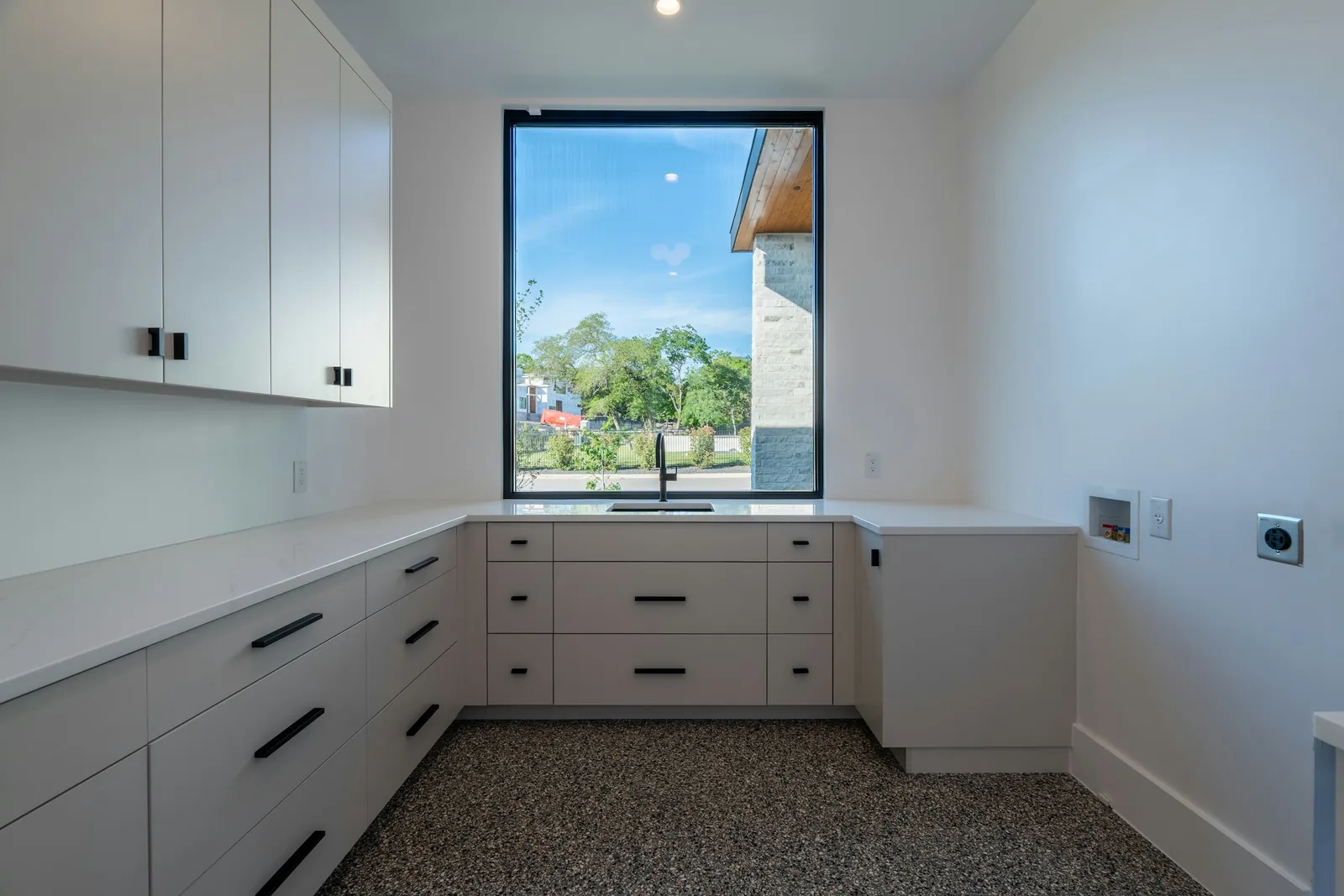
Paint can't fix that. Check the sink base, the cabinet beside the dishwasher and any door edge near the sink. A puffed edge, a soft corner or a lifting skin means repair or replacement comes first. Our guide on whether to paint or replace kitchen cabinets helps you decide, and painting a bathroom vanity covers the same problem in a wetter room.
Formaldehyde and sanding dust
The resin that holds composite board together is the reason for both. The Wood Handbook says urea-formaldehyde resins are used primarily in particleboard and MDF, and that the release of formaldehyde from products made with them is a growing health concern.
Federal rules limit it now. EPA says composite wood products, including MDF, particleboard and finished goods made with them, must be labeled TSCA Title VI compliant after March 22, 2019; from June 2018 until then, a California Phase II label also qualified. Cabinets made before June 2018 predate the federal label. In October 2026 EPA issued a final rule updating the program, and it changes test methods, not limits: EPA's summary lists six updated voluntary consensus standards and one new test method.
Sanding is the exposure you control. The National Toxicology Program's Report on Carcinogens lists wood dust as known to be a human carcinogen, based on studies in humans. MDF and particleboard are made from wood fiber and particles, so treat their dust the same way:
- Sand as little as the job allows: a scuff to dull the old finish, not a strip.
- Wear a respirator made for fine dust, not a loose paper mask.
- Work away from living space, collect dust with a vacuum and don't dry sweep.
- Keep air moving out of the room while you work.
Cold garages and Wisconsin winter air
The CPA puts a number on the cold. For latex paints and lacquers on MDF moulding, it says to avoid application below 55°F or above 65% relative humidity, and to follow the paint maker's temperature range.
The Wisconsin State Climatology Office's 1991 to 2020 normals put the statewide January high at 23.8°F, and average highs stay under 55°F from November through April. For half the year, an unheated garage is the wrong place to paint MDF doors.
Heated rooms bring the opposite problem. The CPA says MDF, like solid wood, changes dimensionally with changes in relative humidity, and recommends storing MDF products at least 24 hours in the space where they'll be installed. The Wood Handbook says indoor heating in northern winters drops wood's moisture content to around 4%. Paint and cure doors in the rooms they'll live in, and see painting in winter for keeping air moving without freezing the house.
Next-step hurdle: doors wrapped in vinyl film
Look closely and you may find the doors aren't painted MDF at all. A vinyl skin with rounded edges and no visible seams is thermofoil, heat-pressed over MDF. It can take paint while the film is firmly attached, but once it starts to lift, paint won't hold it down.
Our guide to painting laminate cabinets covers the prep both laminate and thermofoil need and when they can't be painted. If the film is already lifting on several doors, cabinet refinishing vs refacing explains the door replacement route.
When to stop and call a professional
- Call 911 if anyone has serious trouble breathing while sanding, priming or painting.
- Today: if a cabinet near the sink is wet, soft or smells musty, find and stop the leak before anything else.
- Stop: if your home was built before 1978 and the cabinets carry old paint, don't sand until you know whether it contains lead. Our post on painting older Madison homes explains why.
- Call a pro when board is swollen or crumbling, film is lifting, or you can't tell what the cabinets are made of.
How we handle MDF and particleboard cabinets at GK Painting
We refinish stained, painted, laminate and unfinished cabinets. When you ask for an estimate, tell us what your cabinets are made of if you know, and point out any swelling near the sink.
Cabinet refinishing is the work George cares about most, and he's on every job himself. Doors and drawer fronts come off and are labeled, cleaned, degreased, sanded, primed and sprayed; the frames are finished in your kitchen with a fine-finish roller or spray, depending on the space. The finish cures before the doors go back on, and most kitchens take one to two weeks, priced per cabinet with paint included.
We're based in Waunakee and work across Madison and the surrounding Dane County communities. Our post on how durable painted cabinets are covers life after the paint. Read about our cabinet refinishing service or ask for a free estimate.
Common questions
Can MDF kitchen cabinets be painted?
Yes. MDF has a smooth, grain-free face that takes paint well, and the Composite Panel Association says finishes can be applied directly to its surface. The cut edges are the weak spot: they absorb finish and can raise fibers, so seal and prime them before the color coats go on.
What happens if you paint straight onto MDF?
The face usually takes it, but bare edges soak it up. Water-based primer or paint can raise the fibers on a cut edge, leaving it rough, and the Composite Panel Association warns about that fiber raise. Seal raw edges, prime, sand raised fibers smooth and keep each coat thin.
What kind of paint do you use on MDF cabinets?
A cabinet enamel over the right primer. Over factory primer, the Composite Panel Association says top coats may be solvent based or water based, that acrylic and alkyd paints both work well, and it recommends satin or semi-gloss. The primer and the sealed edges matter more than the brand.
Can you paint particleboard cabinets?
Yes, if the board is dry, flat and sound. Particleboard that has swollen from a leak stays swollen; the Wood Handbook explains that the common resin in it breaks down with moisture. Check the sink base and the cabinet next to the dishwasher first, and repair or replace damaged parts before painting.
Is it safe to sand MDF cabinets?
Only with dust control. The National Toxicology Program lists wood dust as a known human carcinogen, and MDF is made from wood fiber held together with resin. Sand as little as possible, wear a respirator made for fine dust, work away from living space and clean up with a vacuum rather than a broom.
Can I paint MDF cabinet doors in my garage in winter?
Not in an unheated Wisconsin garage. The Composite Panel Association says to avoid latex paint below 55°F or above 65% relative humidity, and the state's average highs stay under 55°F from November through April. Paint and cure the doors in a heated room instead, the same space they'll live in.
Sources
- Medium Density Fiberboard (MDF) Mouldings Technical Bulletin, Composite Panel Association
- Wood Handbook: Wood as an Engineering Material (FPL-GTR-282), USDA Forest Service, Forest Products Laboratory
- Formaldehyde Emission Standards for Composite Wood Products, U.S. Environmental Protection Agency
- Report on Carcinogens: Wood Dust, National Toxicology Program, U.S. Department of Health and Human Services
- Statewide Climate Normals, Wisconsin State Climatology Office
More on cabinet refinishing and every cabinets post.