Repainting cabinets that were already painted: what comes off and what has to bond
· 6 min read · By GK Painting & Remodeling
You can repaint cabinets that were already painted as long as the old paint is still holding firmly to what's under it. Anything loose has to come off, glossy spots get sanded dull, grease and grime get cleaned away, and a primer goes on so the new coat has something to grip.
Here's how to check the paint you have, how to tell oil from latex, what a re-do needs, and why age matters. Whether the old paint was a weekend project or a decades-old finish, the same questions apply.
Start by checking the paint you have
Look closely at the doors, drawer fronts and frames in good light. These are the warning signs:
- Peeling or flaking at the edges, corners and around the pulls.
- Chips that go down to bare wood or to a different old finish.
- A tacky or sticky feel, especially where doors meet the frame.
- Thick drips, brush ridges, or paint that has filled in the profile of the panels.
- A rough, chalky or yellowed surface.
Sound paint is fine to paint over. Loose paint isn't, because a new coat is only as strong as what's under it. Dunn-Edwards explains that when several coats peel together, the cause is loss of adhesion in an underlying layer, not poor adhesion of the top coat, which is still stuck to the paint below it. That's why a new coat on a failing layer fails with it.
Peeling near the sink or dishwasher deserves a second look. Dunn-Edwards says a stained or discolored underside on a peeled flake points to moisture, and that the source of the moisture has to be found and repaired before repainting. Paint can't hold over a problem that keeps pushing it off.
Is the old paint oil or latex?
It matters because the new paint has to bond to the old, and oil-based and water-based paints behave differently. Dunn-Edwards describes a simple test: wet a cotton ball with rubbing alcohol, rub it across the painted surface, and check the cotton. If it picks up color, the existing paint is water-based. If it stays clean, the paint is oil-based.
Try it on a spot that doesn't show, like the inside of a door. Dunn-Edwards says oil-based coatings keep hardening over time after they're applied, which is one reason an old oil finish is often hard and slick. That's the case where cleaning, sanding dull and priming matter most. Our post on latex versus oil-based paint covers the difference, and our guide to what kind of paint to use on kitchen cabinets helps you pick the new coat.
What has to come off
Dunn-Edwards' advice for repainting over failing paint is to scrape off all loose, flaking and peeling paint back to the sound surface, scuff sand any slick and glossy areas to give the new paint tooth, clean the surface, and spot prime any bare spots. The same order works on cabinets:
- Take the doors and drawer fronts off, and remove the hardware.
- Scrape or sand away anything loose or flaking, back to a firm edge.
- Sand down drips, ridges and thick buildup so the surface is smooth.
- Clean and degrease everything, then let it dry.
- Scuff sand the glossy areas, and prime before any color goes on.
Thickness is worth a second look. Dunn-Edwards says that too much paint builds stress in the layers, and that older, brittle coats can't take the shrinking and swelling of the surface underneath, so they crack and peel. If your cabinets have been painted several times over, painting over cracked, brittle paint is borrowing trouble.
Cleaning, sanding and priming so the new coat bonds
Kitchen cabinets carry years of cooking oil and hand grease, and old paint over grease has a weak bond. The same Dunn-Edwards bulletin says a weak bond forms when paint is applied over a dirty, mildewed, chalky, slick or glossy surface. Very poor adhesion can mean immediate peeling, and marginal adhesion can hold for a while and fail later.
That's why previously painted cabinets get the same preparation as stained ones on every cabinet refinishing job: cleaned, degreased, sanded and primed, so the new finish holds to the old one instead of sitting on top of it. Our post on whether you need primer explains what primer does on a surface that's already painted. Our guide to primer types for painted cabinets covers which one to use. If you're tempted to skip the sanding, our post on when cabinets can be painted without sanding has a simple adhesion test.
Why do-it-yourself paint jobs fail
A first paint job that didn't last usually has one or more of these in its history:
- The cabinets weren't degreased, so the paint stuck to grease instead of to the surface.
- The glossy factory finish wasn't sanded, and no primer was used.
- A second coat went on before the first had dried.
- The doors were closed before the paint hardened, so they stuck to the frame and pulled paint off.
- The finish was used hard before it had cured.
Knowing which one happened tells you what to do differently. A cabinet that peels where hands touch it was probably cleaned poorly. One that peels at the doors' edges against the frame was probably handled too soon.
The same causes show up in paid work too, which is why our checklist for judging a cabinet painting quote starts from the ways a finish fails.
Older homes and lead
In an older home, cabinets may carry layers of old paint, sometimes an old oil-based finish, and decades of kitchen grease. That's more preparation, not a reason to skip it.
One more thing applies to homes built before 1978. The U.S. Environmental Protection Agency says those homes are more likely to have lead-based paint, and its Renovation, Repair and Painting program sets lead-safe work practices for paid work that disturbs painted surfaces in them. If your home is that old, mention your home's age when you call, and read EPA's page on how to reduce the risk of lead exposure at home.
The same color or a new one
A refresh in the same color is the simplest repaint, because the old color helps cover the new. A change of color is bigger, especially from dark to light, where the new color needs more coverage over the old.
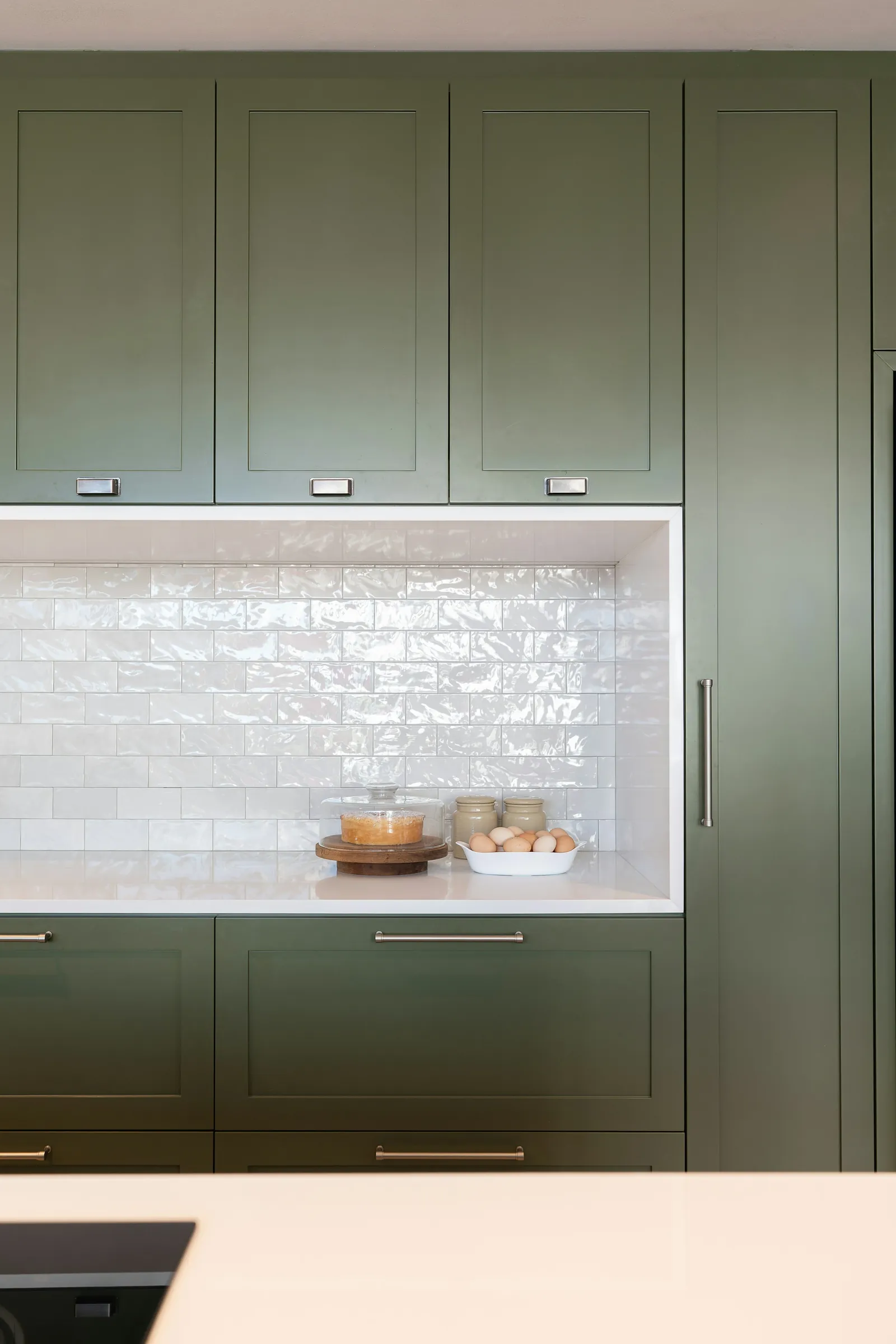
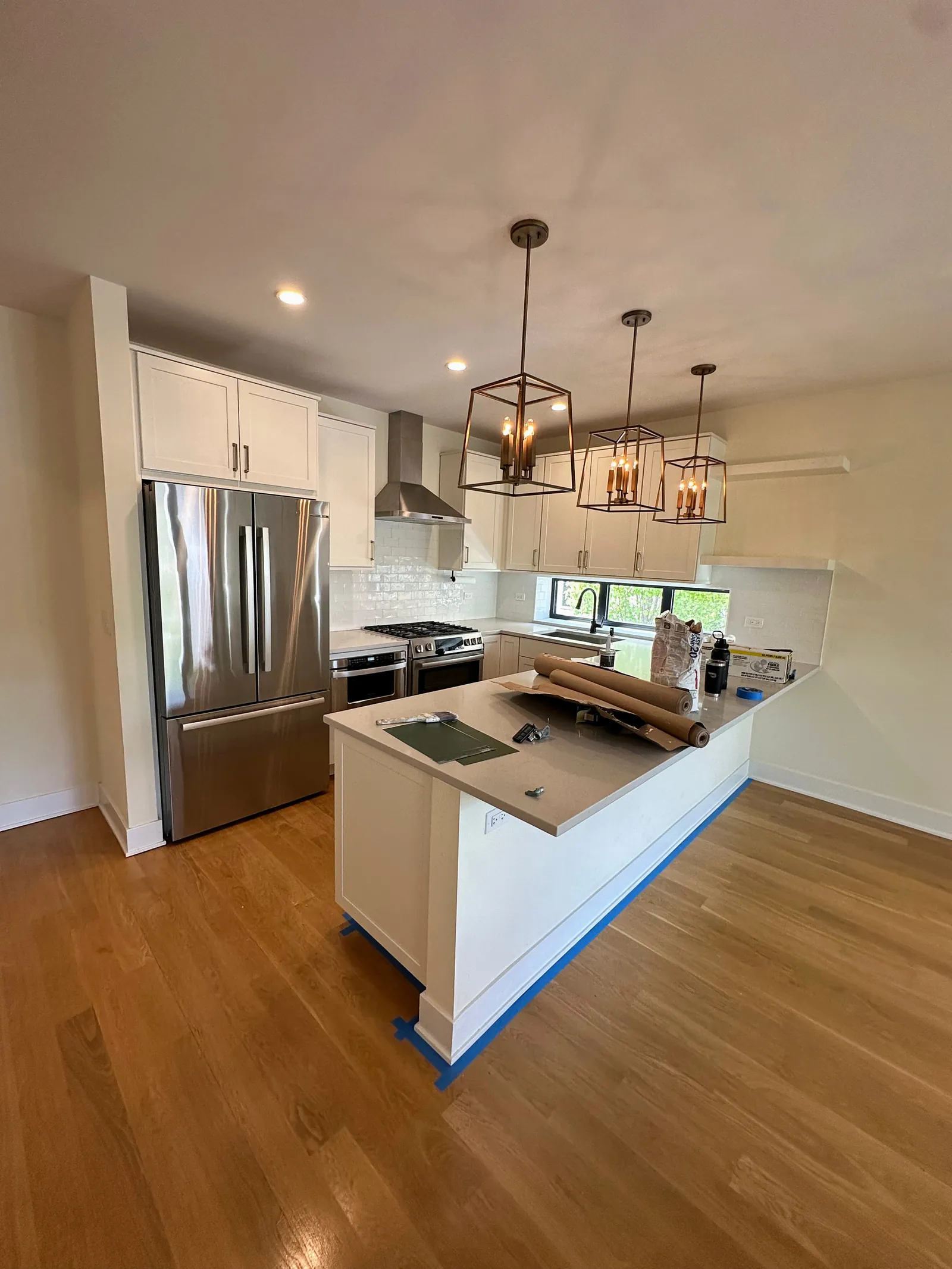
Cabinets don't have to be old to be repainted. One kitchen we worked on was newly built in builder white, and repainting it in deep olive green gave it color without replacing cabinetry that was brand new. You can see it in our white cabinets repainted in olive green project. Our post on reading a cabinet painting before and after sets it beside three other kitchens. If you're still choosing, our guide to choosing a cabinet color walks through five real kitchens.
What repainting can't fix
Paint changes color and finish, not structure. Swollen or water-damaged boards, loose joints and doors that no longer hang square need repair or replacement, and a new coat will only hide them for a while. If you're not sure whether your cabinets are worth repainting, our guide to painting or replacing your cabinets lays out how to decide.
What the new finish needs afterward
A repaint needs the same patience as a first paint job. Dunn-Edwards puts the full cure of latex coatings at 14 to 30 days, and says oil-based coatings reach an initial cure in 7 to 10 days and keep hardening after that. Until then, be gentle with the doors and drawers. Our post on how durable painted cabinets are covers what holds up and what doesn't, and dry time versus cure time explains the wait.
If you'd rather have it done once, ask for a free estimate. George can look at the condition of the old paint when he visits or on the call, and the written quote covers what the job needs.
Common questions
Can you paint over painted kitchen cabinets?
Yes, as long as the old paint is sound. Loose paint has to come off, glossy areas get sanded dull, the surface is cleaned and degreased, and a primer goes on before the new color.
Do you have to strip painted cabinets before repainting?
Not if the old paint is still holding firmly and is in good shape. Loose or peeling paint has to be scraped back to a firm edge, and very thick, cracked or brittle paint may need more work than a light sanding.
Can you paint latex over oil-based cabinet paint?
Yes, with preparation. An old oil finish is hard and slick, so it needs cleaning, sanding dull and a primer made to bond before the latex goes on. Skipping those steps is a common reason a new coat doesn't hold.
How can I tell if my cabinets were painted with oil or latex?
Dunn-Edwards describes rubbing a cotton ball wet with rubbing alcohol across the paint. If the cotton picks up color, the paint is water-based. If it stays clean, the paint is oil-based. Test a spot that doesn't show.
Why is my new paint peeling off the old cabinet paint?
Usually the old layer let go, not the new one. Dunn-Edwards says peeling of several coats comes from loss of adhesion in an underlying layer, caused by moisture, heavy buildup, or an earlier coat applied over a dirty or glossy surface.
Sources
- How to Determine if Existing Paint is Water- or Oil-Based, Dunn-Edwards
- Multiple Coat Peeling (technical bulletin), Dunn-Edwards
- Dry Time versus Cure Time of Paint (technical bulletin), Dunn-Edwards
- Reduce the Risk of Lead Exposure at Home, U.S. Environmental Protection Agency
- Lead Renovation, Repair and Painting Program, U.S. Environmental Protection Agency
More on cabinet refinishing and every cabinets post.