
Refinishing cabinets in an old Madison kitchen, layers and all
About half of Madison's homes were built before 1980. This page is for kitchens whose cabinets have been varnished, painted and patched by owners before you.
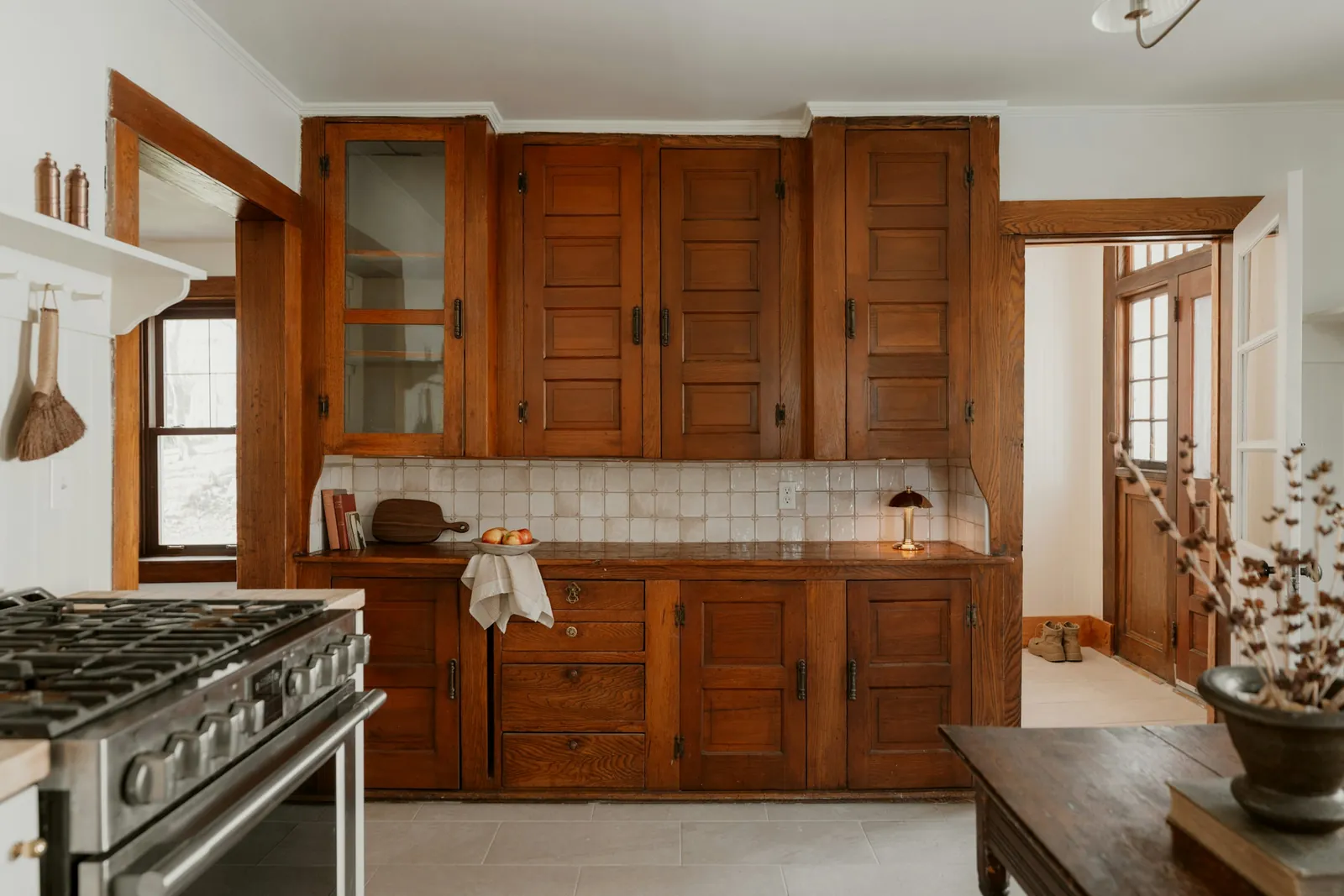
In a Madison house built before 1940, as 13% of the city's homes were, the kitchen cabinets have usually outlasted several owners and every finish each of them liked. Under the current color there may be an older enamel, and under that a clear coat that turned amber long ago.
About 51% of Madison's homes date from before 1980, so the layers, lead and built-ins below aren't a question for the oldest blocks alone. For the service in general, see kitchen cabinet painting.
Reading the layers on an old cabinet door
Open a door and look at its edge beside the hinge. On an old kitchen you can often count the history there: the first varnish or shellac, a coat of paint over it, a different color after that, then whatever went on last. Sags along the bottom rail and ridges in the panel corners show where someone brushed in a hurry.
The National Park Service explains what decades of buildup do. Paint that's several coats thick turns hard and brittle, stops flexing as the wood swells and shrinks, and breaks into fine cracks it calls crazing. Left alone, those cracks deepen into alligatoring, a pattern like reptile skin. The Park Service was writing about exterior woodwork, but a door next to a steaming dishwasher swells and shrinks as well.
Its advice sorts the cases. Cracking confined to the top layers can be sanded back to a sound coat and repainted. Cracking that runs down to bare wood and has started to flake means the old paint must come off entirely before anything new goes on. George checks which case your doors fall into on the estimate visit and explains what it does to the prep before you decide.
Lead in old cabinet paint and the EPA's rule
Getting a cabinet ready for a new finish means sanding, and sanding is where lead matters. The EPA says homes built before 1978 are more likely to have lead-based paint, that paint in good shape usually isn't the problem, and that surfaces under constant friction, doors among them, can wear it into chips and dust. A cabinet door opened all day long is exactly that kind of surface.
The agency's Renovation, Repair and Painting rule applies to anyone paid to do work that disturbs painted surfaces in homes built before 1978. Wisconsin is one of the states the EPA has authorized to run its own version of the program. The EPA adds that landlords and property managers must follow the rule too, which matters in a city where 46% of homes are owner occupied and the rest are rented.
- Tell anyone who will sand your cabinets the year the house was built.
- Ask how sanding dust will be kept out of the rest of the house, and how the kitchen gets cleaned at the end.
- If you rent, talk with your landlord before any cabinet work is planned.
Our post on painting older Madison homes covers the same lead basics for walls and trim.
China cabinets, pantries and glass-front uppers
A house from the first half of the last century often has cabinetry beyond the kitchen: a built-in china cabinet in the dining room, a butler's pantry between the two rooms, or uppers with glass doors meant for display. They're usually the same age as the kitchen and carry the same layers, so they're worth looking at on the same visit.
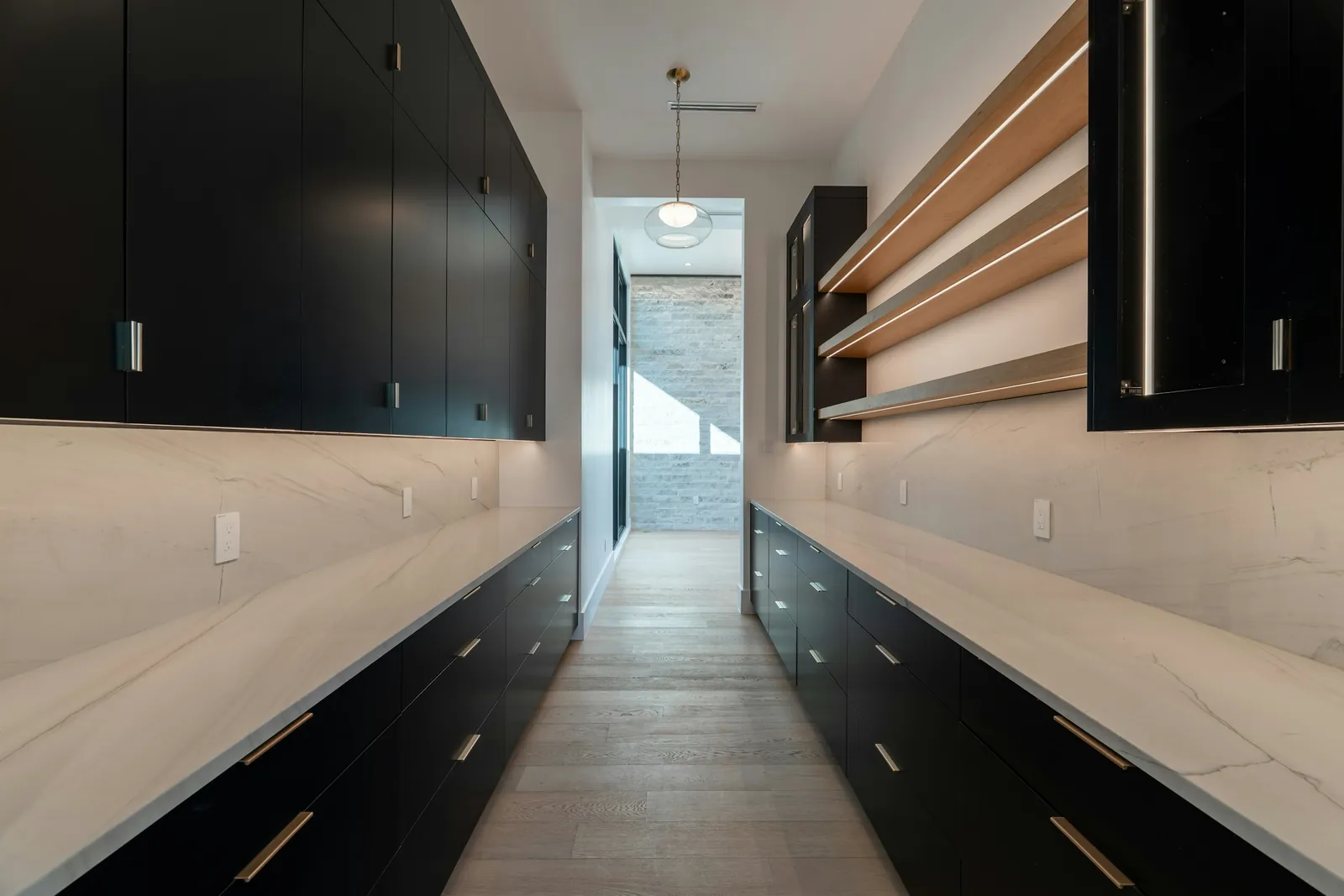
There are two ways to go. Refinishing them along with the kitchen puts everything into one plan and one quote, and every door ends up with the same finish. Or the built-in becomes the contrast: a painted kitchen beside a china cabinet left in its original stain, or a pantry in a deeper shade than the room it serves.
Glass-front doors take more care than solid ones, with a narrow frame around every pane, so count them separately when you call.
When an old kitchen's wood should stay wood
Paint is the right move for a lot of old cabinets, but not all of them. If the doors still wear their first clear finish, the wood matches the trim in the next room, and the finish is worn rather than failing, think hard before covering it. Getting paint back out of old grain is slow, messy work, and an original finish is the one part of the kitchen that can't be bought new.
Paint makes more sense when someone has already painted over the wood, when doors from different decades don't match, or when the stain has gone dark and blotchy around the range and sink. A split decision works too: paint the kitchen and keep the dining room's built-in stained.
Our comparison of painted and stained cabinets has a checklist for deciding. If the woodwork elsewhere is staying natural, our page on painting older Madison interiors covers wall colors that sit well beside it.
What a new finish won't fix
Refinishing changes the surface, not the structure. It won't flatten a door that has cupped, rebuild a sink base soaked by years of slow drips, or square up a face frame sitting on a floor that has settled. Old houses produce all three, so they're worth finding before anyone writes a quote.
On the visit George opens the doors, looks under the sink and watches how each door swings. A door that sags because its hinge has worked loose usually comes right when the hinges are adjusted at reinstall. A twisted door or a soft cabinet box is a job for a carpenter, and he'll say so plainly.
If enough of the boxes are failing, new cabinets may be the better use of the money. Our guide to painting or replacing kitchen cabinets walks through where that line usually falls.
What the estimate visit covers in an older house
George looks at the layers on the doors, the condition of the boxes, any built-ins you'd like included and the hardware. Original pulls are worth deciding on before work starts, because they come off for the prep either way. If you're replacing them, our post on cabinet hardware ideas covers sizing and finishes.
Cabinet refinishing is priced per cabinet with paint included, and most kitchens take one to two weeks from the first drop cloth to the final walkthrough. The written quote is the price, no extra charge if the job takes longer than expected.
Have the year the house was built, a rough count of doors and drawers, and a list of any built-ins ready when you ask for a free estimate. Our Madison page covers the rest of what we do in the city.
Common questions
Do cabinets with lots of old paint layers need to be stripped?
Usually not. Layers that still hold tight get sanded back to a sound coat, primed and refinished. Paint that has cracked through to the wood and begun to flake is the exception, since it has to come off completely first, and George will show you where that's happening before you agree to anything.
Should I worry about lead in my old cabinet paint?
If the house was built before 1978, it deserves a thought. The EPA says homes that age are more likely to have lead-based paint, and sanding during prep can turn it into dust. Mention the build year when you call.
Should the original stained cabinets in an old house be painted?
Only if the finish is failing or you really want a different look. An intact original finish that matches the house's trim is hard to get back once it's painted over.
Can a built-in hutch or glass-front uppers be refinished with the kitchen?
Yes. Built-ins, hutches and glass-front uppers can go into the same plan and the same written quote as the kitchen. Tell us how many glass doors there are, because they take longer than solid ones.
Will refinishing fix cabinet doors that won't close properly?
It fixes doors that sag on loose hinges, because the hinges are adjusted as the doors go back on. A warped door or a damaged box needs a carpenter instead.
More in Madison
Cabinet refinishing nearby
Helpful guides
Sources
- American Community Survey 2020-2024 5-year estimates, U.S. Census Bureau, via Census Reporter
- Lead Renovation, Repair and Painting Program, U.S. Environmental Protection Agency
- Reduce the Risk of Lead Exposure at Home, U.S. Environmental Protection Agency
- Preservation Brief 10: Exterior Paint Problems on Historic Woodwork, National Park Service