
Refinishing mid-century kitchen cabinets in Monona
The typical Monona house was built in 1963, so many kitchens have slab doors, soffits and a few later updates. Here's how refinishing handles them.
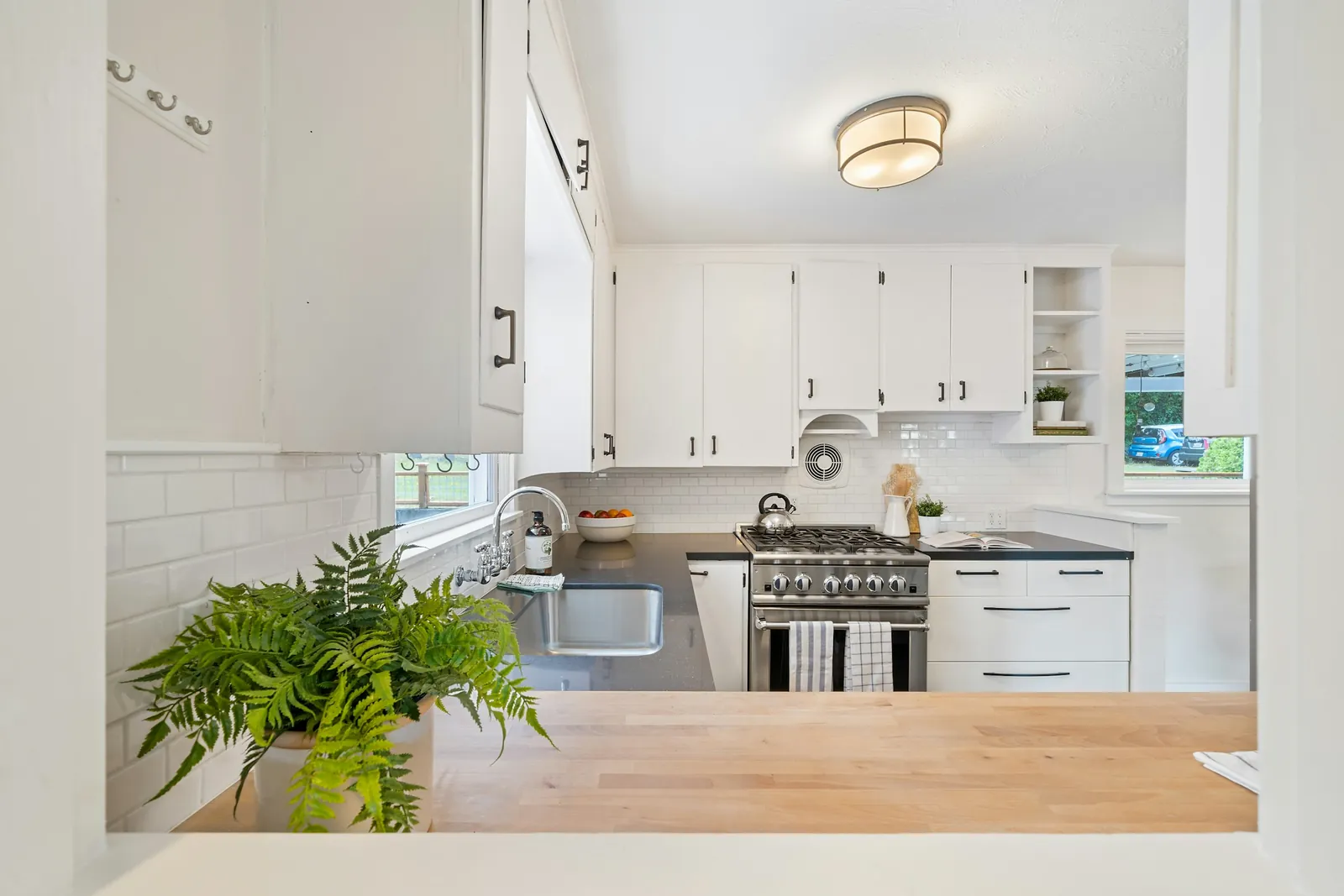
During the 1950s Monona grew from 2,544 residents to 8,178, and its housing still reflects that stretch: the median home in the city was built in 1963, and 68% went up before 1980. Kitchens from those years tend to share a few traits, including flat slab doors, a soffit over the uppers and a footprint smaller than anything built today.
This page is about refinishing kitchens like that: why slab doors are unforgiving, how to tie together a kitchen updated in pieces, colors and pulls that fit the house, and whether it pays to refinish when a remodel might come later. For how the service works in general, see cabinet refinishing.
What a 1950s or 1960s kitchen usually has
Postwar kitchens were built for a smaller scale of cooking. Counters run along one or two walls or wrap into a tight U, the uppers stop short of the ceiling at a boxed-in soffit, and the doors are often plain slabs with no frame-and-panel profile at all.
Most of that stays put during refinishing. Counters, sink, appliances and the soffit itself remain where they are, and only the cabinet surfaces change. The soffit can then follow the walls or take the cabinet color, and matching it to the uppers makes them read taller than they are.
A compact footprint also means fewer boxes and doors to count, which matters because the work is priced per cabinet, with paint included.
Slab doors show every flaw
A raised-panel door hides a lot in its grooves and curves. A slab door is one flat plane, so light from the window over the sink skims straight across it and finds every brush stroke, roller dimple and sanding scratch.
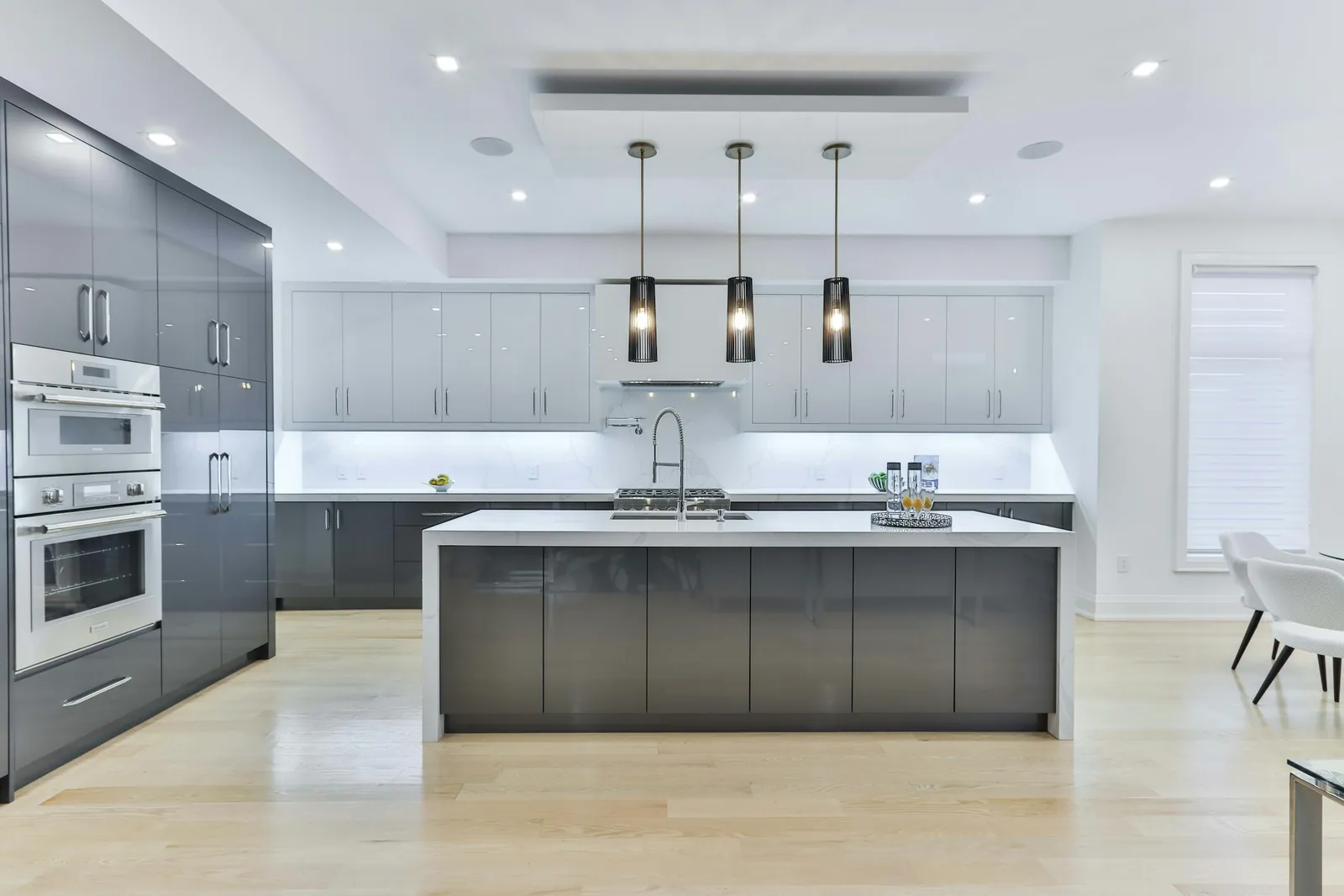
That's why doors and drawer fronts are sprayed rather than brushed. Spraying lays the finish down as a level film, which on a flat door is the difference between a factory look and a homemade one. The frames are finished in the kitchen, where their narrow faces call for a careful hand.
Most of the effort on a slab door comes before any color: washing off decades of kitchen grease, sanding the face smooth and priming it. Deep gouges and veneer lifting at an edge will show through any finish, so George points them out on the visit.
A kitchen remodeled one piece at a time
Sixty years is long enough for a kitchen to collect a newer counter, a replacement range, a run of doors from a later update and an island that arrived on its own. Each piece made sense when it went in. Together they can look like four kitchens sharing one room.
Paint is the simplest way to pull them back together. One color on every door, drawer front and frame makes an original door and its 1980s replacement read as the same kitchen, and a mismatched door style starts to look like a choice rather than an accident.
Mixed materials, laminate pieces from a later remodel included, each get the prep that suits them before the shared color goes on. If the counter is the newest thing in the room, start the color choice there, since it's the piece that isn't changing.
Colors that suit a mid-century house
Houses from this era pair well with warm whites, creams, soft greens and blue-greens, especially next to wood floors. A crisp, cool white can feel clinical in the light from one small window; our post on painting kitchen cabinets white explains how to pick a white that leans the right way.
Size matters as much as style. In a compact kitchen, a light color bounces around more of the daylight you have, while a deep green or navy works best on the lowers in a room that gets good light. Our post on cabinet colors for small kitchens sorts the options by kitchen type, and our guide to choosing a cabinet color shows finished kitchens before and after.
Keeping or swapping the original pulls
Original hardware is part of what makes a mid-century kitchen look like one. Slim bar pulls, small knobs and recessed pulls from the period can go back on after refinishing, and on a freshly painted door they often look better than they have in years.
If you'd rather change them, measure between the screw holes, center to center, before you shop. New pulls with that spacing go straight into the existing holes. If the ones you want use a different spacing, bring it up before work starts so the plan for the doors is settled in the quote rather than at reinstall.
Either way, decide before the doors come off. Hardware is removed for the prep regardless, and having replacements on hand keeps the last day from waiting on a delivery.
Refinishing now when a remodel might come later
If a full remodel is a few years off, refinishing can make the kitchen pleasant to live with in the meantime without buying cabinets that will later be torn out. It fits best when the layout works, the boxes are solid and the remodel you're picturing keeps the cabinets roughly where they are.
It fits less well if the plan is to move walls, relocate the sink or open the kitchen to the next room, because new cabinets would follow those changes anyway. Most kitchens take one to two weeks, and since counters, plumbing and backsplash stay put, refinishing doesn't close off any of those options.
Tell George what you're considering for later when you ask for a free estimate, and he'll be straight about whether refinishing fits. For rooms and decks as well as kitchens, see our Monona overview.
Common questions
Can flat slab doors from a 1960s kitchen be painted smooth?
Yes. Slab doors are cleaned, sanded, primed and sprayed, which leaves an even finish with no brush marks across the flat face. Deep gouges or veneer lifting at the edges will show through, so George checks for them before he quotes.
My kitchen was updated in pieces and nothing matches. Can one color tie it together?
Usually, yes. One color across every door, drawer front and frame makes doors from different decades read as one kitchen, and each material gets the prep it needs first. Start the color choice from whatever isn't changing, which is often the counter.
What cabinet colors suit a mid-century house in Monona?
Warm whites, creams, soft greens and blue-greens are safe starting points for a house from the 1950s or 1960s. A deeper green or navy works on the lower cabinets in a kitchen with good light. Test a large sample in your own kitchen before deciding.
Should I keep the original pulls on my mid-century cabinets?
Keep them if you like them and they're in good shape, since period hardware suits the house and goes right back on. If you're replacing them, match the center-to-center spacing of the old holes, or raise a change before work starts.
Is it worth refinishing if we might remodel in a few years?
Often, yes, as long as the remodel would keep the cabinets roughly where they are. If the plan involves moving walls or the sink, new cabinets will follow those changes, so share your longer plans on the estimate call.
More in Monona
Cabinet refinishing nearby
Helpful guides
Sources
- American Community Survey 2020-2024 5-year estimates, U.S. Census Bureau, via Census Reporter
- Monona, Wisconsin, Wikipedia