
Painting plaster walls and old woodwork in Madison homes
About 13% of Madison homes were built before 1940. This page is for rooms with plaster walls, deep trim and paint older than anyone living there.

Rooms in Madison's prewar houses, and 13% of the city's homes were built before 1940, usually come with plaster walls, wide casings and baseboards wearing a long paint history. Painting them well starts with reading what's there: which cracks are cosmetic, which plaster has let go of its lath, and what the oldest coat on the trim might contain.
The same questions reach past the oldest blocks. About 51% of Madison's housing went up before 1980, and the National Park Service notes that by the late 1930s rock lath was used almost exclusively for residential plaster, so a house from the 1950s may have plaster over gypsum lath rather than drywall. For what every job includes, see interior painting.
Plaster or drywall? Three quick checks
Plaster was the wall surface chosen for nearly all buildings until the 1930s or 1940s, according to the Park Service's guide to historic plaster. In most houses you can tell which you have in a minute:
- Press a thumbtack into the wall somewhere out of sight. Drywall takes it easily; plaster resists, and the tack often bends.
- Knock between the studs. Plaster gives a solid, dull sound, while drywall sounds hollow.
- Take off a switch plate and look at the cut edge. Plaster shows a thick, layered edge, and drywall shows a paper face over a chalky core.
Sound plaster is a very good surface for paint. The Park Service calls three-coat plaster unmatched in strength, and a hard, dense wall takes a finish evenly once it's clean and the patched spots are primed.
Cracks we fill, and plaster that needs a plasterer
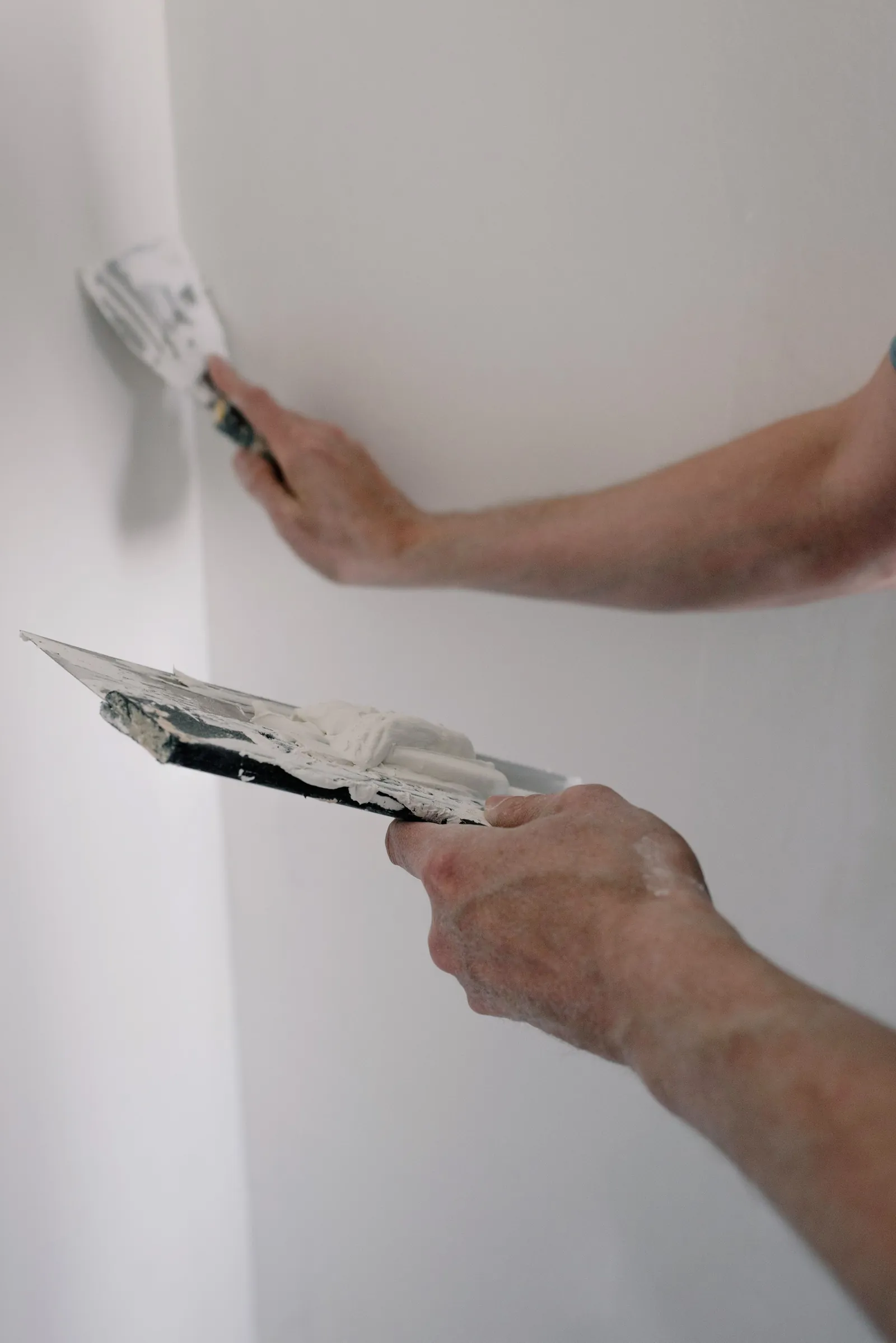
The Park Service says hairline cracks aren't a serious concern as long as the plaster around them is sound. We fill those, along with small holes from nails and anchors, and sand them flush before any paint goes on. Our guide to prepping walls for painting explains why patched spots get primer before the color.
Some cracks point to something else. On wood lath, plaster is held by keys, the ridges that squeeze through the gaps between the strips and harden behind them. When keys break, the plaster loosens or bows, and the Park Service warns that a ceiling in that state can drop chunks. A crack where two walls meet may be structural, and horizontal cracks that return every year often trace to lath swelling and shrinking with humidity.
Loose, bulging or sagging plaster gets repaired by a plasterer before it's painted. George will point it out on the visit, and the painting can be booked once the repair is done and dry.
Picture rails, tall baseboards and wide casings
Older rooms carry more woodwork per wall than new ones: taller baseboards, wider casings around doors and windows, and sometimes a picture rail running around the room near the ceiling. On a repaint, that trim often takes longer than the walls.
The picture rail also gives you a natural line for color. The wall color can stop at the rail with the ceiling color carried down to meet it, or the rail can take the trim color and stand out on its own. Deciding before the estimate means the quote matches the room.
Most of that woodwork has been painted many times, and the lowest coats are often oil based. The Park Service's brief on exterior woodwork warns that latex over old, chalky oil paint can peel because it can't grip, so glossy or chalky trim is cleaned, scuff sanded and primed with a bonding primer before the topcoat. If the trim is already peeling, the cause comes first, and our guide to fixing peeling paint shows how to read the back of a chip.
Lead dust in rooms painted before 1978
If the house was built before 1978, the EPA says it's more likely to have lead-based paint. Paint in good condition usually isn't the problem; the hazard is chips and dust, especially where doors and window sills rub. Settled dust can lift back into the air when someone sweeps, vacuums or simply walks across the room.
Young children face the most risk, because they crawl on floors and put things in their mouths. The EPA suggests wet mopping floors and wiping hard surfaces with a damp cloth or sponge to keep dust down, and it warns that even projects producing a little dust can put a family at risk.
Its Renovation, Repair and Painting rule sets lead-safe work practices for paid work that disturbs paint in homes of that age. Give us the build year when you call, and see our post on painting older Madison homes for more on old paint and plaster.
Old hardwood floors and radiators
Original hardwood is often the first thing the owner of an old house worries about, and with reason: it can't be swapped out the way carpet can. Floors and furniture are covered before any prep starts, and the covering stays down until the trim is dry and the room has been cleaned.
Radiators stay where they are and get covered along with the floor around them. The wall behind a radiator is painted as far as a brush can reach; if you're hoping to have the radiator itself painted, bring it up on the call so it's discussed rather than assumed.
Only about 40% of Madison homes are single-family detached houses, so plenty of painting here happens in flats. In a two-unit house, the shared stairway and entry are protected too, and the work is planned around the neighbors upstairs or down.
Wall colors beside original stained woodwork
If the trim, doors and built-ins still have their original stain, the walls should work with the wood rather than fight it. Aged oak and fir tend to read amber, and wall colors with some warmth, such as muted greens, ochres and warm grays, usually sit better beside them than stark, cool grays.
Light is the other factor. Older rooms often have smaller windows, so test large samples on two walls and look at them morning and evening before choosing. Painting the walls and leaving the woodwork stained is a perfectly good scope, and the quote can be built that way.
Interior work is priced by the square footage of the space, with paint included. When you're ready, ask for a free estimate, or read about kitchens and decks in older homes on our Madison page.
Common questions
Can you paint over plaster that has hairline cracks?
Yes. Hairline cracks in sound plaster are filled and sanded flush, and the patches are primed before the color goes on. Cracks that reopen every winter, or plaster that moves when you press on it, need a different repair first.
What happens if the plaster is loose or bulging?
A plasterer repairs it before anyone paints. The National Park Service describes loose plaster as a sign that the keys holding it to the lath have broken, and paint can't fix that. George will flag it on the visit so the painting can follow the repair.
My house was built before 1978. What should I know before painting inside?
That the old paint may contain lead. The EPA says the danger comes from chips and dust, especially where doors and sills rub, and its rule sets lead-safe practices for paid work in homes that age. Tell us the build year when you call.
Will you protect my old hardwood floors?
Yes. Floors and furniture are covered before prep begins, and the covering stays until the room is cleaned at the end. If there are rugs or pieces you'd rather move yourself, tell us when we schedule.
Can you paint a flat in an older two-unit house?
Yes. A flat is painted the same way as a house, with the shared stairway and entry protected as well. Let us know about parking, the neighbors' schedules and any rules the owner has for contractors.
More in Madison
Interior painting nearby
Helpful guides
Sources
- American Community Survey 2020-2024 5-year estimates, U.S. Census Bureau, via Census Reporter
- Preservation Brief 21: Repairing Historic Flat Plaster, Walls and Ceilings, National Park Service
- Preservation Brief 10: Exterior Paint Problems on Historic Woodwork, National Park Service
- Reduce the Risk of Lead Exposure at Home, U.S. Environmental Protection Agency
- Lead Renovation, Repair and Painting Program, U.S. Environmental Protection Agency