Painted vs stained cabinets: how to choose, and how to switch
· 7 min read · By GK Painting & Remodeling
Painted vs stained cabinets comes down to what you want to see. Paint covers the wood in a solid color; stain soaks in so the grain shows, with a clear coat on top. Neither is chip-proof, and yes, you can paint over stained cabinets when the prep is right.
One thing up front: we paint cabinets, and we don't stain them. So we'll be straight about when keeping your wood is the better call, and what painting over stain really takes. If you're also weighing new cabinets, start with our guide to painting or replacing kitchen cabinets.
Painted vs stained cabinets: what's really on the wood
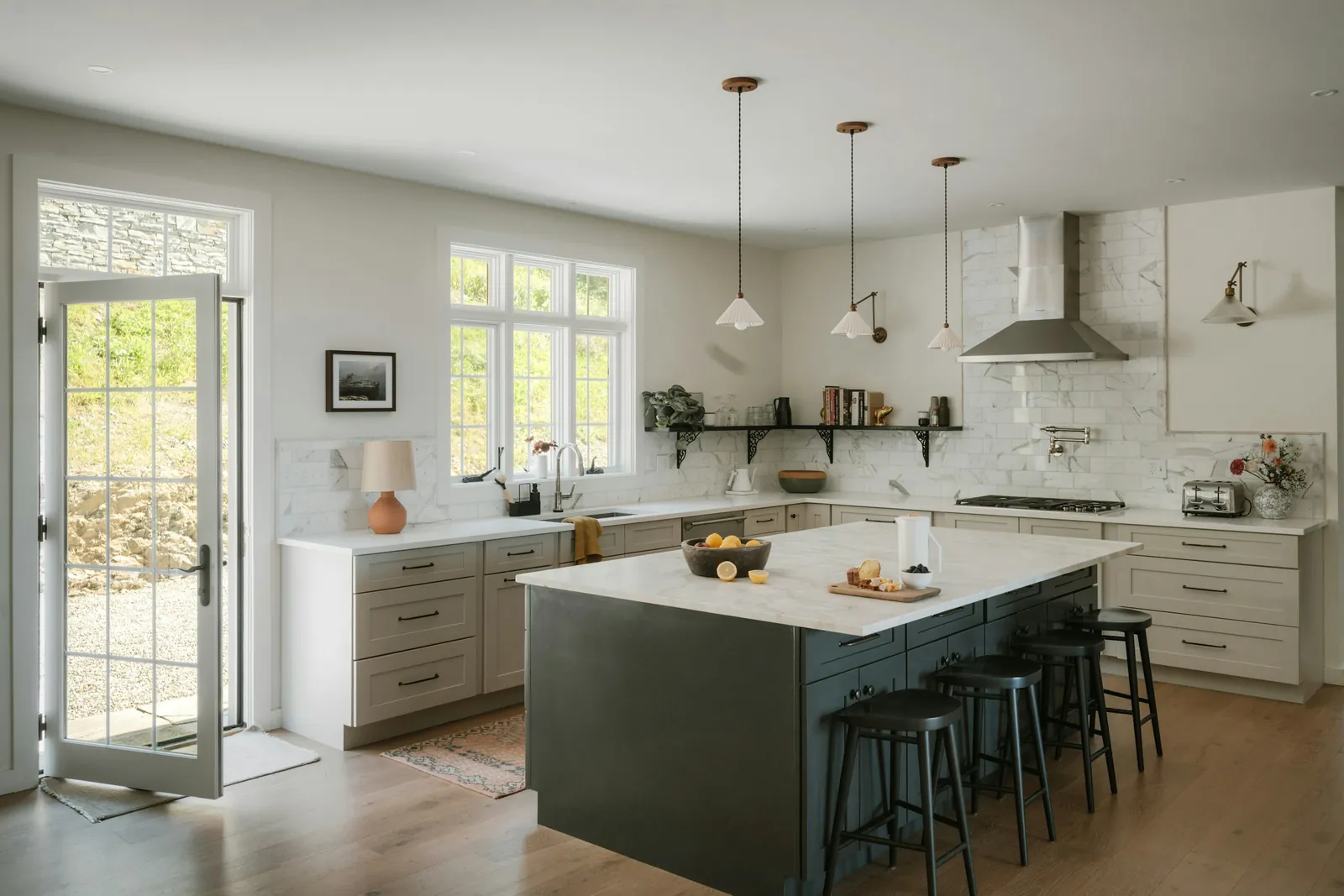
A painted cabinet wears an opaque film: primer, then color coats that hide the wood completely. A stained cabinet has two layers. The stain colors the wood itself, and a clear film goes over it to take the wear.
The Wood Handbook, published by the U.S. Forest Service's Forest Products Laboratory in Madison, says stains accentuate wood grain by absorbing differently into different parts of the wood, including knots, vessels and flaws. That's why stain makes a figured board look rich, and why it plays up knots and flaws too.
The Handbook also says the names for clear finishes and stains are confusing, because manufacturers don't follow a standard set of definitions. When you compare cabinets, ask what the finish actually is, not only what it's called.
The durability myth: stained isn't the same as chip-proof
You'll often read that stained cabinets don't chip. The stain itself can't chip, because it's in the wood. The clear coat over it is a film, though, just like paint.
The Wood Handbook says clear film finishes can give excellent performance on wood indoors, and that films can protect wood from scratches and dents. It also says films often get worn away by repeated cleaning or by abrasion. So both finishes wear. They just wear differently:
- Paint chips or scuffs, and light paint over dark wood makes the damage easy to see.
- A clear coat dulls and thins where hands and cleaning hit hardest, like the pulls and the sink, until bare wood starts soaking up grease and water.
Indoors, the Handbook notes, finishes usually last for decades, since indoor wood needs less protection from water and UV than outdoor wood. How long yours lasts depends mostly on the prep under it and the use it gets. Our post on how durable painted cabinets are covers where chips start and how to head them off.
The Keep-or-Paint Checklist
Use this to sort out your own kitchen. It's our editorial guide, not a measurement:
| If this is true | Lean toward | Why |
|---|---|---|
| You still like the wood's color and grain | Keeping the stain | Paint is easy to add later and hard to undo |
| The red or orange tone fights your floors or counters | Paint | Paint changes the color; going lighter with stain means stripping first |
| Patched, mismatched or mixed materials | Paint | An opaque coat makes different surfaces read as one |
| Laminate or MDF doors | Paint | Stain works by soaking into wood |
| Clear coat worn through to bare wood in spots | Paint, after full prep | Bare spots need cleaning, sanding and priming first |
| You want lighter cabinets but love visible grain | Keeping the stain, or a wood refinisher | Lightening stained wood means stripping it first, a different job from painting |
Laminate and MDF need their own prep, and we refinish laminate cabinets too. Real wood veneer paints like solid wood but can't take heavy sanding; see can you paint veneer cabinets. Our post on painting MDF cabinets covers MDF doors.
Is stained wood coming back? What the 2026 numbers say
Partly, yes. The National Kitchen & Bath Association's 2026 Kitchen Trends Report is based on a survey of designers, manufacturers, remodelers and other industry professionals. In it, 59% of respondents named wood grain cabinets as growing in popularity, and the association says wood grain has surpassed painted cabinets. White oak was the most popular wood type, at 51%.
Read that carefully. It's what industry professionals see gaining ground, and pale white oak leads it. It doesn't say every existing stain looks current; a dark, reddish or orange finish from twenty years ago is a different look from white oak.
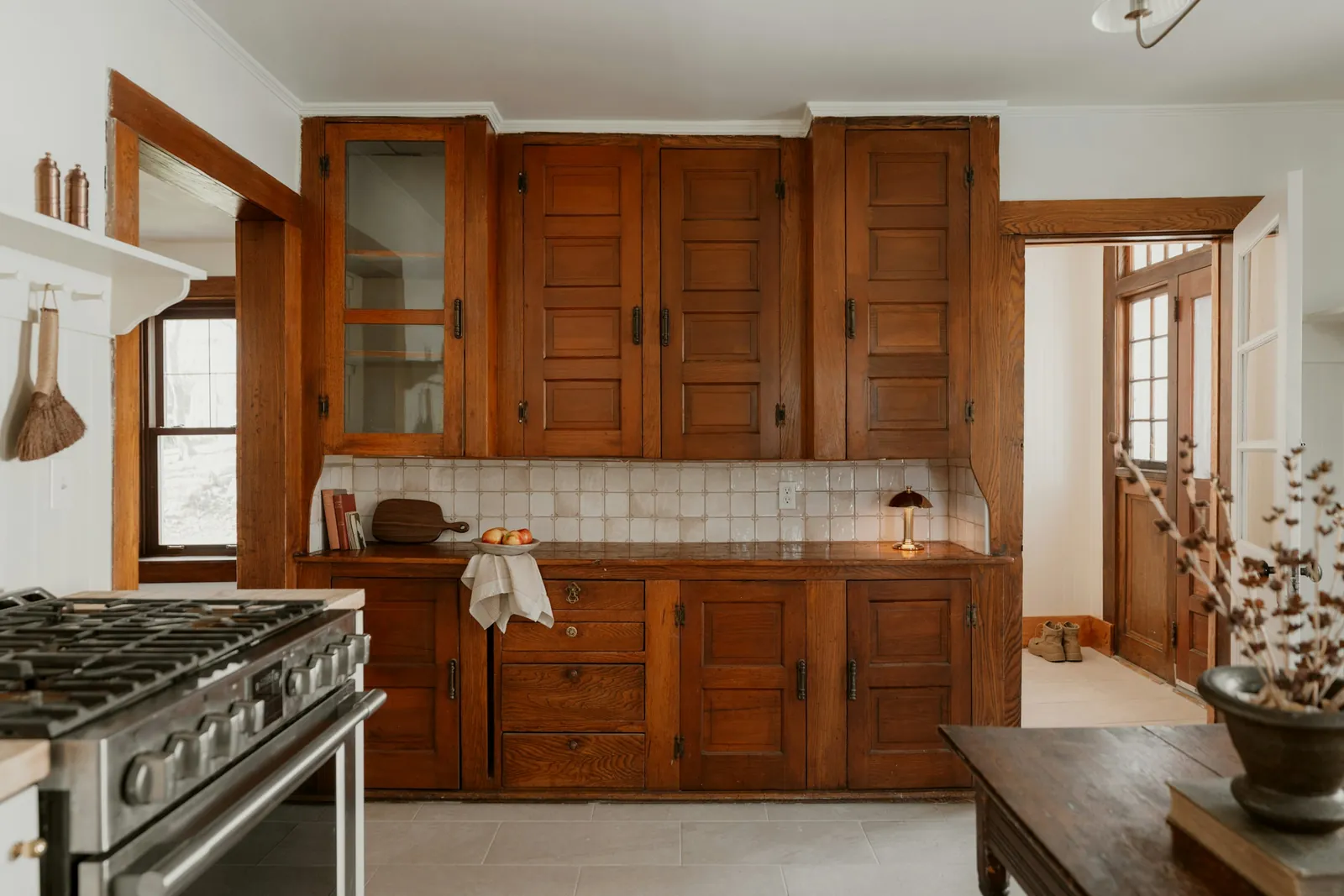
Our honest rule: keep wood you love, and paint when it's the color, not the cabinets, that dates the kitchen. Mixing works too, like a stained island with painted cabinets around it. Our post on two tone kitchen cabinets shows how to balance the two.
Can you paint over stained cabinets?
Yes. Stained, clear-coated wood takes paint well when the surface is clean, dulled and primed. The order matters more than any single product.
Degrease first
General Finishes, a finish maker, says kitchen cabinets are more problematic than furniture because they're work areas where grease, steam, food splatters and oil from hands are common. It sums up prep as degreasing and abrading the surface for better adhesion. Paint that goes over grease is only as stuck as the grease is.
Dull the clear coat, don't remove it
Benjamin Moore says most cabinet finishes are too smooth or glossy to reprime and repaint as they are. It suggests 100 to 150 grit to sand a little: not enough to take the current finish off, just enough to give the primer something to grip. Our post on how to paint cabinets without sanding covers the shortcuts and their limits.
Prime to block bleed
Stained wood can push color up into new paint. The Wood Handbook says extractives can discolor finishes, particularly in humid rooms such as kitchens. It also says that once bleed shows up, another coat of the same finish won't stop it; the fix is a stain-blocking primer, then another topcoat. If you're going white, read painting kitchen cabinets white first. Reddish woods get their own notes in our post on painting cherry cabinets.
For what goes on over the primer, see the best paint for kitchen cabinets.
Test one door
General Finishes suggests taking the most used drawer or door in the kitchen and testing your finish schedule there first. One test door shows adhesion or bleed problems before they're on every cabinet.
Going back to stain means stripping
Going the other way, from paint or a dark stain back to bare wood, means stripping the old finish off every surface before any new stain can soak in. We don't stain cabinets, so if a new stain color is what you want, a wood refinisher is the right call.
Next-step hurdle: the weeks after the paint goes on
Fresh paint over stain looks finished long before it is. Benjamin Moore says kitchen cabinets can go back into service after at least 24 hours, but full hardness and adhesion take time to develop. It advises against heavy abrasion or cleaning for at least five to seven days.
For that first stretch, open doors by the pulls, keep dishes and wet towels off the fresh paint, and wipe spills gently with a soft damp cloth. On our jobs, the finish cures before the doors go back on, so much of that waiting happens before the doors are back up.
Still comparing refinishing with other options? Our post on cabinet refinishing vs refacing lays out the difference.
When to stop and call a professional
Sanding a stained cabinet usually means sanding a clear coat. In an older home, though, cabinets and the trim around them may have been painted at some point, and that changes the risk.
EPA says about three quarters of U.S. homes built before 1978 still contain some lead-based paint, and that renovation or painting work in a home with lead-based paint can easily create dangerous lead dust. Its rule covers anyone paid to disturb painted surfaces in those homes, and Wisconsin is one of the states EPA authorized to run its own program.
- Call 911 if anyone has serious trouble breathing while sanding, priming or spraying.
- Today: if fumes give anyone a headache or dizziness, stop, air the room out and get everyone out until it clears.
- Stop sanding if your home was built before 1978 and you don't know what's in the old paint. For homeowners doing their own work, EPA points to lead-safe work practices.
- Call a pro when the old finish is peeling or flaking, you can't tell what the cabinets are made of, or you'd rather not lose the kitchen for weeks.
If your home is that old, mention it when you ask for a quote, and ask any painter how they handle lead-safe work.
How we handle stained cabinets at GK Painting
We refinish stained, painted, laminate or unfinished cabinets in the color you want. We don't stain cabinets; every cabinet job we do ends in paint.
Cabinet refinishing is the work George cares about most, and he's on every job himself. Doors and drawer fronts come off and are labeled, cleaned, degreased, sanded, primed and sprayed. The frames are finished in your kitchen with a fine-finish roller or spray, depending on the space. The finish cures before the doors go back on, and most kitchens take one to two weeks.
Pricing is per cabinet with paint included. We use premium paint from Sherwin-Williams and Behr, and Behr is the more economical of the two. If you'd rather use a brand you already like, just tell us and we'll use it.
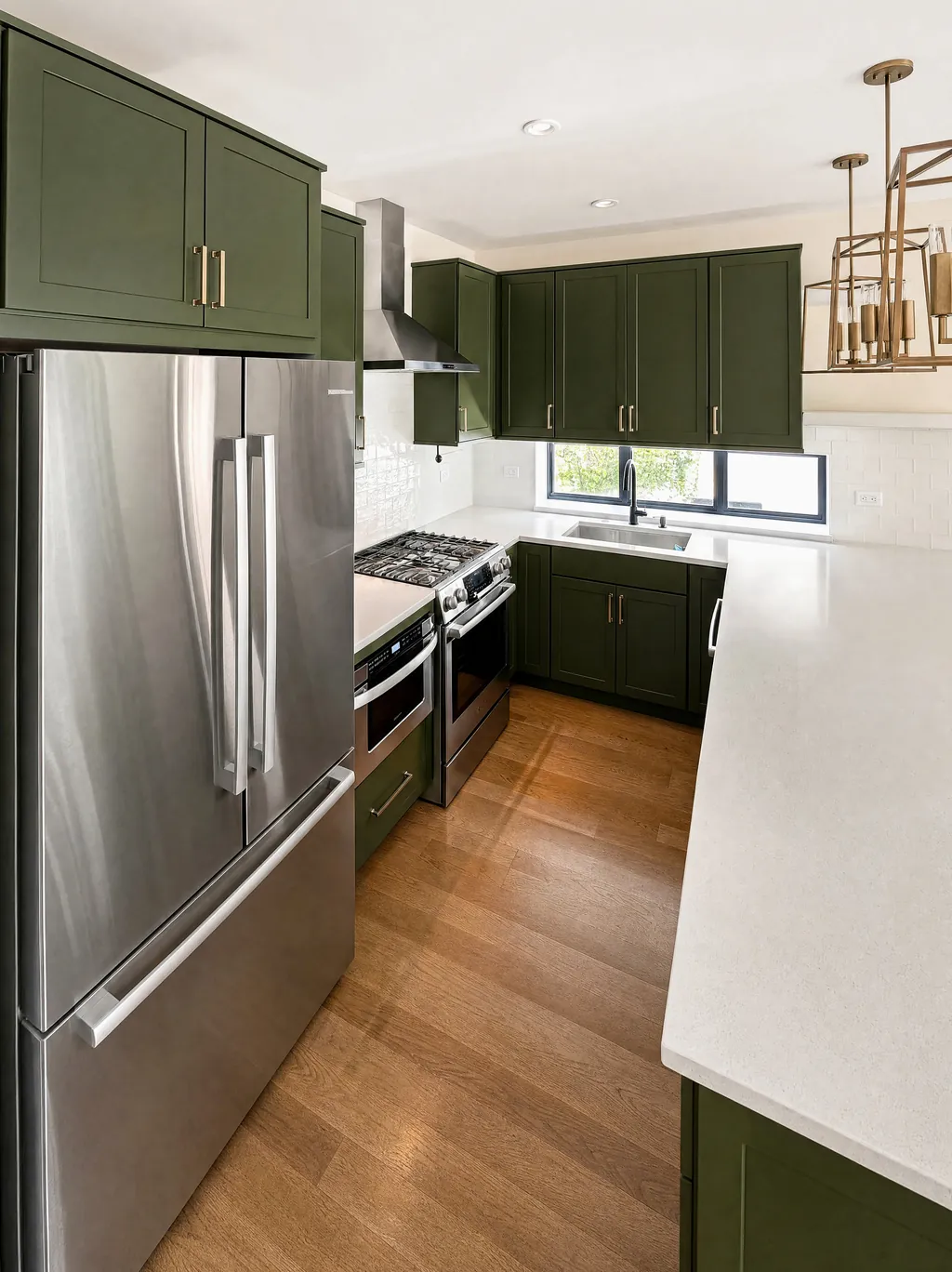
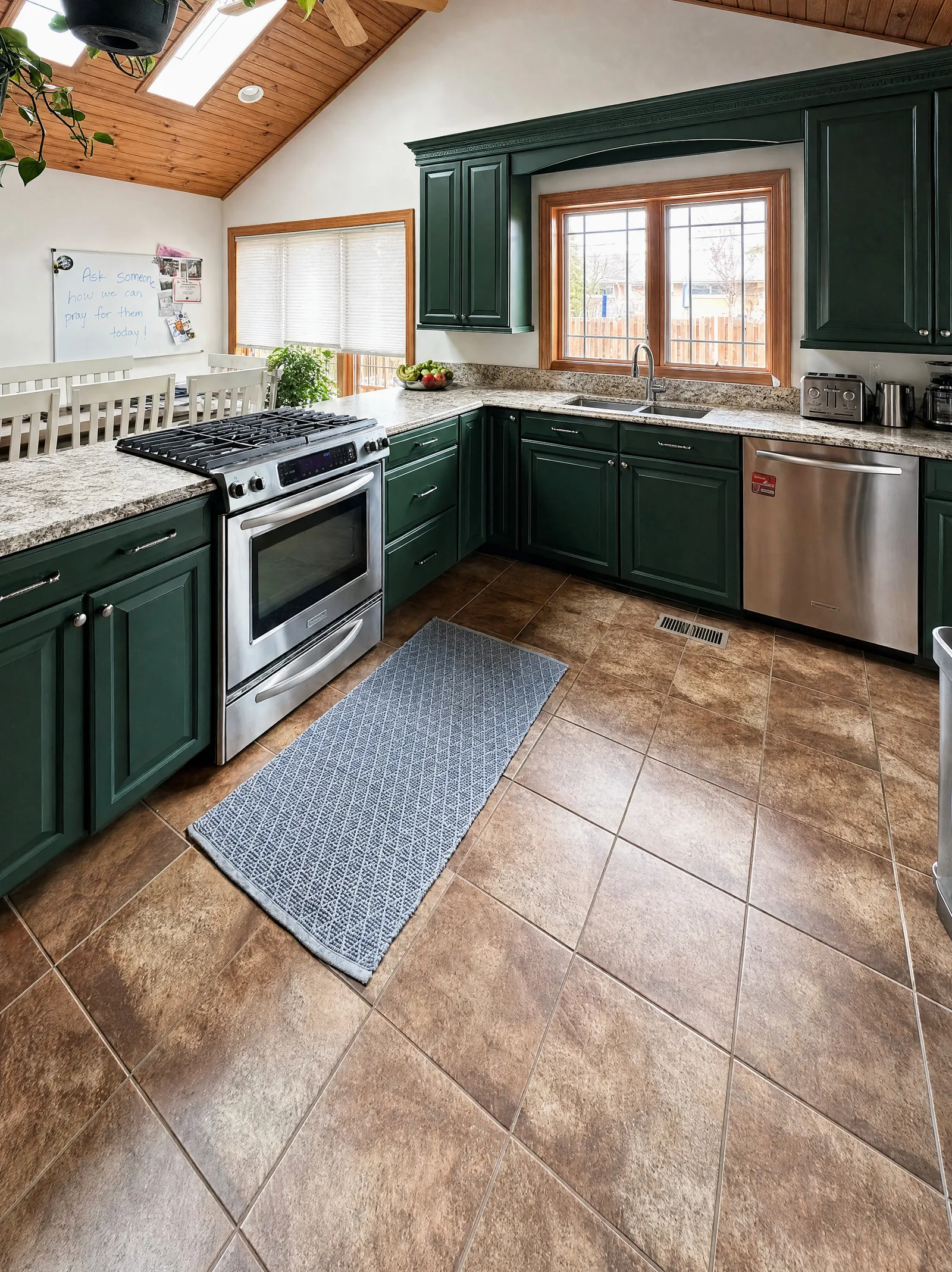
We're based in Waunakee and work across Madison and the surrounding Dane County communities. See our maple cabinets refinished in forest green, read about our cabinet refinishing service, or ask for a free estimate.
Common questions
Are painted or stained cabinets more durable?
Neither is clearly tougher, because both rely on a film. On painted cabinets the paint is the film; on stained ones it's the clear coat, which the Wood Handbook says can wear away with repeated cleaning or abrasion. Paint tends to chip, while a clear coat dulls and thins. Prep and daily use matter most.
Can you paint over stained cabinets without sanding?
You can, but the paint has less to hold on to. Benjamin Moore says most cabinet finishes are too smooth or glossy to repaint as they are and suggests a light sanding with 100 to 150 grit. On our jobs every surface is cleaned, degreased, sanded and primed before any color goes on.
Can you stain cabinets that are already painted?
Not without stripping them first. Stain has to soak into bare wood, so every bit of paint would have to come off, down to the grain. That's a different job from painting, and we don't stain cabinets. If you want stained wood back, talk to a wood refinisher about stripping and restaining.
Will old stain bleed through new paint?
It can. The Wood Handbook says extractives in wood can discolor finishes, especially in humid rooms like kitchens, and that another coat of the same finish won't stop bleed once it shows. A stain-blocking primer under the color, checked first on one test door, is the usual defense against it.
Are stained wood cabinets coming back in style?
Wood grain is gaining ground. In the National Kitchen & Bath Association's 2026 trends survey, 59% of industry respondents named wood grain cabinets as growing in popularity, with white oak the top wood at 51%. That's a reason to keep wood you love, not proof that every older stain looks current.
How soon can I use cabinets after painting over stain?
Gently after a day, normally after about a week. Benjamin Moore recommends waiting at least 24 hours before putting cabinets back into service and avoiding heavy abrasion or cleaning for five to seven days, because full hardness takes time. On our jobs the finish cures before the doors go back on.
Sources
- Wood Handbook: Wood as an Engineering Material (FPL-GTR-282), USDA Forest Service, Forest Products Laboratory
- How to Paint Kitchen Cabinets Like an Expert in 9 Steps, Benjamin Moore
- How Do I Prep Kitchen Cabinets with an Existing Finish Before Painting or Recoating with a Stain?, General Finishes
- NKBA | KBIS Releases Annual 2026 Kitchen Trends Report, National Kitchen & Bath Association
- Lead Renovation, Repair and Painting Program, U.S. Environmental Protection Agency
More on cabinet refinishing and every cabinets post.