
Redoing a cabinet paint job that didn't hold in McFarland
For McFarland kitchens where someone already painted the cabinets: reading why it failed, testing what's underneath, and refinishing so the new finish holds.
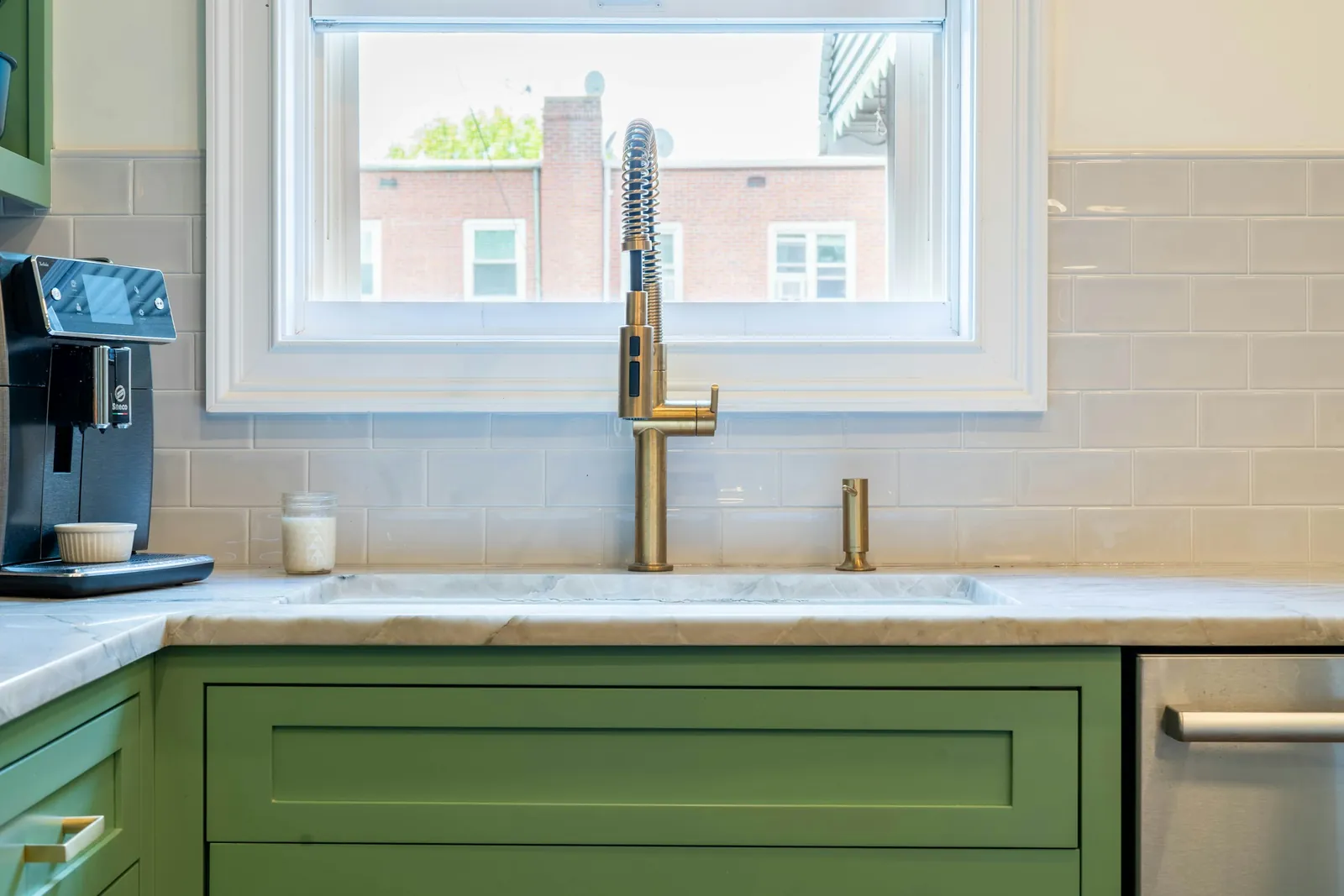
This page is about cabinets somebody already painted: a previous owner freshening the kitchen before listing the house, or a long weekend with a brush and a roller. McFarland's housing spans the decades fairly evenly, with about 36% of homes built before 1980 and about 37% since 2000, so plenty of its kitchens have had time to collect a coat or two along the way.
When that paint peels at the edges, stays tacky, or shows every brush stroke in the afternoon light, another coat on top won't fix it. The fix is finding out why the first job failed and then doing the prep it skipped. Here's how we read an old paint job, test it, and decide how much has to come off.
Reading the failure: what old cabinet paint tells you
A failing cabinet paint job usually announces itself in the same few places:
- Peeling at the door edges and around the pulls, where hands and cooking grease hit hardest.
- Chips that reveal a different color, or a shiny stained finish, underneath.
- Brush ridges, sags and drips, or paint that has filled in the corners of the panels.
- A tacky feel where doors close against the frame, or doors that stick shut.
- Flaking under the sink or beside the dishwasher.
Peeled flakes are useful evidence. Dunn-Edwards explains that when several coats come off together, an underlying layer lost its grip, and the back of the flake shows why: a stained or discolored underside points to moisture, brittle and cracked paint points to too much buildup, and a dirty, slick or glossy underside means an earlier coat went onto a surface nobody prepared. Our post on repainting painted cabinets walks through each warning sign.
Testing what's on the cabinets now
Before choosing a primer, it helps to know whether the old coat is oil or latex. Dunn-Edwards describes a quick check: wet a cotton ball with rubbing alcohol and rub it on a spot nobody sees, like the inside of a door. Color on the cotton means the paint is water-based. A clean cotton ball means oil-based paint, which has to be sanded dull and given a bonding primer before anything water-based goes over it.
Look closely at a chipped edge too. A common shortcut is painting straight over the original factory finish, a hard clear or stained topcoat built to shrug off grease, with no sanding and no primer. Paint on a surface like that tends to let go in sheets, because it never really gripped in the first place.
If the house was built before 1978, tell us when you call, since paint from that era can contain lead and the prep plan changes.
Strip, sand or prime: deciding how deep the prep goes
How far the prep goes depends on the old paint's condition, not on its color or on who put it there.
| What the old paint is doing | What it needs |
|---|---|
| Sound, thin and holding tight | Degrease, scuff sand, prime, then spray |
| Peeling in spots | Scrape back to a firm edge, feather the edges, prime the bare areas |
| Brush ridges and drips | Sand them flat so they can't show through the new finish |
| Thick, cracked or brittle | Strip it, since new paint on failing layers fails with them |
| Still tacky | Take it off rather than bury it |
Dunn-Edwards lays out the repainting order for failing paint, and it's the order we follow on cabinets: scrape off everything loose, scuff sand anything slick or glossy, clean, then spot prime whatever is bare. Doors and drawer fronts come off and are labeled first, so the work happens on a flat surface and each piece returns to its own opening.
Sprayed doors versus a brushed finish
Brush marks are the giveaway of a weekend cabinet job. A brush leaves fine ridges and a roller leaves a faint orange-peel texture, which are both fine on a wall and obvious on a door you look at from two feet away every morning.
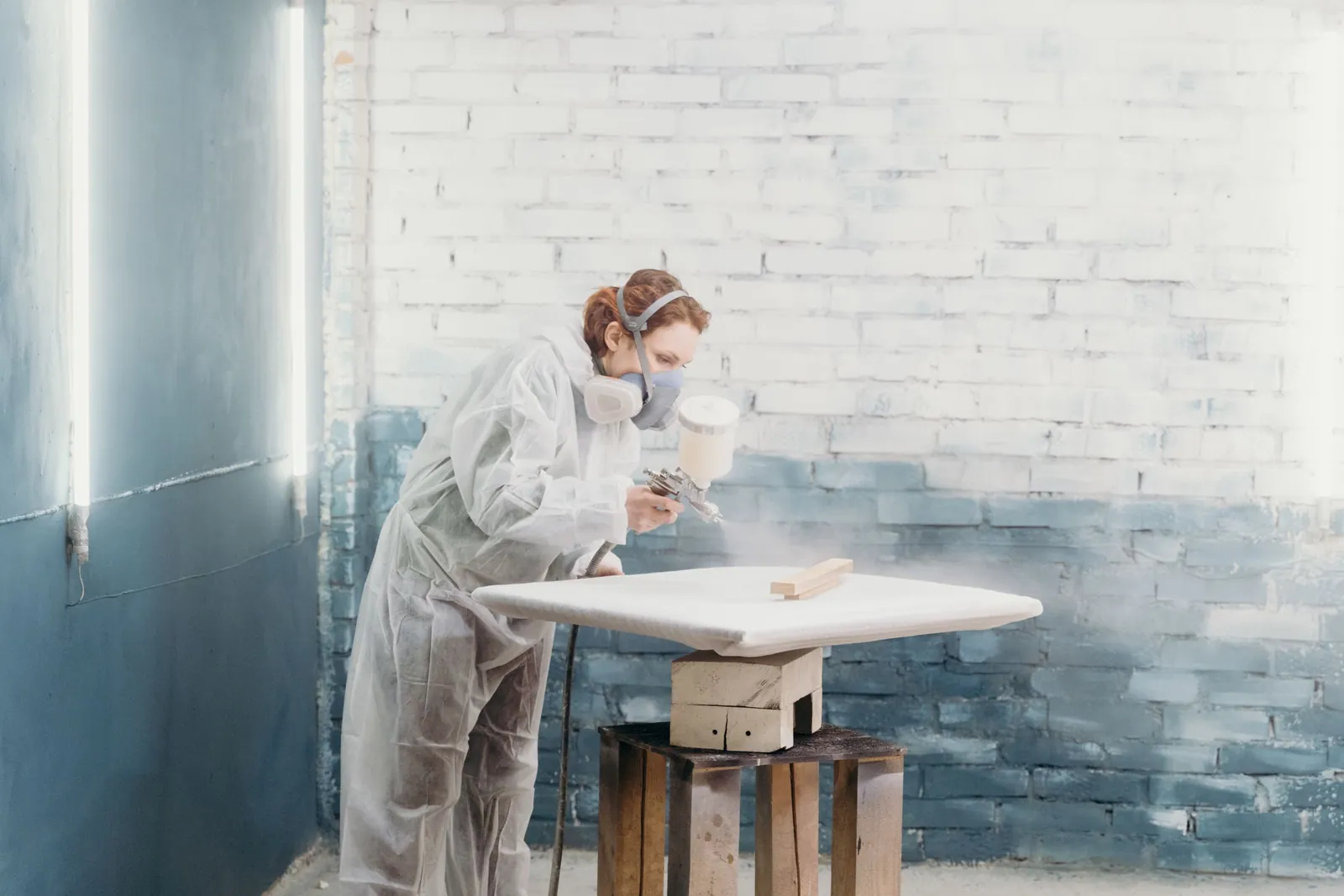
We spray every door and drawer front. The sprayer breaks the paint into a fine mist that lands as a thin film and levels as it dries, so the doors look closer to what a cabinet shop turns out. The frames stay in your kitchen and are finished there with a fine-finish roller or a sprayer, depending on the room. Our guide to spray-painted kitchen cabinets explains why the doors come off for it.
Sheen and window light
It's tempting to choose high gloss for cabinets on the theory that shinier means tougher. The trouble is what gloss reveals. The Wood Handbook notes that flaws such as raised grain and tool marks are accentuated by high-gloss finishes, and on a hand-painted cabinet that list includes every brush ridge, drip and sanding scratch.
Window light makes it worse. Sun coming across a run of doors at a low angle, through the window over the sink, picks out each ridge the way low headlights pick out ruts in a gravel road. A satin or other lower sheen shows far less of the surface, and Dunn-Edwards adds that higher-gloss coatings take longer to cure.
A painted kitchen can take a new color as easily as a new sheen. The builder-white cabinets we repainted in olive green started out painted, and the same prep took them somewhere completely different.
Our promise on the finish, and the estimate
If our finish peels or fails to bond because of how we did the work, call us and we'll come back and put it right. A door that gets kicked, scratched or banged by a stroller after we've gone is everyday wear, which isn't covered, though we'll gladly quote the fix.
Refinishing is priced per cabinet, with paint included. George looks at the old paint first, on a call or a visit, because its condition decides the prep, and then you get a written quote with a start date. Most kitchens take one to two weeks. The written quote is the price, no extra charge if the job takes longer than expected.
For what a good cabinet quote should name, see our post on professional cabinet painting. Read more on our cabinet refinishing page, visit our McFarland page, or ask George for a free estimate.
Common questions
Can cabinets a previous owner painted be painted again?
Yes, once what's on them is made sound. Loose paint is scraped back to a firm edge, ridges and drips are sanded flat, everything is degreased and primed, and the doors are sprayed. Paint that's brittle or still tacky comes off first.
How can I tell if the old cabinet paint is oil or latex?
Dampen a cotton ball with rubbing alcohol and rub it on the inside of a door. Color on the cotton means water-based latex; a clean cotton ball means oil-based paint, which needs sanding and a bonding primer before a new water-based finish.
Do painted cabinets have to be stripped to bare wood?
No, not when the old paint is still holding tight. Sound paint is cleaned, scuffed and primed. Stripping is for paint that's thick, cracked, brittle or tacky, where a new coat would only fail along with the layers under it.
Why is my cabinet paint still sticky months later?
Usually because it went on too thick, dried in cool or damp air, or was never meant for doors that get handled all day. Dunn-Edwards notes that heavy film build, humidity, dark colors and high gloss all slow drying and curing. Paint that's still tacky after months seldom firms up on its own, so we remove it rather than paint over it.
What happens if your finish fails?
We come back and make it right when the failure comes from our work, like a finish that peels or didn't bond. Wear and accidents after the job aren't covered, but we'll quote the repair.
More in McFarland
Cabinet refinishing nearby
Helpful guides
Sources
- American Community Survey 2020-2024 5-year estimates, U.S. Census Bureau, via Census Reporter
- How to Determine if Existing Paint is Water- or Oil-Based, Dunn-Edwards
- Multiple Coat Peeling (technical bulletin), Dunn-Edwards
- Dry Time versus Cure Time of Paint (technical bulletin), Dunn-Edwards
- Finishing of Wood (Wood Handbook, chapter 15), USDA Forest Service, Forest Products Laboratory