Two tone walls: where to split, which color goes down, how to paint the line
· 7 min read · By GK Painting & Remodeling
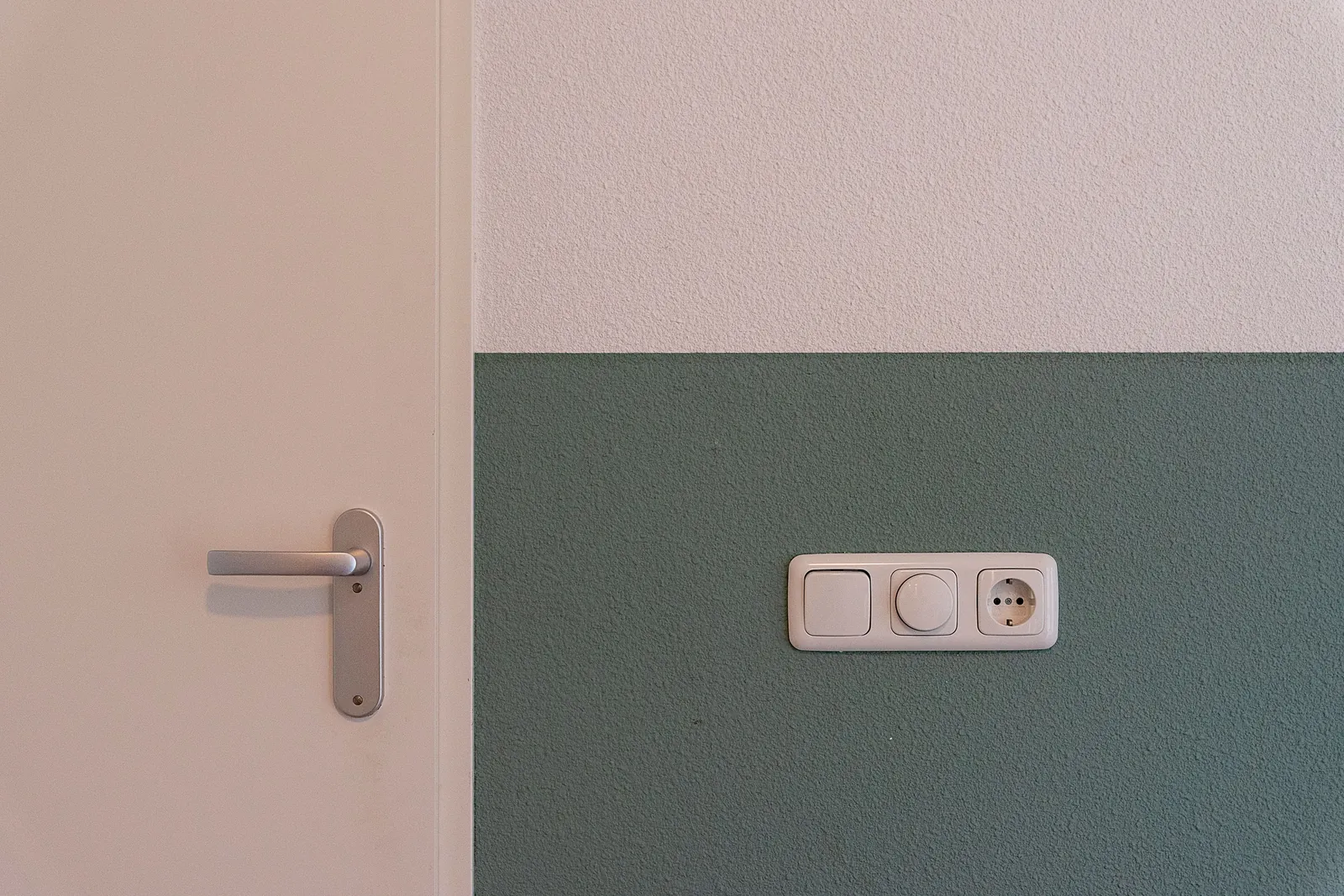
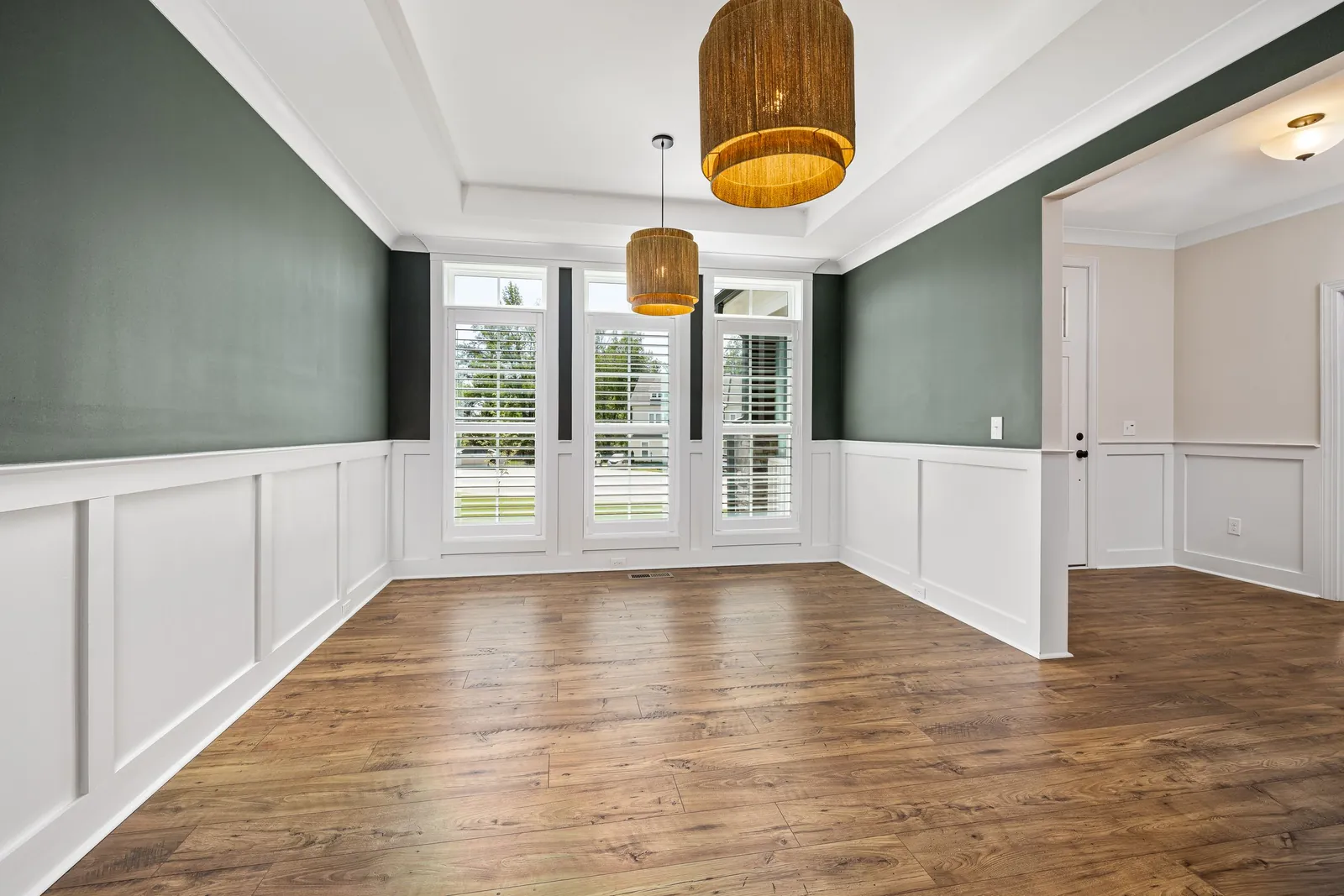
Two tone walls use two paint colors on one wall, split by a horizontal line, often with the darker color below. The split looks planned when it sits at a real proportion, often about a third of the way up, and when the line itself is level, sealed and crisp.
Below: where to split, which color goes down, how to pick the pair and how to paint the line. One thing up front: we paint the line. We don't install chair rail, wainscoting or picture rail.
What two tone walls are, and what we mean by the line
A two tone wall is one wall in two colors. The classic version is a horizontal split, one color below and another above. Variations include a band of color near the ceiling and a block of color behind a bed or desk; our post on accent wall ideas covers blocks and single walls.
Where a room already has chair rail, wainscoting or a picture rail, that molding is the natural line. Where it doesn't, the line is paint. Benjamin Moore calls this “feign-scoting”: using paint to mimic the contrast wainscoting gives a room, without the millwork. That painted version is the one we do.
Where to split two tone walls
The one rule with a published source is the rule of thirds. Benjamin Moore says wainscoting typically sits about a third of the way up the wall, and that it's traditionally sized using the “rule of thirds.” A painted split can borrow the same proportion.
On an 8 foot wall, a third is 32 inches. On a 9 foot wall, it's 36 inches. Measure your own wall rather than assuming, because ceiling heights vary, especially in older houses.
Other splits are common practice, with no published rule we could find: a split about two thirds of the way up, a narrow band near the ceiling, or a line that follows the window sills. Benjamin Moore does say wainscoting can go higher depending on the look, and it shows board and batten reaching two thirds of the way up a wall.
Our split and color matrix
Here's where we'd start in common rooms. It's our editorial guide, not a measurement or a rule.
| Room | Where to split | Darker color goes | Why |
|---|---|---|---|
| Dining room | At an existing chair rail, or a third up | Below | A classic proportion; chairs bump the lower wall |
| Hallway or entry | A third up | Below | Bags, shoes and hands scuff the lower wall |
| Kids' room | A third up | Below | A darker, wipeable lower section takes the knocks |
| Bathroom | Just above the vanity backsplash | Below | A lighter upper wall keeps a small room open |
| Tall room with a picture rail | At the picture rail | Above | A deeper shade up high draws the eye up |
| Small, dark room | A third up, or skip the split | Below, kept light above | A deep color overhead can feel enclosed |
Which color goes down?
Usually the darker one. A darker lower section grounds the room and hides the scuffs that collect near the floor, and a lighter upper section keeps the room open. That's common practice rather than a tested rule.
You can flip it on purpose. Benjamin Moore's UK team says painting above a picture rail in a slightly deeper shade than the walls draws the eye upward and celebrates a room's height, which suits tall older rooms. It also warns that a deep ceiling color can feel overly enclosed in very small, dark rooms.
Do two tone walls make a room look bigger?
Sometimes, and we found no direct test of it. Benjamin Moore says horizontal stripes can make a space seem larger, and a two tone split is one wide horizontal band. A light upper wall and ceiling also help a small room stay bright. Treat both as design guidance, not measurement.
Picking the pair with LRV
Benjamin Moore's color pages list a light reflectance value, or LRV, next to the color. It describes LRV as the percentage of light reflected from a surface, on a scale from 0 for absolute black to 100 for pure white.
Use the gap between two LRVs to set the contrast on purpose: far apart for a bold split, close together for a quiet one. Keep the undertones related, both warm or both cool, so the pair looks chosen rather than accidental. Both points are our editorial guide.
Then test both colors on the actual wall, in the light you live with. Our post on choosing paint colors covers sampling, and painting the ceiling the same color as the walls goes further into LRV.
How to paint a two tone wall line
- Paint the lighter color first, a little past where the line will go. Benjamin Moore's stripe guide says most people use the lightest color as the base coat, and it recommends at least 24 hours of dry time before taping.
- Mark the line with a level or a laser level, as Benjamin Moore suggests for stripes. Measuring up from a floor that isn't level carries its slope up the wall.
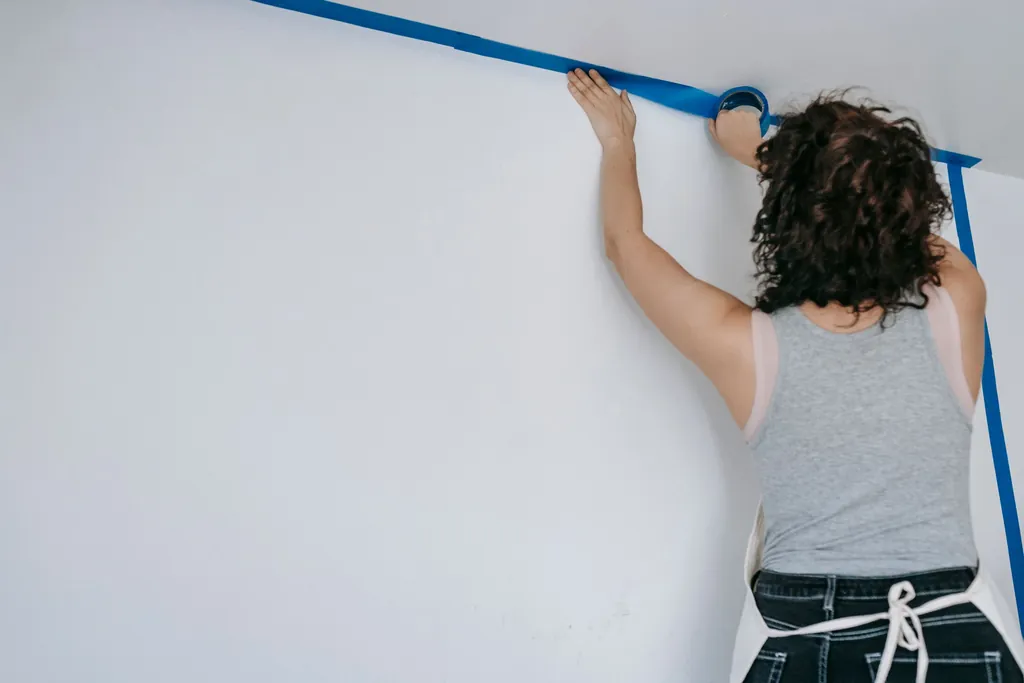
- Tape on the side of the line that gets the second color, pressed down firmly. Our post on how to use painter's tape covers the details.
- Seal the tape. Benjamin Moore says to run a very thin bead of clear caulk along the tape line and work it in with a damp rag, so paint can't creep under it.
- Paint the second color in two coats, letting the first dry.
- Pull the tape slowly, at about a 45 degree angle.
Tape timing is where sources disagree. Benjamin Moore's stripe guide says to remove the tape immediately after your final coat. Its trim guide says to remove tape only when the paint is completely dry. Our tape post compares more makers; whichever you choose, pull slowly. If paint bleeds under the tape anyway, Benjamin Moore suggests touching it up with a small angled brush.
Steady with a brush? You can skip tape and cut the line freehand, as in how to cut in paint.
Sheen for each section
A common choice is a more washable sheen below, such as satin or eggshell, and a flatter one above. Keeping one sheen on both makes the line about color alone. Our paint sheens guide covers what each one handles.
Colour capping: the current version of two tone
Are two tone walls outdated? The newest variation says no. In 2025, Benjamin Moore's UK arm introduced “colour capping,” a tonal wash that deepens the further up it goes: lighter walls, a mid-tone at the cornicing and the deepest shade on the ceiling, all from one color family.
It's two tone walls turned upside down and carried onto the ceiling. In older properties, the same team suggests the picture rail as the break. Where a room has crown, our post on painting crown molding covers using it as the line.
Next-step hurdle: older walls that aren't flat or level
In an older house, a split line shows what the wall is doing. Plaster can wave, and floors and ceilings drift out of level, so a perfectly level line can look crooked next to a sloping ceiling. Common practice is to strike a level line, then step back and check it against the ceiling and trim before painting, splitting the difference if they fight.
Existing picture rails and chair rails settle the height for you, and cracks need filling before any line goes on. Prime the patched spots too, so they don't show through the lower color as dull patches. Our post on painting older Madison homes covers plaster and old trim.
If the house was built before 1978, prep can raise lead dust. EPA says renovation or repair work that disturbs painted surfaces in older homes may create large amounts of lead dust. It advises fixing small areas of damaged paint, under 6 square feet, without sanding, and if you must sand, wetting the area first. Ask any painter how they handle lead-safe work practices.
When to stop and call a professional
- Call 911 after a fall from a ladder or stairs if someone is badly hurt or can't get up.
- Today: if paint is chipping in a pre-1978 home where children live or visit, wipe up chips with a damp paper towel, as EPA advises, and keep children away from them.
- Stop before sanding or scraping walls in a pre-1978 home until you know what's in the paint.
- Call a pro for two-story walls and stairwells, plaster that's cracking or bulging, or a line that has to run level through several rooms.
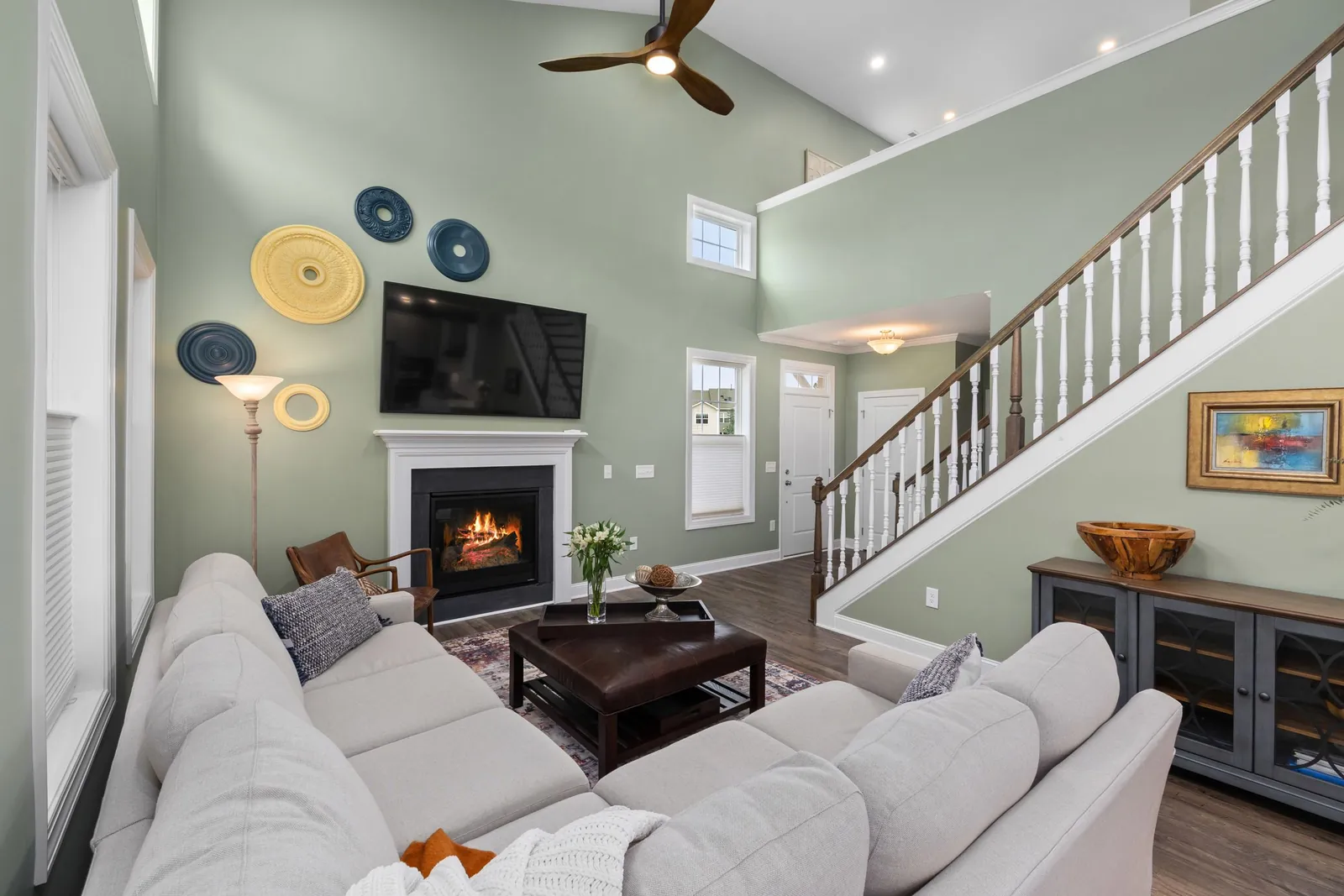
Stairwells are their own job; our post on painting a stairwell covers the ladder setup.
How we paint two tone walls at GK Painting
Two tone walls are part of our interior work: walls, ceilings, trim and doors for homes and businesses. We paint the line at an existing rail or as a painted line; we don't install chair rail, wainscoting or picture rail.
Floors and furniture are covered first, small holes are repaired, and walls are sanded and cleaned as needed. George is on every job himself. Most rooms take one to two days, priced by square footage with paint included. The written quote is the price, no extra charge if the job takes longer than expected.
We use premium paint from Sherwin-Williams and Behr, and Behr is the more economical of the two. If you'd rather use a brand you already like, just tell us and we'll use it. We're based in Waunakee and work across Madison and the surrounding Dane County communities. Read about our interior painting service, or ask for a free estimate.
Common questions
How high should you paint a two tone wall?
About a third of the way up is the classic split. Benjamin Moore says wainscoting is traditionally sized using the rule of thirds, which works out to 32 inches on an 8 foot wall and 36 inches on a 9 foot wall. Higher splits, up to about two thirds, are common too.
Which color goes on the bottom of a two tone wall?
Usually the darker color. A darker lower section grounds the room and hides scuffs near the floor, while a lighter upper wall keeps it open. That's common practice, not a rule; colour capping deliberately puts the deeper shade up high, above a picture rail or on the ceiling.
Are two tone walls outdated?
No. Benjamin Moore's UK arm introduced colour capping in 2025, a tonal take on two tone that deepens toward the ceiling, and Benjamin Moore also promotes painted feign-scoting to add contrast without millwork. A split that follows the room's proportions reads as planned rather than dated.
Do two tone walls make a room look bigger?
They can, though we found no direct test. Benjamin Moore says horizontal stripes can make a space seem larger, and a split wall is one wide horizontal band. Keeping the upper wall and ceiling light helps a small room stay bright, while a deep color up high can feel enclosed.
Do I need a chair rail for a two tone wall?
No. A painted line works on its own, and Benjamin Moore calls that approach feign-scoting, using paint to mimic wainscoting's contrast without the millwork. Mark the line with a level, tape it, and seal the tape edge with a very thin bead of clear caulk so the line stays crisp.
Should both colors on a two tone wall be the same sheen?
They don't have to be. A common choice is a more washable sheen, like satin or eggshell, on the lower section where scuffs happen, and a flatter sheen above. Matching the sheens keeps the line about color alone. Either works if the line itself is level and sealed.
Sources
- 23 Wainscoting Ideas That Add Character to Every Room, Benjamin Moore
- How to Paint Stripes on Wall, Benjamin Moore
- Reflection 850 (color page with LRV definition), Benjamin Moore
- 2026's hottest trend: Colour Capping, Benjamin Moore UK
- Reduce the Risk of Lead Exposure at Home, U.S. Environmental Protection Agency
More on interior painting and every interior painting post.