
Painting paneled dens, textured ceilings and flush doors in Monona
The median Monona home was built in 1963, and its rooms often show it in paneled dens, textured ceilings and slab doors. Here's how each takes paint.
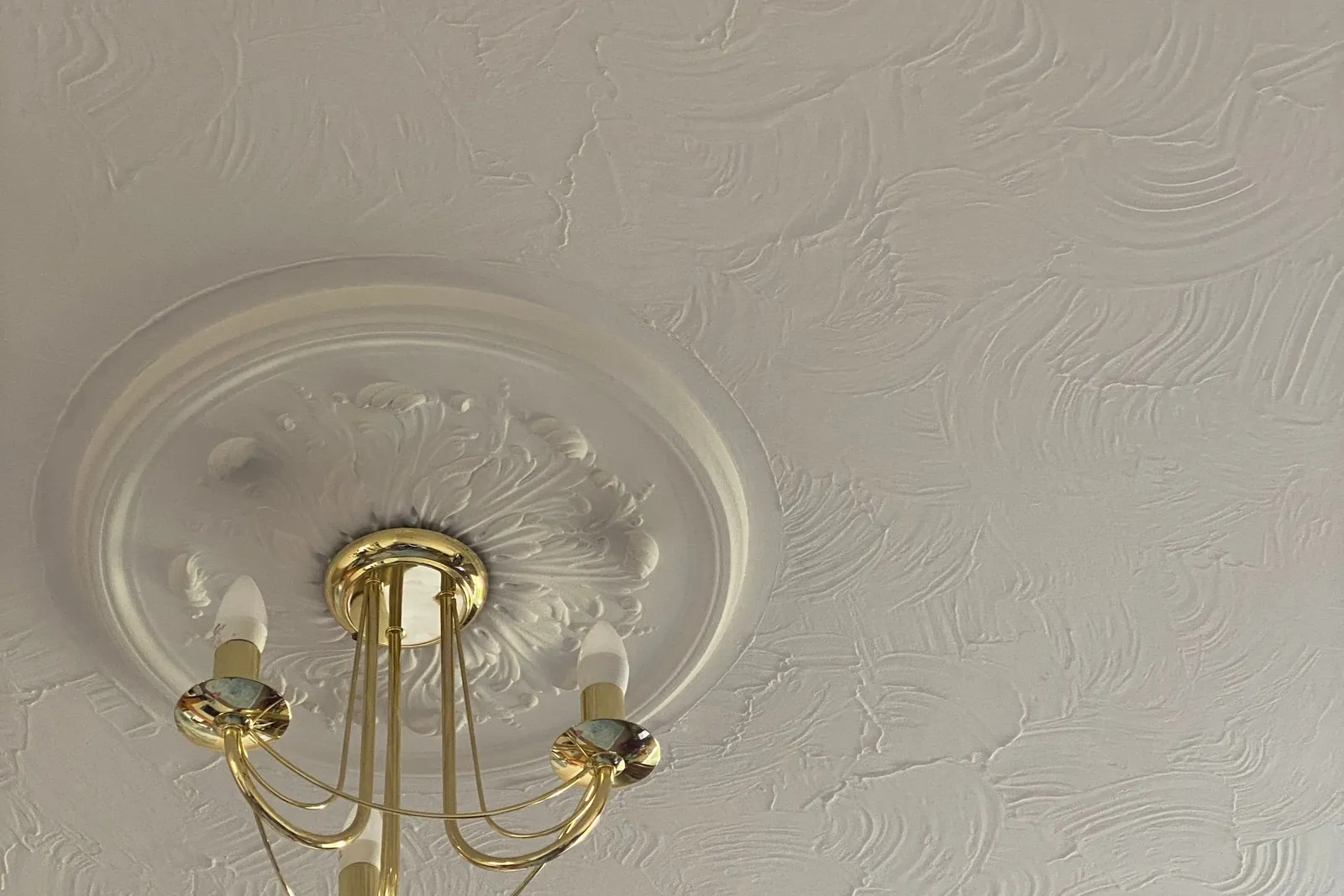
A den or rec room in a Monona house from the early 1960s, the city's median build year, may well have wood paneling on the walls and texture on the ceiling. Both can usually be painted, and each needs one question answered first: what the paneling is made of, and whether the ceiling has been tested for asbestos.
With 68% of the city's homes built before 1980, those mid-century surfaces turn up in plenty of rooms here, along with flush doors and narrow casings. For what's included on every interior job, see interior painting.
Paneled dens: solid boards or sheet paneling
Paneling comes in two kinds, and they paint differently. Solid boards, often tongue and groove, are wood all the way through and can be sanded much like trim. Sheet paneling is a large panel with grooves cut or printed into its face, and some of it carries only a thin veneer or a printed wood grain over a backing.
To tell them apart, take off an outlet cover and look at the cut edge. Solid boards show wood through their full thickness; sheet paneling shows thin layers or a pressed backing. The difference matters because a veneer can be sanded through in seconds, so sheet paneling gets a light scuff and a primer made to grip rather than heavy sanding.
Our post on painting wood paneling covers damp basements, previously painted panels and other special cases in more depth.
Grooves, gloss and primer
Most paneling has a glossy clear coat with decades of dust, smoke film and furniture polish on top of it. Paint won't hold on any of that, so the walls are washed with a degreaser and left to dry, then dulled with a light sanding so the primer has something to bite.
Primer does the heavy lifting. Purdue Extension notes that the knots in many softwoods, pine in particular, hold resin that can make paint peel or turn brown, and dark-stained paneling can bleed old finish into a light color. A stain-blocking primer goes on before the color for that reason.
The grooves stay. Primer and paint are brushed into them first, in thin coats so nothing pools, and the flat faces are rolled afterward, which leaves a lined wall a bit like board and batten. Filling every groove for a flat wall is closer to drywall finishing than painting, so it isn't part of a paint quote.
Textured ceilings and the EPA's asbestos caution
The EPA lists textured paint and patching compounds used on walls and ceilings among the places asbestos may be found in a home. Its homeowner guidance says you generally can't tell whether a material contains asbestos by looking at it, unless it's labeled.
The agency's advice is to leave material in good condition alone and not to saw, sand, scrape or drill it. Painting sits close to that line, because a roller drags across the surface and wet texture can soften. EPA's bans on spray-applied surfacing materials came in 1973 and 1978, a decade or more after the median Monona house was built, but no build year settles the question either way. A lab test does.
If your ceiling hasn't been tested, have that done before anyone paints, scrapes or drills it, and mention the result when you call. Our post on painting popcorn ceilings explains Wisconsin's rule for untested texture and where samples can be analyzed.
Flush doors and narrow casings
Mid-century houses traded the paneled doors of earlier decades for flush doors: one flat face, often a wood veneer over a hollow or solid core. Casings slimmed down too, with simple profiles in place of the wide, molded trim of a prewar house.
Flush doors paint well, but like any flat surface they show the tool. Every face and edge gets paint, and the faces are finished in long, even strokes running one direction so the door reads smooth from across the room. Veneer is thin, so the sanding before primer stays light.
Narrow casings go faster than wide ones, so in a mid-century room the trim usually takes a smaller share of the day than it would in an older house. A satin or semi-gloss on doors and casings wipes clean where hands land.
Warm neutrals and mid-century accents
Mid-century rooms suit warm neutrals: soft whites, sand, oatmeal and warm grays that don't drift blue. Against those, one saturated color in a den or on a single wall nods to the period without turning the house into a time capsule.

Teal, olive, mustard and deep orange-red all have roots in the era. A den is a good place to try one, because paneling takes a deep color well and the room is mostly used in the evening under lamps, when dark walls feel cozy rather than closed in.
Test any color on the actual wall. A sample on paneling looks different from the same color on a smooth chip, since the grooves add their own shadow.
Ceiling color, and how a room is priced
Whether the ceiling matches the walls is a choice. Carrying the wall color overhead can make a small den feel enclosed in a deliberate way, and on a textured ceiling a flat finish keeps the bumps from catching light. A white ceiling keeps the room brighter. Our post on painting the ceiling the same color as the walls walks through when each works.
Interior painting is priced by the square footage of the space, with paint included, and most rooms take one to two days. A paneled room can run longer because of the washing, the stain-blocking primer and the brushwork in the grooves. The written quote is the price, no extra charge if the job takes longer than expected.
Have the rooms, the surfaces and any ceiling test results ready when you ask for a free estimate. Kitchens and decks are covered on our Monona page.
Common questions
Can old wood paneling be painted?
Yes, as long as it's solid, dry and firmly attached. It's washed, scuff sanded, primed with a stain-blocking primer and painted, with the grooves brushed first. Sheet paneling with a thin veneer gets only a light scuff so the surface isn't sanded through.
Is it safe to paint a popcorn ceiling?
It is once a lab test shows the texture is free of asbestos and it's firmly attached. The EPA says you can't tell by looking and advises against sanding, scraping or drilling suspect material, so test first and share the result when you call.
Should the ceiling be the same color as the walls?
It can be, especially in a small den where one color feels intentional. A white or lighter ceiling keeps a room brighter, so the choice comes down to how much daylight the room gets and the mood you're after.
Can flush doors be painted?
Yes. Flush doors are cleaned, lightly sanded, primed where needed and painted on every face and edge, using long, even strokes so the flat surface looks smooth. The sanding stays gentle because the face veneer is thin.
Does wood paneling need primer before it's painted?
Yes. A stain-blocking primer keeps resin and old finish from bleeding through the new color, and it gives paint a surface to grip on slick, varnished paneling. Skipping it is the usual reason painted paneling turns blotchy or peels.
More in Monona
Interior painting nearby
Helpful guides
Sources
- American Community Survey 2020-2024 5-year estimates, U.S. Census Bureau, via Census Reporter
- Learn About Asbestos, U.S. Environmental Protection Agency
- Protect Your Family from Exposures to Asbestos, U.S. Environmental Protection Agency
- EPA Actions to Protect the Public from Exposure to Asbestos, U.S. Environmental Protection Agency
- Discoloration of House Paint: Causes and Cures (NCR-134), Purdue University Cooperative Extension Service