Painting a popcorn ceiling: test it first, then paint it gently
· 7 min read · By GK Painting & Remodeling
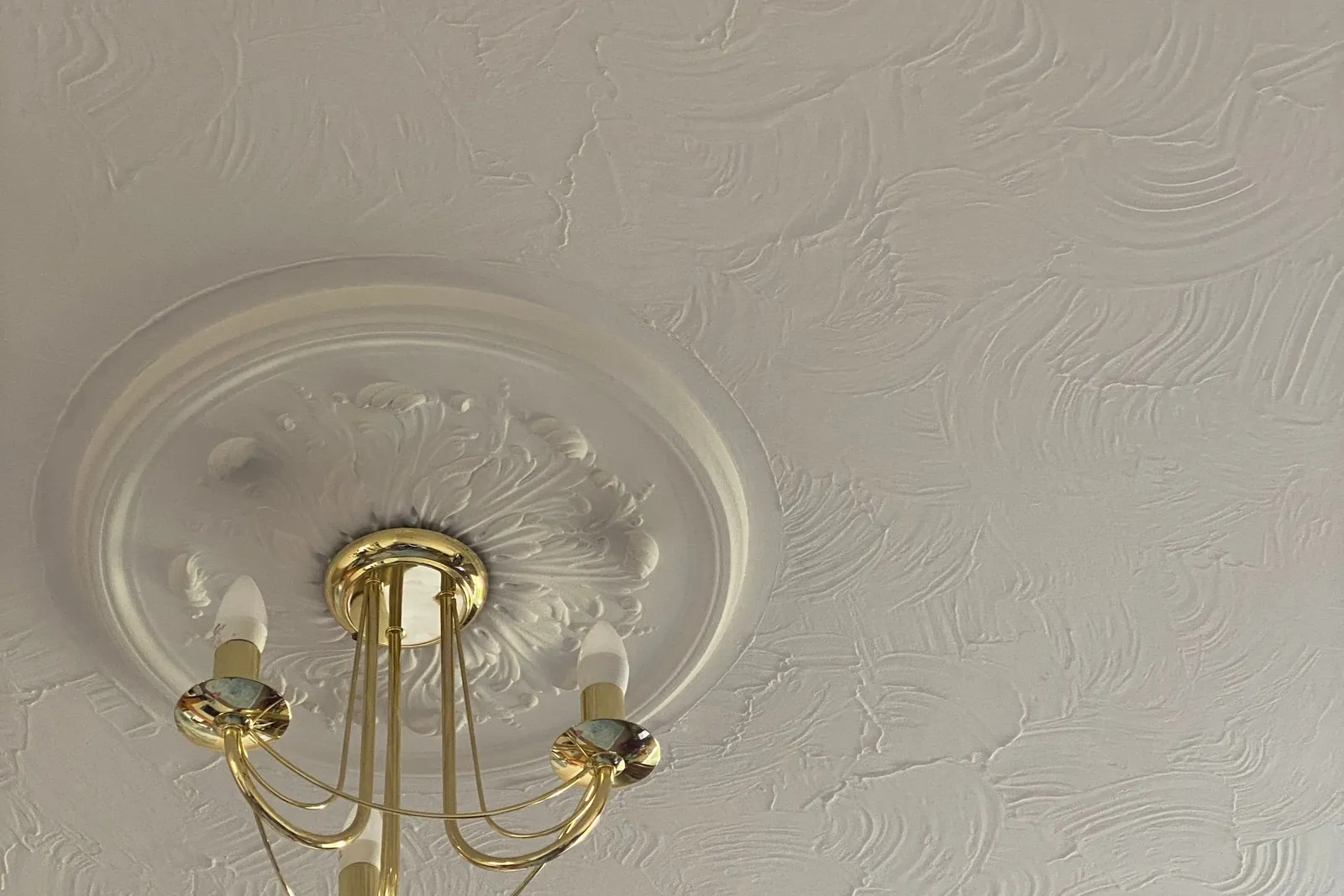
Yes, you can paint a popcorn ceiling, but have it tested for asbestos first and never scrape, sand or drill texture that hasn't been tested. Once it tests negative, painting a popcorn ceiling comes down to primer on any stains, flat paint and a light hand, because wet texture can pull loose.
Below: what EPA advises, why no build year makes a ceiling safe, Wisconsin's rules for untested texture, a state lab that tests samples, and the painting method once you have a clean result. For ceiling paint in general, see our guide to the best ceiling paint.
Why painting a popcorn ceiling starts with a test
EPA's list of places asbestos may be found includes textured paint and patching compounds used on walls and ceilings, which is where popcorn and other sprayed ceiling textures fall. You can't settle it by looking. EPA says you generally can't tell whether a material contains asbestos simply by looking at it, unless it's labeled, and that if you're in doubt you should treat it as if it does and leave it alone.
The risk is in disturbing it. EPA says asbestos material that isn't damaged or disturbed isn't likely to pose a health risk, and that it may release fibers when it's damaged, removed improperly, repaired, cut, sanded, sawed, drilled or scraped. Its do's and don'ts for homeowners are direct:
- Don't saw, sand, scrape or drill holes in asbestos-containing materials.
- Don't dust, sweep or vacuum debris that may contain asbestos.
- Do leave undamaged asbestos-containing material alone.
- Do have removal and major repair done by people trained and qualified in handling asbestos.
Painting sits close to that line. A roller drags across the surface, wet texture can soften and drop pieces, and prep tends to mean scraping loose spots or drilling for a new fixture. That's why the test comes before the paint, not after.
No build year makes a ceiling safe
Online guides give different cutoffs: 1977, 1979, 1980. EPA's own history of asbestos rules shows why a single year can't settle it. The bans arrived in pieces, and each one stopped some new uses rather than removing what was already on ceilings.
| Year | What changed, per EPA |
|---|---|
| 1973 | EPA banned spray-applied asbestos surfacing for fireproofing and insulating |
| 1977 | The Consumer Product Safety Commission banned asbestos in artificial fireplace embers and wall patching compounds |
| 1978 | EPA banned spray-applied surfacing materials for purposes not already banned |
| 1989 | EPA tried to ban most asbestos products; a court overturned most of that ban in 1991 |
| 2024 | EPA banned ongoing uses of chrysotile asbestos, the only form still imported |
That last line gets misread. EPA describes the 2024 rule as prohibiting ongoing uses, such as brake parts, gaskets and the diaphragms some chemical plants use. Asbestos already sitting in a house is what EPA calls a legacy use. Its 2024 evaluation of legacy uses, which names ceiling tiles among its examples, found that disturbing and handling that asbestos poses an unreasonable risk, and EPA says it will now begin the risk management process. A lab test is still the only answer.
Wisconsin's rule: untested texture counts as asbestos
Federal law is light here. EPA says it doesn't require people who inspect, repair or remove asbestos material in detached single-family homes to be trained and accredited, but that some states do. Wisconsin is one of them, through chapter DHS 159 of its administrative code. Four definitions in that rule matter for a textured ceiling:
- Suspect material includes any untested material used in or on a building component, except metal, glass, wood or fiberglass. Untested popcorn qualifies.
- All suspect material is treated as asbestos-containing material.
- An asbestos abatement activity is any activity that disturbs asbestos-containing material, including repair, enclosure, encapsulation or removal.
- An inspection, including collecting a sample, is an asbestos management activity.
Put together, anyone you hire to disturb, seal, cover, remove or sample untested texture is doing work the rule reserves for people who hold the state's asbestos credentials. The main exception is an owner working on their own single-family home that isn't rented and is occupied only by the owner's family. There's also a narrow exception for small maintenance jobs by trained workers.
The owner exception is a legal carve-out, not advice. EPA says removal is complex and must be done only by a trained, accredited asbestos professional, and that improper removal may actually increase your family's exposure.
Getting the ceiling tested
EPA recommends having a trained and accredited asbestos professional take the sample, and says taking samples yourself is not recommended, because sampling done wrong can be more hazardous than leaving the material alone.
For the lab side, the Wisconsin Occupational Health Laboratory, part of the Wisconsin State Laboratory of Hygiene at UW-Madison, tests asbestos samples for homeowners and businesses. As of November 2026 it lists 48 dollars per sample with a normal turnaround of 12 to 14 working days, and faster service for more. You can mail a sample or drop it off with the lab's submission form.
Here the sources pull in different directions. The lab's page gives homeowners sampling steps, starting with moistening the spot before cutting so fibers stay out of the air, and Wisconsin's rule lets owners sample their own home. EPA still advises against doing it yourself. Our view: have a trained professional take the sample, and ask which lab they use.
The Popcorn Ceiling Decision Path
This is our editorial guide, built on EPA's homeowner advice and Wisconsin's rule, not a measurement or legal advice:
| Where you are | What it means | Next step |
|---|---|---|
| Not tested | Treated as asbestos-containing under Wisconsin's rule | Test before anyone scrapes, sands, drills or paints |
| Positive, intact, no work planned | EPA: usually best left alone | Leave it and watch for damage |
| Positive, damaged or a remodel planned | EPA: repair or removal by trained, accredited pros | Hire an asbestos contractor |
| Negative and firmly attached | An ordinary paint job | Paint it, as below |
| Negative but loose, sagging or stained | Paint won't fix it | Fix the cause, then remove or cover |
How to paint a popcorn ceiling that tested negative
Prep without scraping
Move furniture out or to the middle and cover everything, because texture throws more spatter than a smooth ceiling. Dust the ceiling gently with a soft brush attachment on a vacuum, and don't wash it, because water can soften popcorn texture. Then press a damp fingertip against an out-of-the-way spot. If texture comes off on your finger, the ceiling is likely to shed under a wet roller.
Prime the stains, then go flat
Water stains bleed through ordinary paint, so find and fix the leak, let the ceiling dry, and spot-prime the stain with a stain-blocking primer. Then use a flat ceiling paint. Flat doesn't add shine to the hills and hollows of the texture, which is the point. Buy more than you'd need for a smooth ceiling of the same size, because texture has far more surface to cover. Our post on the best ceiling paint covers stain-blocking primer in more detail.
Spray it, or roll with a light hand
Spraying lays paint on without dragging anything across the texture, so it keeps the look intact. The trade is masking: walls, windows, floors and anything left in the room need covering against overspray.
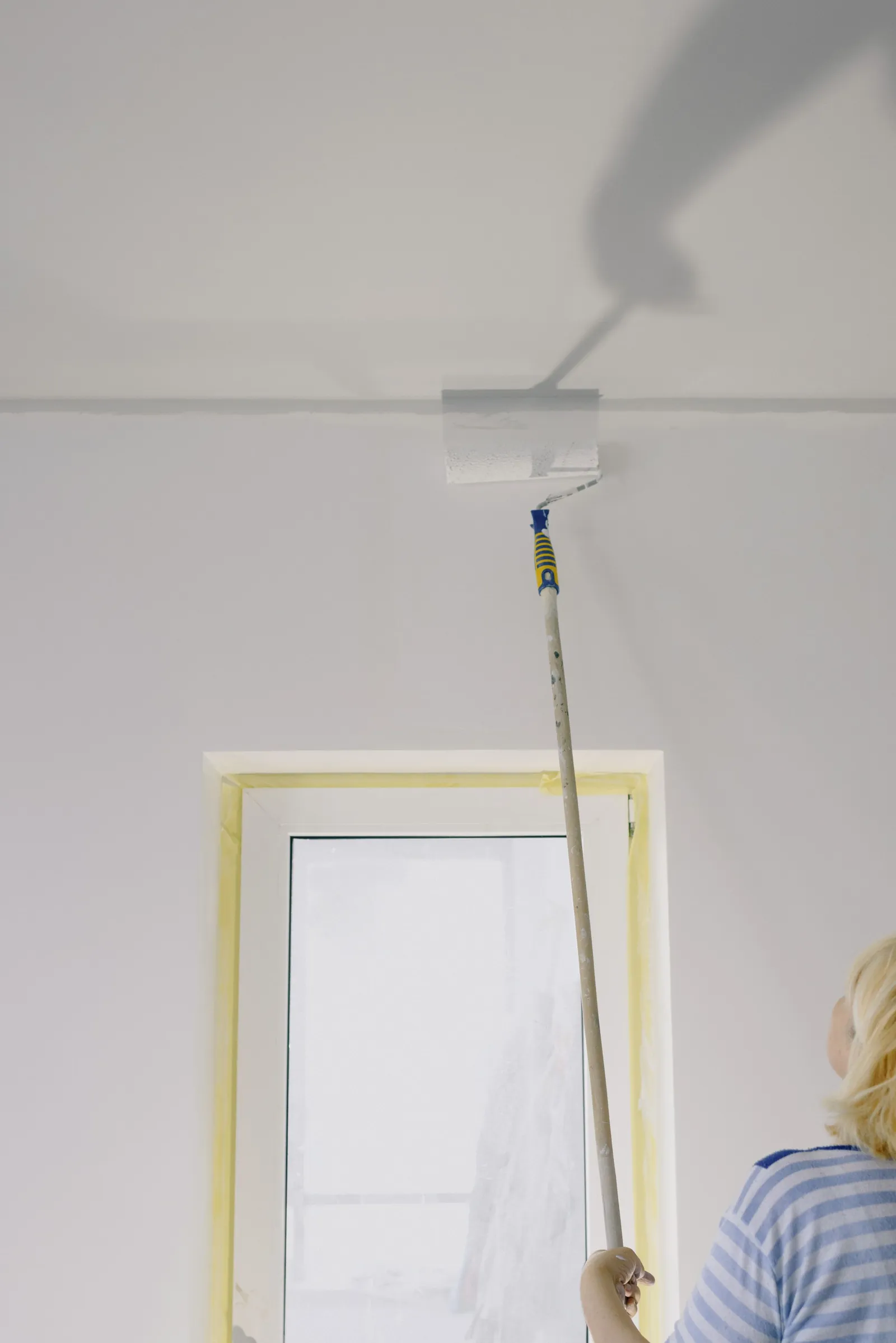
Rolling works if you're gentle. Use a thicker nap than you would on a smooth ceiling, matched to how coarse the texture is; our guide to roller naps explains the sizes. Load the roller fully, roll in one direction with light pressure, and don't go back over a section while it's wet. Let the first coat dry completely, then roll the second at a right angle to the first. For cutting in and keeping a wet edge, see how to paint a ceiling.
Next-step hurdle: when paint isn't the answer
Paint refreshes a sound ceiling. It won't hold up loose texture, hide a sag or stop a stain whose leak hasn't been found. When a negative test comes back on a ceiling like that, there are three usual paths:
- Removal: wet the texture, scrape it off, then repair and smooth the surface underneath. It's messy, and on a tested-negative ceiling it's a drywall job before it's a paint job.
- Covering: new drywall or ceiling panels fastened over the old surface. Over asbestos-containing texture, Wisconsin's rule counts that enclosure as abatement work.
- A new finish: a skim coat or a fresh, lighter texture once the old one is off or sealed behind something new.
Older homes can raise a second question under the texture: lead in the old paint layers if the house was built before 1978. Our post on painting older Madison homes covers the lead basics and plaster ceilings. If the room's walls are getting new color too, our guide to painting the ceiling the same color as the walls helps with that decision.
When to stop and call a professional
- Call 911 if someone falls from a ladder and is hurt, can't get up or hit their head.
- Act today if untested texture falls, breaks open or gets soaked by a leak: keep people and pets out of the room, don't sweep or vacuum the debris, and call an asbestos professional.
- Stop before scraping, sanding, drilling or cutting a sample from texture that hasn't been tested, including drilling for a new light or ceiling fan.
- Call a pro if the test comes back positive, you're planning a remodel that will disturb the ceiling, or the texture sags or keeps flaking.
How we handle a textured ceiling question at GK Painting
Our interior painting covers walls, ceilings, trim and doors for homes and businesses. We're based in Waunakee and work across Madison and the surrounding Dane County communities.
If your ceiling is textured and the house is older, get it tested first. Then mention the texture and your home's age when you ask for a free estimate, and we'll talk through what comes next.
On every room we paint, floors and furniture are covered first and small holes are repaired, and most rooms take one to two days. Interior work is priced by square footage with paint included.
Common questions
Can I just paint over a popcorn ceiling?
Yes, once it has tested negative for asbestos and the texture is firmly attached. Untested texture shouldn't be scraped, sanded or drilled, and Wisconsin's rule treats it as asbestos-containing. On a tested ceiling, use light pressure and don't overwork one spot, because wet texture can soften and fall.
What kind of paint should you use on a popcorn ceiling?
A flat ceiling paint, with a stain-blocking primer on any water stains first. Flat doesn't add shine to the bumps and shadows of the texture. Spraying keeps the texture intact; rolling works with a thicker nap, a fully loaded roller and light, single passes in one direction.
Should you paint popcorn ceilings?
Paint it if it tested negative, it's firmly attached and you can live with the texture. If it tested positive and is intact, EPA says leaving it alone is usually best. If it's loose, sagging or stained by a leak that keeps returning, removal or covering is the better path.
How do I know if my popcorn ceiling has asbestos?
Only a lab test tells you. EPA says you generally can't tell by looking and recommends that a trained, accredited professional take the sample. The Wisconsin Occupational Health Laboratory at UW-Madison tests asbestos samples; as of November 2026 it lists 48 dollars per sample with a 12 to 14 working day turnaround.
Is a popcorn ceiling safe if the house is newer?
Not automatically. EPA's asbestos bans came in pieces, with spray-applied materials in 1973 and 1978, wall patching compounds in 1977, and a 1989 ban that a court mostly overturned in 1991. Wisconsin treats any untested texture as suspect, so test before disturbing it, whatever the build year.
Can I remove a popcorn ceiling myself in Wisconsin?
The state's asbestos rule exempts owners working on their own single-family, non-rental home that only their family occupies. That's an exemption, not a recommendation. EPA says removing asbestos material is complex and must be done only by a trained, accredited professional, because improper removal can increase exposure. Test first either way.
Sources
- Learn About Asbestos, U.S. Environmental Protection Agency
- Protect Your Family from Exposures to Asbestos, U.S. Environmental Protection Agency
- EPA Actions to Protect the Public from Exposure to Asbestos, U.S. Environmental Protection Agency
- Chapter DHS 159, Asbestos (Wisconsin Administrative Code), Wisconsin State Legislature
- Asbestos for Homeowners, Wisconsin State Laboratory of Hygiene
More on interior painting and every interior painting post.