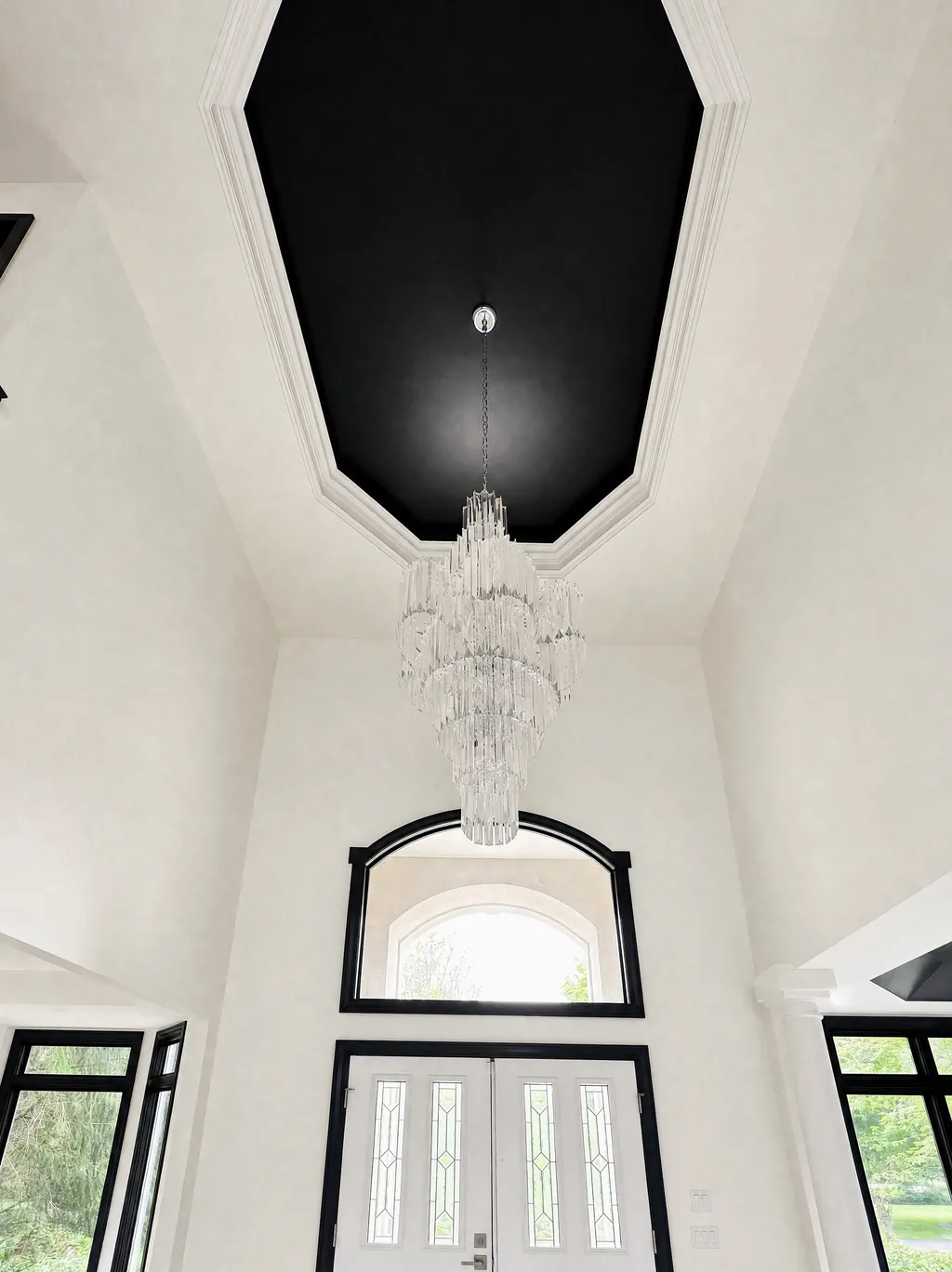
Painting the ceiling the same color as the walls: when it works, when it doesn't
· 7 min read · By GK Painting & Remodeling
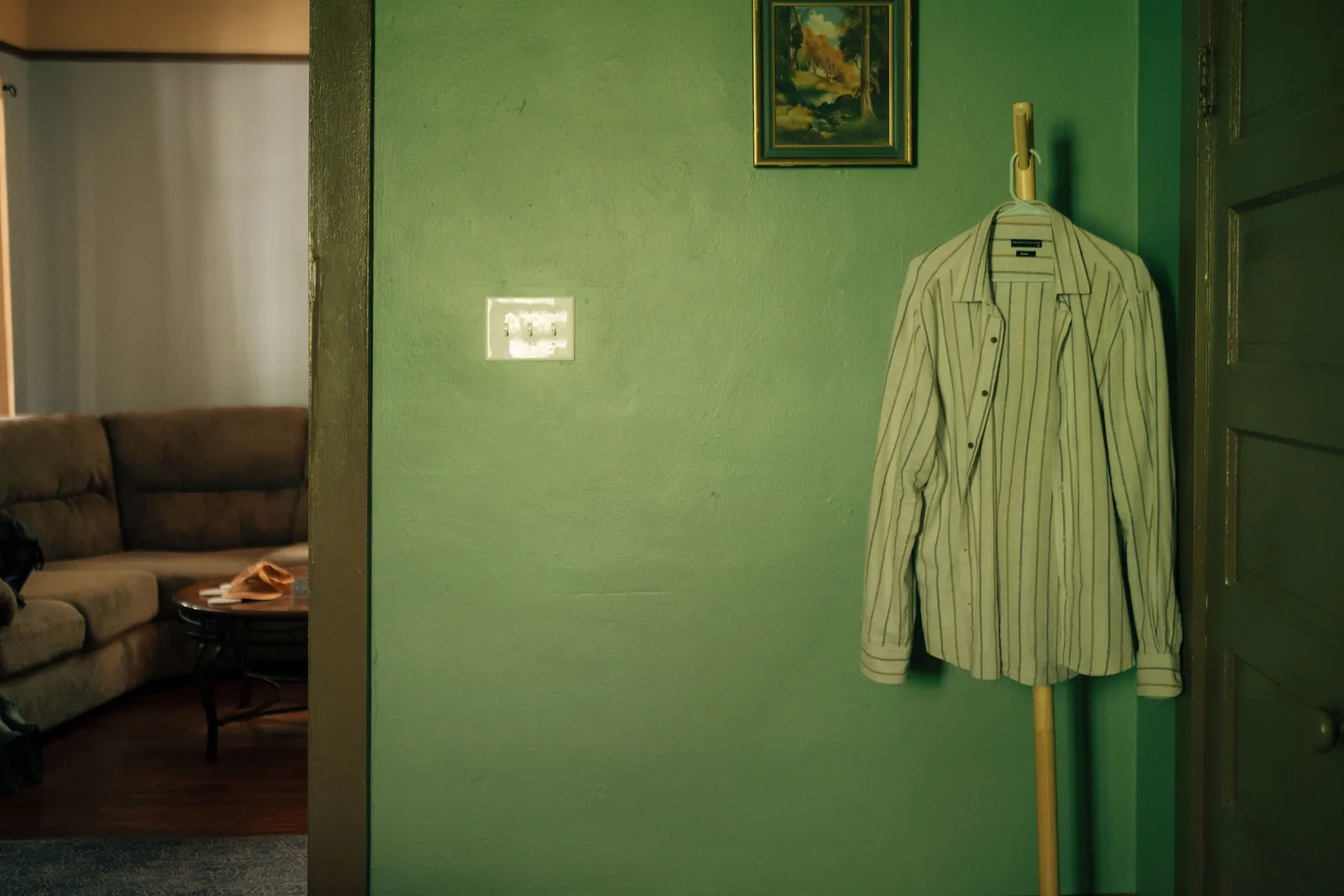
Painting the ceiling the same color as the walls works best with light colors, sloped or busy ceilings and rooms with decent light. Research on how tall rooms look found that lightness matters, not contrast: a light color on both surfaces holds up well, while a dark one brings the ceiling down.
Below: what the look is called, what the studies found, a checklist built around a color's LRV, the sheen question, and what older Madison homes add. For choosing the ceiling paint itself, see our guide to the best ceiling paint.
What painting the ceiling the same color as the walls is called
Most people call it color drenching. The paint maker Dunn-Edwards describes it as painting all of the walls, ceiling and trim in a room the same color, and says it reduces visual noise and creates a backdrop for light, shadow and decor. You'll also hear it called a monochromatic room.
There are three common versions:
- Full drench: walls, ceiling, trim and doors in one color, often with the trim in a higher sheen.
- Walls and ceiling matched, trim in a contrasting white or a second color.
- Tonal: the ceiling in a lighter or darker step of the wall color from the same color card.
The practical upside is the corner. When the wall and ceiling share a color, there's no crisp line to cut where they meet, so a wavy ceiling line or an uneven corner stops drawing the eye. On a sloped ceiling, the angles stop reading as a patchwork of planes and start reading as one room.
Does it make a room look bigger, or smaller?
It depends on how light the color is. The best evidence comes from psychologists at Johannes Gutenberg University Mainz in Germany, who have tested how surface color changes the way people judge room height.
In their 2010 study, volunteers estimated the height of virtual rooms shown in 3D. The researchers confirmed that a pale ceiling makes a room look higher, but found the effect has nothing to do with the contrast between walls and ceiling. As the lead researcher put it, the ceiling does not have to be lighter in color than the walls to make a room seem to be higher. Their suggested rule: use light color tones on walls as well as the ceiling.
A 2018 follow-up in the journal Human Factors tested colored ceilings, not just grays. Volunteers judged brighter ceilings to be higher than darker ones, while hue had a very small effect and saturation virtually none. The authors' advice for maximum height was to paint the ceiling in the brightest possible color.
Put together: matching a light color doesn't cost you height because the contrast is gone. It costs a little only because a light color is still darker than white. Matching a deep color lowers the ceiling visually, which can be exactly what you want in a cozy den or a bedroom. These were lab studies in simulated rooms, so treat them as a strong guide, not a promise for your room.
Should the ceiling be lighter or darker than the walls?
Neither is required. The old advice to make the ceiling a shade paler than the walls isn't what the studies support; lightness is. If height is the goal, keep the ceiling light, matched or not. If you want the room to feel enclosed and warm, a ceiling darker than the walls does that on purpose.
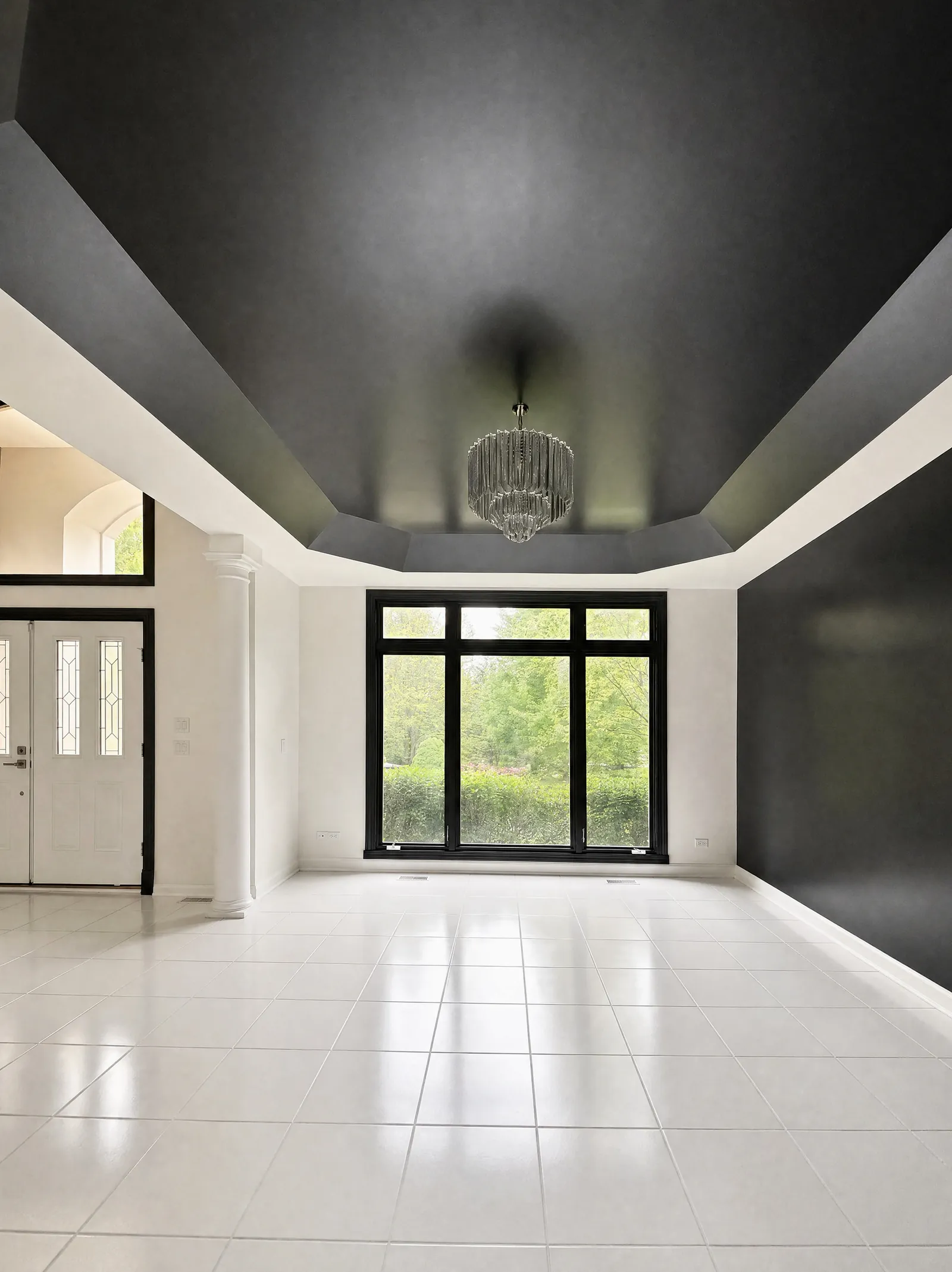
The Ceiling Match Check: LRV, light and shape
Start with the color's LRV
Benjamin Moore defines LRV, or light reflectance value, as a measure of the percentage of light reflected from a surface, on a scale from 0 to 100, with 100 pure white and 0 absolute black. Benjamin Moore shows it on its color pages, so look it up before you buy.
By that definition, a color listed at an LRV of 70 sends back roughly 70 percent of the light that hits it, and one at 20 sends back roughly a fifth. On a ceiling, that's the light that would otherwise bounce back down into the room. The higher the number, the closer a matched ceiling behaves to a white one.
Then run the rest of the check. This is our editorial guide, not a measurement:
| Question | Leans toward matching | Leans toward a white ceiling |
|---|---|---|
| How light is the color? | High LRV, a light or pale color | Mid or deep tone in a low room |
| How much light does the room get? | Good daylight or plenty of lamps | One small window, few lamps |
| What shape is the ceiling? | Sloped, angled, dormers, no crown | Flat, with crown molding you love |
| What should be the star? | The whole room, calm and wrapped | A bold wall, cabinets or art |
| What's the ceiling surface like? | Smooth and sound | Cracked, stained or textured: fix or test first |
| What's your goal? | Cozy, quiet, enveloping | As tall and bright as possible |
Mostly left column: match it. Mostly right: keep the ceiling white or choose a much lighter step of the wall color. A split usually means a light color can go up, and a deep one should stay on the walls.
Sheen: one finish everywhere, or flat overhead?
Here the advice you'll find online splits. Some guides say to use the same sheen on walls and ceiling so the room reads as one surface. Others say the ceiling should always be flat, with eggshell or satin on the walls. Both have a point, and the deciding factor is your ceiling, not a rule.
Flat paint hides the most. Light crosses a ceiling at a low angle, and any shine picks out roller laps, patches and dips. Our post on the best ceiling paint explains why flat is the usual answer overhead. The catch with mixed sheens is that the same color in two finishes can look slightly different where they meet, because one reflects more light than the other.
- Smooth, sound ceiling and you want full immersion: use the same low sheen on walls and ceiling, flat or matte on both, and put the shine on the trim.
- Ceiling with patches, waves or old plaster: keep it flat no matter what the walls get, and accept a slight difference at the corner.
- Kitchen or bathroom: washability comes first, so read the room-by-room advice in our paint sheens guide before you match anything.
Next-step hurdle: where the color stops
Once the ceiling decision is made, the next question arrives fast: what happens at the trim, the crown and the doors? Matching the crown molding to the walls makes it blend in, which is the point in a drenched room and a loss if the molding is the best feature in the room. Our post on painting crown molding covers both directions.
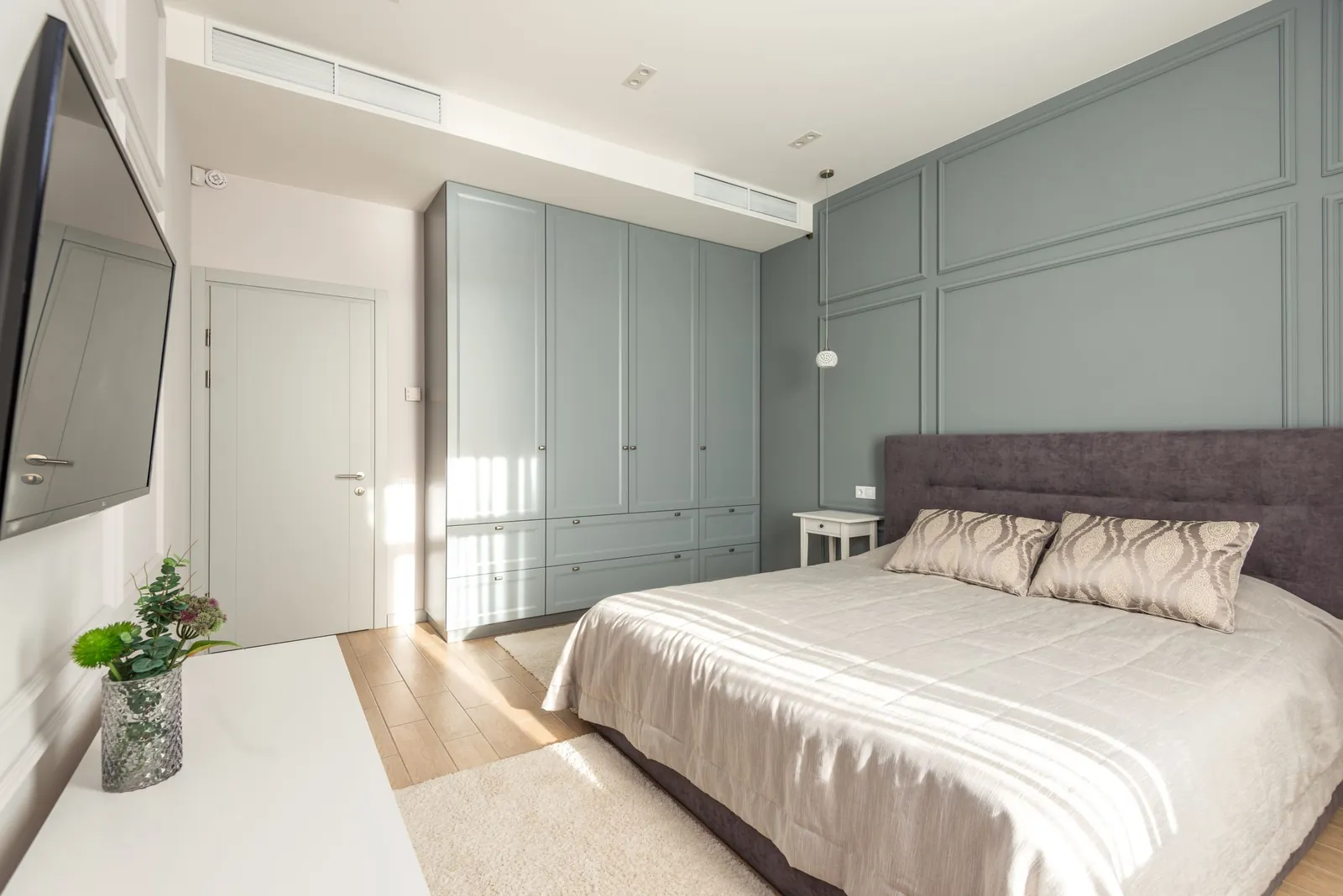
If the room has a chair rail or a natural break, two-tone walls are another way to carry color higher without committing the ceiling. And if a single deep wall is all you really wanted, see our accent wall ideas first.
Test the color overhead, not just on the wall
A color on a ceiling gets less direct light than the same color on a wall, so it can read darker or shift in tone. Paint a large sample board, hold it flat against the ceiling, and look at it in the morning, at midday and with the lamps on at night. Our guide to testing paint colors walks through the method.
Older Madison homes: plaster, lead and texture
Older houses add three questions. The first is plaster. Hairline cracks get filled and sanded before any color goes on, and a deep color shows uneven patching and lap marks more than white does. Our post on painting older Madison homes covers plaster repair in detail.
The second is lead. EPA says approximately three quarters of U.S. homes built before 1978 still contain some lead-based paint, and its renovation rule covers anyone paid to disturb painted surfaces in those homes. If you're sanding an old ceiling yourself, EPA says the rule generally doesn't apply to homeowners in their own home, rentals aside, but it urges lead-safe work practices.
The third is texture. If the ceiling has a sprayed popcorn or other textured finish, don't sand, scrape or drill it until it's been tested for asbestos. Our guide to painting popcorn ceilings explains the test and what comes after it.
When to stop and call a professional
- Call 911 if someone falls from a ladder and is hurt, can't get up or hit their head.
- Stop today if a textured ceiling crumbles, gets damaged or falls in an older home. Keep people out of the room and don't sweep up the debris until you know what it is.
- Stop before sanding or scraping a ceiling in a pre-1978 home until you know what's in the old paint.
- Call a pro for ceilings you can't reach safely from a stepladder, sagging or crumbling plaster, or a deep color you need perfectly even across a big ceiling.
Deep colors are less forgiving overhead. Lap marks and thin spots that vanish in white show up in a saturated color, so a matched dark ceiling usually needs more care with coverage than a white one.
How we handle a matched ceiling at GK Painting
Our interior painting covers walls, ceilings, trim and doors, so a drenched room or a matched ceiling is one job, not three. Floors and furniture are covered first, small holes are repaired, and walls are sanded and cleaned as needed. Most rooms take one to two days.
Interior work is priced by square footage with paint included. We use premium paint from Sherwin-Williams and Behr, and Behr is the more economical of the two. If you'd rather use a brand you already like, just tell us and we'll use it. Your written quote is built around the paint you pick.
We're based in Waunakee and work across Madison and the surrounding Dane County communities. Tell us the color you're leaning toward and whether the ceiling is flat or sloped, and ask for a free estimate.
Common questions
Should I paint my ceiling the same color as my walls?
Match it when the color is light, the ceiling is sloped or has no crown, and the room gets decent light. Keep the ceiling white when the wall color is deep, the room is dim, or you want a bold wall or crown molding to stand out against a clean ceiling.
Does painting the ceiling the same color as the walls make a room look bigger?
With a light color, it holds up well. Studies at Johannes Gutenberg University Mainz found rooms look taller when the ceiling and walls are light, and that contrast between them doesn't matter. A deep color on both surfaces brings the ceiling down visually instead, which suits a cozy room.
What is it called when you paint the walls and ceiling the same color?
It's usually called color drenching, or a monochromatic room. A full drench carries one color across walls, ceiling and trim, often with a higher sheen on the trim. A softer version matches only the walls and ceiling and leaves the trim in white or a second color.
Should my ceiling be lighter or darker than my walls?
Neither is required. Research on perceived room height found lightness matters, not contrast, so a light ceiling looks high whether or not it's paler than the walls. Choose darker than the walls only when you want the room to feel lower and more enclosed on purpose.
What sheen should a ceiling be if it matches the walls?
Usually flat or matte. If the ceiling is smooth and you want one continuous look, use the same low sheen on walls and ceiling. If the ceiling has patches or old plaster, keep it flat regardless and accept that the corner may look slightly different from the walls.
Do I paint the trim the same color as the walls and ceiling?
Only if you want a full drench. Matching the trim makes the room calm and continuous but hides crown molding and door casings. Painting the trim white or a second color keeps those details visible. A higher sheen on matched trim is a common middle ground that adds definition without contrast.
Sources
- On the effects of lightness of different room surfaces on the perceived height of the room, Johannes Gutenberg University Mainz
- Ceiling Color and Perceived Room Height (Human Factors, 2018), Johannes Gutenberg University Mainz
- Shaker Beige HC-45 (color page with LRV definition), Benjamin Moore
- Announcing the Color of the Century: Viridian Odyssey, Dunn-Edwards
- Lead Renovation, Repair and Painting Program, U.S. Environmental Protection Agency
More on interior painting and every interior painting post.