
The first real repaint after builder paint in a Verona home
Many Verona houses still wear the flat, one-color paint a builder rolled on around 2002. What changes when you finally repaint the whole place.
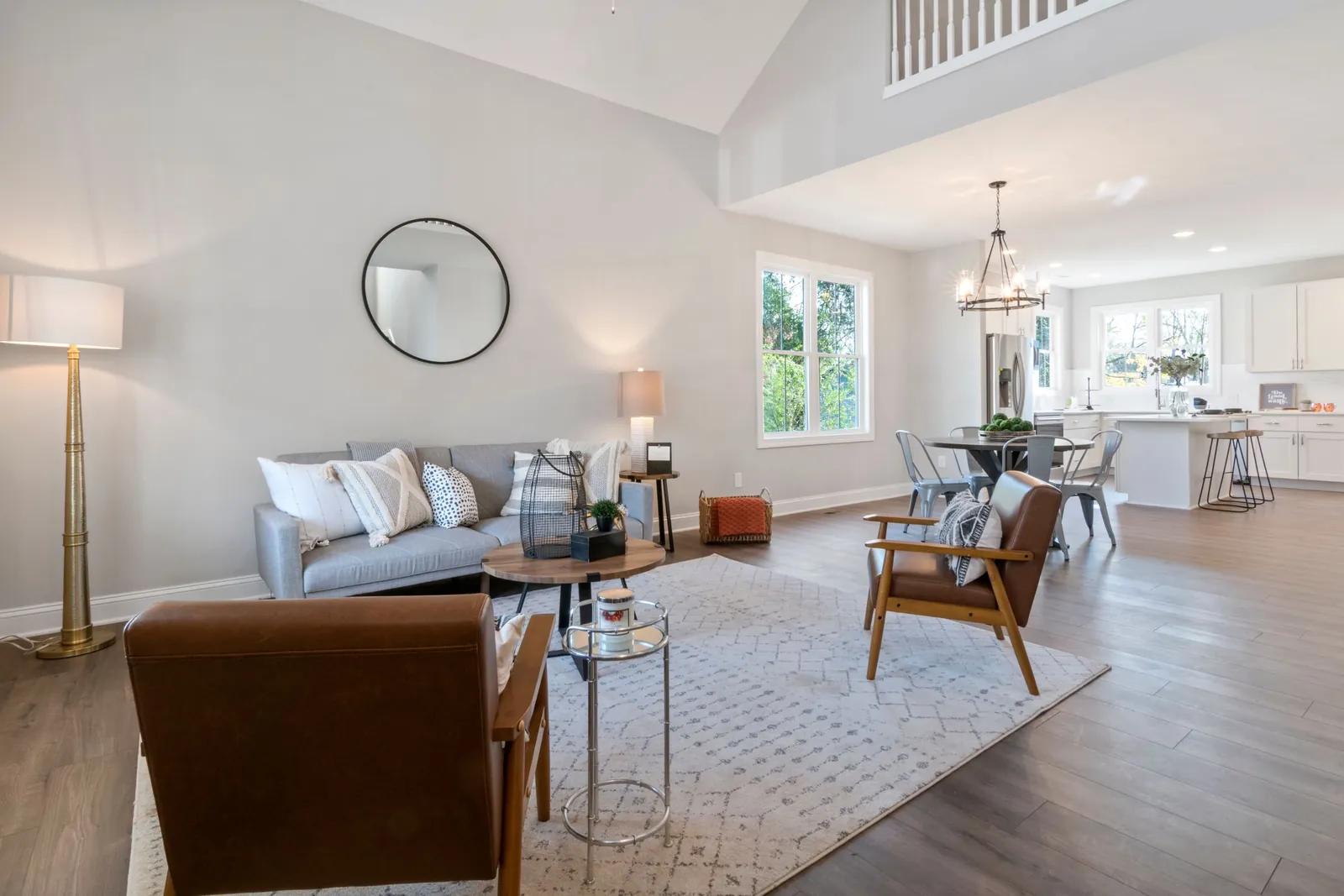
A lot of Verona living rooms are still in their builder paint: one flat neutral on every wall, rolled on around the time the house was finished. With the city's median home built in 2002 and about 57% of homes dating from 2000 or later, that first full repaint is the job many owners here are now weighing.
Flat builder paint does fine until someone tries to wash it or patch it. This page is about what to choose when you replace it: a sheen that cleans, a plan for where colors change, and the small repairs a twenty-year-old wall needs first. For the service as a whole, see our interior painting page.
What builder paint is, and why it scuffs so easily
Builder paint is chosen to cover fresh drywall quickly and cheaply, and in many new houses that means a flat or matte finish in a single color. Flat paint is good at hiding seams and small dents, which is exactly why builders like it. Being cleaned is another matter. Twenty years in, the signs are gray smudges at shoulder height in the halls, rub marks behind dining chairs and a dull track up the stairs.
Dunn-Edwards, a paint maker, explains why in its bulletin on burnishing: rubbing a flat or low-sheen finish knocks off the tiny pigment particles that keep it dull, and a shiny patch is left behind. That's the smooth, glossy spot you find in a hallway after someone scrubbed a scuff, and darker colors show it most. Our post on repainting a new build covers the other builder finishes.
Touch-ups that flash, and why whole walls get repainted
A dab of paint on an old flat wall rarely disappears. Diamond Vogel's bulletin on touch-ups lists three ways a patch can stand out, in color, sheen and profile, and the sheen difference, called flashing, is the one people notice. Low light raking across the wall from a window makes it obvious.
Age makes it harder. Dunn-Edwards defines a touch-up as paint applied to a surface painted less than about a year earlier, and twenty-year-old builder paint has long since faded and picked up grime. Its advice for a wall that needs too many patches is to repaint it corner to corner, and that's how we treat a wall like this: the whole wall, not the spot. See how to touch up paint for the cases where a patch can work.
Washable sheens for halls and family rooms
Sheen is the central trade-off in a repaint. Dunn-Edwards puts it plainly: more gloss makes a coating tougher and easier to scrub, and also makes dents and patches easier to see. For the walls of a busy house, that usually lands on eggshell or satin.
Hallways, stairwells, the family room and the wall by the garage door take hands, bags and pets, so they get the most wipeable sheen the wall's condition allows. Bedrooms and a formal living room can stay lower. Ceilings normally stay flat, and trim and doors go glossier than the walls so they stand up to handling.
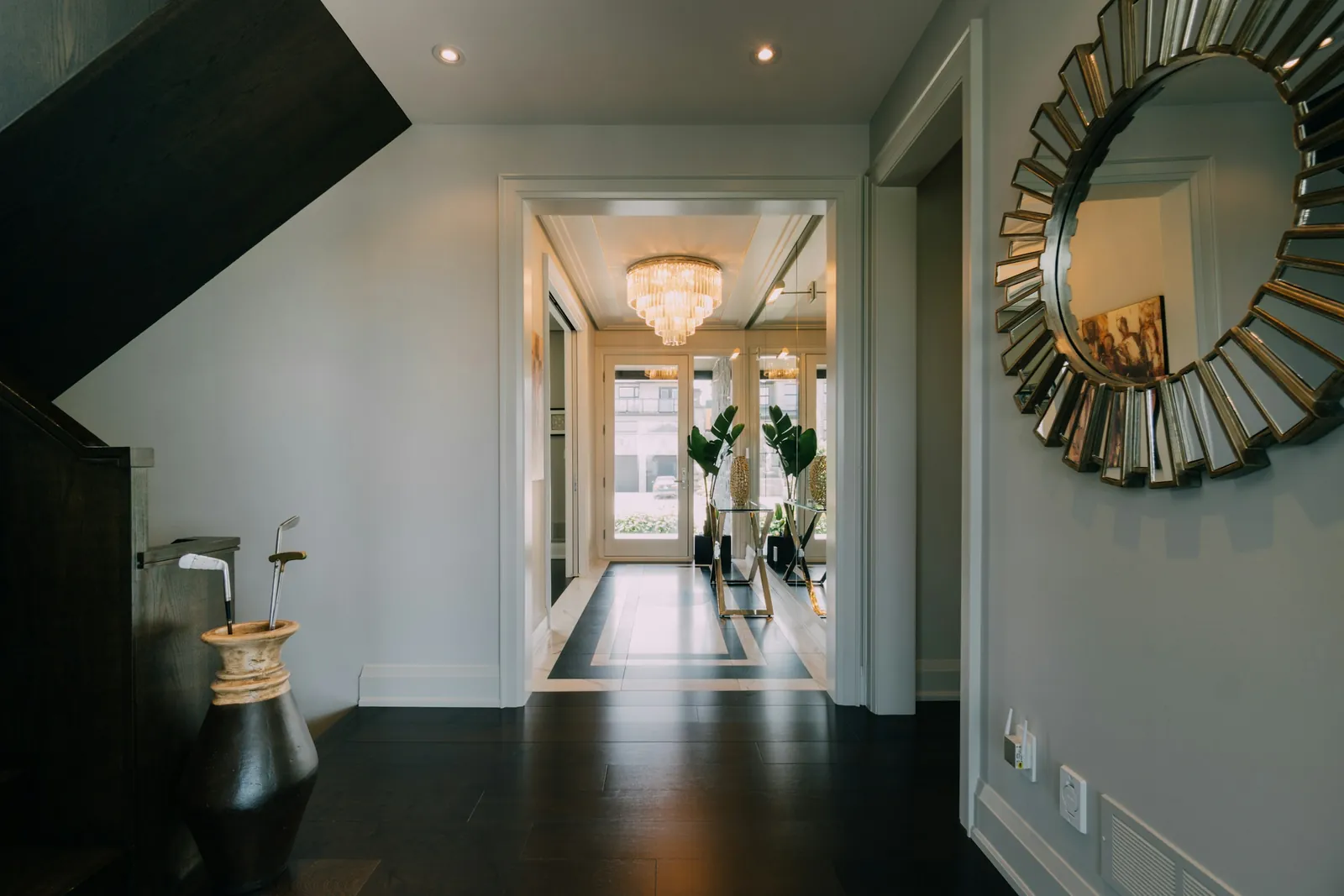
Give the new finish time before you scrub it. Dunn-Edwards' burnishing bulletin suggests waiting at least two weeks before washing fresh paint, and then sticking to a mild detergent and water.
Breaking up a one-color house: where a color stops
Builders used one color everywhere because it was simple, and in an open plan it also dodged a hard question: where does a new color stop? The answer is at an edge the house already has. An inside corner, a cased opening, the end of a soffit or the line where a stairwell begins all make clean stopping points.
The middle of a flat wall almost never works, and neither does an outside corner where you see both faces at once. A practical plan is one main color through the connected kitchen, dining and family space, with changes saved for rooms behind doors and for a hall or stair that already reads as its own space. Taking a hallway or stair a shade deeper than the rooms it joins is a simple way to break up the single color without fighting the open plan.
How many coats when the color changes
Two coats is the normal plan for a repaint. Benjamin Moore recommends at least two topcoats for full hide and color development, and the second coat is what evens out lap marks and thin spots left by the first.
Going from a builder beige to a similar light neutral usually stays at two. A big jump in depth, beige to navy or a dark accent wall back to white, can mean primer and then two coats, and Dunn-Edwards notes that primer is often a less expensive route from dark to light than extra finish coats. Patched spots get primed first as well, because filler soaks up paint differently and can show as dull blotches. Our post on how many coats of paint goes further.
Nail pops and dried caulk in 20-year-old walls
A house from the early 2000s has been through about twenty heating seasons, and its framing has moved a little in each one. The National Research Council of Canada explains that lumber shrinks as it dries in a heated house, and that as wood shrinks around a fastener the head can rise and push through the joint compound. That's the small round bump or crack you see on a wall or along the ceiling.
Caulk ages too. The beads where baseboards and casings meet the wall dry out and split into thin dark lines. Both are small repairs, handled in prep along with the holes from pictures and anchors, before any color goes on. Water stains, wide cracks or damaged drywall belong to a different trade, and George will point those out on his visit.
Most rooms take one to two days, and floors and furniture are covered before a can is opened. Interior painting is priced by the square foot with paint included. When you're ready, ask for a free estimate or read about painting and refinishing in Verona.
Common questions
Can new paint go straight over flat builder paint?
Yes, once the walls are cleaned and the small holes and nail pops are repaired. The flat finish underneath doesn't show through, so you can move up to eggshell or satin in the same repaint.
Why do my touch-ups look shinier than the wall?
That's flashing, a sheen difference between the patch and the older paint around it. It's at its worst on flat builder paint that has aged for years, which is why a wall with several patches is usually repainted from corner to corner.
What sheen works best in a hallway?
Eggshell or satin. Both wipe clean far better than flat, and they show fewer flaws than semi-gloss, which is better kept for trim and doors.
Where should a wall color stop in an open floor plan?
At an edge the house already has: an inside corner, a cased opening, a soffit or the start of a stairwell. A color change partway along a flat wall tends to look like a mistake.
How many coats will the walls need?
Two coats for most repaints. A big change in depth, or a wall with patches, adds primer first, and George tells you which rooms need it when he writes the quote.
More in Verona
Interior painting nearby
Helpful guides
Sources
- American Community Survey 2020-2024 5-year estimates, U.S. Census Bureau, via Census Reporter
- Burnishing (technical bulletin), Dunn-Edwards
- Touch-up Factors (technical bulletin), Diamond Vogel
- Touch-up (technical bulletin), Dunn-Edwards
- Selecting Paint Gloss, Dunn-Edwards
- How to Paint a Room in 7 Steps, Benjamin Moore
- The Ultimate Drywall Primer Guide for Perfect Results, Dunn-Edwards
- CBD-244. Effects of Wood Shrinkage in Buildings, National Research Council of Canada