
Painting a Middleton condo or townhome while you live there
Association rules, neighbors, closed winter windows and a compact floor plan: how interior painting goes when you're staying in your Middleton unit.
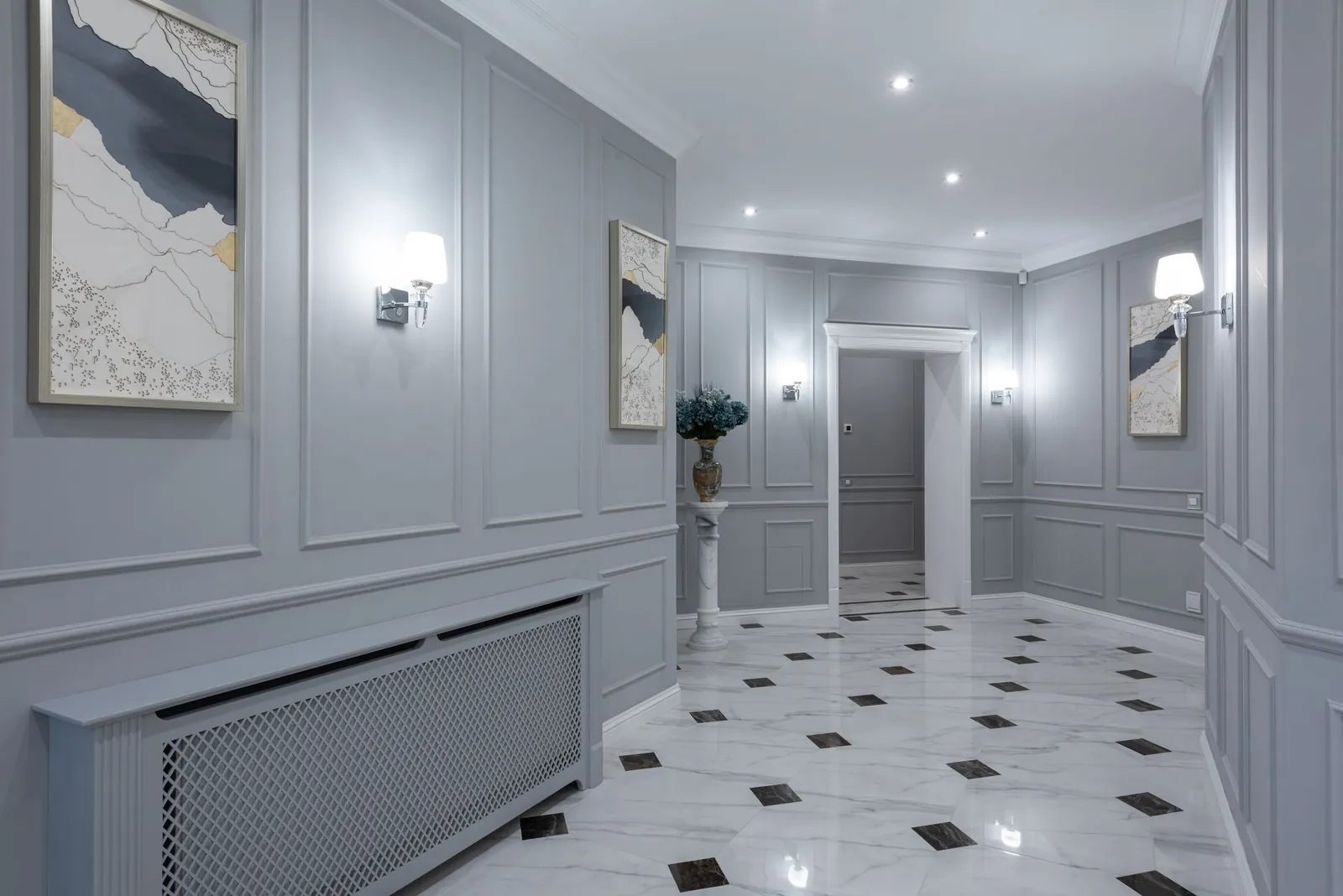
In Middleton, where only about 37% of homes are detached houses, a lot of interior painting happens in a unit with neighbors above, below or beside it, and with an owner who isn't going anywhere for the week. Painting around your life in a compact floor plan takes more planning than painting an empty house, and most of that planning is about order, air and access.
Here's how it goes, from the association's rules to the last room. What's covered and how rooms are prepped is all on the interior painting overview.
What to clear with the association before booking
Repainting the inside of your own unit rarely needs a formal vote, but most associations have something to say about contractors: when they may work, where they park, and whether the elevator needs pads or a reservation. Ask the property manager before we pick dates, and forward whatever comes back.
Our hours, Monday to Friday from 8am to 5pm, usually sit comfortably inside a building's quiet-hour rules. Parking matters more than people expect, because ladders, drop cloths and paint arrive on the first morning and leave on the last. A guest spot near the entrance turns that into a few minutes instead of a long haul down a corridor.
Staying home: furniture, order and one room at a time
A typical room needs one to two days, so a unit is usually painted in sequence rather than all at once. Start with the space you can most easily do without, such as a second bedroom or a den, and finish with the rooms you use every day, so there's always somewhere to sit and somewhere to sleep.
You don't need to empty a room. Furniture moves to the middle and gets covered along with the floor. Your part is taking down pictures, mirrors and anything breakable on shelves, and in a small unit it helps to clear one closet or corner as a parking spot for lamps and side tables. Our checklist on how to prepare for painters walks through the night before.
A bedroom with little trim goes faster than a kitchen full of cabinets to cut around, and our post on how long it takes to paint a room explains why the same unit can need a different number of days than the one next door.
Fresh air in a unit with windows on one side
Many condos have windows on one or two walls only, and an interior bathroom may have nothing but an exhaust fan. That makes ventilation something to plan rather than an afterthought. The EPA says most paint emissions happen while it dries, in the first few days, and advises keeping fans going and air moving continuously through the job and for two or three days once it ends.
In practice, open the windows the unit has, set a box fan in one of them blowing out, and run the bath and range fans if they vent outdoors. The same EPA guidance adds that water-based paints generally give off fewer chemicals than oil-based paints. Keeping the unit door shut holds the smell inside instead of sending it down the hall, and if anyone at home is sensitive to odors, plan an afternoon out on the day a room is finished.
Color in small rooms and windowless spaces
Condo rooms are often modest, and a hall or bath may have no window at all. Paint chips often list a light reflectance value, or LRV, a number that tells you how much light a color sends back; a higher number means a brighter wall in a dim space. Pale colors with a high LRV make a small bedroom or a windowless hall feel more open.
Trim that sits close to the wall color, rather than a stark contrast, keeps edges from chopping a compact room into pieces. There's also a case for going deeper in a space you pass through quickly. A den or an entry nook painted a rich color reads as a choice, and with so little wall, it's an easy one to live with or change later.
Your walls, the association's corridor
Wisconsin's condominium law defines the common elements as all of a condominium except its units, so the corridor outside your door, the stairwell and the lobby belong to the association, and so does the decision to repaint them. Your declaration spells out exactly where your unit's boundaries are.
The rule of thumb is simple. Inside your door, the walls, ceilings, trim and doors are yours to repaint. The hallway face of your entry door may not be, since some associations keep every corridor door the same color, so ask before you plan to change it. If the board wants the corridor freshened up, it can request its own estimate.
Painting through a Wisconsin winter with the windows shut
Winter is a good season for interior work: the unit is warm inside and there's no outdoor schedule competing for the calendar. The tradeoff is air. With the windows closed for months, fresh air comes from short, deliberate airings: crack a window for ten minutes in the warmest part of the day, run every exhaust fan you have, and keep the freshly painted room open to the rest of the heated unit.
Leave the thermostat at its normal setting. Paint dries slower in a cold room, so turning the heat down while a window is open works against you. Our post on painting in winter covers room temperature, dry air and drying times in more detail.
Each room's price comes from its square footage, paint included. The written quote is the price, no extra charge if the job takes longer than expected. Tell us which rooms you have in mind and when your building allows work, or see our other services in Middleton.
Common questions
Does my condo association need to approve interior painting?
Usually not for the walls inside your own unit, but associations often set rules for contractors on hours, parking and elevators. Check with your property manager and send us the rules before we schedule.
Can I stay home while you paint my unit?
Yes. Rooms are painted one after another, starting with the ones you can most easily do without, so you keep a place to sit and sleep. If paint smell bothers you, plan to step out for a few hours when a room is finished.
Do I need to move my furniture out of the condo?
No. Furniture moves to the center of each room and is covered along with the floor. Do take down pictures and mirrors, pack small breakables, and clear one spot for lamps and side tables.
Can you paint a condo in the winter?
Yes, interior painting works year round. Keep the heat at its usual setting, run the exhaust fans, and open a window briefly during the warmest hours to clear the air while the paint dries.
Who paints the hallway outside my door?
The association, in most buildings, because a shared corridor is a common element rather than part of your unit. Your declaration settles it. We paint what's inside your unit, and the board can ask for its own estimate for the hallway.
More in Middleton
Interior painting nearby
Helpful guides
Sources
- American Community Survey 2020-2024 5-year estimates, U.S. Census Bureau, via Census Reporter
- Addressing Indoor Environmental Concerns During Remodeling, U.S. Environmental Protection Agency
- Wisconsin Statutes 703.02: Definitions (Condominiums), Wisconsin State Legislature
- Light reflectance value, Wikipedia