Front door colors that suit your house, from brick to white walls
· 6 min read · By GK Painting & Remodeling
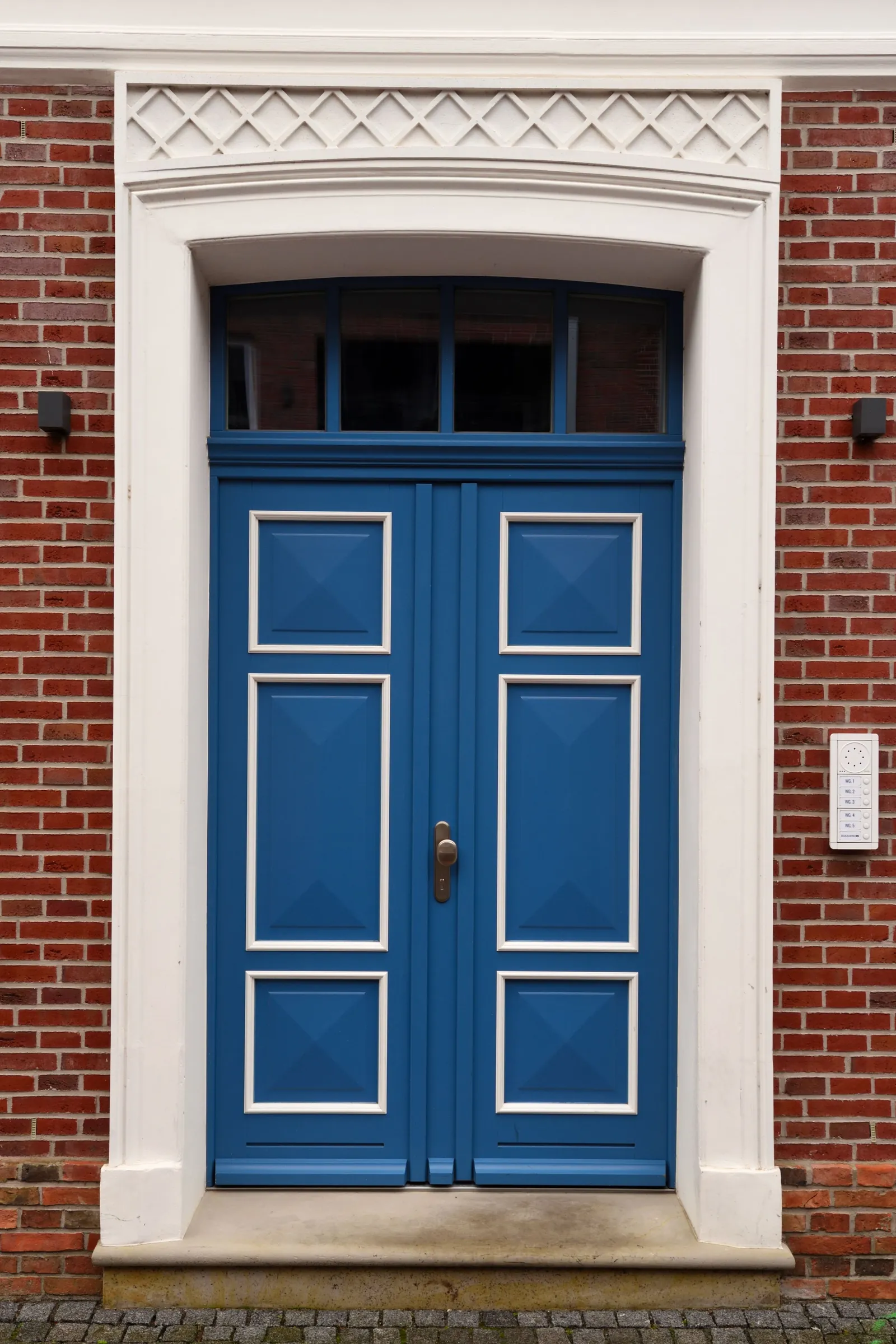
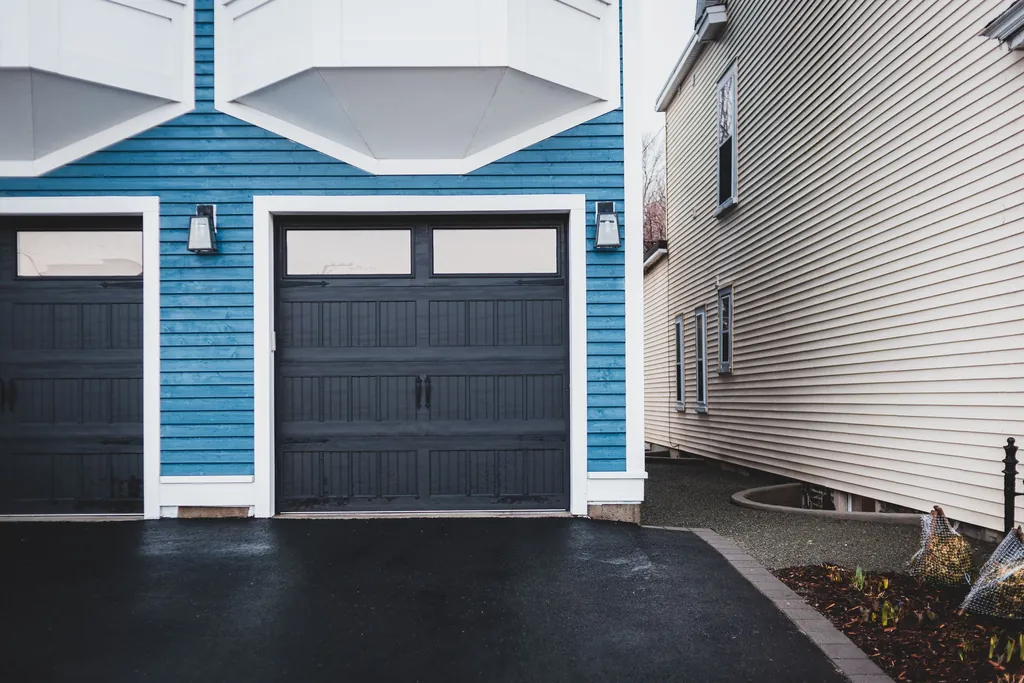
The best front door color is one that contrasts a little with your house, suits its style and still looks right in the light at your door. Deep navy, forest green, black and a muted red are the reliable choices, and a few simple rules decide which one is right for your home.
Here are color ideas by house style and by what's around the door, how light and sun exposure change a color, and what to settle before you commit. Painting a front door is part of our exterior painting work, and if you'd rather learn the technique first, our guide to how to paint a front door covers the steps.
Start with what can't change, trim included
A door isn't chosen in a vacuum. Brick, stone, the roof, the porch floor and the light fixtures all stay put, and the door has to work with them. Look at the fixed colors first, then pick a door that either contrasts with them or quietly matches their undertone.
Undertone is the hidden warm or cool lean in a color. Red brick leans warm, a gray house usually leans cool, and a door with the opposite lean tends to look off no matter how nice the color is on its own. Hold your sample against the brick, not against the white of the trim.
Contrast is the other half. A door in nearly the same value as the wall around it disappears. A door noticeably darker or noticeably more saturated gives the entry a focal point, which is what a front door is for.
The door's frame and the trim around it set the stage. A door painted the same white as the trim reads as one flat surface, while a door in a deeper color gives the frame something to define. If the trim is already dark, a door in a lighter or brighter color is what makes the entry stand out.
Shutters are the other reference. Matching the door to the shutters ties the front of the house together, and a door in its own color reads as the focal point. Both work, so decide whether you want calm or contrast.
Front door colors by house style
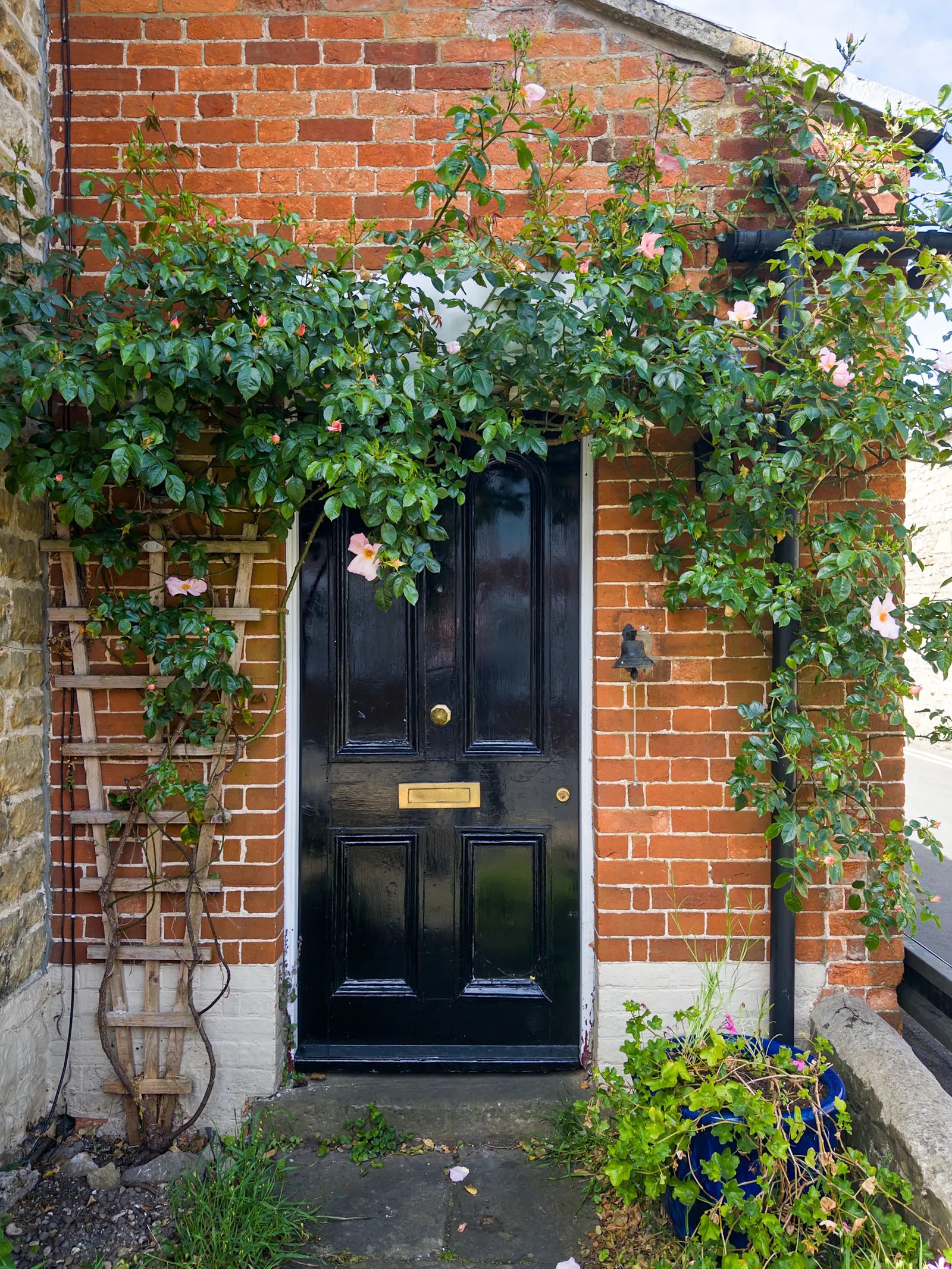
These are starting points, not rules. Most styles can carry more than one answer:
| House style | Colors to try | Why it works |
|---|---|---|
| Traditional two-story | Navy, forest green, black, deep red | Strong contrast against light trim |
| Farmhouse | Sage, muted blue, black, wood tone | Soft and earthy, nothing shiny |
| Craftsman or bungalow | Deep green, rust, warm brown | Earth tones sit well with wood trim |
| Ranch | Warm red, teal, charcoal, soft yellow | One bold color lifts a long, low front |
| Brick colonial | Black, dark green, deep navy | Dark doors anchor brick |
| Contemporary | Black, charcoal, one saturated accent | Simple shapes suit a single strong color |
Front door colors by what's around the door
Red or brown brick
Black, deep green and dark navy all hold their own against brick. A door in a red close to the brick tends to blend in, so if you like red, go deeper or more muted than the brick, not brighter.
Gray walls
Gray is the easiest backdrop. Navy, black, a warm red, a golden yellow and a muted green all work, so choose by mood. Because gray leans cool, a warm door feels welcoming and a cool one feels calm and tailored.
White or cream walls
Nearly anything works here, which is the trouble. White gives you the most contrast, so a deep color looks crisp and a pastel can look washed out. If the house is crisp white, a dark door gives it definition.
Tan or beige walls
Warm neutrals pair well with deep green, brown, burgundy and navy. Skip a door that's close to the wall color unless you want the entry to recede.
Dark walls
On a dark house, you can match the door for a quiet look or go light and bright for contrast. A natural wood tone is also lovely against dark walls, if the door is sheltered enough to hold a wood finish.
If you want a bold color
Yellow, orange, teal and bright red can all be great, and they're easiest to live with when the rest of the front is calm. Keep the walls, trim and roof quiet, repeat the accent once (a pot, a cushion, the house numbers) and let the door do the talking.
Light and direction change the color
A color that looks right in the store won't necessarily look right under your porch roof. A door in deep shade reads darker and cooler. A door in full afternoon sun can look brighter and lighter, and can wash out a pale color.
That's why we'd test a color at your door itself, in morning, midday and evening light. In a Wisconsin winter, the light is lower and flatter and snow bounces more of it around, so look once more on an overcast day before you decide.
Dark colors and sunny doors
Deep colors look great, and they ask for a little more care. A technical bulletin from the paint maker Dunn-Edwards says dark colors, which carry a high load of pigment, typically take longer to dry and cure than light ones, and that additives in colorants can slow the cure of dark colors further. A door in a deep color needs patience before it's shut and latched against its weatherstripping. Our post on dark colors on metal doors adds the storm door heat problem.
Sun adds a second concern. The Forest Products Laboratory warns that oil-based paint put on a cool surface that the sun will warm within a few hours can blister, and that this is most common with thick coats of dark color. It also says areas fully exposed to sun and rain, which on a house it describes as the south and west sides, are the first to deteriorate. If your door faces that way, expect to refresh it sooner and choose the day you paint it carefully. If a storm door sits in front of a dark door, see painting fiberglass and steel doors for what one door maker warns about heat.
Sheen, hardware and the details
A satin or semi-gloss sheen on a door is the usual choice, since both wipe clean and show fingerprints less than a high gloss. Keep in mind the Dunn-Edwards note that higher-gloss coatings generally take longer to cure fully than lower-sheen ones.
Then look at the metal. Black, brass and nickel hardware each flatter different colors: black suits nearly everything, brass warms up navy and green, and nickel reads cleaner against red and white. Check the house numbers, the light fixture and the mailbox too, so the door isn't the one thing that doesn't match.
A wood door: paint or stain?
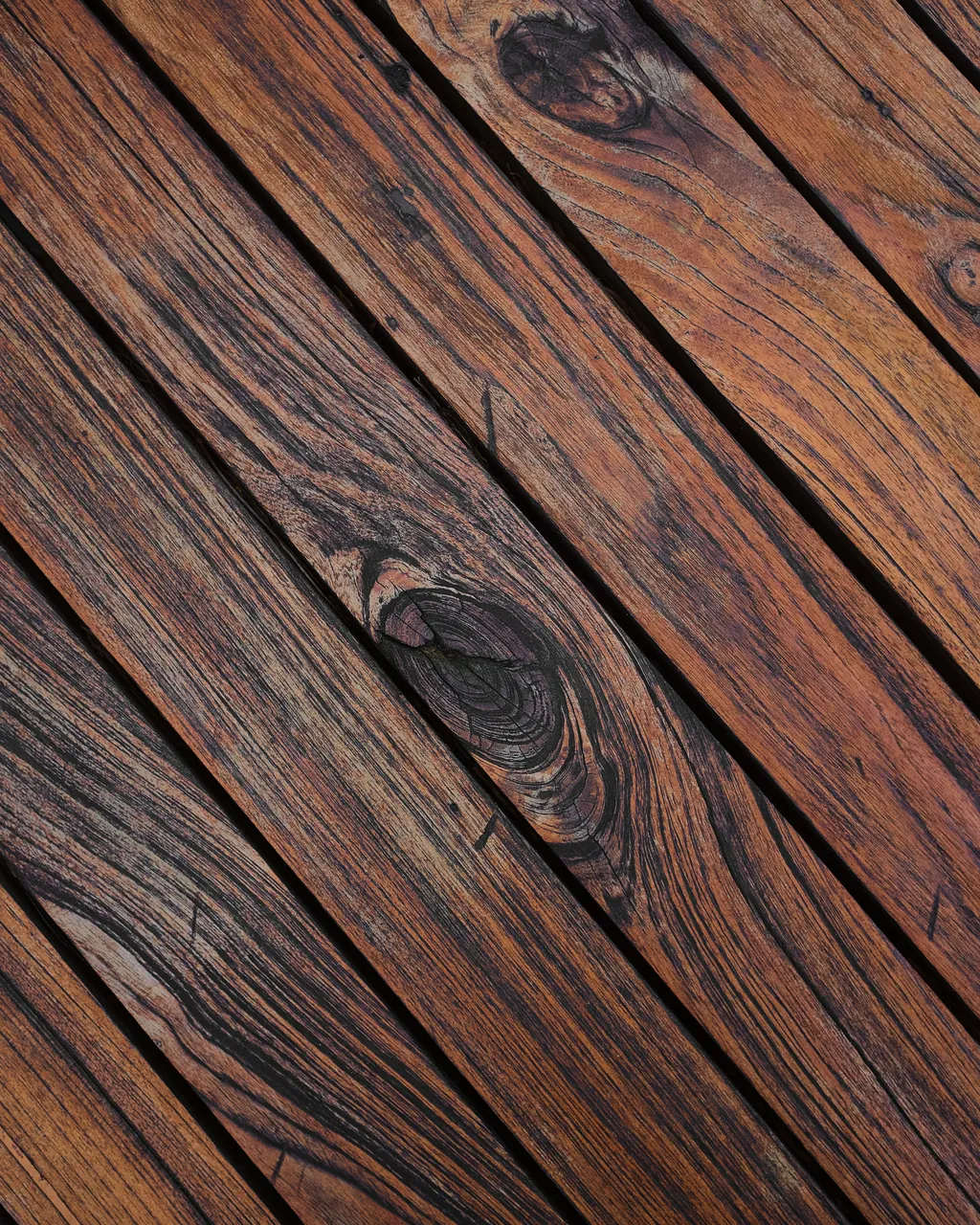
If your door is real wood, you can show the grain instead of covering it, but the door has to be sheltered. Purdue Extension says clear finishes such as exterior spar varnish may work on exterior doors with some success if the door has adequate protection from the weather, and that in severe exposure a clear film finish may last barely one year.
A door under a deep porch roof can hold a natural finish. A door in full sun and rain is better served by paint. If you're drawn to a natural look on a protected door, say so on the estimate call and George will tell you what he sees.
Test before you commit
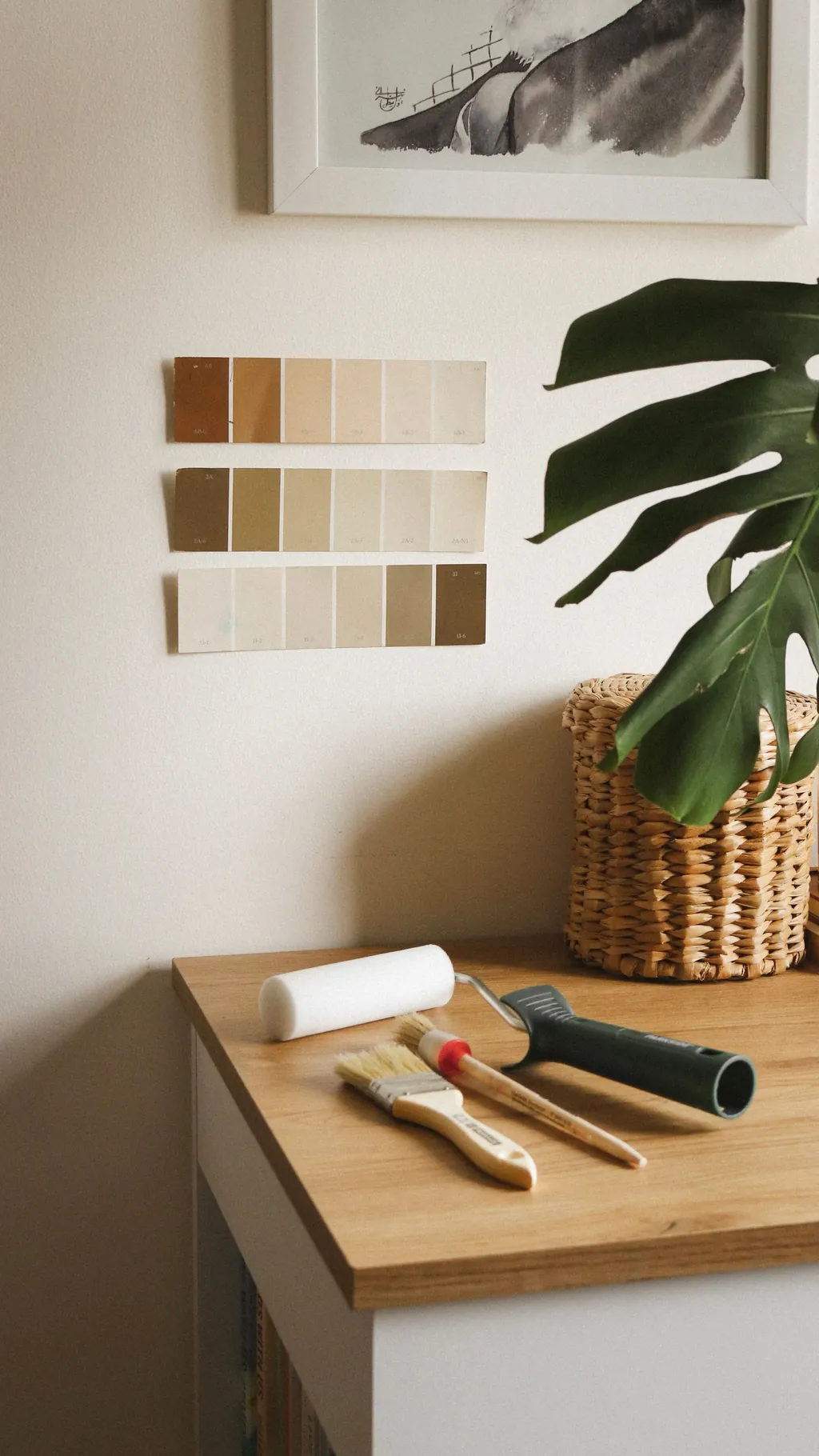
- Paint a sample on a board or a large piece of card and tape it to the door for a few days.
- Look at it in different light, with the trim, brick and walls in the frame.
- Check whether your neighborhood, an HOA or a historic district has rules about door colors before you buy paint.
- Photograph it from the street, because that's how most people will see it.
Our guide to testing paint colors goes through the method, and our look at paint and Madison's historic districts covers the rules question. The same approach works indoors: our guide to choosing a cabinet color walks through five real kitchens.
Having your front door painted
Front doors and other exterior doors are part of our exterior work. Smaller exterior projects usually take one to three days and are scheduled around dry weather, so the start date depends on the forecast as well as the calendar.
We're based in Waunakee and work across Madison and Dane County. See our Waunakee service page for the towns we cover, or ask for a free estimate and tell us the color you're considering.
Common questions
What is the best color for a front door?
Navy, forest green, black and a muted red are reliable choices, though there's no single best color. Pick one that contrasts a little with the walls and brick, suits the house's style and looks good in the light at your door.
What color front door goes with a brick house?
Black, deep green and dark navy all work with red or brown brick. If you want red, choose one deeper or more muted than the brick, since a close match tends to blend in.
What color front door goes with a gray house?
Navy, black, warm red, golden yellow and muted green all work. Gray leans cool, so a warm door feels welcoming and a cool one feels calm.
Should a front door match the shutters or the trim?
It can, but it doesn't have to. A door that matches the shutters ties the front together, and a door in its own color becomes the focal point. Either way, keep the metals, the numbers and the light fixture consistent.
Does a front door in full sun need special care?
A little. The Forest Products Laboratory says areas fully exposed to sun and rain deteriorate first, so a sunny door will need refreshing sooner than a sheltered one. It also warns that oil-based paint, especially in thick coats of dark color, can blister if it goes on a cool surface the sun will soon warm.
What sheen is best for a front door?
Satin or semi-gloss is the usual choice because both wipe clean. Higher-gloss coatings generally take longer to cure fully, according to Dunn-Edwards, so allow for that before you close the door tight.
Sources
- Dry Time versus Cure Time of Paint (technical bulletin), Dunn-Edwards
- Finishing of Wood (Wood Handbook, chapter 15), USDA Forest Service, Forest Products Laboratory
- Selection and Application of Exterior Finishes for Wood (NCR-135), Purdue University Cooperative Extension Service
More on decks and exterior and every decks and exterior post.