How to paint a front door without taking it off its hinges
· 6 min read · By GK Painting & Remodeling
To paint a front door without removing it, choose a mild, dry day, take the hardware off, clean and scuff the surface, prime bare or glossy spots, then paint the panels first and the flat areas after, in two thin coats. Prop the door open until the paint is dry to the touch, and go easy on it for the next few weeks while the paint cures.
A door is a small project with a big effect, and the details are what separate a smooth finish from a streaky one. Here's the order of work, the weather it needs and how to handle drying when the door has to stay in place. Front doors are part of our exterior painting work, so this is the method we'd want you to follow.
What you'll need
- A screwdriver to take off the handle, lock and any kickplate, plus painter's tape for anything that stays.
- A cleaner or degreaser, rags and a bucket of clean water.
- Sandpaper and a sanding block, wood filler or patching compound for dings.
- Primer and exterior paint, a good angled brush and a small foam roller.
- Drop cloths, and a wedge or folded cardboard to hold the door ajar.
A brush gives you the best control around panels and edges. The Forest Products Laboratory says brush application is always superior to roller or spray, especially for the first coat. A small foam roller is fine for the flat areas once the first coat is down.
Pick the day
Weather decides more of a door job than the paint does. The Forest Products Laboratory says water-based latex paint should be applied when the temperature is at least 50 degrees Fahrenheit and oil-based paint at least 40, and that latex shouldn't drop below 50 for at least 24 hours afterward, or the film won't form properly. Your paint can will give the exact limits.
Dew and sun matter too. The laboratory warns against painting on days when heavy dew forms overnight, and against putting oil-based paint on a cool surface that the sun will warm within a few hours, since thick coats of dark color can blister. A door that gets afternoon sun is best painted in the morning, once the dew is gone. A technical bulletin from Dunn-Edwards adds that high humidity slows drying, so a damp day is a poor one.
That's the weather logic behind how we schedule exterior projects: around dry conditions. Our guide to the best time to stain a deck goes further into reading a forecast.
Prep the door
- Remove the handle, deadbolt, kickplate and any other hardware. Taking it off is faster than taping around it and leaves cleaner edges.
- Clean the whole door, paying attention to the area around the handle, where hands leave oil. Rinse and let it dry.
- Scuff-sand glossy or slick areas so the new coat has something to grip, and sand rough spots smooth.
- Fill dings and small holes, let the filler dry, and sand it flush.
- Wipe off the dust with a damp rag, then tape the glass, the frame and the weatherstripping.
Prime when you need to
Bare wood always needs primer. The Forest Products Laboratory says to apply it whether the topcoat is oil-based or latex, and to apply enough to obscure the grain and not to spread it thin. You'll also want primer for a big color change, such as going from a dark door to a light one, and for any glossy finish you can't sand dull.
If you're repainting over an old coat and aren't sure it will accept new latex paint, Purdue Extension describes a quick test. Paint a small, hidden spot, let it dry overnight, then press an adhesive bandage onto it and pull it off with a snap. If there's no paint on the bandage, the bond is good. If there is, the old surface needs more cleaning or an oil-based primer.
Steel and fiberglass doors have their own primer requirements, so check the paint and primer labels for the surface you have. For steel, our guide to painting a metal door covers rust, dents and the dew point. Our guide to painting fiberglass doors compares what three door makers say about primer, sanding and timing.
Paint in the right order
Work in an order that keeps a wet edge, so brush marks and lap lines don't show:
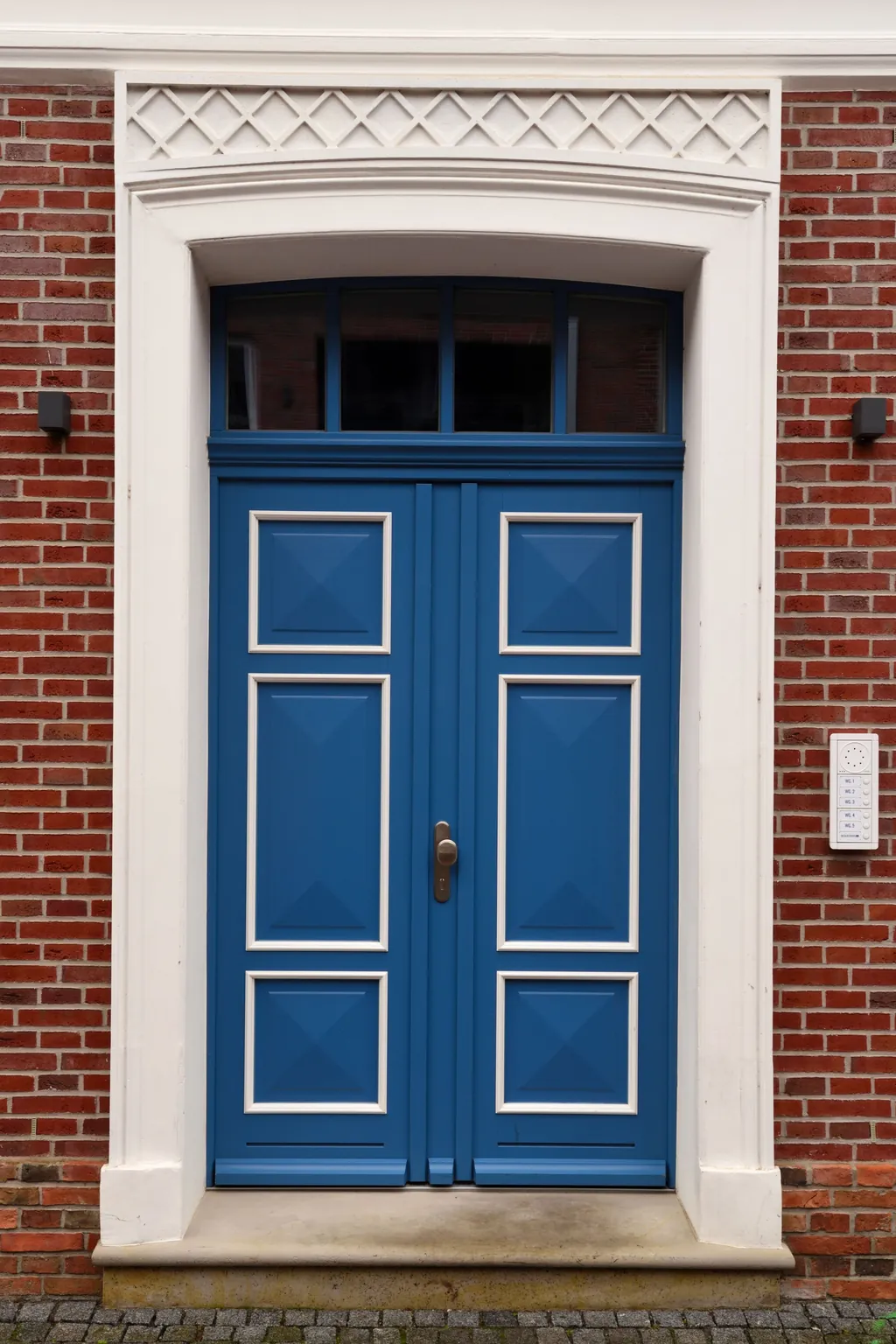
- Paint the recessed panels first, brushing into the corners and then along the grain.
- Paint the horizontal rails, the flat bars between the panels.
- Paint the vertical stiles, the long edges on each side, from top to bottom.
- Paint the edges of the door last. Check that the latch side and hinge side aren't leaving drips.
- Wait for the first coat to dry, then repeat for the second.
Keep the brush moving along the grain on a wood door, and finish each section with a light stroke in one direction. Raised panels collect paint in their corners, so check the corners and the lower edge of each panel for drips after every coat and brush them out while the paint is still wet.
Two thin coats beat one heavy one. Thick coats are slower to dry and more likely to run, and the blistering the Forest Products Laboratory describes is most common with thick coats.
How long to wait between coats
The Dunn-Edwards bulletin gives these times for the two main paint types. Cool, humid air, dark colors and thick coats all stretch them:
| Paint type | Dry to the touch | Typical wait before the next coat | Fully cured |
|---|---|---|---|
| Water-based (latex) | 1 to 2 hours | 2 to 4 hours | 14 to 30 days |
| Oil-based | 4 to 8 hours | 8 to 10 hours or overnight | 7 to 10 days to start |
Drying while the door hangs
This is the part that catches people. A door has to stay in its frame, and fresh paint sticks to weatherstripping and to the frame where they touch. Wedge the door open and leave it there until the coat is dry to the touch. Close it gently afterward, and open and close it a few times in the first day to confirm it isn't catching.
Plan the day around the door. If it's the only entrance you use, pick a day when everyone can come and go another way, since the door has to stay propped open until the paint is dry to the touch and needs gentle handling after that.
Dry to the touch is not finished. Latex paint can take 14 to 30 days to cure fully, and oil-based paint keeps hardening past its first week or so. In that window, don't slam the door, don't lean a rake or a ladder on it, and wait to hang a wreath or add a storm door. Remove the tape slowly, at an angle, once the paint is dry to the touch.
The edges nobody sees
The top and bottom edges of a door are easy to skip. The Forest Products Laboratory and Purdue Extension both single out the bottoms of doors as spots especially vulnerable to moisture. Water collects at the threshold, and bare wood soaks it up.
Getting paint onto the bottom edge of a hanging door is awkward, which is the main reason to take the door off its hinges for that step. If you leave it hung, a small mirror and a small brush will help you reach it.
Or have it done for you
We paint front doors and other exterior doors. We protect the entry first, prep it, paint it, clean up and walk the door with you before we call it done. Smaller exterior projects usually take one to three days and are scheduled around dry weather. Ask for a free estimate and George will talk through the door and send a written quote and a start date. We're based in Waunakee, and our Waunakee exterior painting page has the details for homes nearby.
Still choosing a color? Our guide to front door colors walks through ideas by house style, and our guide to painting interior doors covers the doors inside.
Common questions
Can I paint a front door without taking it off the hinges?
Yes. Remove the hardware, wedge the door open and work in the right order, panels first and edges last. Taking the door off makes the top and bottom edges easier to reach, but it isn't required.
What temperature is too cold to paint a front door?
The Forest Products Laboratory says latex paint should go on at 50 degrees Fahrenheit or warmer and oil-based paint at 40 or warmer. Latex shouldn't drop below 50 for at least 24 hours after, so check the overnight low as well.
How long does a painted front door take to dry?
Water-based paint is typically dry to the touch in one to two hours and ready for another coat in two to four, according to Dunn-Edwards. Fully curing takes 14 to 30 days, so be gentle with the door for a few weeks.
Do I need to prime a front door before painting?
Bare wood always needs primer, and a big color change or a glossy old finish usually does too. If you're repainting a sound finish, a quick adhesion test on a hidden spot will tell you whether the new paint will bond.
Should I paint the front door with a brush or a roller?
Brush the panels and edges for control. The Forest Products Laboratory says brush application is superior to roller or spray, especially for the first coat. A small foam roller works for the flat rails and stiles.
How do I keep the door from sticking after I paint it?
Wedge it open until the paint is dry to the touch, then open and close it gently a few times. Paint keeps curing for weeks, so the door can still stick in humid weather. Keep an eye on the weatherstripping.
Sources
- Finishing of Wood (Wood Handbook, chapter 15), USDA Forest Service, Forest Products Laboratory
- Dry Time versus Cure Time of Paint (technical bulletin), Dunn-Edwards
- Selection and Application of Exterior Finishes for Wood (NCR-135), Purdue University Cooperative Extension Service
- Reduce the Risk of Lead Exposure at Home, U.S. Environmental Protection Agency
- Lead Renovation, Repair and Painting Program, U.S. Environmental Protection Agency
More on decks and exterior and every decks and exterior post.