Painting stair railings: banisters, spindles and a finish that handles hands
· 6 min read · By GK Painting & Remodeling
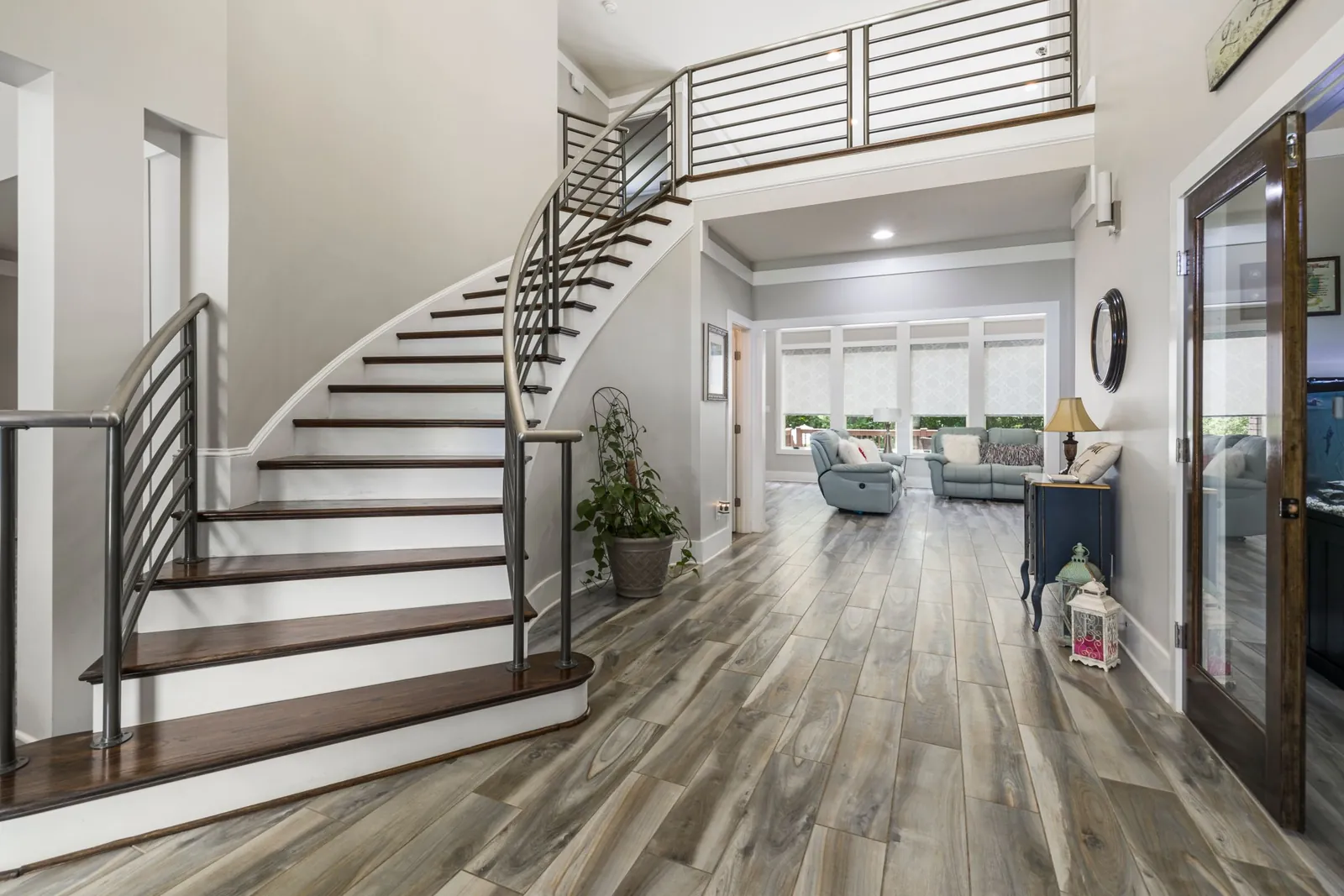
To paint a stair railing, make sure it's solid, clean it, sand or scuff the old finish, prime, and paint the spindles first and the handrail last, in thin coats with time to dry between them. The part your hand grips every day is the part that takes longest to harden, so plan for a gentle first few weeks.
Below are the tools, the steps in order, the real drying and curing times, and the places where painting a banister yourself gets fussy.
What you'll need
- Primer suited to the existing finish. A bonding or stain-blocking primer is the usual pick over varnish or dark stain.
- Trim paint in a durable sheen. Satin or semi-gloss wipes clean.
- A 1.5 to 2 inch angled brush for spindles and a small foam roller for flat faces, if the rail has them.
- Sanding sponges or fine sandpaper, and a detail sander or sanding sticks for tight spots.
- A degreasing cleaner, sponges and rags.
- Wood filler for dents and holes.
- Painter's tape, drop cloths, and plastic or cardboard to protect treads and walls.
- Gloves, glasses and a dust mask.
Check the railing first
A railing is a safety feature, so before you paint it, test it. Press and shake the handrail, the newel posts and a handful of balusters. A loose newel or wobbly spindle needs to be repaired and glued or fastened before it's painted. Paint won't fix it, and it hides the movement that tells you something's wrong.
Then look at the finish. A varnished or stained railing is glossy and slick, so it needs a thorough scuff and a bonding primer. A painted one needs cleaning, scuffing and spot repairs. Raw wood needs primer. Metal spindles need loose rust brushed off and a primer made for metal. In each case, the surface should be dull, clean and dry before the first coat goes on.
If your home was built before 1978, EPA says its paint is more likely to contain lead, and it lists stairways among the high-wear places to check for chipping and peeling. EPA's Renovation, Repair and Painting rule sets lead-safe work practices for paid work in older homes and generally doesn't cover homeowners working on their own, though EPA still asks them to follow lead-safe practices. Find out before you dry sand a railing.
Step by step
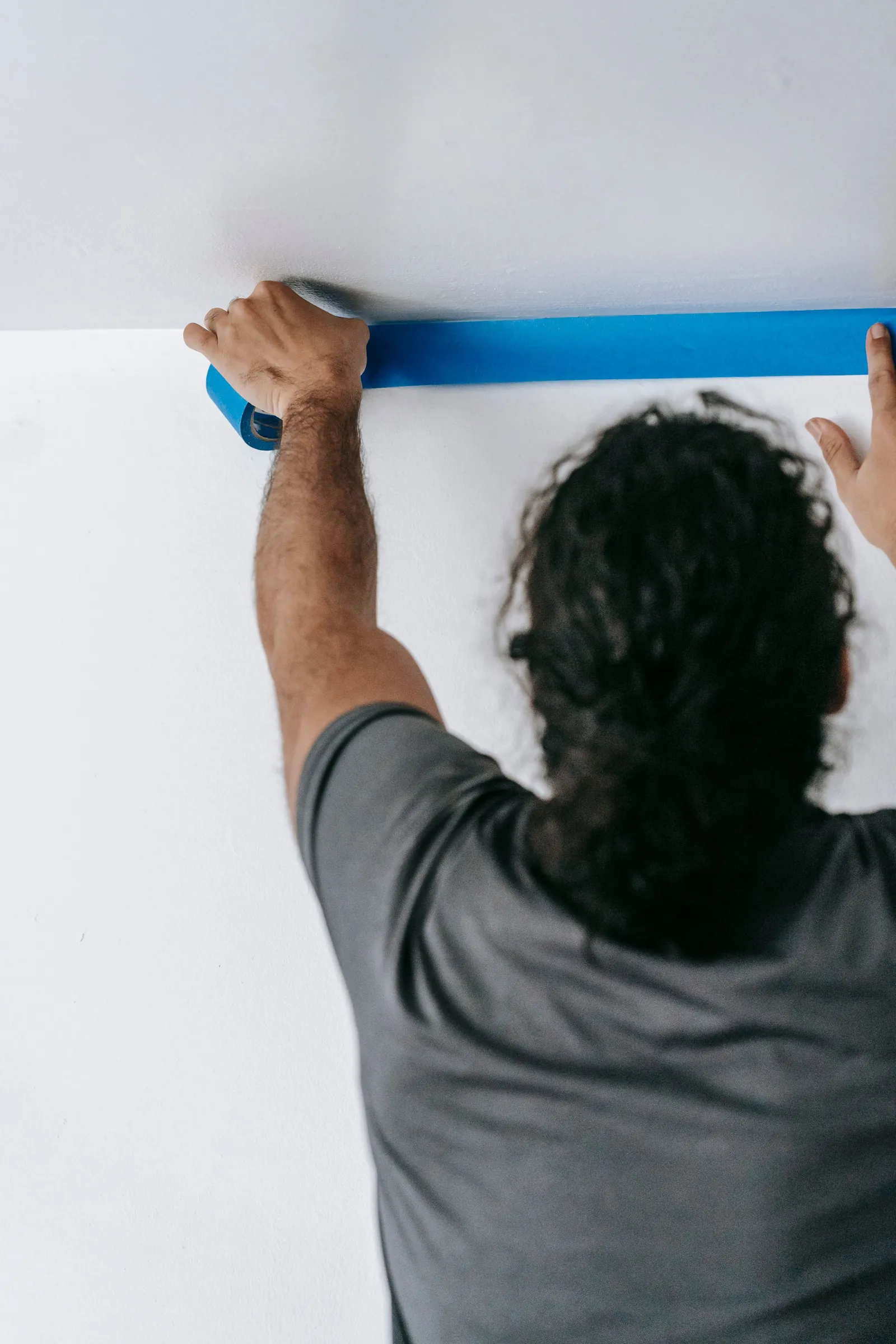
- Protect the treads, the wall and the floor at the bottom with drop cloths, plastic and tape. Paint drips down stairs.
- Wash the railing with a degreasing cleaner to remove hand oils, then rinse and dry.
- Sand or scuff every surface until the shine is gone. A sanding sponge reaches the curves, and sanding sticks reach between spindles.
- Fill dents and nail holes, let the filler dry, sand it flush and wipe off the dust with a damp cloth.
- Prime the spindles first, then the newel posts and the handrail. Work from the top of the stairs down, and watch for drips at the joints.
- Let the primer dry according to the can, then sand it lightly and wipe off the dust.
- Paint the spindles first. Hold the brush at an angle, and do the sides that face you and then the sides that face away. Check the bottom joints for drips.
- Paint the newel posts, then the handrail last, in long strokes along its length.
- Let the first coat dry, sand lightly, wipe the dust off and paint a second coat the same way.
- Peel the tape slowly once the paint is dry to the touch, and keep the rail free of heavy use while it hardens.
Painting the handrail last means you're not brushing against wet paint on the spindles while you work on it. For the rest of the stair area, see our guide to painting a stairwell.
Plan around the stairs you still need
A railing is one thing you can't leave off limits for weeks. If these are your only stairs, plan the timing so you can avoid touching the rail while the paint is wet. Paint it in the morning, keep your hand off it for the rest of the day, and go slowly with a hand on the wall if you need to use the stairs. A second staircase makes the job much easier.
Dunn-Edwards says water-based coatings are usually dry to the touch in one to two hours, and oil-based in four to eight, with professionals often waiting 8 to 10 hours before another oil-based coat. Dry to the touch isn't ready to grip, though.
Why a handrail needs longer to cure
Dry and cured are different. Dunn-Edwards says latex coatings take 14 to 30 days to cure, and that oil-based coatings reach an initial cure in 7 to 10 days and keep hardening after that. It also says higher-gloss coatings generally take longer to cure than lower sheens, and that dark colors, cool temperatures and high humidity slow it down.
A handrail is gripped with warm, damp hands all day, which is hard on a soft finish. For the first few weeks, avoid scrubbing it, don't set things on it, and expect the finish to feel slightly less hard than it eventually will. A semi-gloss on a dark color will take the longest.
Painting versus refinishing the wood
Painting a railing hides the grain, which is the point if the existing stain is dated or worn. If you want to keep natural wood, you'd strip the old finish and re-stain, which is a longer and messier job. Our guide on the right sheen for each room can help you pick a finish for the railing that fits the rest of the house.
Tips for spindles and tight spots
Use a small angled brush and load only the tip, so paint doesn't pool in the joints. The brush technique is the same as for trim, which our guide to painting trim covers. Brush out any excess that collects at the bottom of each spindle before it can run. A scrap of cardboard held behind a spindle protects the wall and the next spindle while you work.
Check each spindle again a few minutes after painting. Drips and runs form as paint settles, and they're easy to brush out while the paint is wet and hard to fix after it's dry. A work light held low across the railing shows the spots you missed.
Where DIY gets hard
- A lot of tiny surfaces. Every spindle has four sides, and a long run of them adds up to a lot of brushwork.
- Drips and runs. Paint collects at the joints between spindles and rails, and a gloss finish shows every drip.
- Slick, glossy old finishes. If the shine isn't fully dulled, the new paint can peel off in flakes at the places hands touch.
- Reaching and awkward angles. Curved sections, turned spindles and the underside of a handrail take patience, and a ladder or stool is often needed.
- The stairs are in use. You can't just close the room.
- Older homes. Lead paint, plaster and out-of-square posts all complicate things.
When hiring makes sense
Painting a short, simple railing is a manageable DIY project. Hiring makes more sense for a long run with many spindles, a high or curved stair, a glossy finish that needs careful prep, or when you can't do without the stairs for several days. Our post on DIY painting versus hiring a pro covers the trade.
Trim and doors are part of our interior painting, and the process starts with protection before any paint comes out, then prep, paint and a walkthrough. If a railing is on your list, mention it when you call and George will tell you what he'd do. The written quote is the price, no extra charge if the job takes longer than expected. Ask for a free estimate.
Common questions
Do I need to sand a stair railing before painting?
Yes. A varnished or glossy railing needs sanding or at least a thorough scuff so primer can grip. Painted railings need a light scuff and repairs. Never skip this on a handrail, because hands wear away poorly adhered paint quickly.
Should I paint the spindles or the handrail first?
Paint the spindles and newel posts first and the handrail last. That way you won't brush against wet paint on the spindles while you reach across, and the part people grip gets the most time to dry.
What paint works best on a stair railing?
A durable trim paint in satin or semi-gloss, over a primer suited to the existing finish. Glossier paint is tougher but takes longer to cure fully, so be gentle with it at first.
How long before I can use the railing after painting?
Water-based paint is dry to the touch in one to two hours, but latex needs 14 to 30 days to fully cure. You can use the railing sooner, but be gentle for the first few weeks.
Can I paint a stained wood railing white?
Yes. Clean it, sand through the gloss, prime with a stain-blocking primer so tannins don't bleed through, and then paint two thin coats. Dark stain going to white often benefits from an extra coat.
Sources
- Dry Time versus Cure Time of Paint (technical bulletin), Dunn-Edwards
- Reduce the Risk of Lead Exposure at Home, U.S. Environmental Protection Agency
- Lead Renovation, Repair and Painting Program, U.S. Environmental Protection Agency
More on interior painting and every how-to post.